COME AS YOU ARE, JUST SHOW UP KAVISHKA WEERASINGHE ON RUNNING, COMMUNITY AND A BIRTHDAY RUN WITH A DIFFERENCE
BY THALIBA CADER
For Kavishka Weerasinghe, running began as a nudge from his father, disappeared from his life for several years, and returned almost by accident when a friend convinced him to enter the Melbourne Marathon. Three marathons later, running has become less about chasing a finish line and more about the life built around it: the discipline of showing up, the strangers who become friends at 5am, the example he wants to set for his young family, and the belief that an ordinary person can train themselves towards an extraordinary goal.
1. How did you actually get into running? Was it something you always did, or did you have one of those moments suddenly?
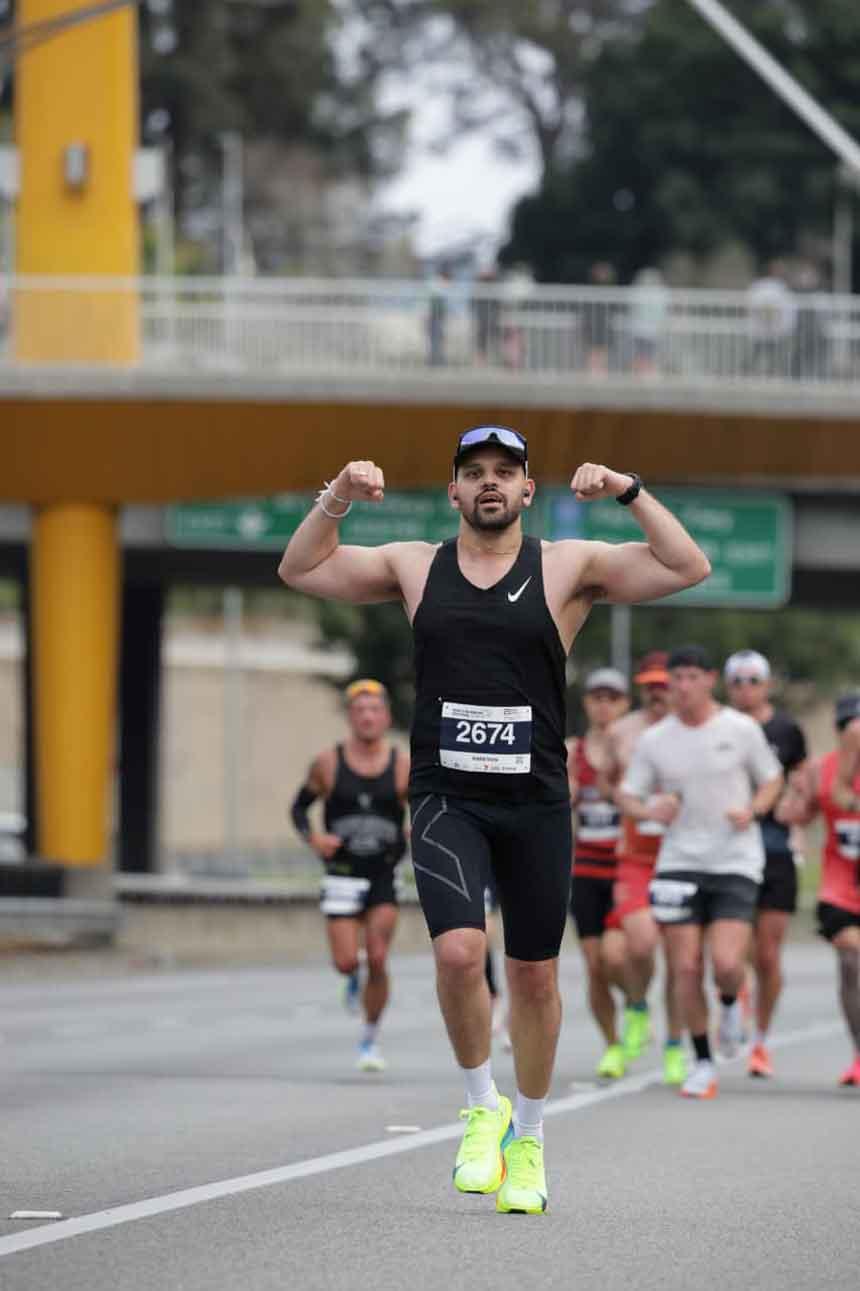
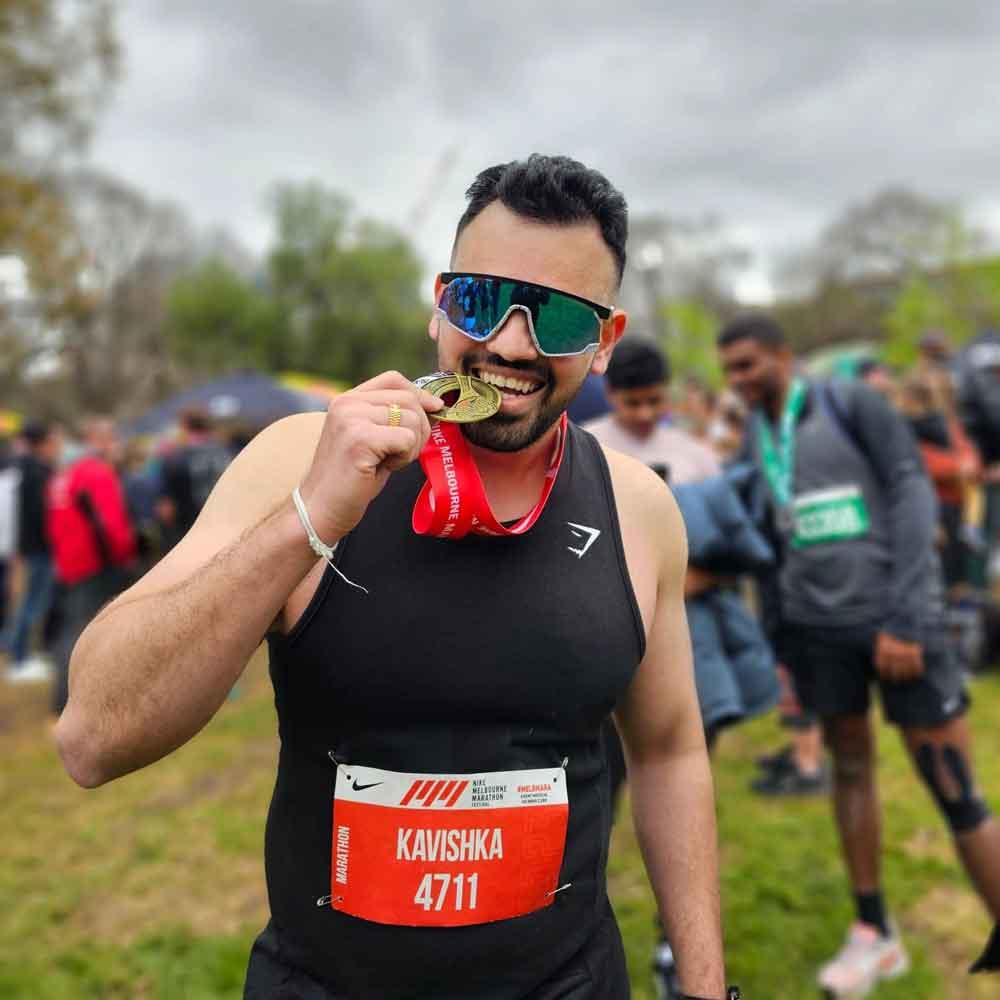
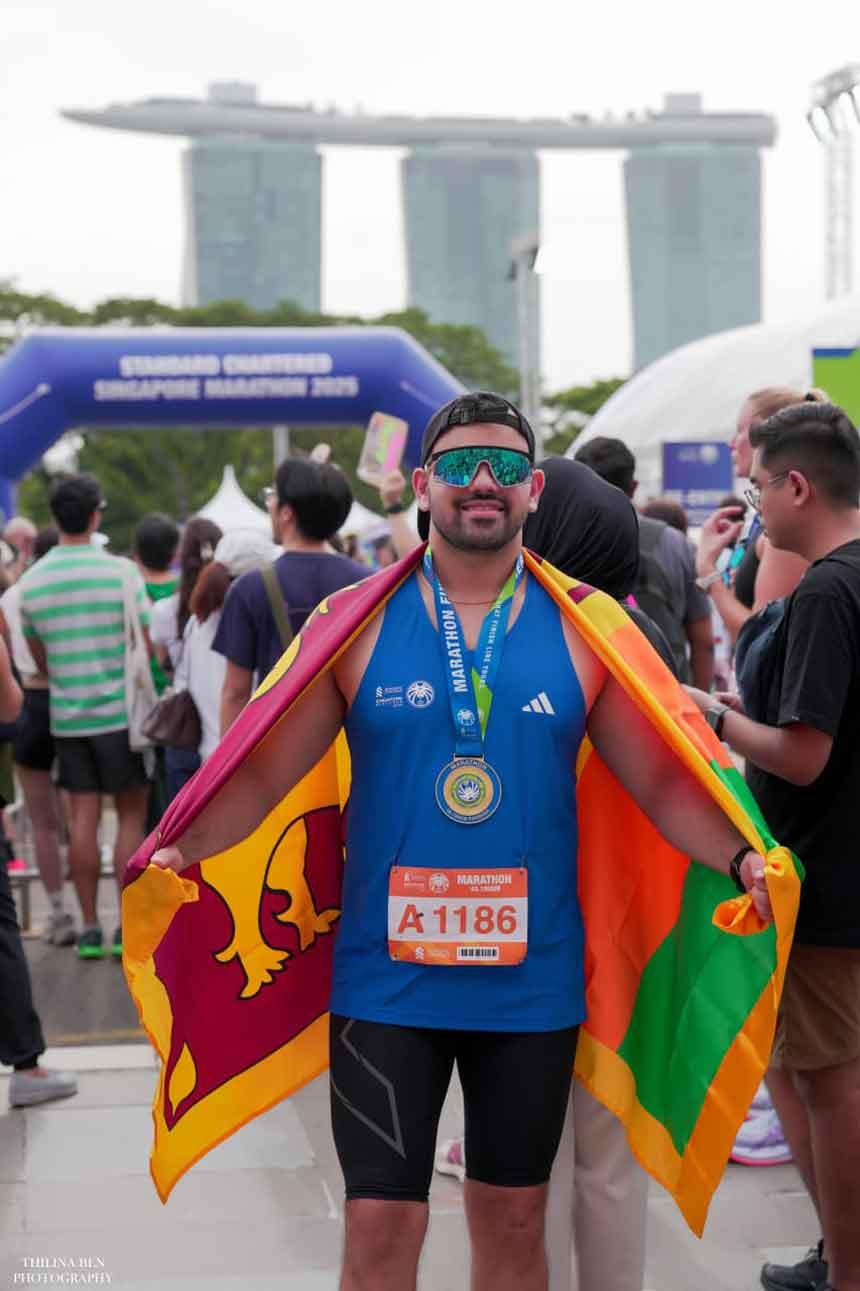
Running was originally my father's idea. During my school days, he pushed me towards it to get my body moving, and I kept at it until I finished school in 2015. Then I moved to Australia for my higher studies and stopped completely. I only came back to the sport on my own in 2023, the year I got married. My wife and I were living in Australia temporarily, and a very close friend convinced me to sign up for the Melbourne Marathon, even though I hadn't run in years. That gave me five months to train, and somewhere during those months, I fell in love with running. I haven't stopped since. I ran Perth the next year and Singapore the year after, and now I run a full marathon (42.2 km) every year, which keeps me training and healthy all year round. I'm on a mission to run Singapore again this year, and then my biggest marathon yet: London, in April 2027.
3. Be honest, do you actually enjoy all the training? Or are there mornings when the alarm goes off and you think, “Absolutely not”?
Honestly, no, I don't enjoy every session. There are plenty of mornings when the alarm goes off and my first thought is, "Absolutely not." What I've learned is that motivation is unreliable, so I don't depend on it. I follow a structured plan and log every session, so the decision has already been made before the alarm rings. The first ten minutes are always the hardest, but I always know that I would never regret completing any run. I don't always love the alarm clock, but I love what the training gives me back.
4. What does a really bad running day look like for you?
It starts in the first kilometer. My legs feel heavy, my heart rate is higher than it should be for the pace, and everything feels like effort. Then the mental voice kicks in: "Why are you doing this? You can stop." Every runner has these days, however experienced. I've learned not to fight them. I slow down, shorten the session if I need to, and move on without beating myself up. I always remember that even showing up on bad days is what takes my running journey to a greater level. Ten per cent of a session is better than zero.
5. You’re also a father. How does running fit into that life? Do you have to negotiate your training time at home, or has the family simply accepted that Dad is going to disappear in his running shoes?
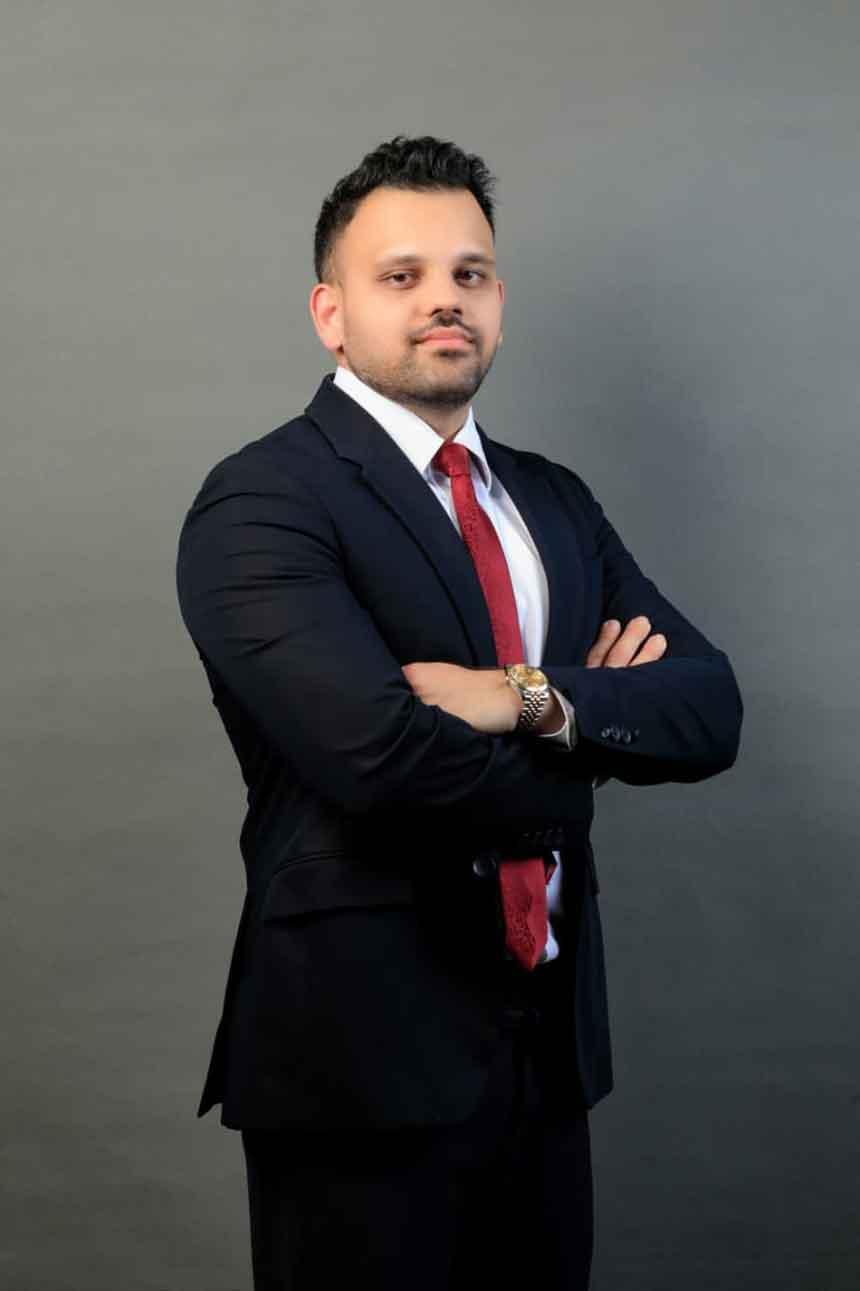
I'm lucky to have a family that understands. My wife is very supportive and knows that I’m always trying to set an example for the family. I want to see both my wife and one-year-old son prioritizing their health and fitness one day as well, so I do my best to set that example. Time at home is precious, and I don't take it for granted. I protect it by doing most of my training early in the morning, before the house wakes up, so I'm back before the day really begins. My rule is simple: running should never come at the cost of being present at home. If it does, I've got the balance wrong.
6. Has becoming a father changed the way you look at running, competition or even success?
Definitely. Success in running used to be purely about the time on the clock. Now it's bigger than that. I want my son to grow up watching his dad set a hard goal, work for it consistently, and handle the days it doesn't go to plan. That matters more to me than any personal best. It has also made me less ego-driven about competition. I still want to run fast, but I'm more patient, and I think more about health and longevity, so that I can keep running and keep up with him for decades.
7. Let’s talk about Kavishka’s Colombo Run. Why did you feel Colombo needed this particular run?
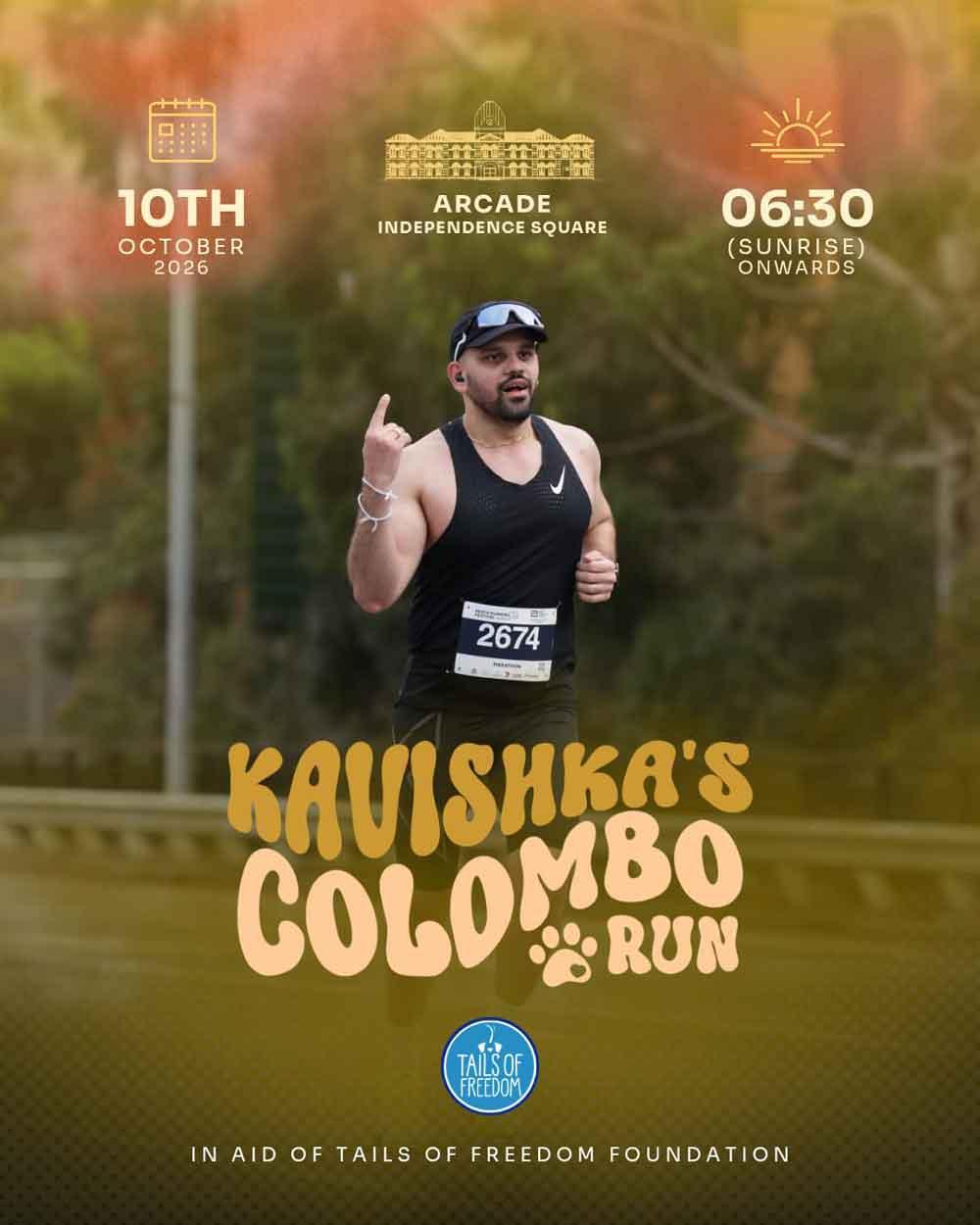
Colombo already has a great running scene and plenty of races, but I wanted to create something that's about people more than the clock. I turn 30 this week, and instead of celebrating with a party, on the 10th of October, I wanted to do something that brings the city together and gives something back. Kavishka's Colombo Run is open to everyone, from seasoned marathoners to people who have never run at all, and it's for a cause. Tails of Freedom (ToF) is a registered animal welfare organization based in Sri Lanka, committed to rescuing, rehabilitating and rehoming companion animals that have been neglected, abused or exploited by the country’s unregulated commercial breeding industry. I'd love it to be one of the biggest runs Colombo has seen, but more than the numbers, I want everyone who shows up to feel they belong at that start line, whatever their pace.
8. Why Tails of Freedom? What made you want this particular run to support animal welfare?
Every runner in Colombo has met the street dogs on their morning route. They're out there at 5am just like us, and they depend entirely on people to look out for them. Tails of Freedom is a dog rescue initiative doing the hard, unglamorous work of helping those who can't speak for themselves. A run is about moving freely, and I liked the idea of those of us who get to run for fun doing it for dogs who've had a tough start in life. It's also a cause that's easy to rally around, because almost everyone has a soft spot for a dog.
10. Colombo’s running scene has grown quite a bit. What do you think is behind that? Why are people suddenly so keen to wake up at 5am and voluntarily suffer together?
I think it's social at heart. Running used to be seen as a solitary, serious thing. Now it's a way to meet people, and social media has made it visible and inviting. Run clubs make it easy to start: you turn up, nobody judges your pace, and you're instantly part of a group. It's also one of the most accessible sports there is. All you need is a pair of shoes and a road. The cafés and brands like Under Armour and Street Burger have helped too, because the coffee, breakfast and giveaways turn a workout into a social and rewarding morning. And honestly, the suffering is the bonding. You will never forget the person who suffered next to you.
11. You’re now in the position of telling other people to push themselves. Who tells you to push yourself?
A lot of people, actually. My wife and my son give me a reason bigger than myself. My wife, Saseni, and I are actually expecting a daughter as well, so this gives me another huge reason to push myself every day. My father started all of this, and he still sets the standard for work ethic that I try to match. My mother and two younger brothers keep me focused as well. My training partner, Sandev Fernando, whom I was lucky to meet along my running journey, gives me a huge reason to wake up so early and hit our training sessions together hard. My run community keeps me honest, because I can't ask people to show up at dawn and then skip my own session. And then there's the clock. I've run three marathons and none of them under three hours, so my sub-three target in London doesn't let me relax.
14. You’re currently training for the London Marathon in April 2027. Tell us a little about that journey so far.
London is my first World Marathon Major and a dream I've held for a long time, and I'll be running it representing Sri Lanka. I'm following a 42-week training plan built around a sub-three-hour target. I have three marathon medals and none of them are under three hours, so this one is personal. The Singapore Marathon on 6th December is my tune-up race along the way. I'm documenting the whole thing in a series called Road to London: the good weeks and the bad ones, the early mornings, and balancing training with being a dad, a husband and a full-time professional. I want people to see what a big goal actually looks like day to day, not just the finish line.
15. What’s still unfinished for you? Is there a race you want to run, a time you want to beat, or something completely outside running that you want to take on?
The sub-three marathon is the obvious one, and London is the stage I want to try it on. Beyond that, I'd love to see how many of the World Marathon Majors I can tick off. Outside running, I want to keep building new businesses alongside our family company, and keep growing the run community here in Sri Lanka, helping more people discover running the way I did. And one day, I'd love to stand at a start line with my kids.
17. One last one. After everything you’ve put yourself through, what still gets you excited enough to put your shoes on and go?
I can confidently and proudly say that many people in Sri Lanka, and perhaps even overseas, have taken up the beautiful journey of running because of me. They’ve seen the videos I’ve posted, and every time I go to a running event in Colombo, or even meet people in public, a lot of people tell me the same thing: that I inspired them to start running. That is one of the best feelings in the world. I can never let go of my running shoes because knowing that I can inspire more people and set that example will always motivate me. And, of course, the thought of representing Sri Lanka at the London Marathon gets me out of bed on the hardest mornings.