KING CHARLES FACES RENEWED DEMANDS FOR SLAVERY REPARATIONS AS CARIBBEAN NATIONS SEEK JUSTICE.
By: Giselle Gunewardene
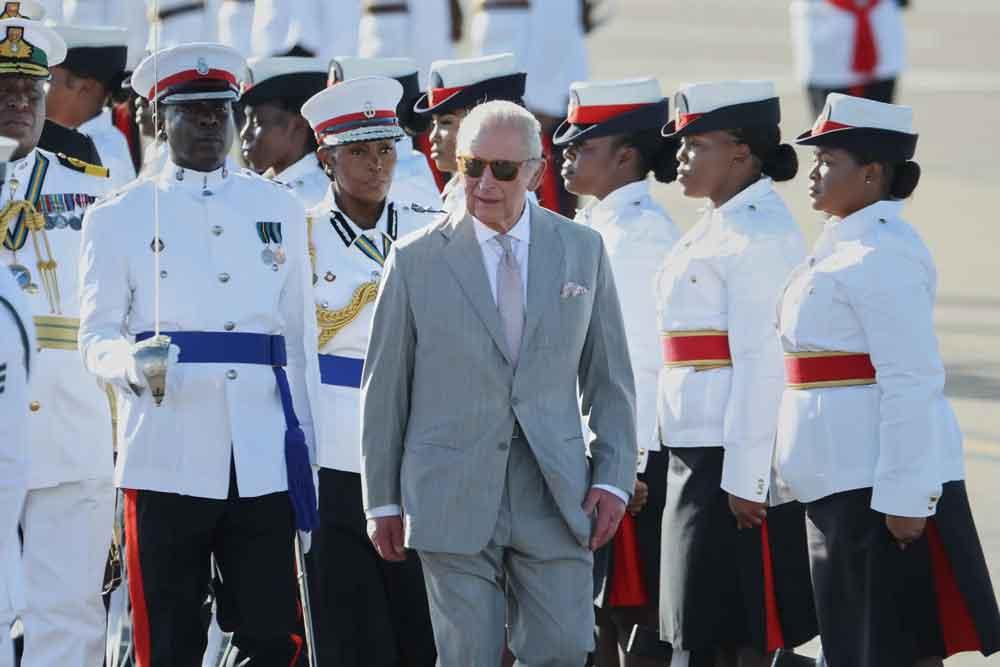
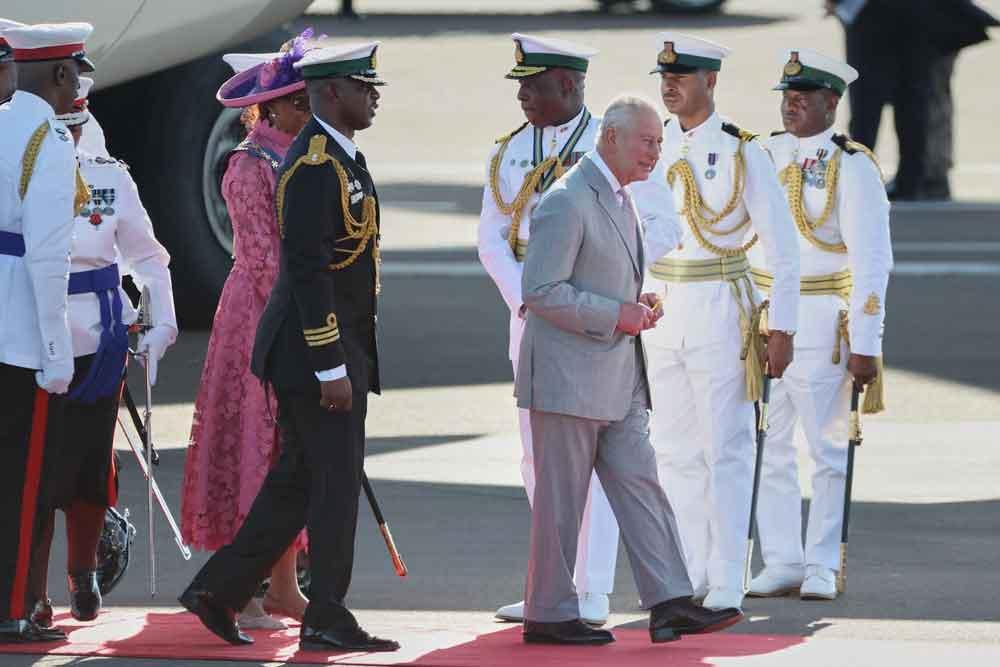
King Charles III has arrived in the Caribbean at a moment when the ceremonial traditions of royal diplomacy are increasingly overshadowed by demands for historical justice. His nine-day tour of the Bahamas, Guyana and Antigua and Barbuda comes amid renewed calls for Britain to formally apologise and provide reparations for its involvement in the transatlantic slave trade. What might once have been regarded primarily as a diplomatic visit has become an important test of the relationship between the British monarchy and countries shaped by centuries of colonial rule. For Caribbean campaigners, the central issue extends beyond expressions of regret. They want meaningful acknowledgement of historical responsibility, accompanied by practical measures to address the enduring consequences of slavery. The King's visit, which began on the 27th of October, will culminate in the Commonwealth Heads of Government Meeting in Antigua and Barbuda from the 1st to the 4th of November. The gathering brings together representatives of 56 countries, providing a prominent international setting for discussions about colonial history, economic inequality and reparatory justice. Although Buckingham Palace has confirmed that Charles will not offer a formal apology during the tour, the debate surrounding his visit has intensified.
A Royal Visit Under Historical Scrutiny
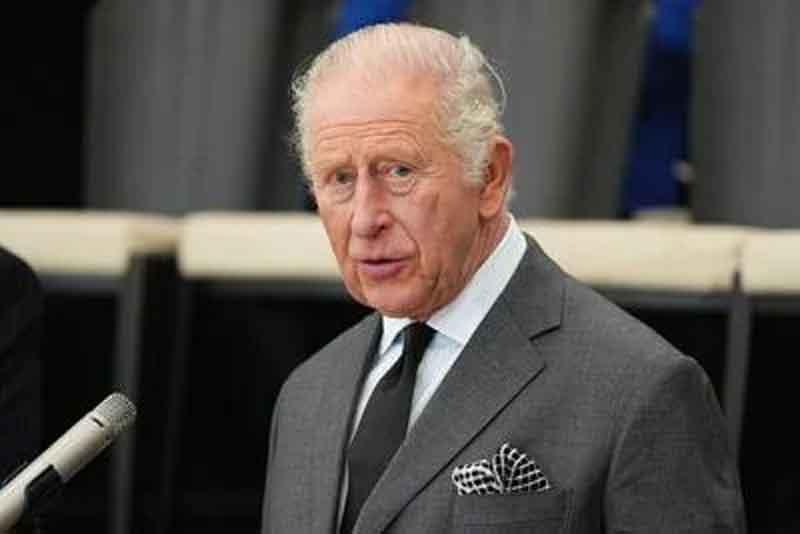
In the Bahamas, King Charles acknowledged the suffering and injustices associated with slavery during an address at a youth event in Clifford Park, where the country's independence was proclaimed in 1973. He recognised that aspects of contemporary Bahamian culture had emerged from a painful historical experience and confirmed that Commonwealth leaders would discuss slavery's legacy at their forthcoming summit. His remarks represented a continuation of his willingness to address difficult aspects of Britain's imperial history. Nevertheless, they stopped short of the formal apology sought by reparations campaigners. A small group of protesters gathered outside the event, carrying placards demanding compensation. The contrasting scenes illustrated the complexity of the royal visit. While official engagements celebrated cultural achievements and contemporary partnerships, campaigners used the occasion to draw attention to unresolved historical grievances. For those seeking reparations, expressions of sorrow are insufficient without an accompanying commitment to accountability. Buckingham Palace has maintained that the King's programme will concentrate principally on present-day cooperation and future opportunities, while acknowledging the darker chapters of the relationship between Britain and the Caribbean.
The Historical Foundations of the Reparations Debate
The demands confronting King Charles are rooted in the history of the transatlantic slave trade, which forcibly transported millions of Africans to the Americas over several centuries. Britain became one of the principal European powers involved in this system. British merchants, plantation owners, investors and commercial institutions benefited from the exploitation of enslaved Africans, particularly across Caribbean colonies producing sugar and other valuable commodities. Historians estimate that British ships transported approximately 3.2 million enslaved Africans across the Atlantic. The British Parliament abolished the slave trade in 1807, although slavery itself continued throughout much of the British Empire until emancipation legislation took effect in the 1830s.
One particularly contentious aspect of abolition was the compensation awarded to slave owners for the loss of what the law had treated as their property. Formerly enslaved people received no equivalent compensation for their suffering, unpaid labour or deprivation of freedom. This historical imbalance remains central to contemporary arguments for reparatory justice. Campaigners contend that slavery was not merely an individual moral wrongdoing but an economic and political system whose consequences continued long after emancipation. They argue that wealth accumulated through plantation economies contributed to British prosperity, while formerly enslaved communities faced profound disadvantages that persisted across generations.
What Caribbean Nations Are Demanding
The Caribbean Community, commonly known as CARICOM, has developed a coordinated approach to reparatory justice. Its longstanding ten-point reparations plan identifies several areas for potential action, including formal apologies, educational initiatives, cultural institutions, public health programmes, debt cancellation and economic development. The framework demonstrates that reparations are not necessarily limited to direct financial payments. Supporters envisage a broader process addressing the social, cultural and economic consequences of enslavement and colonial exploitation. Caribbean leaders have increasingly sought to elevate these demands within international diplomacy. Guyana's President Irfaan Ali has argued that recognition of slavery's historical horrors should be followed by a formal apology. Meanwhile, former Saint Vincent and the Grenadines Prime Minister Ralph Gonsalves has called for an unequivocal apology and structured discussions about reparatory justice. Jamaica has also pursued a separate legal initiative, submitting a petition concerning slavery reparations to the British monarch in September. These developments indicate that the movement is operating through several channels, including diplomatic engagement, public campaigning and legal proceedings. However, Caribbean countries do not necessarily share identical priorities or approaches, and the form of any eventual settlement remains uncertain.
Britain's Position Remains Unchanged
Despite mounting diplomatic pressure, the British government's position has remained resistant to financial reparations. Successive governments have acknowledged the brutality of slavery while declining to accept demands for compensation. The current government maintains that historical injustices should be recognised and discussed but has not committed to financial settlements. British officials have also raised legal considerations concerning historical conduct and the difficulty of applying contemporary legal standards retrospectively. Reparations advocates dispute the suggestion that historical legality resolves questions of responsibility. They distinguish between the laws that permitted slavery and the broader moral and political obligations arising from its consequences. King Charles occupies a particularly sensitive constitutional position within this disagreement. Although he is head of state in several Caribbean countries, the monarch acts in accordance with constitutional conventions and government advice. An official royal apology involving questions of state responsibility would therefore carry implications beyond the King's personal views. Buckingham Palace has emphasised that decisions concerning reparations are principally matters for governments. This distinction helps explain why Charles can acknowledge historical suffering without committing Britain to compensation or issuing the formal apology demanded by campaigners.
The Monarchy's Changing Relationship With the Caribbean
The reparations debate is unfolding alongside broader questions about the future of the British monarchy in the Caribbean. Although many former British colonies remain members of the Commonwealth, membership does not require recognition of the British monarch as head of state. Guyana became a republic in 1970, while Barbados removed the monarch as head of state in 2021. The Bahamas and Antigua and Barbuda continue to recognise King Charles as their constitutional monarch, although republican movements have gained attention in both countries. For some campaigners, the monarchy represents a continuing institutional connection to colonial rule. Others distinguish between maintaining constitutional arrangements and pursuing historical accountability, regarding the two questions as related but not inseparable. Royal visits have increasingly exposed these competing perspectives. During the Prince and Princess of Wales's Caribbean tour in 2022, demonstrations and criticism of particular public engagements highlighted changing attitudes towards Britain's royal family. The current visit therefore takes place within a wider regional reassessment of sovereignty, national identity and historical relationships. Whether these discussions ultimately produce constitutional change will depend on political processes within individual countries rather than decisions made by the British monarch alone.
Why the Commonwealth Summit Matters
The forthcoming Commonwealth summit provides an opportunity for Caribbean leaders to raise reparations directly within a prominent diplomatic forum. The organisation encompasses countries with different histories, economic circumstances and political priorities, making consensus on contentious issues challenging. Climate resilience, trade, development and international cooperation are among the subjects expected to feature prominently in Antigua and Barbuda. Reparations are not currently listed as a formal agenda item, although Caribbean representatives have indicated their intention to raise the issue. This distinction is significant. Discussion among leaders would not automatically establish a negotiating process, produce a financial commitment or create a binding international agreement. Nevertheless, campaigners believe that sustained diplomatic engagement could gradually shift the debate from symbolic acknowledgement towards practical proposals. The Commonwealth's emphasis on cooperation and shared values may also provide a framework for discussing historical injustice without requiring every member country to adopt an identical position. For Britain, the challenge involves maintaining productive relationships with Caribbean partners while defending its existing position against financial reparations.
A Debate Extending Beyond the Caribbean
The demands directed at King Charles form part of a wider international discussion about colonialism, slavery and historical accountability. European countries have faced increasing scrutiny over their involvement in the slave trade, while museums, universities and other institutions have investigated historical connections to enslavement. The Netherlands has taken a different approach from Britain, with King Willem-Alexander formally apologising in 2023 for his country's historical involvement in slavery. Such developments have strengthened arguments that public institutions can acknowledge responsibility more explicitly without necessarily resolving every financial or legal question. Within Britain, opinions remain divided. Supporters of reparations argue that meaningful reconciliation requires more than commemorative statements.
Critics question how responsibility should be assigned across generations, how compensation could be calculated and whether contemporary taxpayers should bear financial obligations for historical actions. These disagreements reflect substantial differences over justice, responsibility and the appropriate relationship between historical wrongs and present-day policy. They also demonstrate why the issue cannot easily be resolved through a single royal speech or diplomatic declaration.
The Unfinished Conversation
As King Charles continues his Caribbean tour, the immediate question is not whether Britain will announce a reparations settlement. No such commitment has been made. Instead, attention is turning towards whether Commonwealth leaders can establish a more substantive dialogue about the consequences of slavery and the possibilities for addressing them. For Caribbean campaigners, an apology would represent an important acknowledgement, but not necessarily the conclusion of their demands. For the British government, the priority remains engagement without accepting financial liability. Between these positions stands a monarch seeking to recognise historical suffering while operating within constitutional and diplomatic constraints. The significance of this visit may ultimately depend less on its ceremonies than on the conversations it encourages after the royal delegation departs. The legacy of slavery remains part of the relationship between Britain and the Caribbean. How that history is acknowledged, debated and addressed will continue to shape the region's political relationships long after the Commonwealth summit concludes.