Featuring Viren Beruwalage on Built to Inspire
Changing the Game Beyond the Field - The Courage to Think Differently

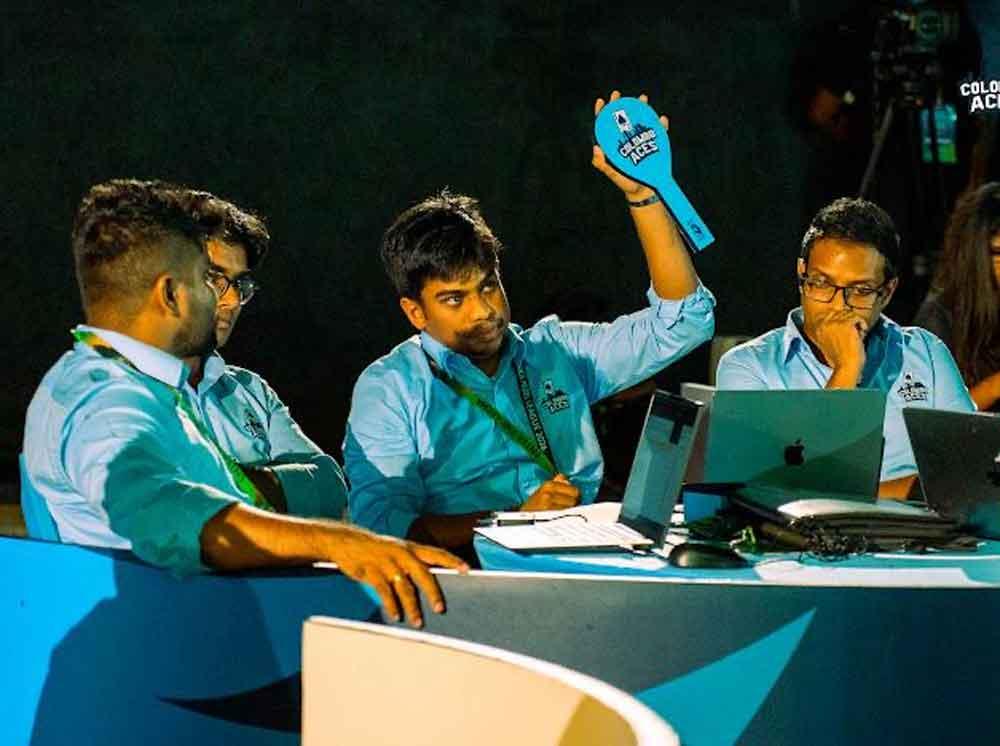
At 27, Viren Beruwalage wears many hats. He is an economist, policy researcher, founder of Eye on Econ, and principal owner of Colombo Aces, one of Sri Lanka's pioneering multi-sport franchises. But his story isn't simply about sports. It's about refusing to inherit a path. Coming from a family of lawyers and engineers, Viren could have chosen certainty. Instead, he chose economics, public policy, and eventually a niche field almost unheard of in Sri Lanka, sports economics. Along the way, health setbacks reshaped his outlook on life. "I didn't know when I'd be under the knife next," he says. That uncertainty taught him to make every day count. Today, he is trying to answer a question that few in Sri Lanka are asking: Can sport be treated not just as entertainment, but as an economic force that shapes communities, livelihoods, and national progress?
Q: Viren, you are an economist, a policy researcher, and a sports entrepreneur. You are also the founder of Eye on Econ and the principal owner of Colombo Aces. What made you want to pursue such an unconventional path?
Sport has always been a huge part of my life. Unfortunately, because of a few health setbacks growing up, becoming a professional athlete was never really an option. But I always wanted sport to remain a part of my life in some way. At the same time, I was deeply interested in economics and public policy. I completed my undergraduate degree in Economics at St Andrews University, pursued a Master's in Economic Policy at King's College London, and I am currently back at St Andrews pursuing a second Master's in Economics. The more I studied, the more I realized that economics is ultimately about resource allocation and human behavior. In finance, technology, and energy, there are think tanks and research institutes that study these sectors extensively. But in sport, especially in South Asia, there was a vacuum. We invest heavily in sport, emotionally and financially, but there is very little research on whether those investments are creating meaningful outcomes. I saw an opportunity to bring together my academic background and my passion for sport and create something entirely new
Q: Is that how Eye on Econ was born?
Exactly. Eye on Econ actually started in 2021 as a YouTube channel during the pandemic. I was using real world examples to explain complex economic concepts. Around the same time, I had another channel called Eye on Cricket because I was fascinated by sport. But gradually I began asking bigger questions. Why don't we have sports economics research in Sri Lanka? Why don't we evaluate sports policies the same way we evaluate economic policies? Why don't we track the social and economic impact of sport? That was the beginning of Eye on Econ as a sports economics think tank. The goal is to study sport through data, governance, and public policy. I want to create a framework where decisions about sports are based on evidence, where we understand the costs and benefits, and where we can make better decisions for athletes, federations, sponsors, and the country as a whole.
Q: Were there people who influenced this way of thinking?
Absolutely. I was fortunate to work alongside brilliant people early in my career. I have to credit the late Professor Rohan Samarajiva and Helani Galpaya at Learn Asia. Their work on the digital economy and public policy showed me how research can shape entire industries. At St Andrews, Professor McCrorie also had a profound impact on me. He helped me realize that economic models are far more flexible than people think. You can apply them to anything. You can study coaching performance, athlete development, fan engagement, sponsorship returns, or the economics of sports clubs. That is when it clicked for me. If we can analyze public policy, technology, and finance this way, surely, we can do the same for sport..
Q: Alongside Eye on Econ, you also became the founder and principal owner of Colombo
Aces, one of Sri Lanka's first cross sport franchises. How did that happen?
Quite organically actually. We first entered a padel league and formed a team called Colombo Aces. At that point there was no grand vision. But after winning the league, my co- founders and I began thinking more seriously about what we could build. Later, when Mahela, Shamal and Shoaib approached me regarding the Ceylon Golf League, it felt like a natural progression. Today Colombo Aces spans multiple sports including padel, golf, and cricket. But what excites me most is not the trophies or the competition. It is creating opportunities. We want to create an ecosystem where athletes feel supported, where they can develop over time, and where they feel they belong to something bigger than themselves
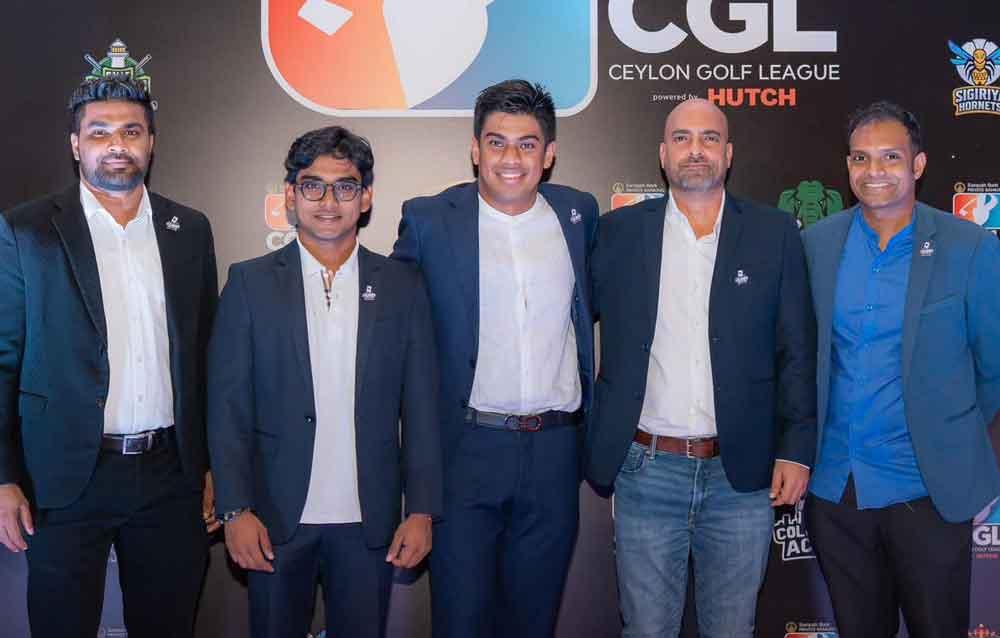
Q: What is your long- term vision for Colombo Aces?
The vision is much bigger than winning championships. I want Colombo Aces to become a platform that nurtures talent and creates pathways for athletes. One of my favorite examples is a twelve-year-old golfer from Anuradhapura who played for us. Through the franchise model she received exposure, media attention, and the opportunity to compete alongside senior players in a professional environment. Without structures like this, talented young athletes often go unnoticed. We want to identify talent, support them, and track their progress over time. I also want to expand beyond performance metrics. I want us to understand athlete wellbeing, mental health, education, commitment levels, and long-term development. Sport is not just about results. It is about building people.
Q: You speak about data and economics a lot. Why is measuring sport so important?
Because we cannot improve what we do not measure. In Sri Lanka, sport is often treated purely as entertainment. Governments fund it. Private companies sponsor it. Fans passionately support it. Athletes dedicate their lives to it. But very rarely do we ask whether the systems are actually working.
Are federations allocating resources effectively?
Are grassroots programs producing long term outcomes?
What is the return on investment for sponsors?
Which interventions actually improve athlete performance?
These are questions economists ask every day in other sectors.

I believe sport deserves the same level of scrutiny. My dream is for Eye on Econ is to publish annual reports on sport much like how central banks publish reports on the economy. I want stakeholders to understand where we are succeeding, where we are falling short, and where the opportunities lie.
Q: You come across as incredibly confident and clear about your purpose. Where does that confidence come from?
I think it comes from adversity. Growing up, I had a few health setbacks that changed my perspective on life. They made me realize that every day matters because you never really know what tomorrow looks like. I was fortunate to have parents who went above and beyond to support me and ensure I had every opportunity to pursue my interests. At the same time, I found my identity through the performing arts. I have to thank Aunt Mary and the Mary Anne Singers because the stage became my best friend. It gave me confidence and helped me discover my voice. Later, debating and Model United Nations at Colombo International School strengthened that even further. Those experiences taught me that ideas matter and that you should never be afraid to question existing systems..
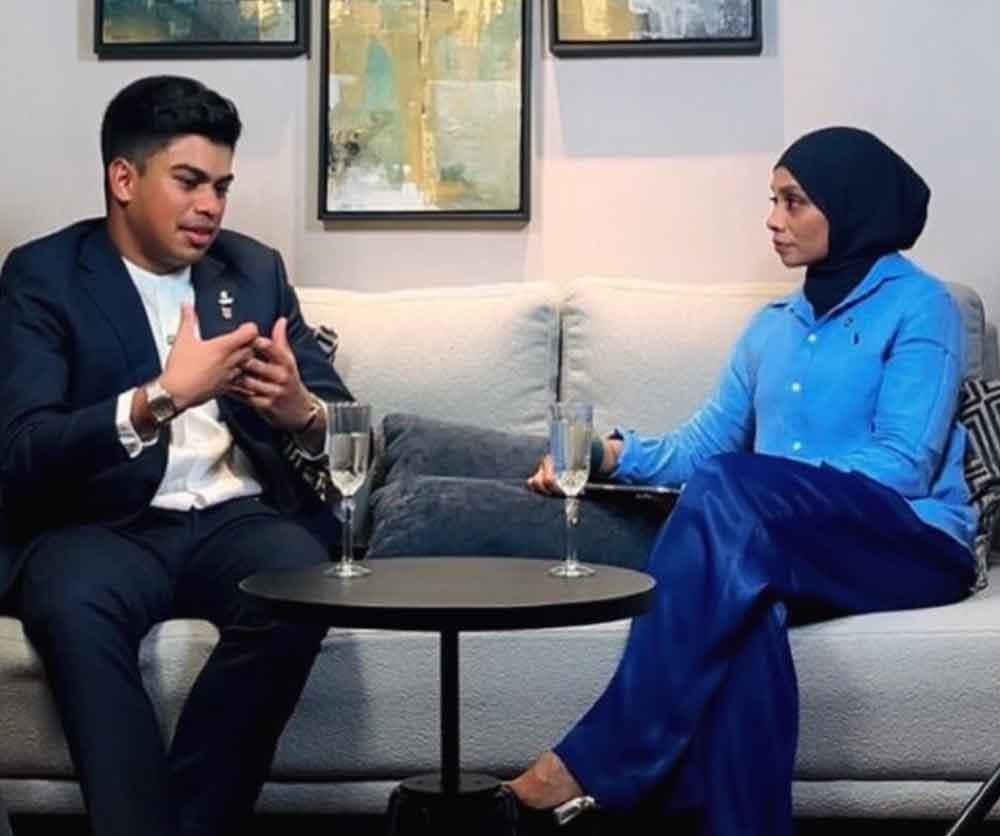
Q: Your academic journey has taken you to institutions like St Andrews and King's College London. How did those experiences shape your thinking?
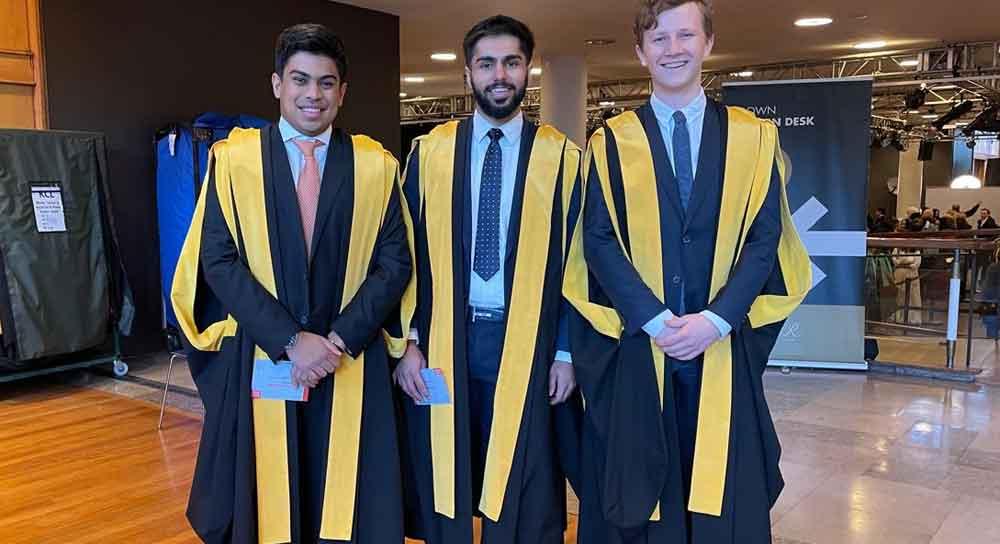
They completely changed the way I view leadership and society. At St Andrews, I had the privilege of serving as the first South Asian Vice President of the Union Debating Society and became an honorary life member of the Students' Union. I had conversations with global leaders and even interviewed former Australian Prime Minister Kevin Rudd. What struck me most was how open these spaces were to disagreement. You could challenge politicians. You could critique policies. You could ask difficult questions. Nobody saw it as disrespectful. That culture of constructive debate taught me that progress comes from discourse. I think Sri Lanka needs more of that. We need more evidence-based discussions. We need institutions that are willing to challenge themselves and evolve.
Q: Looking back, did you ever imagine you would be doing this today?
Not exactly. I come from a family where I could have easily followed a more traditional career path. I could have become a lawyer. I could have become an engineer. I would have had all the support in the world. But I never wanted to inherit a legacy. I wanted to create one. It took me a while to find my path. There were moments where I questioned myself. Moments where I stayed in academia longer because it felt safe. But eventually everything clicked. I realized that economics, public policy, governance, and sport could coexist. And once I saw that possibility, I knew I had to pursue it.
Final Thoughts
At twenty-seven, Viren Beruwalage is not simply building sports franchises. He is attempting to build a new language around sport in Sri Lanka. One where data matters. Where governance matters. Where athletes are supported beyond the field. And where sport is recognized not only as entertainment, but as an economic force capable of transforming communities and shaping societies. His journey is proof that sometimes the most meaningful careers are not found on well- worn paths. Sometimes they are created by people willing to ask a simple question. What if we could do things differently? And then having the courage to build the answer themselves.