In Conversation with Venya Wijegoonewardene
From Colombo to Chief Strategy Officer: Building a Global Career Through Curiosity, Courage and Instinct.
Venya Wijegoonewardene's career has been shaped not by rigid plans, but by curiosity, courage and an unwavering willingness to trust her instincts. Raised in Colombo and educated at Colombo International School, she initially seemed destined to follow a family tradition in medicine. Instead, a series of bold decisions led her to study law in the United Kingdom before unexpectedly finding her true calling in the world of media, communications and strategy. Today, as Chief Strategy Officer of Spark Foundry UK, part of Publicis Groupe, she sits at the forefront of an industry being transformed by technology, culture and artificial intelligence. Along the way, she has worked on some of the world's most iconic brands, built high-performing teams and established herself as one of the most respected strategic leaders in the business. In this conversation, Venya reflects on leadership, resilience, identity, creativity and the lessons she has learned while building a global career without losing sight of her Sri Lankan roots.
You began your journey at Colombo International School. What early experiences there shaped your ambitions?
I've always had an insatiable curiosity about the world. I wanted to understand why things happen, how systems work and what drives people. Looking back, that curiosity has probably been the most consistent thread throughout my life and career. I was fortunate to grow up in a very inclusive environment. I was never far from a book and was always seeking out ideas, music and perspectives that sat slightly outside the mainstream. I found myself drawn to people who saw the world differently because I was fascinated by the way they thought. That exposure taught me early that there is rarely only one way to look at a problem. One of the defining experiences of my time at Colombo International School was becoming Head Girl. It was the first significant leadership role I held and one that I worked very hard to achieve. What I enjoyed most was bringing together a diverse group of people and finding common ground between them. Leadership, I discovered, was not about authority. It was about creating a shared sense of purpose and helping people work towards something together. CIS also gave me a belief that the world was accessible. It felt as though opportunities were available to anyone willing to pursue them with enough determination. That mindset has stayed with me. Even now, when I face a challenge or an unfamiliar situation, I often return to that early belief that curiosity and hard work can take you further than you imagine.
Can you share with us a summary of your personal journey?
I grew up in Colombo in a large, close-knit family that gave me equal measures of love, support and perspective. While ambition was always encouraged, an older brother and a lively group of cousins ensured I stayed grounded and never took myself too seriously. As a teenager, I was highly structured and convinced I had my future mapped out. Like my father, brother and generations before them, I assumed I would study medicine and follow a well-established family path.
Everything changed during a summer internship at Leisure Times. What began as a temporary opportunity became a turning point. Through journalism, entertainment and culture, I discovered a world that felt exciting, creative and full of possibility. Reviewing restaurants, attending performances and meeting people from different walks of life challenged my assumptions about what I wanted from my future and prompted me to reconsider medicine. Trusting my instincts for the first time, I chose to study law and moved to the United Kingdom for university. That decision marked the beginning of a career that has been anything but conventional. After completing a law degree and a Master's at King's College London, I entered the media industry through Publicis Groupe. Today, as Chief Strategy Officer of Spark Foundry UK, I can see how every unexpected turn helped shape the journey.
Growing up in Sri Lanka, did you always envision an international career, or did that evolve later?
I always imagined an international career and was eager to explore the world beyond Sri Lanka. As a teenager, I imagined careers followed a clear, linear path, but experience quickly taught me otherwise. My journey has been shaped by unexpected turns, from studying in Bristol and completing a Master's degree in London to briefly pursuing law before discovering the media industry. There were several moments that could have led me in entirely different directions, including opportunities outside advertising. What remained constant, however, was a commitment to learning and growth. Rather than focusing solely on promotions or titles, I concentrated on building skills, gaining diverse experiences and becoming the kind of leader I wanted to be. Looking back, my career feels less like climbing a ladder and more like building a portfolio of experiences. Each role taught me something valuable and ultimately contributed to the path that has brought me to where I am today.
What motivated your decision to pursue higher education in the UK?
My decision to study in the UK was initially driven by a desire to pursue law within one of the world's strongest legal education systems. What I did not anticipate was how transformative the experience would be beyond the classroom. Moving abroad at eighteen taught me independence, resilience and adaptability. I had to build a new life, navigate a different culture and find my place far from home. At times, I felt caught between being deeply Sri Lankan and adapting to life in Britain, but that experience ultimately became a strength. It taught me to embrace complexity and recognise the value of existing between different worlds. Later, my Master's degree at King's College London reflected a growing interest in intellectual property and media law. By then, London had become more than a place to study. Its energy, diversity and sense of possibility played a significant role in shaping both my personal and professional journey.
Looking back, what aspects of your Sri Lankan upbringing still influence how you think and work today?
Probably more than I consciously realise. The strongest influence is community. Growing up in Sri Lanka, particularly in a large family, teaches you that very little exists in isolation. Decisions, celebrations and even setbacks are shared experiences. You learn to think collectively rather than individually. That philosophy has shaped the way I lead. I don't believe leadership is about hierarchy. I believe it is about creating an environment where people feel valued, connected and motivated to do their best work together. Another influence is warmth. There is a generosity of spirit that I associate strongly with Sri Lankan culture.
People are naturally welcoming, open and interested in one another. I try to bring those qualities into every room I enter, whether I'm meeting a client, leading a team or mentoring someone earlier in their career. Perhaps the most significant influence is resilience. Sri Lanka has taught generations of people how to adapt, endure and move forward despite uncertainty. That mindset has been invaluable throughout my career. Over time, I have consciously changed the way I think about setbacks. Rather than seeing failure as something personal, I view it as information. Of course, disappointment still hurts. I still feel frustrated when things don't work out. But I recover more quickly because I immediately begin asking what I can learn from the experience. That perspective has helped me navigate challenges without allowing them to define me.
What first drew you to the media and communications industry?
My interest in media began during an internship at Leisure Times, where I was first exposed to the worlds of culture, entertainment and storytelling. But the defining moment came after completing my Master's degree. I was working in intellectual property and media law, enjoying the intellectual challenge but feeling increasingly constrained creatively. Around that time, while exploring different career paths, I reached the final stages of recruitment with McKinsey. One senior partner remarked that management consultancy might not be creative enough for me. At the time, I was disappointed, but in hindsight, he was absolutely right. Soon after, I attended a graduate open day at Zenith with little understanding of what a media agency actually did. The moment I walked through the doors, something clicked. The combination of creativity, strategy, technology and consumer behaviour felt like the perfect fit. Nearly two decades later, that excitement remains. What continues to inspire me is the constant evolution of the industry. From digital transformation to artificial intelligence, media sits at the intersection of culture, technology and business, ensuring there is always something new to learn.
Can you walk us through the key turning points that led you to your current leadership role?
One of the earliest turning points was failing a contract law exam during my first year at university. At the time, it felt catastrophic. I had always been academically successful and suddenly I was confronted with failure in a very tangible way. Yet that setback forced me to become resourceful. Instead of following the conventional route, I pursued internships and opportunities that broadened my experience. The next major turning point was discovering the media industry through Zenith. Working on O2 provided an incredible foundation. It exposed me to major sponsorships, partnerships and strategic challenges that accelerated my development. My time at Dentsu working on Diageo brands was equally transformative. It was there that I truly developed confidence in my strategic abilities. Winning multiple IPA Effectiveness Awards reinforced my belief that creativity and commercial success are deeply connected. Joining Brainlabs represented another significant chapter. Building a communications strategy practice from scratch pushed me far beyond my comfort zone. It required me to think about leadership, growth, operations and culture in entirely new ways. Those experiences taught me how to build teams, make difficult decisions and lead through uncertainty. Each stage added something different, and together they created the foundation for my current role.
What has been the most defining moment of your corporate journey so far?
Without question, becoming Chief Strategy Officer of Spark Foundry UK in 2024. The significance goes far beyond the title itself. It represented a moment of clarity. For years, my career had felt exciting but nonlinear. There were unexpected turns, risks, failures and reinventions along the way. When I stepped into this role, I suddenly realised that every one of those experiences had contributed something valuable. It was also the moment when I genuinely felt that I had found my voice as a leader. That doesn't mean self-doubt disappeared. I still experience imposter syndrome. I still prepare carefully before major presentations and important meetings. I still have moments where I question myself. The difference is that I no longer view those feelings as evidence that I don't belong. Instead, I recognise them as a natural part of growth. What makes the role particularly meaningful is the opportunity to shape the future of an industry undergoing enormous transformation. We are living through one of the most exciting periods in media history, driven by technological innovation, changing consumer behaviours and the rise of artificial intelligence. Being part of an organisation that is actively helping define that future is both a privilege and a responsibility. More than anything, though, becoming Chief Strategy Officer represented a personal milestone. It was the moment when I looked back at the journey and realised that every challenge, every instinctive decision and every unexpected opportunity had brought me exactly where I was meant to be.
How did you navigate being a young professional from Sri Lanka in a highly competitive UK industry?
With a lot of hustle, humility and determination. When I graduated in 2008, the world was in the middle of a financial crisis. Jobs were disappearing overnight and, as a Sri Lankan national who required visa sponsorship, I faced additional challenges. Many of the traditional routes available to my peers simply were not available to me in the same way. At the time, it felt frustrating. Looking back, it was one of the best things that could have happened to me. Constraints force creativity. They push you to find alternative routes and build resilience. I learned very quickly that nothing was going to be handed to me and that every opportunity would need to be earned. That mindset has stayed with me throughout my career. I never assumed I was entitled to a seat at the table. Instead, I focused on delivering exceptional work, learning as much as possible and creating value wherever I could. There were also moments when I felt like an outsider. I still walk into rooms where people who look like me are underrepresented in leadership positions. Occasionally, people are surprised when they discover what role I hold. Early on, those moments affected me more than they do now. What helped was finding mentors, colleagues and clients who saw potential in me and championed my work. More importantly, I learned to trust my own abilities. Confidence does not come from always feeling certain. It comes from repeatedly proving to yourself that you can handle challenges, even when you feel uncertain.
What leadership qualities have you had to develop the most over time?
The first is kindness. People often assume leadership requires toughness above all else, but I believe kindness is one of the most important qualities a leader can possess. That does not mean avoiding difficult conversations. In fact, quite the opposite. It means being willing to have honest conversations while treating people with dignity and respect. Some of the most valuable feedback I have ever received was difficult to hear. Equally, some of the most meaningful conversations I have had as a leader involved telling someone something they may not have wanted to hear. Feedback is a gift when it is delivered thoughtfully.
The second quality is accountability. Leadership is ultimately about trust. People need to know that you will follow through on commitments, own mistakes and take responsibility for outcomes. Accountability creates credibility and credibility creates influence. The third is tenacity. Over time, I have realised that determination is one of my defining characteristics. I work hard, I care deeply about what I do, and I am prepared to persist when things become difficult. Tenacity has helped me navigate setbacks, advocate for ideas I believe in and continue moving forward when circumstances are challenging. These qualities may sound simple but developing them takes time. Leadership is not a destination. It is a continual process of learning and growth.
How do you approach strategy differently today compared to when you first started?
When I started my career, I thought strategy was about finding the smartest answer and building the perfect recommendation. Over time, I realised that great strategy is not just about being right, it is about creating belief. Even the strongest ideas only have value if people understand them, connect with them and act on them. Today, I focus as much on the human side of strategy as the analytical side, asking how ideas can resonate emotionally and inspire action. I have also become far more comfortable with ambiguity. The most important strategic challenges rarely have a single right answer, and the role of a strategist is to navigate uncertainty thoughtfully. Most importantly, I no longer believe great ideas come from individuals working alone. The strongest thinking emerges through collaboration, with diverse perspectives helping to challenge assumptions, sharpen ideas and create more meaningful outcomes.
What challenges have you faced as a woman rising to senior leadership in media?
Many of the challenges women face in leadership are often subtle rather than obvious. They appear in everyday moments, having your ideas overlooked, being interrupted or navigating conflicting expectations about how women should lead. Women are often expected to strike an impossible balance between being authoritative and approachable. While I have been fortunate to have strong supporters throughout my career, I have learned that confidence cannot rely solely on external validation. At some point, you have to believe you belong, take opportunities and advocate for your own value. Equally important is creating opportunities for others. Representation matters because seeing people with similar backgrounds succeed expands what others believe is possible. That is why I care deeply about mentorship, sponsorship and advocacy. Real progress happens when those in leadership actively help others rise, ensuring that talent, regardless of background, has the opportunity to thrive and succeed.
How do you balance creativity with commercial pressures in your role?
I have never viewed creativity and commercial success as opposing forces. In my experience, the most effective and commercially successful work is often the most creative. Creativity captures attention, creates emotional connections and makes brands memorable, all of which contribute directly to business growth. Working on brands such as Guinness, Baileys and Gordon's Gin reinforced my belief that bold, creative thinking can drive exceptional commercial results. However, creativity is most powerful when supported by strong strategic foundations. Understanding audiences, market dynamics and business objectives is essential. I also believe constraints can be a catalyst for innovation. Tight budgets, ambitious deadlines and complex challenges often force teams to think more creatively and focus on what matters most. Ultimately, the best work combines imagination with rigour.
Creativity and commercial performance are not competing priorities; they are partners. When they work together, they create meaningful impact for both brands and businesses.
How has your Sri Lankan identity influenced your perspective in global media strategy?
My Sri Lankan identity has shaped both how I see the world and how I approach strategy. Growing up in Sri Lanka exposed me to diverse cultures, perspectives and experiences, teaching me that complexity and nuance are often where the most valuable insights lie. Coming from a smaller market has also given me a different lens through which to view global challenges, helping me identify opportunities that others may overlook. I am particularly interested in how South Asian philosophies, with their focus on interconnectedness and systems thinking, can enrich modern strategy. Above all, Sri Lanka taught me the importance of storytelling, empathy and human connection, principles that remain central to everything I do.
Do you feel a responsibility to represent South Asian voices in the industry?
Absolutely. When I began my career, there were very few South Asian women in senior strategic leadership roles, and that absence of representation was impossible to ignore. Seeing people who share aspects of your background succeed can expand your sense of what is possible, which is why representation matters so much. As my career has progressed, I have felt a growing responsibility not only to succeed myself but also to help create opportunities for others. That means mentoring emerging talent, sharing my experiences honestly and advocating for more inclusive workplaces. I believe it is important to talk about setbacks and self-doubt as openly as successes, because careers are rarely as straightforward as they appear from the outside. I also try to use whatever influence I have to champion talented people whose voices may otherwise go unheard. Diverse teams bring broader perspectives, stronger ideas and better outcomes. For me, supporting greater representation is both a responsibility and a privilege, and I hope my journey encourages others to believe that similar paths are possible for them too.
What differences stand out most between working cultures in Sri Lanka and the UK?
Both Sri Lanka and the UK have shaped the way I work and lead. The UK workplace places a strong emphasis on structure, efficiency and direct communication, which has sharpened my strategic thinking and ability to operate in fast paced environments. Sri Lanka, meanwhile, has taught me resilience, resourcefulness and adaptability. Working in a smaller economy often requires people to find creative solutions with limited resources, fostering an entrepreneurial mindset and a remarkable ability to navigate challenges. What stands out most, however, is the warmth of Sri Lankan culture. Relationships matter deeply, and people bring a strong sense of humanity to professional interactions. If I could combine the best of both worlds, I would take Sri Lankan warmth, resilience and ingenuity and pair them with British rigour, ambition and discipline. That balance is something I strive to bring to my own leadership style, creating environments where people feel supported while also being inspired to achieve excellence.
What habits or routines keep you grounded despite a high-pressure career?
Running is probably the most important one. There is something incredibly liberating about stepping away from a screen, putting on a pair of trainers and spending time outdoors. Some of my best thinking happens when I am not actively trying to solve a problem. Ideas often emerge while I am running because my mind finally has space to wander.
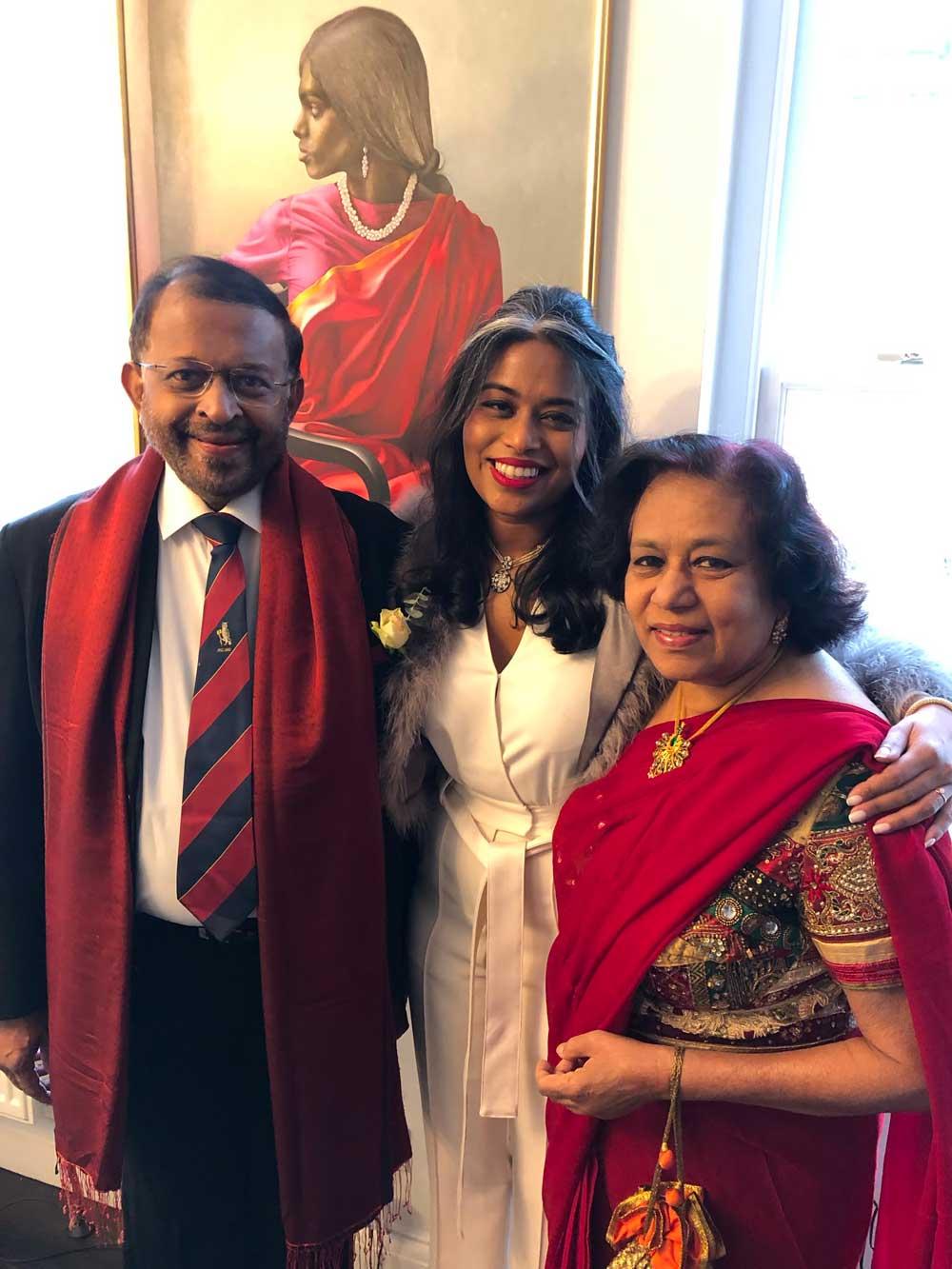
I have also become much more intentional about friendships as I have grown older. I am fortunate to have a close circle of friends from different stages of my life. Some are from school in Colombo, some from university and others from the industry. Those relationships provide perspective and remind me that there is far more to life than work. Family remains another important anchor. No matter what is happening professionally, family has a way of keeping everything in proportion. And then there is Sri Lanka. Every time I return home, even for a short visit, I feel recalibrated. The food, the family, the conversations and the familiar energy of Colombo reconnect me with a part of myself that can sometimes get lost in the pace of daily life. Home reminds me where I came from and what truly matters. Over the years, I have learned that staying grounded is not about achieving perfect balance. It is about creating regular moments that reconnect you with yourself, your values and the people you care about.
Have you faced any form of discrimination in the UK?
Not in any overt or significant way. London, in particular, is one of the most diverse and open cities in the world. It has provided me with extraordinary opportunities, and I have generally felt welcomed throughout my career. That said, there have been occasional moments that reflect some of the subtler realities of being different. Sometimes people assume you are more junior than you are. Sometimes they are surprised when they realise you are leading the meeting rather than attending it. Sometimes your name is mispronounced repeatedly without anyone making the effort to learn it properly. These moments are rarely malicious, but they can be reminders that representation at senior levels still matters. Early in my career, I probably spent more time worrying about those things than I do now. As I have become more confident, I have learned to focus my energy elsewhere. I would rather invest my time in doing great work, building strong relationships and creating opportunities for others than dwelling on assumptions that people may make. What stands out to me far more than those occasional challenges is the generosity I have experienced. Throughout my career, there have been mentors, leaders, colleagues and clients who supported me, believed in me and opened doors. Their impact has been far greater than any isolated moments of bias.
How do you define success for yourself today, and has that definition changed over time?
My definition of success has evolved significantly over the years. Early in my career, success was largely measured by external markers such as promotions, titles, awards and professional milestones. I was highly goal oriented and constantly focused on achieving the next objective. Success felt like a destination that could be reached through accomplishment alone. Today, I see it very differently. While achievement still matters, success is more about impact than recognition. It is about doing meaningful work, creating environments where people can thrive and helping others grow. Some of my greatest satisfaction now comes from seeing colleagues develop into confident leaders and achieve things they once thought impossible. I have also learned that sustainable success requires balance. Careers are built over decades, not short bursts of relentless effort. Maintaining strong relationships, protecting time for creativity and prioritising wellbeing are just as important as professional achievement. Increasingly, I think about legacy: whether I have helped others, created opportunities and left a positive impact that extends beyond my own career.
What advice would you give young Sri Lankan women aspiring to build global careers?
My advice to young Sri Lankan women aspiring to build global careers is simple: back yourself. Many talented women wait until they feel completely ready before pursuing opportunities, but confidence is built through action, not certainty. Be willing to take risks, even when the path ahead feels unclear. Don't be afraid of unconventional journeys. Some of the most important opportunities in my life came from unexpected places, and often the alternative route proves more rewarding than the original plan. Equally important is investing in relationships. Mentors, colleagues, friends and champions can provide guidance, support and perspective throughout your career. Trust your instincts. Some of the biggest decisions I have made were driven by intuition rather than analysis, and those instincts were shaped by experience and self-awareness. Most importantly, embrace your Sri Lankan identity. The qualities it gives you, warmth, adaptability, resilience and a unique perspective, are strengths, not limitations. Finally, be ambitious but patient. Careers are built over decades, so think long term while continuing to seize opportunities and advocate for yourself.
Where do you see yourself ten years from now?
If you had asked me this question when I was seventeen, I would have had a very detailed answer. I used to be the queen of the ten-year plan. Everything was mapped out with remarkable precision. The reality, of course, is that very little unfolded exactly as I expected. That experience has taught me to leave room for uncertainty and possibility. What I do know is that I want to continue doing work that excites me intellectually and creatively. Curiosity has always been one of my biggest drivers and I hope that never changes. I am increasingly drawn to building things. Whether that takes the form of a new business, a new venture or a different kind of leadership opportunity, I suspect entrepreneurship will play a larger role in my future. I also hope to deepen my connection with Sri Lanka. I would love to contribute more actively to the country's creative and professional communities. Sri Lanka has extraordinary talent and enormous potential. If I can play a role in creating bridges between that talent and the global industry, that would be deeply meaningful. Beyond those aspirations, I am deliberately leaving space for the unexpected. Some of the most important opportunities in my life arrived completely unplanned. I have learned that while ambition is important, flexibility can be just as valuable.
Who do you look up to for mentorship or inspiration?
My greatest sources of inspiration have always been my family. My parents instilled in me both confidence and discipline, encouraging ambition while emphasising the importance of hard work and perseverance. They taught me to believe in my potential, but also that achievement requires commitment and effort. My wider family has been equally influential, providing support, perspective and humour throughout every stage of my life and career. Professionally, I have never relied on a single mentor. Instead, I have built what I call a ‘merry band’ of mentors, a diverse network of people whose experiences and perspectives challenge and inspire me in different ways. Some are senior industry leaders whose strategic thinking I deeply admire, while others are peers who encourage me to see challenges from new angles. Beyond the professional world, I am inspired by people who have forged their own paths and remained true to themselves. The individuals I admire most combine ambition with kindness, intellectual curiosity with humility, and professional success with genuine humanity. That balance is something I continually strive towards in both my leadership and my life.