Sir Vince Cable: Why India and China Will Shape the 21st Century.
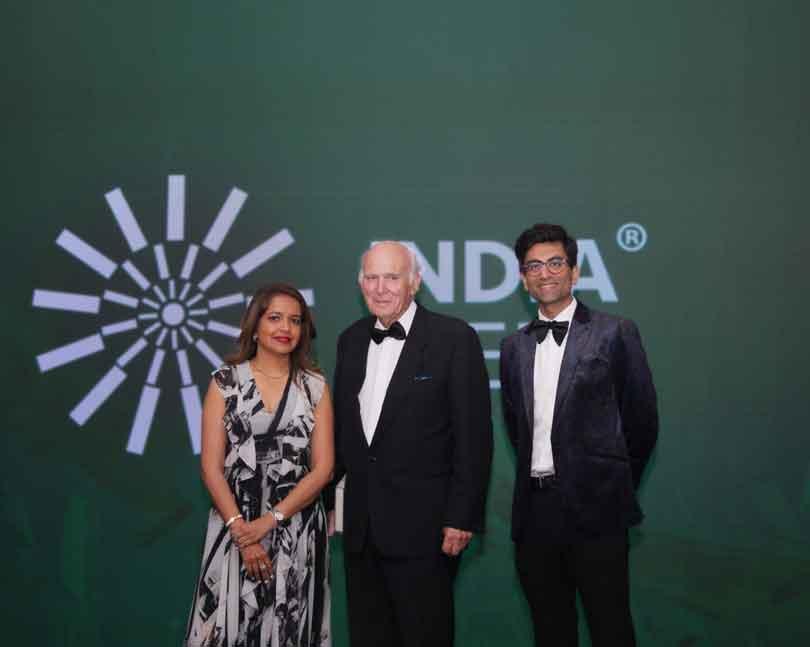
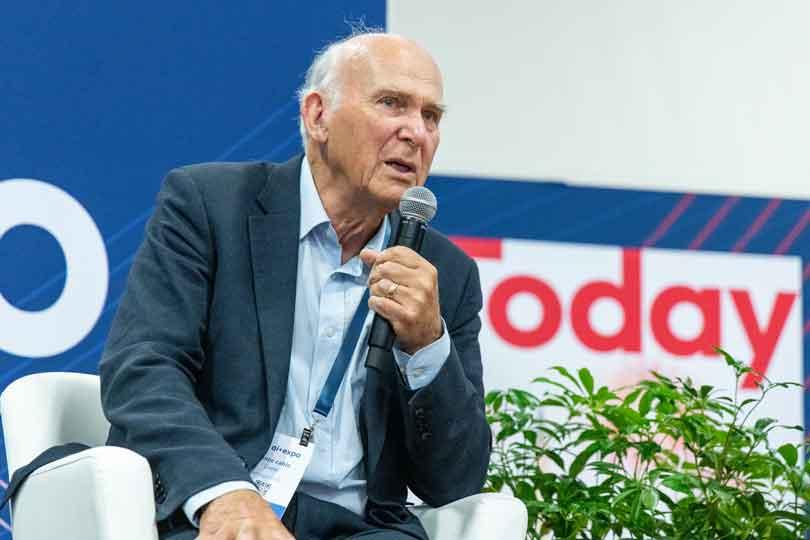
I was first introduced to Sir Vince Cable at the Black-Tie Celebratory Dinner hosted by Prateik Dattani, Founder, Bridge India, on the 29th of May, as part of India Week 2026 at the Royal Lancaster Hotel in Kensington, London. The evening brought together an influential gathering of policymakers, business leaders, academics, entrepreneurs and members of the diplomatic community, creating a vibrant platform for discussions on the future of global trade, diplomacy and economic cooperation. During the event, I had the privilege of engaging Sir Vince in a 45-minute fireside chat on stage, where we discussed the shifting balance of global power, the rise of Asia, and the economic and geopolitical realities of an increasingly multipolar world. His ability to distil complex economic trends into clear, accessible insights, combined with his decades of experience in public service and international affairs, captivated the audience and sparked a lively exchange of ideas. Our conversation centred on his latest book, Eclipsing the West: China, India and the Forging of a New World, a timely and thought-provoking analysis of how the rise of India and China is reshaping the global order. In the book, Sir Vince argues that the centre of economic and political gravity is steadily moving eastwards, challenging assumptions that have long underpinned Western dominance and forcing governments, businesses and policymakers to rethink their place in a rapidly changing world.
Sir Vince Cable is widely recognised as one of Britain’s leading economists, politicians and public intellectuals. Prior to entering frontline politics, he served as Chief Economist at Shell and worked as the Treasury Finance Officer for the Government of Kenya under the ODI Fellowship programme. He later became a leading figure within the Liberal Democrats, serving as Secretary of State for Business, Innovation and Skills from 2010 to 2015 in the UK Coalition Government and subsequently as Leader of the Liberal Democrats from 2017 to 2019. Renowned for warning of the global financial crisis before it unfolded, he has earned widespread respect as one of Britain's most perceptive economic thinkers.
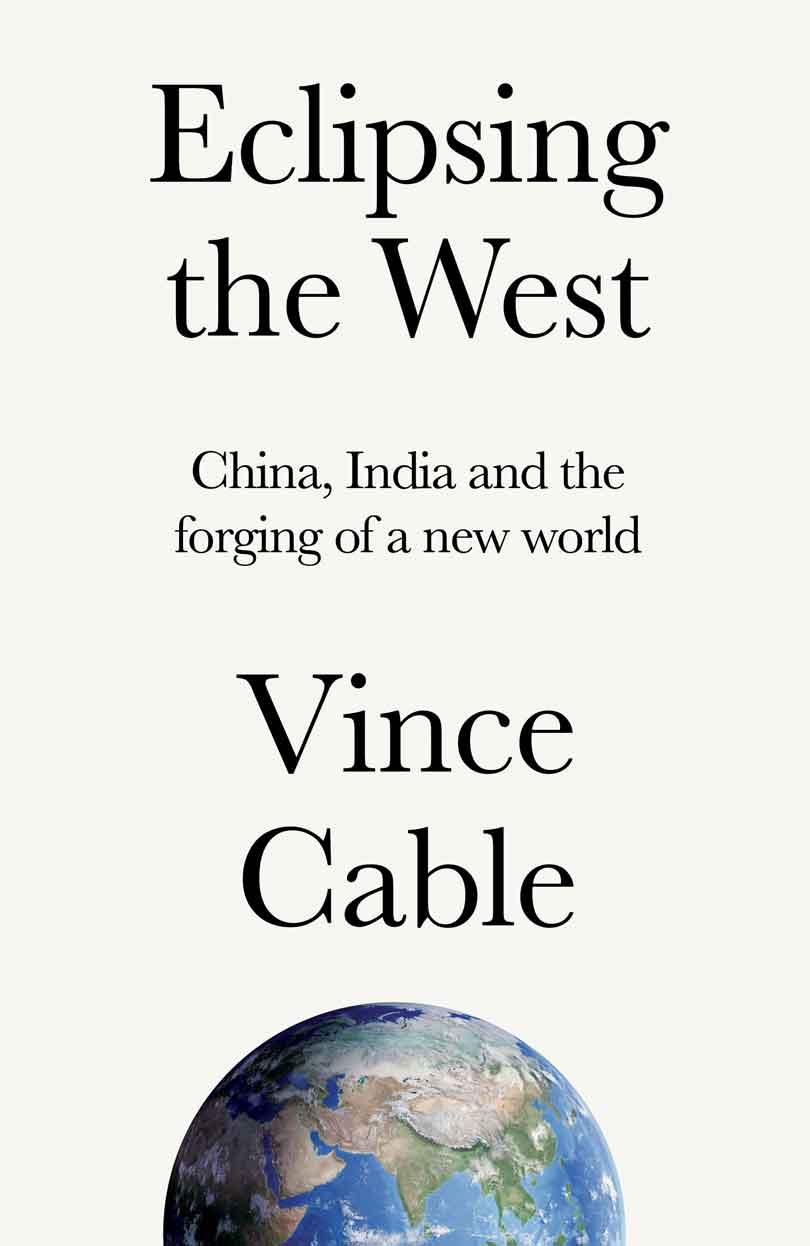
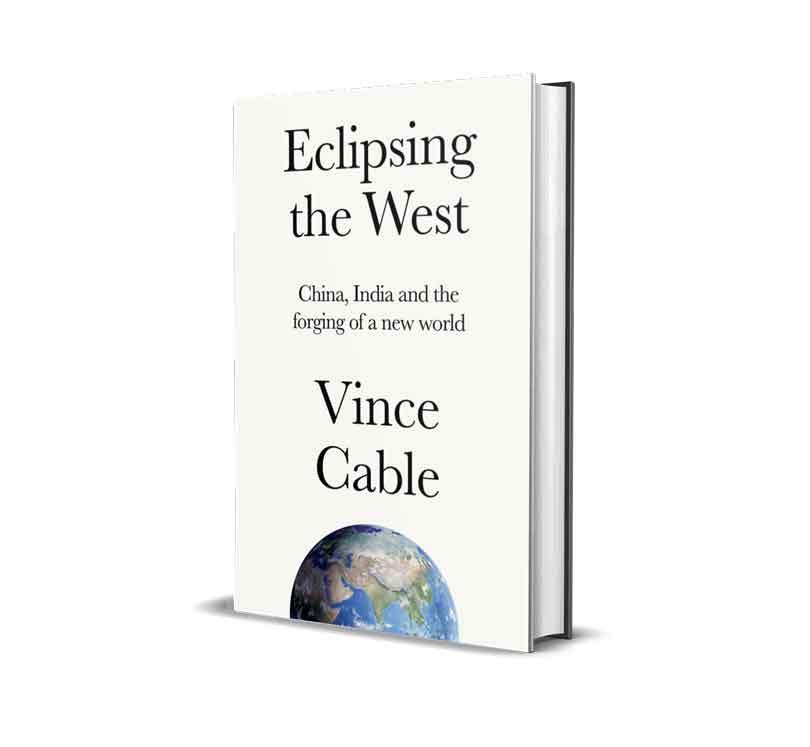
A prolific author, Sir Vince has written extensively on economics, politics and global affairs. In Eclipsing the West, he examines the extraordinary rise of Asia’s two giants and explores how their expanding economic, political and technological influence is transforming international relations, global commerce and the balance of power in the twenty-first century. The book offers a compelling argument that the future of the world economy will increasingly be shaped not in Washington, London or Brussels, but in New Delhi and Beijing. In this exclusive interview, arranged by Curzon PR, Sir Vince Cable shares his insights on India’s extraordinary economic rise, the challenges confronting China, Britain’s place in an increasingly multipolar world, and the opportunities and lessons that countries such as Sri Lanka can draw from Asia’s ongoing transformation. Drawing on decades of experience as an economist, policymaker and author, Sir Vince offers a thoughtful and compelling perspective on the global forces that are reshaping the international landscape and are set to define the decades ahead.
What inspired you to write Eclipsing the West?
The central motivation was the recognition that we are living through one of the most profound shifts in global history. For several centuries, economic and political power was concentrated in Europe and later North America. Yet within my lifetime, we have witnessed the extraordinary rise of Asia, particularly India and China. The conventional narrative in many Western countries has often underestimated the scale and significance of this transformation. I wanted to examine how these two countries emerged from poverty and relative isolation to become major forces shaping the global economy. The book is not simply about economics. It is also about politics, demographics, technology, culture and international relations. India and China are not merely large countries; they are increasingly acting as superstates whose decisions affect every region of the world.
The title suggests that the West is being eclipsed. Is this decline inevitable?
Not necessarily. The word “eclipsing” is important. An eclipse does not mean disappearance. It means that something else is moving into greater prominence. The West remains enormously influential. The United States continues to lead many of the most important technological developments, particularly in artificial intelligence. There is a remarkable innovation ecosystem there that should not be underestimated. However, the reality is that emerging economies are catching up. As countries become wealthier and more technologically advanced, their share of global economic output naturally increases. That process is already happening. The rise of India and China is therefore less about Western collapse and more about the rest of the world achieving levels of prosperity and influence that were previously concentrated in a handful of countries.
You compare the development paths of India and China. What makes that comparison so fascinating?
They have followed radically different models. China pursued rapid industrialisation through a highly centralised political system. It created an export-led manufacturing powerhouse and achieved one of the fastest economic transformations in human history. India took a different route. It remained democratic, often chaotic, and at times frustratingly bureaucratic. Yet despite those challenges, it has demonstrated remarkable resilience and adaptability. The contrast allows us to examine an important question: can democracy deliver sustained economic growth on the same scale as authoritarian systems? India’s experience increasingly suggests that it can.
You highlight the reforms of former Indian Prime Minister Dr. Manmohan Singh as a turning point. Why were they so important?
The early 1990s represented a defining moment for India. The country faced a severe balance-of-payments crisis and was forced to confront longstanding structural weaknesses. As Finance Minister, Manmohan Singh introduced a series of reforms that fundamentally changed India’s economic trajectory. Import barriers were reduced. Excessive regulation was dismantled. The notorious Permit Raj was gradually weakened. The economy became more open and competitive. The results were extraordinary. India experienced periods of growth approaching ten percent annually. Those reforms unleashed entrepreneurial energy that had been constrained for decades. Even though different governments have come and gone, the broad direction of economic policy has remained remarkably consistent.
How do you assess Prime Minister Narendra Modi’s economic legacy?
Prime Minister Modi has largely continued the reform trajectory that began before him. His administration has pursued infrastructure development, digitalisation and efforts to improve the ease of doing business. While there are debates about specific policies, the broader commitment to economic modernisation has remained intact. India today is the fastest-growing major economy in the world. That does not mean it is without problems. There are still significant regional inequalities, unemployment challenges and underdeveloped areas. But the overall direction remains positive.
What challenges continue to hold India back?
India missed much of the manufacturing export boom that helped transform China. There are also significant disparities between regions. Southern states have generally benefited more from economic growth than parts of northern India. Infrastructure gaps remain. Educational outcomes vary widely. However, these challenges should not obscure the broader success story. India’s achievements over the past three decades have been remarkable, and there remains enormous potential for future growth.
As an economist, how has your view of Asia evolved over the decades?
My perspective has consistently been that Asia’s potential has been underestimated. When I was younger, countries such as Bangladesh were often dismissed as economic failures. Yet Bangladesh has achieved impressive progress. Vietnam has transformed itself into a major manufacturing centre. Many Southeast Asian economies have performed exceptionally well. The same applies to Sri Lanka. Despite its recent difficulties, it possesses significant potential. The broader lesson is that Western observers have repeatedly underestimated Asia’s capacity for development and innovation.
What is the biggest misconception the West has about Asia?
Historically, there was a deeply flawed assumption that Asian cultures were somehow less compatible with entrepreneurship, innovation or risk-taking. These stereotypes emerged during colonial times and reflected racial prejudices rather than reality. The evidence today completely disproves those assumptions. Many of the most impressive economic transformations of the modern era have occurred in Asia. The entrepreneurial energy, educational achievement and work ethic demonstrated across the region have shattered outdated narratives.
Looking ahead to 2050, which country is likely to wield greater influence: India or China?
Many people assume China’s dominance is inevitable. I think that is far from certain. China has achieved extraordinary success, but it faces serious challenges. Demographic decline is perhaps the most important. The population is ageing rapidly, and the consequences of the one-child policy continue to shape society. The country is also dealing with difficulties in its property sector and broader economic management challenges. India, by contrast, has a younger population and considerable growth potential. If current trends continue, India could emerge as an equal or even greater global influence by mid-century.
You describe India and China as “frenemies.” How fragile is their relationship?
It is more fragile than many people realise. Relations are currently relatively stable, and there is increasing trade and investment. However, unresolved border disputes remain. There have been military clashes in recent years, and thousands of miles of territory remain contested. The situation becomes even more complex when Pakistan and the United States are added to the equation. What appears to be a bilateral relationship is actually part of a much larger geopolitical puzzle.
If tensions between China and the United States worsen, where does India stand?
Officially, India prefers what it calls “multi-alignment.” It does not want to be forced into choosing sides. However, many within India’s strategic establishment view the United States as an important security partner. If US-China rivalry intensifies significantly, India will find it increasingly difficult to remain entirely neutral. The challenge for India, and indeed for much of Asia, will be maintaining strategic autonomy while navigating growing competition between the world’s two largest powers.
What role should middle powers such as Britain, Japan and Australia play?
Middle powers are becoming increasingly important. The world is not simply divided between superpowers and everyone else. Countries such as Japan, Australia, Germany and the United Kingdom have substantial influence. Their role should be to strengthen international institutions, promote stability and resist the tendency toward polarisation. Smaller and medium-sized states often have a strong interest in preserving a rules-based international order because they are most vulnerable when great powers behave irresponsibly.
How do you view Britain’s position in this changing world?
Britain has made life more difficult for itself through Brexit. Membership of the European Union amplified Britain’s influence and attractiveness as a destination for investment. Leaving created new barriers and reduced some of the advantages we previously enjoyed. The country remains strong in many respects, but it faces important strategic choices about its future relationships and economic direction.
What would be your top priorities for Britain over the next quarter century?
First, invest heavily in skills and education. Second, rebuild practical and constructive relationships with Europe. Third, improve access to finance for high-growth companies. Britain has excellent entrepreneurs and innovative businesses, but too many struggle to secure the capital they need to expand. Those are issues that need urgent attention.
If you were starting your career today at thirty years old, where would you focus your energies?
I would want exposure to several regions rather than betting everything on one. I would certainly want a stake in India because of its growth potential. I would maintain a base in Britain because of its strong institutions, universities and legal system.
I would also remain internationally minded. The future belongs to people who can navigate multiple markets and multiple cultures rather than thinking within narrow national boundaries.
Are you already thinking about your next book?
Yes. I have recently ventured into fiction and discovered that I enjoy it enormously. Having experimented with writing a political thriller with elements of romance, I may well continue in that direction. It offers a different way of exploring political ideas and human behaviour.
You are currently on a book tour. Any plans to visit South Asia?
I would certainly welcome the opportunity. South Asia remains a region of enormous importance and potential, and I have long taken a keen interest in its development. I have visited India on numerous occasions over the years and continue to follow developments across the region very closely. Sri Lanka, in particular, is a country that I have great affection for and one whose progress I watch with considerable interest. I am currently involved with the Overseas Development Institute, which works alongside institutions such as the University of Colombo and other organisations committed to supporting Sri Lanka’s economic and social development. While Sri Lanka has faced significant challenges in recent years, I remain optimistic about its future. The country possesses a wealth of talented individuals, strong institutions, and considerable untapped potential. With the right policies and leadership, I believe Sri Lanka can build on its strengths and emerge even stronger in the years ahead. I would be delighted to extend my book tour to Sri Lanka and would very much welcome the opportunity to engage with readers there.
----------------------------
As our conversation drew to a close, Sir Vince Cable returned to the central theme of Eclipsing the West, that the future will not be defined by Western decline alone, but by the remarkable rise of societies that were once underestimated. His message is both a warning and an opportunity. The world is entering an era in which India and China will increasingly shape global economics, technology, diplomacy and security. For countries such as Sri Lanka, understanding this shift is not merely an academic exercise; it is essential preparation for the decades ahead. Whether one agrees with all of his conclusions or not, Sir Vince Cable offers a compelling and deeply informed perspective on the forces transforming our world. Eclipsing the West is therefore more than a book about two countries; it is a guide to understanding the century now unfolding before us.
To Buy The Book Visit: https://manchesteruniversitypress.co.uk/9781526179821/
Sir Vince Cable - Online: www.vincecable.org | X: @vincecable | Instagram: @sirvincecable