Be unsure whether you’re interested romantically.

Nichol Fernando
You wake up already convinced it will be a bad day.
The alarm feels more irritating than usual. The weather seems dull. Someone replies to your message with a single word and you immediately assume they are upset. On the way to work or class, you notice every impatient driver, every unfriendly expression and every small inconvenience that appears to confirm what you decided before leaving your bed.
By evening, you think, “I knew today would be terrible”.
Perhaps it was.
But perhaps you were also looking for proof.
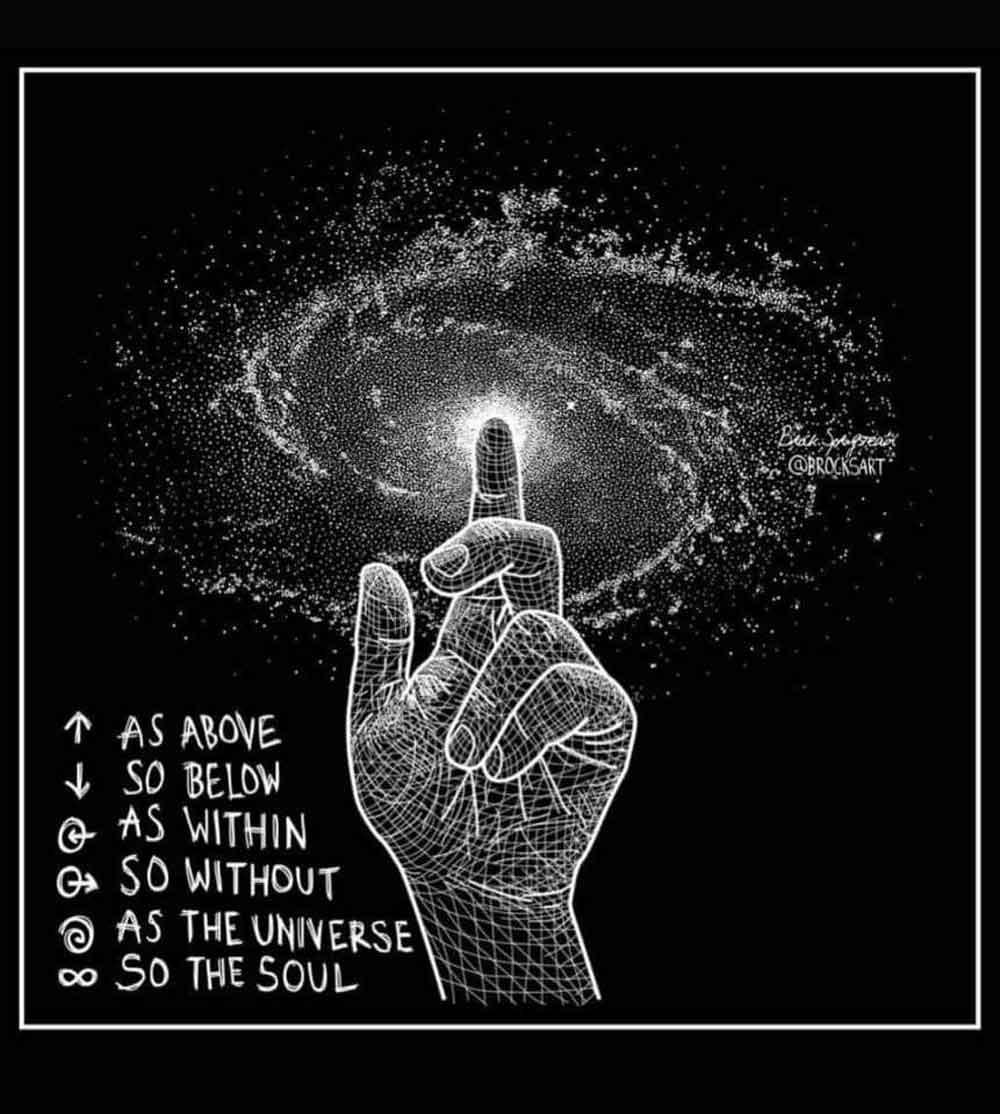
The ancient Hermetic principle states, “As within, so without, as above, so below, as the universe, so the soul.” It sounds mysterious at first, like something written to be admired rather than understood. Yet beneath its grand language is a surprisingly familiar idea: what exists within us shapes what we notice, how we interpret it and eventually, the kind of world we experience.
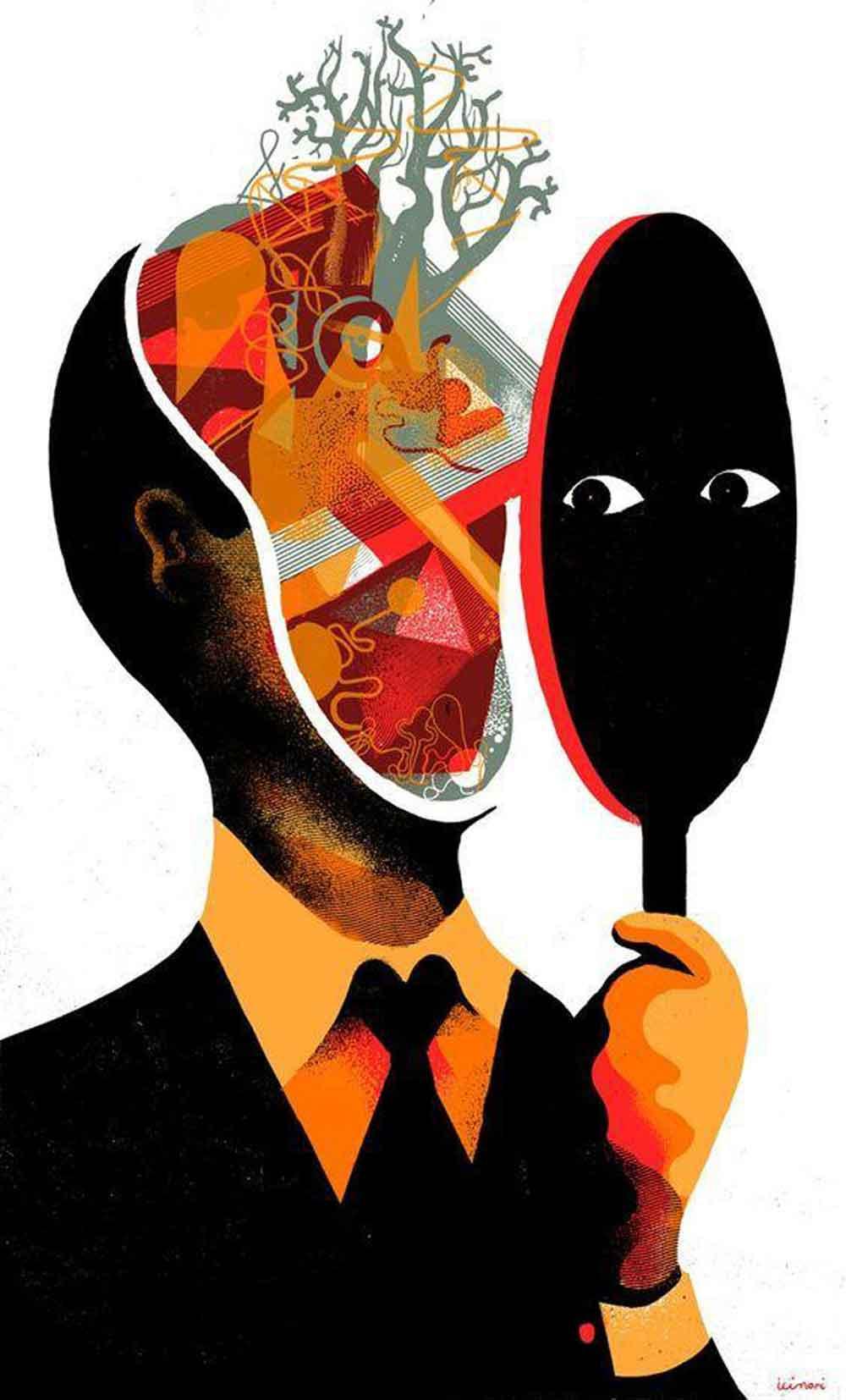
Our inner life does not remain hidden simply because no one else can see it.
It follows us into rooms.
It enters conversations before we speak. It influences the meaning we attach to silence, the opportunities we recognise, the people we trust and the risks we are willing to take. Our thoughts may be invisible, but the lives they help create are not.
“As within” refers to the private world of beliefs, emotions, expectations and fears we carry inside ourselves. “So without” is the way that world becomes visible through our actions, relationships and surroundings. What is above; the conscious mind, our intentions and ideas, eventually appears below, in the body, our behaviour and the life taking shape around us.
The principle is not necessarily claiming that every event is summoned by thought. People do not deserve every misfortune that reaches them and positive thinking cannot prevent illness, loss or injustice. The world contains circumstances far beyond personal control.
However, even when we cannot control what happens, our inner state often determines what we see within what happens.
The brain is constantly receiving more information than it could possibly examine. Colours, voices, faces, movements, memories and sensations compete for our attention every second. To cope with this, it filters. One system associated with alertness and attention is the reticular activating system, often shortened to the RAS. It helps the mind prioritise what appears relevant.
This is why a police officer may notice behaviour that seems suspicious while everyone else walks past. A salesperson may recognise the small hesitation that suggests a customer is uncertain. Someone planning to buy a particular car suddenly begins seeing that model everywhere.
The cars did not suddenly appear.
Their attention changed.
Our beliefs can tune attention in a similar way. When someone believes they are unlikable, they may notice every interrupted conversation and forgotten invitation while overlooking the people who enjoy their company. Someone who expects failure may treat every mistake as evidence that they should stop. Someone who believes possibilities exist may notice an opening where another person sees only an inconvenience.
The world has not necessarily changed between them.
The frequency has.
This does not mean that perception is magical. It means that attention is selective and what we repeatedly focus on begins to feel like the whole truth. We gather evidence for the stories we already carry. Eventually, those stories affect how we behave and our behaviour may encourage the very outcome we expected.
A person who assumes others will reject them may become distant. Their distance may make others withdraw. That withdrawal then feels like proof that the original belief was correct.
The inner fear creates an outer pattern.
The same process can move in a kinder direction. Someone who enters a room expecting warmth may appear more approachable. They make eye contact, begin conversations and respond openly. Others naturally become more comfortable around them. What began as an internal expectation becomes visible in posture, tone and action, before returning as an external experience.
As within, so without.
We often notice this on good days. You begin the morning feeling grateful or strangely at peace. Nothing extraordinary has happened, but everything seems to move more gently. A conversation flows. A stranger appears kinder. A delay feels manageable rather than insulting. Even a problem seems less like proof that life is against you and more like something that can be solved.
Then there are days when the opposite happens.
You are anxious, exhausted or angry and the world appears to develop sharp edges. A harmless comment sounds insulting. A slow reply feels like rejection. Minor setbacks gather until they seem to form a conspiracy. It may feel as though the universe has changed its attitude towards you, when perhaps you are meeting the same world through a more wounded version of yourself.
Inner chaos does not always cause outer chaos, but it can make chaos easier to see and harder to survive.
This is where self-awareness becomes important. If our inner state influences our experience, then we must learn to notice that state before treating every interpretation as fact. When something feels wrong, we can ask whether the situation itself is threatening or whether fear has taken control of the lens.
Sometimes the answer will still be that something is genuinely wrong.
Self-awareness is not pretending everything is beautiful. It is refusing to let every passing emotion become an unquestioned reality. It allows us to separate intuition from insecurity, a difficult moment from a doomed future and someone else’s silence from the story we are tempted to place inside it.
Realignment often begins quietly.
It may begin by stepping away instead of forcing an answer. It may look like resting before responding, writing down a fear, going for a walk or sitting in enough silence to hear what the noise inside has been trying to say. We are often taught that every problem demands immediate action, but sometimes the most useful action is to become still.
Stillness gives us the chance to retune.
It allows us to choose which “episode” of our life receives our attention. There will always be an episode where nothing works, nobody understands and every setback proves we were foolish to hope. But another episode may exist beside it: the one where people support us, difficulties teach us and an apparent ending quietly redirects us towards something better.
Both stories may contain evidence.
The question is which one we keep feeding.
This is not about forcing positivity onto pain. A setback does not have to be called a blessing while it is still hurting. Some experiences need to be grieved before they can be understood. Yet even then, we can decide whether pain will become the permanent language through which we read everything that follows.
What we repeatedly hold within eventually asks to be expressed.
Peace may become patience. Gratitude may become generosity. Confidence may become the courage to begin. Fear may become avoidance. Resentment may become distance. An inner belief becomes an action; an action becomes a pattern; a pattern slowly becomes a life.
Perhaps this is the real meaning of “As above, so below.” The ideas we keep above do not remain floating harmlessly in the mind. They travel downward into choices, habits, bodies and environments. They become the messages we send, the opportunities we pursue, the boundaries we accept and the way we treat people when no one is watching.
Change, then, does not always begin by rearranging the world outside us.
Sometimes it begins by entering the quieter world within and asking what has been living there unnoticed.
What are you expecting to find?
What are you rehearsing before it has happened?
What kind of evidence are you collecting?
The world may not immediately transform when you change your mind. The weather will still turn. People will still disappoint you. Plans will still fail. However, you may begin to meet these things differently. You may notice an opportunity that fear once concealed. You may ask a question instead of making an assumption. You may discover that peace is not something the outside world finally gives you when everything becomes perfect.
It is something you practise within, until traces of it begin appearing everywhere else.
Tomorrow, you may wake up before the alarm and decide nothing about the day in advance. The sky may still be grey. The message may still contain only one word. The traffic may still be impatient.
But this time, you leave room for another interpretation.
And perhaps that small opening is where another world begins.