Anoli Perera at Christie’s London: A Sri Lankan Voice in a Meeting Ground for South Asian Art
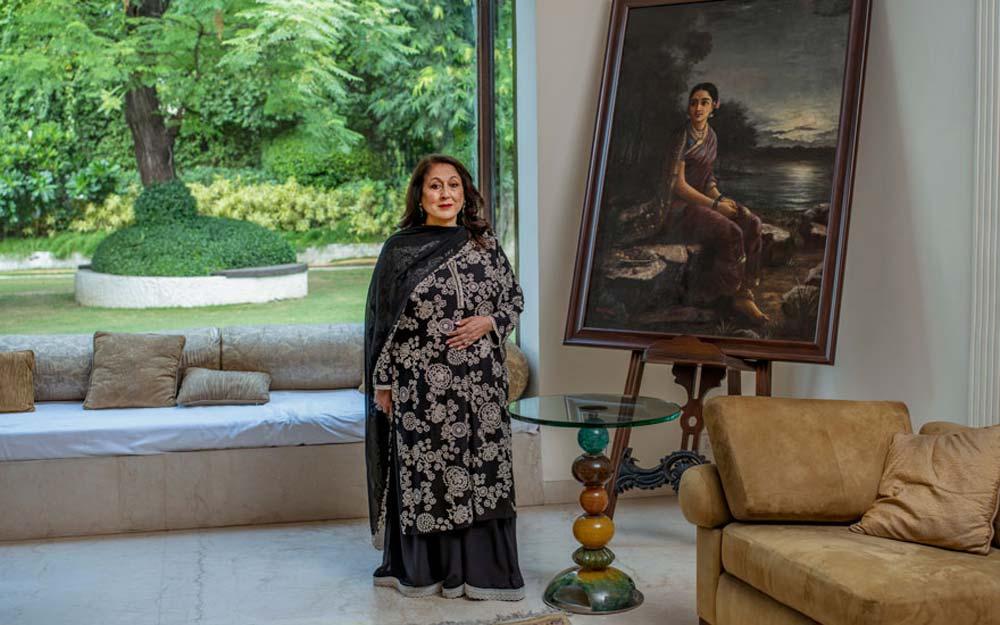
Kiran Nadar
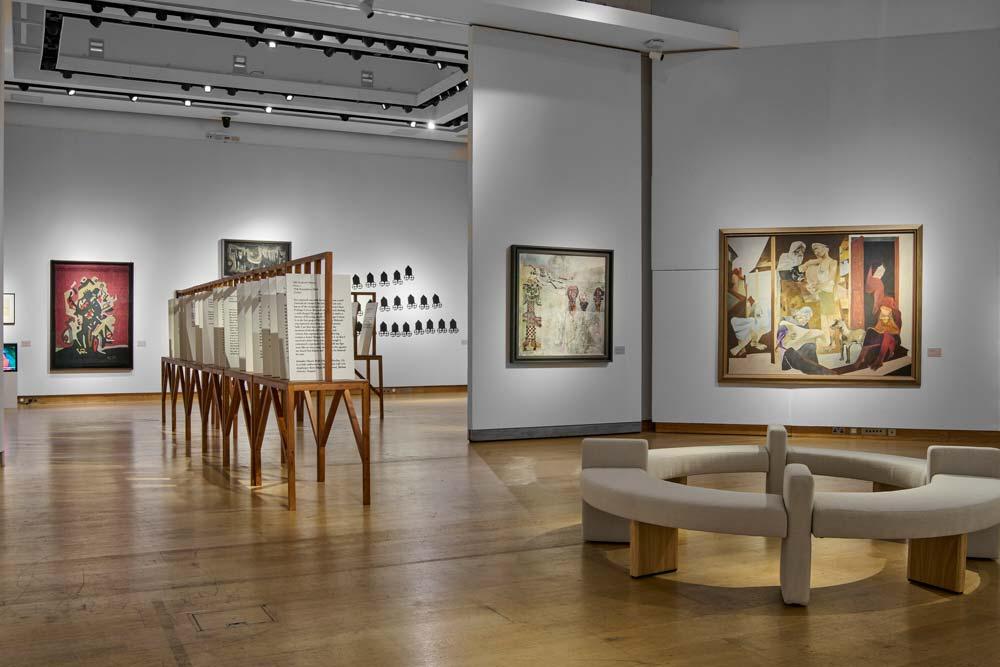
The Meeting Ground
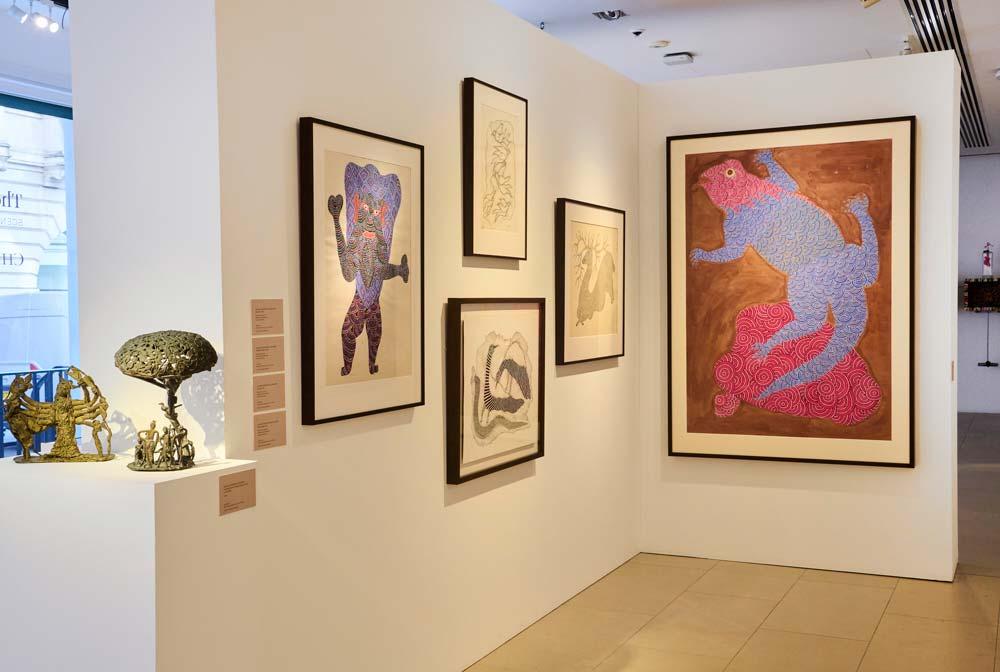
At Christie’s historic King Street galleries in London this summer, South Asian art has taken centre stage. The Meeting Ground: Scenes from the KNMA Collection brings together modern, contemporary, folk and indigenous practices from across the region, drawn from the collection of the Kiran Nadar Museum of Art in New Delhi. For Sri Lankan audiences, the exhibition holds particular significance. Among this remarkable gathering of artists whose practices have shaped and challenged the cultural narratives of South Asia, contemporary artist Anoli Perera is the sole Sri Lankan represented.
|
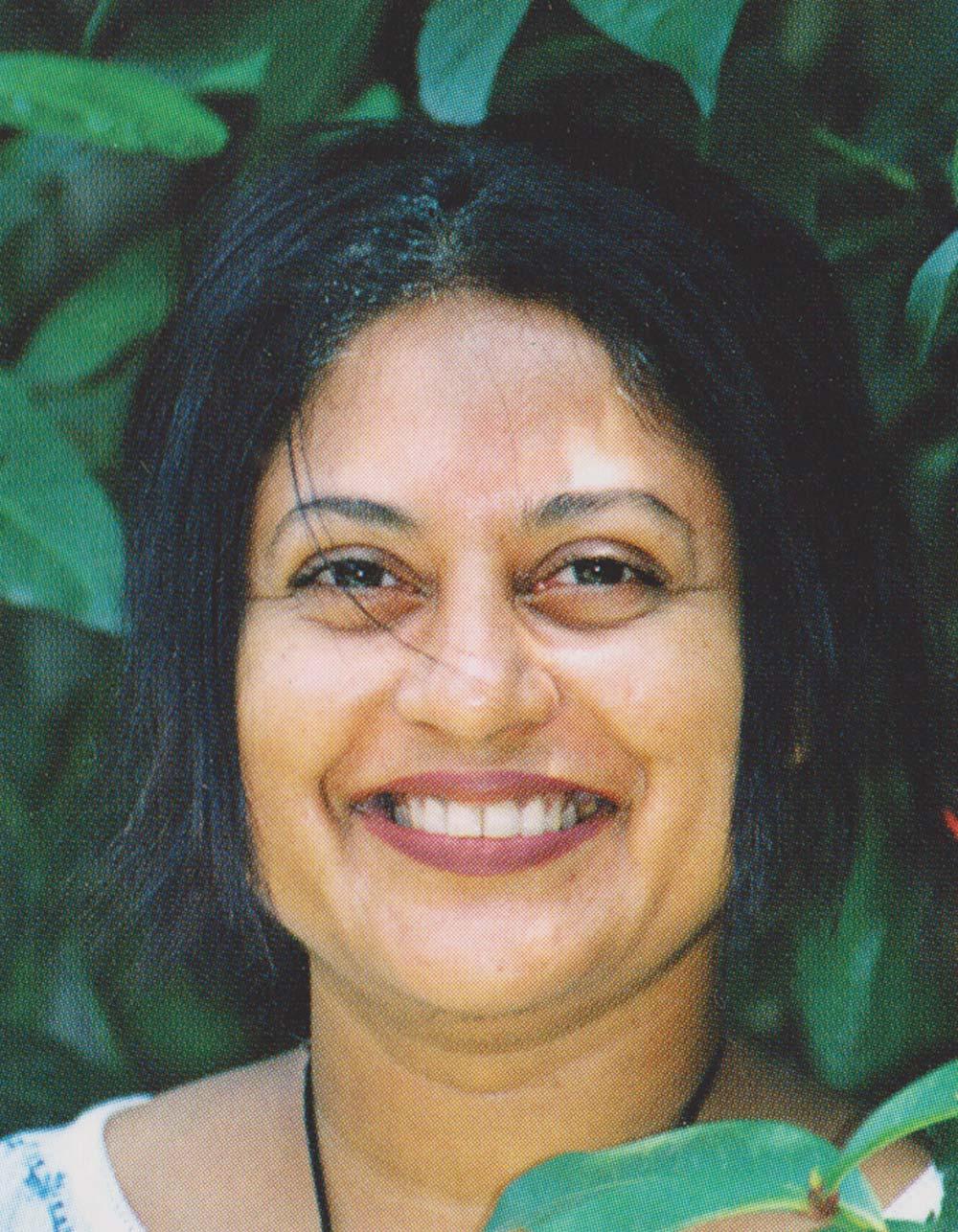
Anoli Perera |
Running from the 16th of July to the 21st of August 2026, The Meeting Ground is presented by the Kiran Nadar Museum of Art (KNMA), in collaboration with Christie’s. It marks the first time Christie’s London has dedicated its annual summer exhibition to South Asian art and to the collection of a single institution. Open to the public free of charge, the exhibition brings an important cross section of South Asian artistic practice into one of London’s most established international art spaces.
For Anoli, whose practice has evolved over more than three decades, her inclusion is significant not simply as a moment of Sri Lankan representation, but as recognition of her work within a much wider conversation about the history and future of modern and contemporary art from South Asia.
I was pleased to be invited to a private preview of The Meeting Ground at Christie’s, offering the opportunity to experience the exhibition in a more intimate setting. The evening also featured an engaging conversation with Kiran Nadar, founder of the Kiran Nadar Museum of Art, and Nadia Samdani, co-founder of the Samdani Art Foundation and Dhaka Art Summit. Their discussion explored collecting, patronage and the increasing international visibility of South Asian art, as well as the important role private collectors and cultural institutions can play in supporting artists, building significant collections and creating international platforms through which the art of the region can be seen, studied and understood. The conversation was moderated by Dr. Deepanjana Klein, Director of Acquisitions and Development at KNMA.
A SRI LANKAN PRESENCE IN LONDON
Born in Colombo in 1962, Anoli Perera belongs to the influential generation of Sri Lankan artists who emerged during the 1990s and began questioning established ideas around art, identity, gender and society. She is also a cofounder of the Theertha International Artists Collective, an organisation that has played an important role in developing contemporary artistic exchange in Sri Lanka and connecting Sri Lankan artists with the wider South Asian region.
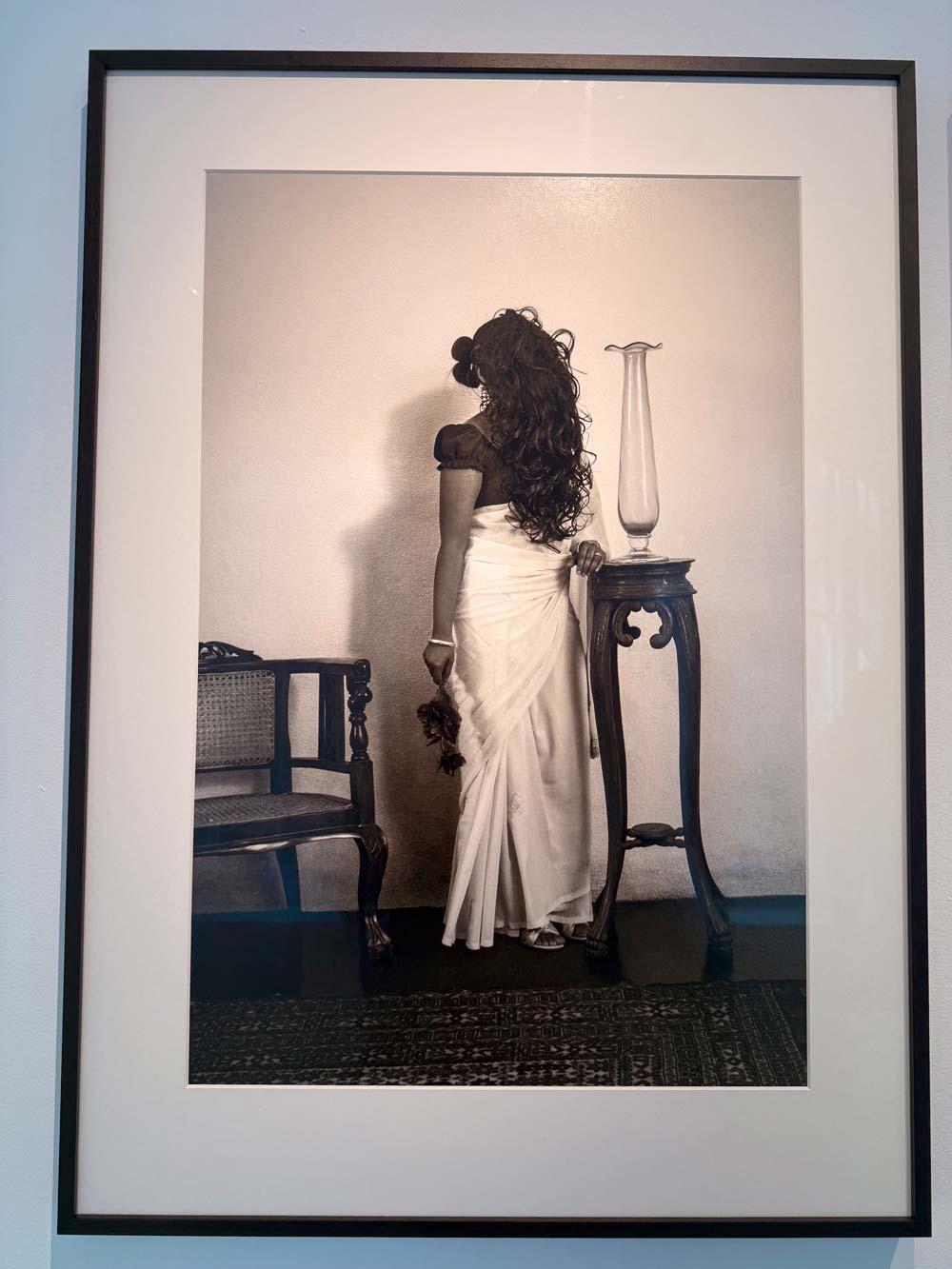
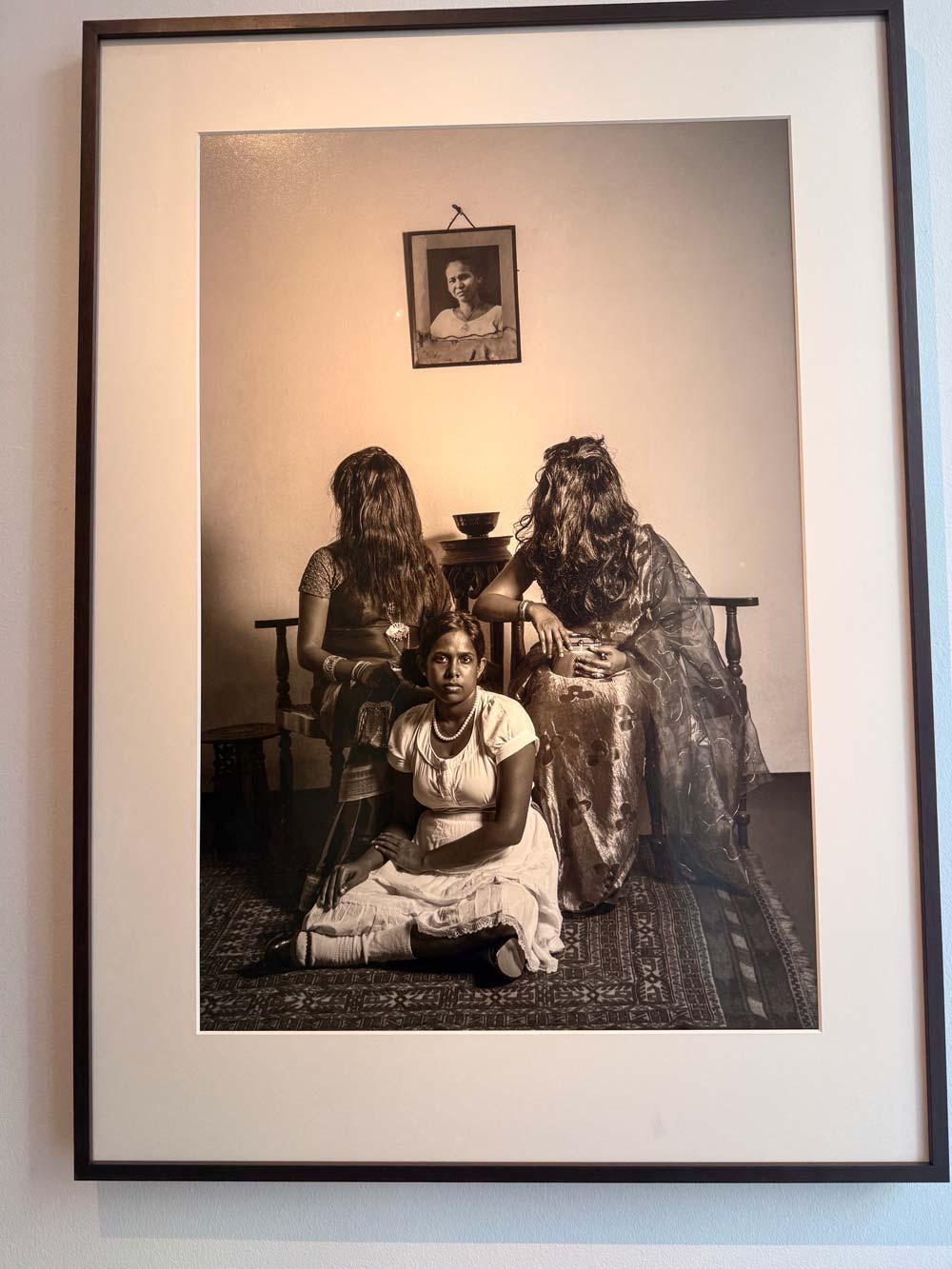
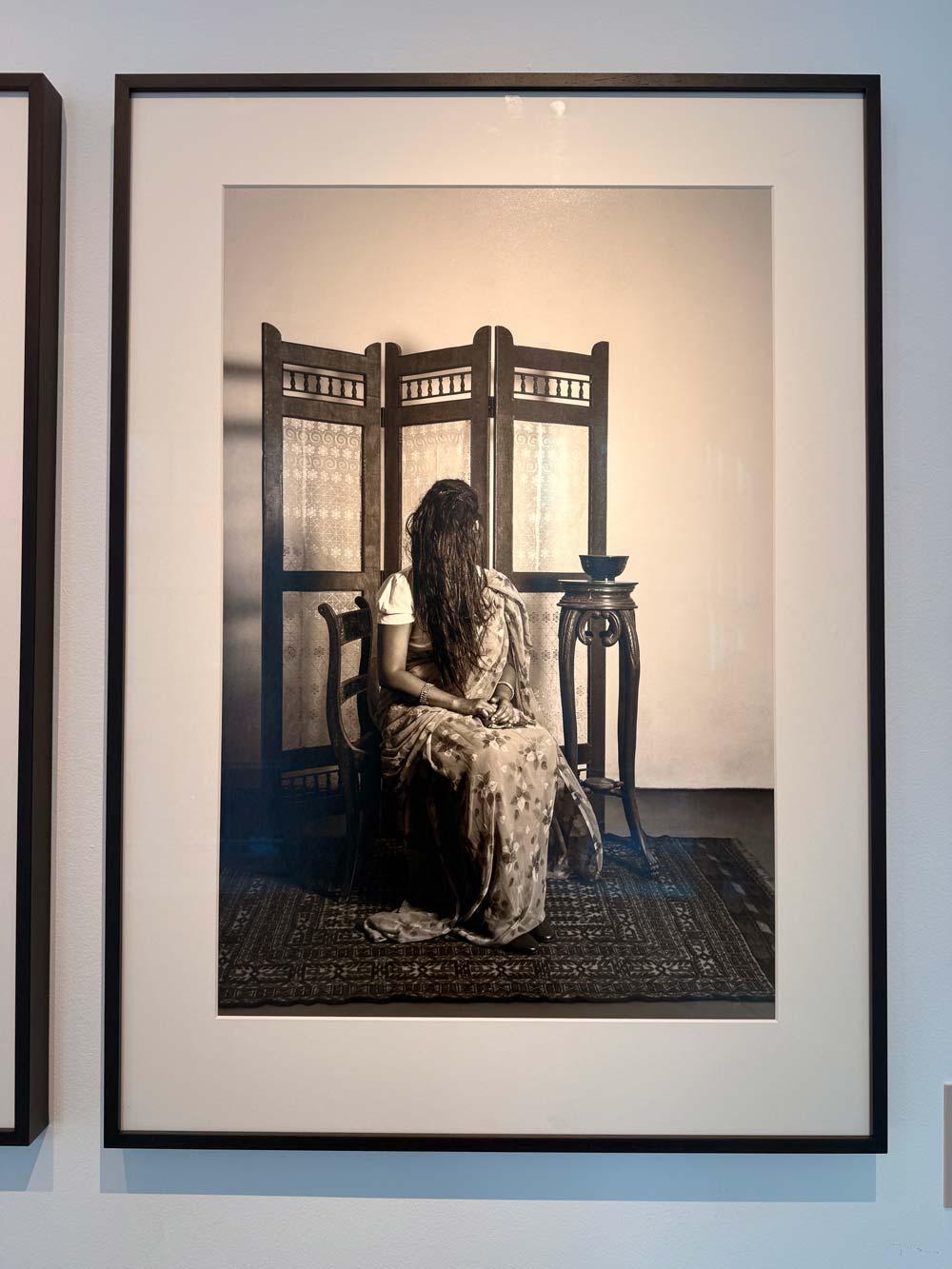
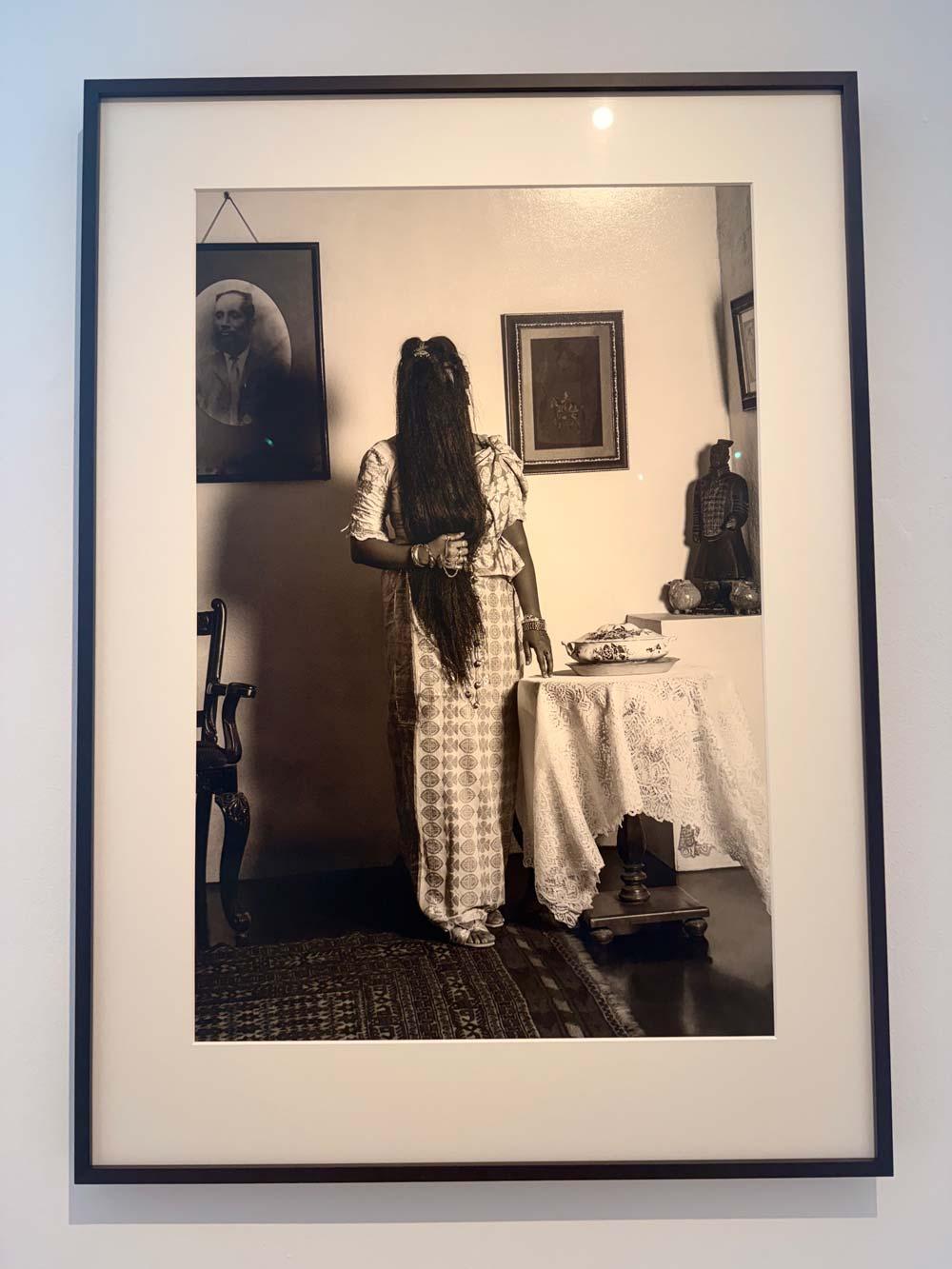
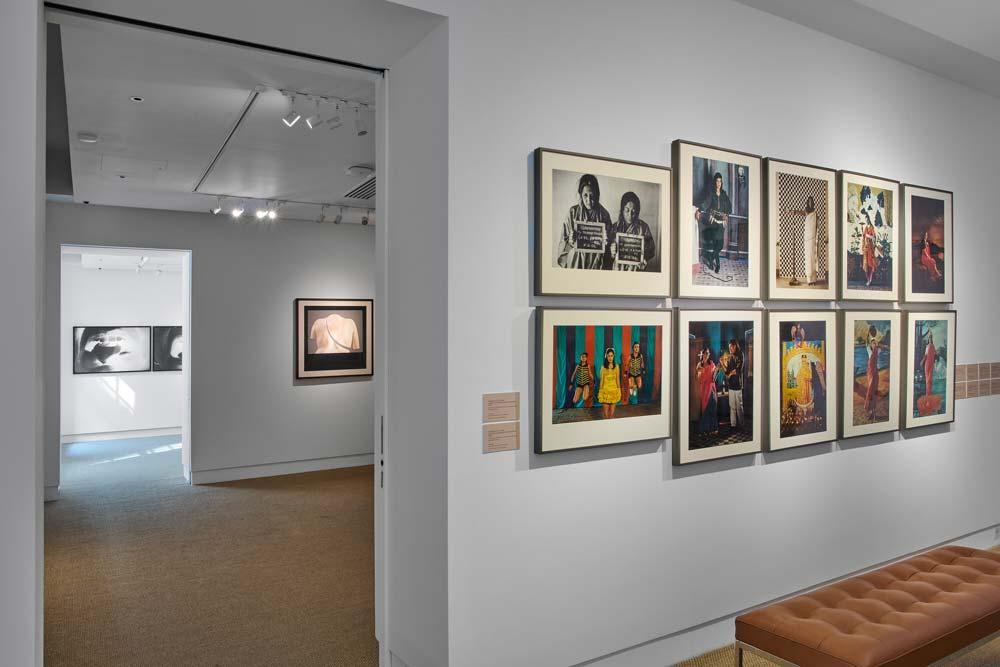
Anoli’s practice has never been restricted to a single medium. Installation, textiles, sculpture, found objects, painting and photography have all formed part of her visual language. More recently, photography and photo performance have become particularly important within her work. Across these different forms runs a recognisable set of concerns.
The position of women within society, domesticity, memory, personal histories, displacement and the construction of identity repeatedly surface in her practice. Materials and objects that might initially appear ordinary become carriers of larger histories. That approach is particularly relevant within The Meeting Ground because the exhibition itself is concerned with how individual lives intersect with much larger histories.
Anoli is not presented simply as a representative of a nation. Her work enters into conversation with artists from different generations and different parts of South Asia whose experiences have been shaped by questions of belonging, migration, memory and the complicated political geography of the region. That distinction matters. Sri Lankan contemporary art is sometimes presented internationally as a separate story dominated by the island’s civil conflict and its aftermath. Here, Anoli’s inclusion offers another possibility. Sri Lanka becomes part of a much broader and more complicated South Asian visual history.
THE MEETING GROUND
The scale of the exhibition is ambitious. Rather than attempting to present the KNMA collection chronologically, The Meeting Ground, unfolds through what its curators describe as a series of ‘scenes.’ Works from different generations, artistic movements and media are placed in dialogue with one another. The exhibition begins with conversations and contestations between major modernists including M.F. Husain, S.H. Raza, Jeram Patel, K.C.S. Paniker, K.G. Subramanyan and K. Ramanujam. From there it moves into contemporary practices and questions surrounding performance, memory and institutions, before considering artists whose lives and practices inhabit multiple homelands and resist the rigid boundaries created by modern maps. Artists including Zainul Abedin, Anwar Jalal Shemza, Zarina Hashmi, F.N. Souza and Bani Abidi appear within this strand. Indigenous artistic practices are not treated as an appendix to modern and contemporary art. Instead, artists including Jangarh Singh Shyam and Jivya Soma Mashe, as well as the collaboration between photographer Gauri Gill and Warli artist Rajesh Vangad, are woven into the exhibition’s wider narrative. The result is a proposition about South Asia that moves beyond national borders. This is especially pertinent for Sri Lanka. Our understanding of modern and contemporary Sri Lankan art has frequently been framed through the island’s own political and cultural history. The Meeting Ground encourages a different reading. It asks what happens when those histories are placed alongside the experiences of neighbouring countries shaped by colonialism, Partition, migration, modernisation, conflict and shifting ideas of home.
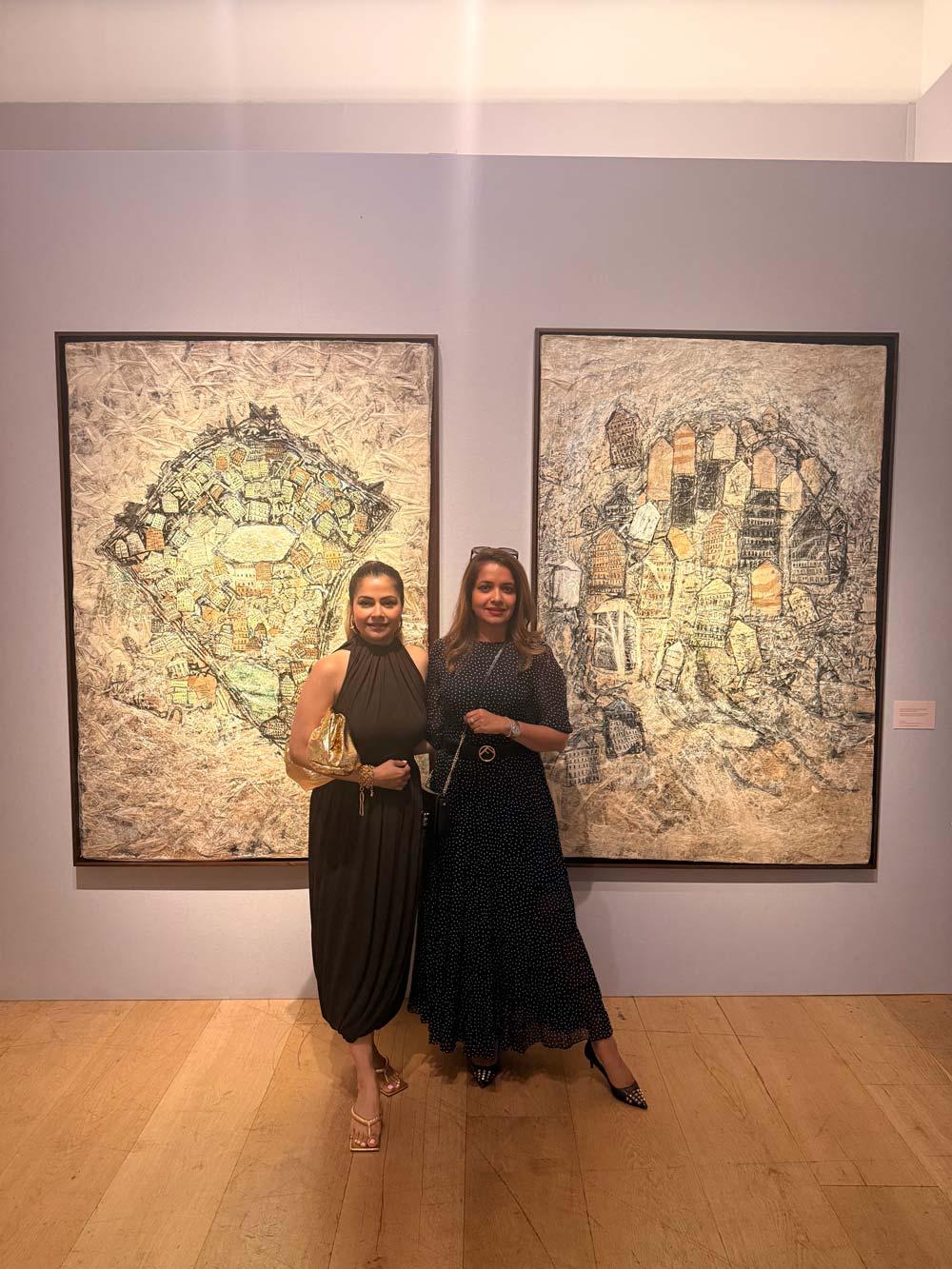
Rishini and Nadia Samdani
THE CURATORIAL VISION
The exhibition is curated by Akansha Rastogi with Preeti Bahadur, Avijna Bhattacharya, Premjish Achari and Srinivas Aditya Mopidevi.
Akansha Rastogi, Lead Curator of The Meeting Ground and Associate Director, Visual Arts at KNMA, describes South Asia as a region connected by “a shared visual history and deep cultural resonances”. The exhibition, she explains, brings these conversations together through an intergenerational selection of artists. It also represents the way KNMA thinks about the possibilities contained within a museum collection and draws upon 15 years of exhibition making developed under the artistic direction of Roobina Karode.
This curatorial approach is important because it resists the temptation to reduce South Asian art to a single aesthetic. There is no singular South Asian experience, just as there is no singular Sri Lankan experience. Instead, the exhibition allows different histories to coexist, overlap and occasionally contradict one another.
The title, The Meeting Ground, consequently, feels particularly appropriate. The museum collection becomes a place where ideas, generations and geographies encounter each other. Anoli’s work sits naturally within such a framework. Her career has consistently operated between the intensely personal and the wider social world. The female body, clothing, domestic materials and personal memory can become ways of examining structures that extend far beyond an individual life.
A MUSEUM LOOKING OUTWARD
Behind the exhibition is also the extraordinary development of KNMA itself. Founded by collector Kiran Nadar and opened to the public in 2010, KNMA was India’s first private museum dedicated to modern and contemporary art from the subcontinent. Today its collection comprises more than 16,000 works. Its scope is also expanding beyond modern and contemporary art to incorporate classical, folk and indigenous traditions.
The institution is now developing a new standalone museum complex in New Delhi of more than one million square feet, envisioned as a multidisciplinary centre encompassing visual art, performance, education, archives and research. Against this background, the London exhibition is not merely a touring selection of attractive works. It is a statement about how KNMA sees its role internationally.
Kiran Nadar, Chairperson of KNMA, describes international engagement as a pillar of the museum’s vision and argues for placing South Asian artistic practices within broader international conversations. The Meeting Ground, she says, reflects both the depth of the collection and the museum’s evolving position as a multidisciplinary institution “speaking with the world from South Asia”.
The choice of Christie’s King Street gives that ambition considerable visibility. Christie’s President for Europe, the Middle East and Africa, Anthea Peers, has described The Meeting Ground as a landmark exhibition for Christie’s London. Damian Vesey, Christie’s International Specialist for South Asian Modern and Contemporary Art, similarly notes that this is the first occasion on which Christie’s London has dedicated its summer exhibition to South Asia and to one institution. It follows Christie’s previous non selling summer exhibitions focusing on Modern and Contemporary Art of the Arab World in 2023, Ahmed Mater in 2024 and Marwan in 2025.
WHY ANOLI PERERA’S INCLUSION MATTERS
For Sri Lanka, Anoli’s presence deserves attention beyond the achievement of one artist. Sri Lanka possesses a rich modern and contemporary art history, but its artists have not always received sustained representation within the institutional narratives of South Asian art internationally. The inclusion of a Sri Lankan artist within a museum exhibition of this scale provides an opportunity to consider where Sri Lanka sits within that larger cultural geography.
Anoli is an especially fitting artist through whom to have that conversation. Her generation helped change the language of contemporary art in Sri Lanka. Artists associated with the country’s 1990s movement moved towards autobiographical experience and the social and political realities surrounding them, responding to a period marked by civil war, ethnic conflict and profound social transformation.
Anoli brought an explicitly female perspective into this changing artistic landscape. Rather than separating the domestic from the political, her work has repeatedly demonstrated how the two intersect. Her photographic practice extends that investigation. Photography becomes more than documentation. The constructed image, the body and the act of performance allow questions of femininity, visibility and identity to be examined through another language.
Internationally, Anoli has participated in exhibitions including the Kochi Muziris Biennale, Dhaka Art Summit and Colomboscope, while more recent presentations have included Notations on Time at Ishara Art Foundation in Dubai and Visible/Invisible at the Museum of Art and Photography in Bengaluru. Her appearance at Christie’s therefore belongs to a longer trajectory rather than representing a sudden international discovery. Yet there is something symbolically powerful about encountering her work in London within an exhibition attempting to redraw the map of South Asian art. The Meeting Ground ultimately asks audiences to consider South Asia not simply as a collection of countries, but as a region connected by shared and contested histories. Within that meeting ground stands a single Sri Lankan artist. Anoli Perera’s presence ensures that Sri Lanka is part of that conversation. More importantly, the strength and complexity of her practice demonstrate why it should be.
The Meeting Ground: Scenes from the KNMA Collection is presented at Christie’s, King Street, London, from the 16th of July to the 21st of August 2026. Entry is free.
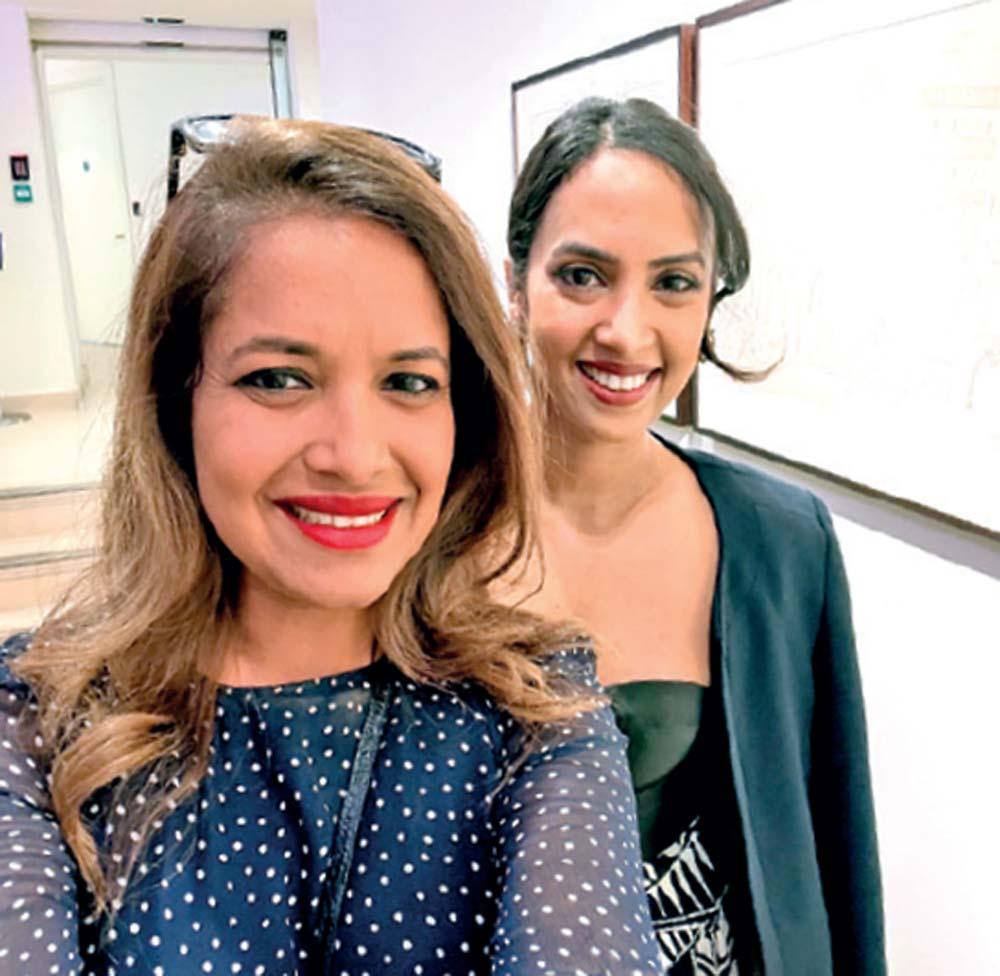
Rishini and Yatra Jayawardene