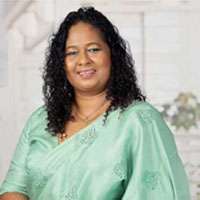
FEATURING DR. EMESHA PINTO JAYAWARDENA
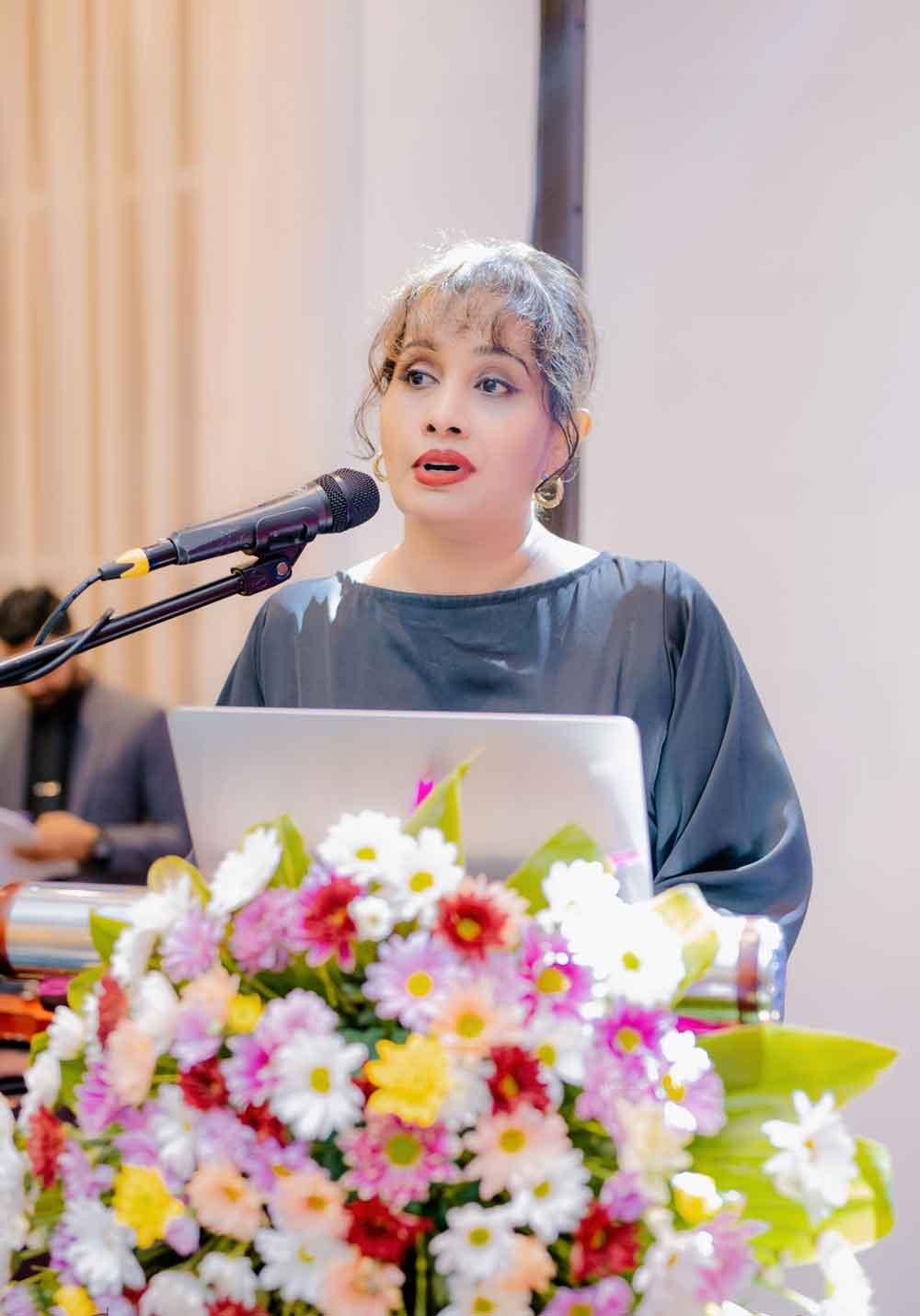
HER STORY. HER STRENGTH. BY: DR. SULOCHANA SEGERA
Dr. Emesha Pinto Jayawardena has built a career around one powerful belief: people are at the heart of every successful organisation. As a corporate executive, people leader, consultant, trainer, researcher, entrepreneur and wellness advocate, her journey has crossed industries and disciplines yet remained firmly anchored in purpose. Her work champions respectful workplaces, inclusive leadership, women’s advancement and the importance of creating environments where people can genuinely flourish. Alongside her corporate career, she is the founder of ALTHEA Wellness, an entrepreneurial venture inspired by her own journey towards healthier and more conscious living. Yet behind the titles and achievements is a philosophy shaped by observation, empathy, resilience and a desire to leave people better than she found them. In this edition of Her Story, Her Strength, Dr. Jayawardena reflects on leadership, ambition, wellbeing, entrepreneurship and the quiet strength that has defined her journey.
Every successful woman has a defining story. What inspired your journey into leadership, and what motivated you to dedicate your career to people development and organisational excellence?
People often see the title before they see the journey. They see Chief Operating Officer, Doctor, Entrepreneur or Trainer and assume the path was carefully planned. The truth is it was not. If someone had told the young woman starting her career that one day she would lead organizations, lecture, build businesses, advocate for respectful workplaces and speak about women’s leadership, I probably would have smiled politely and thought they had the wrong person. I have never been the loudest person in the room. I have always been the person observing, listening, asking questions and trying to understand what helps people flourish. Very early in my career, I realized something that has stayed with me ever since: businesses do not transform people. People transform businesses. A strategy can look brilliant on paper, but if people do not feel respected, inspired or valued, it rarely succeeds. Leadership, for me, has never simply been about climbing higher. It is about reaching back and helping someone else climb with you. When someone I once mentored tells me they have become a leader themselves, I quietly think, “That is why I do what I do.” More than any title or achievement, that is what success feels like to me.
You have successfully balanced roles as a corporate executive, consultant, trainer, researcher, entrepreneur and wellness advocate. How do you prioritize while staying true to your personal values?
People often ask whether I ever switch off. I usually laugh and say, “Sometimes my brain does not get the memo.” But I no longer chase the idea of perfect balance because I do not believe it exists. Instead, I believe in alignment. Every role I have chosen has grown from the same purpose: helping people live better lives. Corporate leadership allows me to shape workplaces, training allows me to shape leaders, research allows me to shape ideas, and ALTHEA allows me to encourage healthier choices. They may appear to be different careers, but to me they are different expressions of the same calling. There was a time when I believed saying yes to everything meant I was ambitious. Life taught me otherwise. Through health challenges, long days and moments of exhaustion, I realized that if I wanted to continue serving others, I first had to learn to care for myself. Today, I protect my peace with the same commitment that I once protected my calendar. Interestingly, learning to slow down has made me a better leader, entrepreneur and more present human being.
As Chief Operating Officer and Head of People, what does people centric leadership mean to you in today’s rapidly changing workplace?
The best leadership lesson I ever learned was not taught in a classroom. It came from watching how one leader made another person feel. Over the years, I have seen incredibly talented people lose confidence simply because they were not heard. I have also watched ordinary employees become extraordinary because someone believed in them. Those experiences taught me something no qualification ever could: leadership is deeply human. People may not always remember exactly what a leader said in a meeting, but they remember how that leader made them feel. Did they feel respected? Did they feel safe enough to speak honestly? Did they leave believing that they mattered? To me, that is the essence of people centric leadership. Technology will continue to evolve, and artificial intelligence will continue reshaping our workplaces, but kindness, trust, empathy and respect will never become outdated leadership qualities. The tools may change, but our fundamental responsibility as leaders remains the same: to create environments where people feel valued and able to do their best work.
Diversity, Equity and Inclusion have been central themes throughout your career. Why do you believe DEI is no longer simply a corporate initiative but a business necessity?
Whenever I hear someone describe Diversity, Equity and Inclusion as a nice to have, I smile because I know they have probably never experienced the power of a truly inclusive team. Some of the best ideas I have seen emerged because someone with a completely different perspective felt safe enough to speak up. Innovation does not happen because everyone agrees. It happens when people respectfully challenge one another and bring different experiences, backgrounds and ways of thinking to the table. For me, inclusion has never been simply about giving people a seat at the table. It is about ensuring that once they are there, they feel valued, heard and confident enough to use their voice. When people genuinely feel they belong, they stop spending their energy trying to fit in and begin contributing their best. That is when organizations become stronger, more innovative and better equipped to respond to change. DEI is ultimately about unlocking human potential, and that makes it fundamental to business success.
What is the role of corporate leaders in ensuring workplace harassment prevention becomes a culture, not just a policy?
Throughout my work in building respectful workplaces, one lesson has remained constant: culture is never created by policies alone. It is created by people, and particularly by leaders. Employees pay close attention to how leaders behave, who they listen to, who they recognise and what they choose to tolerate. Leadership is demonstrated in everyday moments that can easily go unnoticed. Creating a respectful workplace is not simply about preventing complaints or fulfilling a compliance requirement. It is about fostering an environment where every individual feels safe, respected and treated with dignity. Policies are important because they establish expectations and accountability, but they only become meaningful when leaders consistently demonstrate those principles through their actions. When leaders model empathy, fairness, respect and accountability, those behaviours gradually become embedded within the organisation. That is when respect moves beyond a statement in an employee handbook and becomes part of how people genuinely experience the workplace every day.
You have championed women’s participation in technology and STEM. What barriers still exist for women, and how can organisations accelerate meaningful change?
One of the biggest barriers I continue to see is that many talented women underestimate themselves long before anyone else does. Throughout my career, I have met brilliant women who questioned whether they were ready for an opportunity, while others with considerably less experience stepped forward without hesitation. Closing that confidence gap is just as important as addressing the structural barriers women continue to encounter. Organisations have a responsibility to create inclusive cultures, provide meaningful mentorship and sponsorship, and ensure women have equal access to opportunities that can lead to senior positions. At the same time, I encourage women to stop waiting until they feel completely ready. Growth rarely begins with certainty. Sometimes courage simply means raising your hand before you have all the answers. I have done that many times throughout my own career, and I am grateful that I did. Confidence is not always something you possess before taking an opportunity. Very often, it is something you develop because you were brave enough to take it.
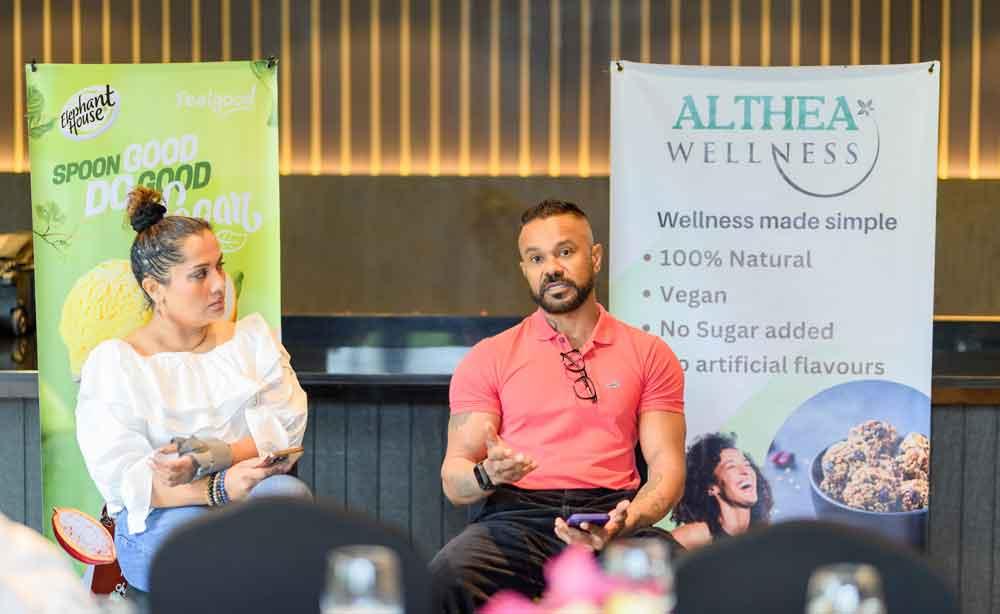
Your entrepreneurial venture, ALTHEA Wellness, reflects your passion for healthy living. What inspired you to step into entrepreneurship, and what lessons has that journey taught you?
ALTHEA Wellness was not born in a boardroom. It grew from my own wellness journey. Like many women, I spent years balancing work, responsibilities and caring for others before realising that I could not continue pouring from an empty cup. Choosing a plant-based lifestyle transformed not only what I ate, but also how I thought about health, energy and self-care. When I could not find nutritious products that genuinely reflected my values, I found myself asking, “Why not create them?” That simple question became the beginning of ALTHEA. Entrepreneurship has been one of the most rewarding and humbling experiences of my life. It has taught me resilience, patience and the importance of remaining connected to your purpose, particularly when things do not happen as quickly or perfectly as you imagined. I have learned that meaningful businesses are not built on perfection. They are built on passion, authenticity, persistence and a genuine desire to improve people’s lives.
In today’s fast paced corporate environment, how can leaders create cultures that encourage both high performance and employee wellbeing?
For too long, we have celebrated being busy as though it were a measure of success. Somewhere along the way, exhaustion became confused with commitment, and I do not believe that is healthy or sustainable.
The best teams I have worked with were not driven by fear or constant pressure. They were driven by purpose. People perform at their best when they feel trusted, appreciated, challenged and supported. Wellbeing should not be viewed as a reward people receive after achieving success. It is one of the reasons they are able to succeed in the first place. Leaders therefore need to create environments where ambition and wellbeing can coexist. That means setting clear expectations while recognizing that people are human beings with lives beyond their job descriptions. Healthy people build healthy organizations. When leaders genuinely care about their people and demonstrate that through everyday decisions, they create cultures where individuals can perform at a high level without sacrificing their physical or emotional wellbeing to do so.
How have education, financial independence and changing expectations influenced women’s views on marriage and commitment?
I believe women today are increasingly redefining success on their own terms, and that is something worth celebrating. Education and financial independence have given women greater freedom to make important life choices based on their own values rather than simply following societal expectations. Marriage is no longer viewed only as a source of security. Increasingly, it is understood as a partnership built on mutual respect, shared values, companionship and personal growth. The strongest relationships I have seen are those in which both individuals continue becoming more of themselves, not less. Love should never require a woman to shrink her dreams, ambitions or identity in order to make another person comfortable. Instead, a healthy partnership should create space for both people to grow, evolve and pursue what matters to them. For me, the changing conversation around marriage is ultimately about choice. Women having the freedom to decide what fulfilment looks like for them is an important part of progress.
What does “Her Story, Her Strength” mean to you, and what message would you like to leave for every woman who is still discovering her own strength?
When I hear the words Her Story, Her Strength, I do not immediately think about achievement. I think about resilience. I think about the quiet moments nobody applauds. The days you keep going when you are tired. The difficult decisions you make when no one is watching. The courage required to begin again after disappointment. That is where real strength is forged. If I could leave one message for every woman, it would be this: do not spend your life trying to become who the world expects you to be. Become the woman who allows herself to keep growing. Protect your health. Invest in your mind. Choose kindness even when it is difficult and never stop believing that it is possible to reinvent yourself. Every new chapter begins the moment you decide it can. At the end of my journey, I do not hope people remember my job title or the positions I held. I hope they remember that I cared that I helped someone believe in themselves, and that I left every place and every person a little better than I found them. If that is the story people tell about me one day, I will consider my life well lived.