The Original Divine Transaction: Ancient Greece’s Holiest Vending Machine
Imagine entering a temple nearly two thousand years ago.
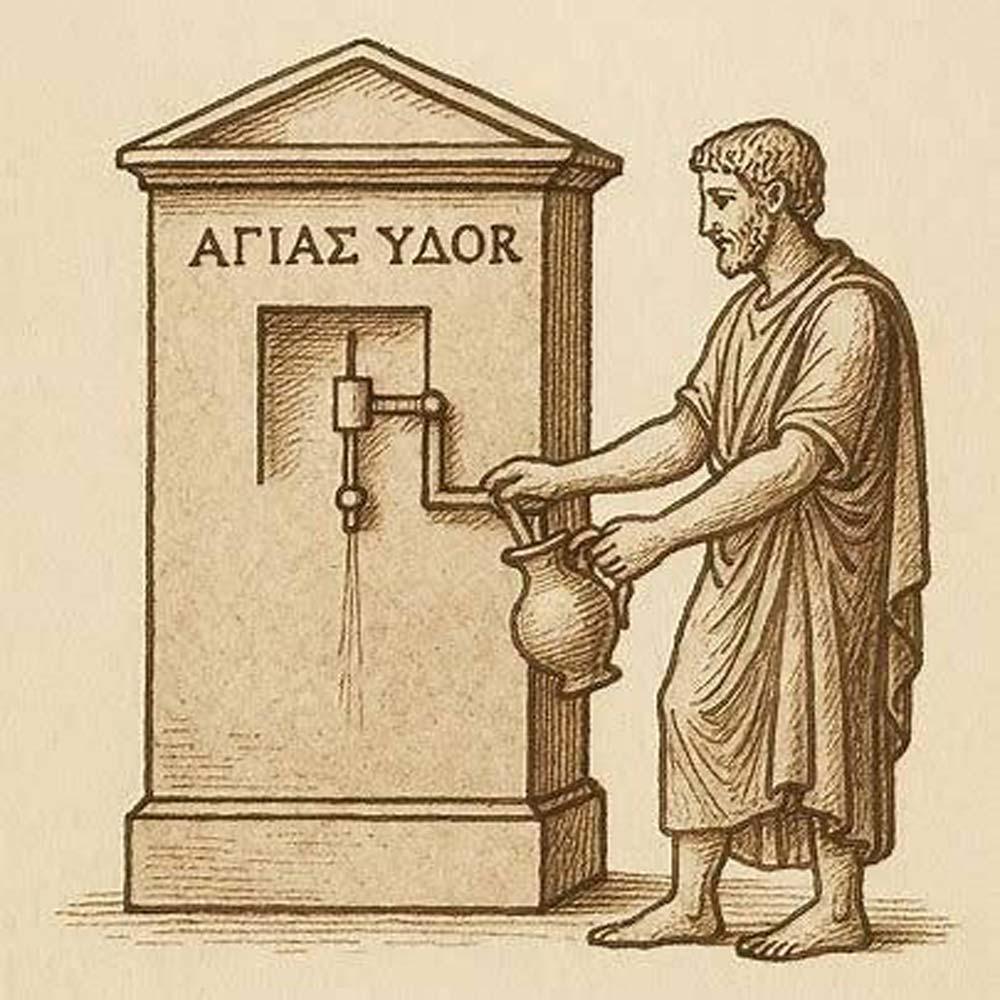
There are no glowing screens, digital payment systems or neatly arranged rows of snacks behind glass. There is only a metal vessel, a narrow slot and a small opening through which water can flow. You place a coin into the machine. Somewhere inside it, a pan lowers. A lever tilts. A valve opens.
- Holy water begins to pour.
- Then, just as suddenly, it stops.
- It sounds strangely modern.
 Long before vending machines began swallowing coins in exchange for soft drinks, chocolate bars and the occasional packet of chips that refuses to fall, an ancient engineer had already developed the same basic idea. His machine did not satisfy hunger. It did not offer anything colourful, cold or convenient. Instead, it dispensed something sacred.
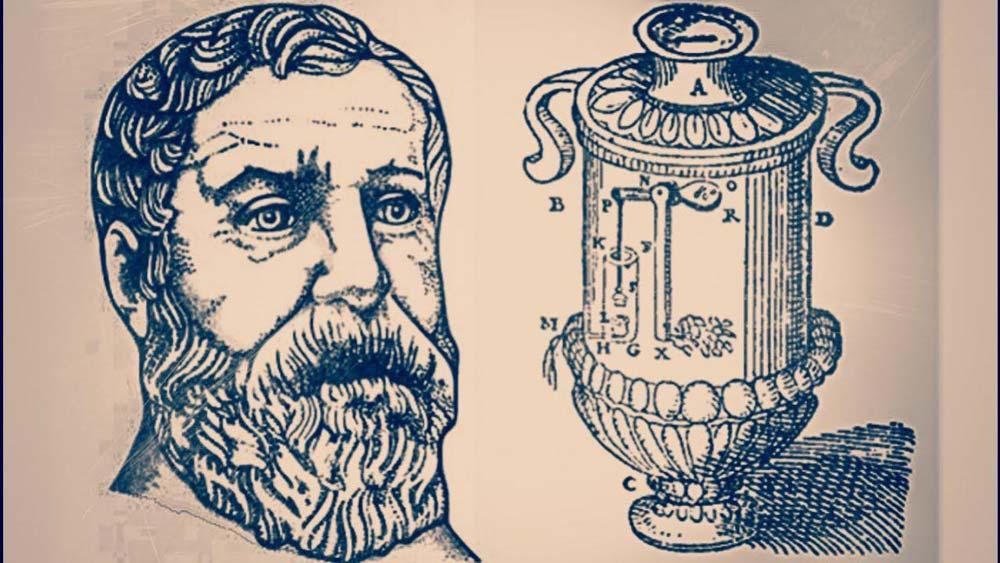
The earliest known coin-operated vending machine is credited to Heron of Alexandria, also known as Hero, a Greek mathematician and engineer who lived in Alexandria around the first century AD. His invention was designed to dispense a measured amount of holy water to worshippers inside ancient temples.
At first, the machine may seem like little more than an interesting historical curiosity. Something to glance at in a museum, quietly admire and then forget.
However, simplicity can be deceptive.
Hidden inside this small vessel was an idea that would eventually become part of everyday life: a machine could recognise that something had been given, perform a task in response and then stop by itself.
In other words, it was automation before the modern world had a word for it.
Today, vending machines are associated with convenience. We use them when we are hungry, thirsty, in a hurry or simply unwilling to speak to another person before our morning coffee. They stand in airports, hospitals, schools and railway stations, glowing quietly and waiting for us to make a choice.
Heron’s machine existed for an entirely different reason.
Holy water was used in temple rituals and ceremonial purification. A worshipper could insert a coin and receive a controlled amount of water before entering or participating in worship. There was no electricity inside the machine. No motor. No computer chip. No digital sensor waiting to confirm the payment.
The coin itself powered everything.
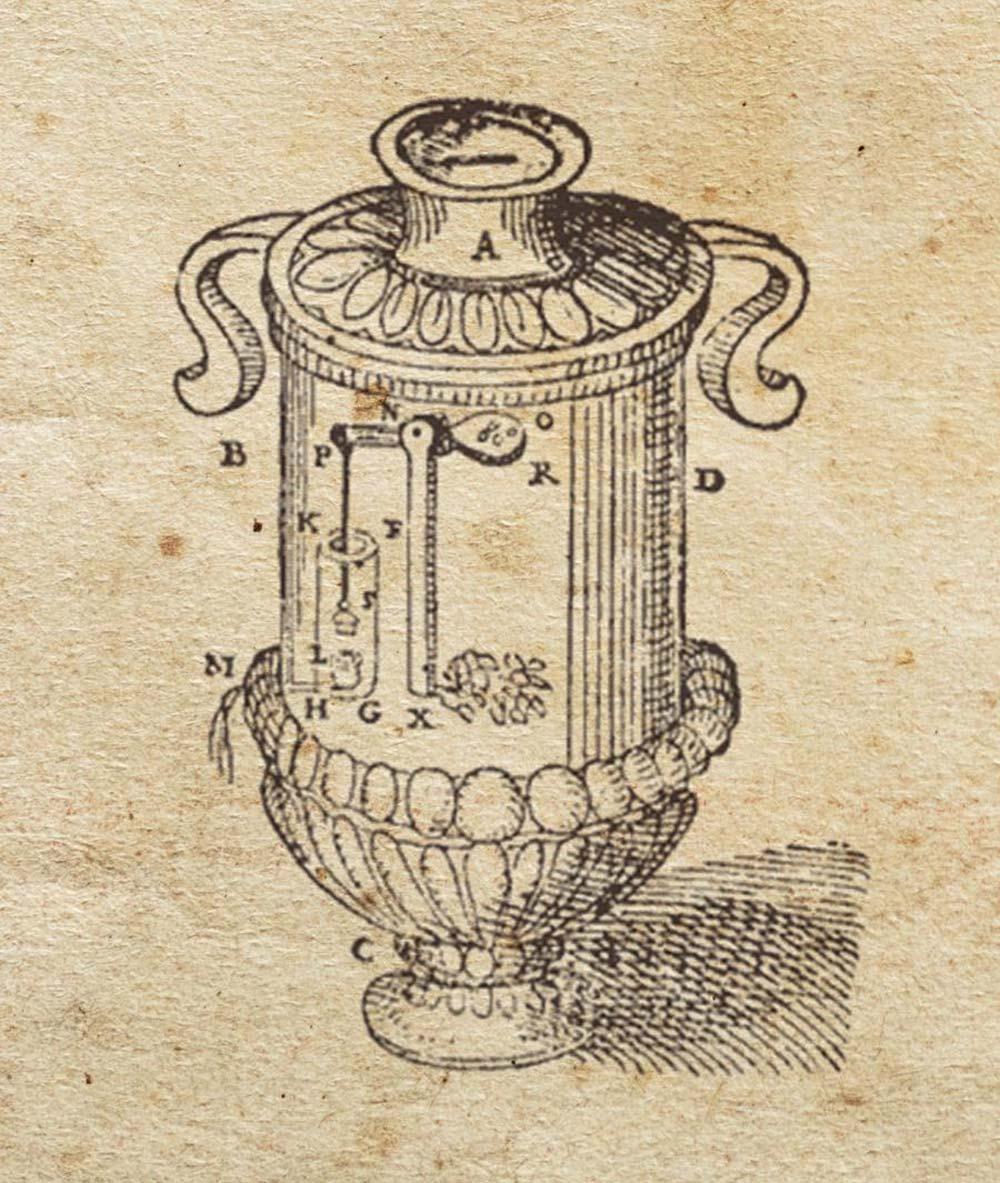
Once dropped through the slot, the coin landed on a small pan attached to one end of a lever. Its weight pushed the pan down, causing the opposite end of the lever to rise. That movement opened a valve inside the vessel, allowing holy water to flow from an opening below.
For a few seconds, the machine came alive.
The pan continued to tilt until the coin eventually slid off and fell into a collection chamber. The moment the coin disappeared, so did its weight. A counterweight pulled the lever back into place, the valve closed, and the water stopped flowing.
Then the machine returned to stillness, ready for the next worshipper.
The entire process can be reduced to a few movements.
- The coin falls.
- The pan lowers.
- The lever rises.
- The water flows.
- The coin slips away.
- The valve closes.
Yet somewhere within those simple movements is something almost poetic.
A small piece of metal entered the machine and briefly changed the balance of everything inside it. Its weight became pressure. Pressure became movement. Movement released water. Once the coin fell away, the vessel became silent again.
For a few seconds, money became motion.
That is perhaps the most beautiful part of Heron’s invention. The coin did not merely pay for the water. It physically created the movement that released it. It was the worshipper’s payment and the machine’s trigger.
Modern machines perform the same transaction through electronic systems. A sensor identifies the coin or card, a circuit confirms its value, and a motor releases the selected item. Heron’s machine completed the essential stages mechanically. It accepted payment, responded to it, released a measured product and ended the transaction automatically.
It did not need to understand the coin.
It only needed to feel its weight.
The design also meant that the amount of water released could be controlled. The valve remained open only while the coin rested on the tilting pan. Once it dropped into the chamber below, the transaction was over. The worshipper could not simply hold the valve open and take as much water as they wished.
Some modern accounts suggest that the machine was created because people were taking more holy water than they had paid for. The exact motivation behind the invention is difficult to know with certainty. Still, the mechanism clearly removed the decision from the person using it.
It transformed trust into engineering.
Instead of hoping that every visitor would take only the correct amount, the machine quietly decided for them. It did not matter whether the worshipper was honest, impatient or particularly enthusiastic about spiritual purification. The valve opened for the time allowed by the mechanism and not a second longer.
The machine could not be persuaded.
It could not be guilt-tripped.
It treated every coin the same.
 There was something theatrical about many of his creations. A person performed one small action, and somewhere else, something unexpected moved. Doors opened. Water flowed. Figures turned. To those who did not understand the mechanisms hidden beneath the surface, the effect may have seemed almost supernatural.
Inside a temple, that boundary between engineering and wonder must have felt even thinner.
A worshipper placed a coin into a vessel and received sacred water in return. They may not have seen the lever, pan or counterweight. They only witnessed the response.
An offering entered.
A blessing came out.
Perhaps that is why the machine feels so strangely out of place in history. We expect ancient engineering to reveal itself through monuments, weapons and enormous structures built to challenge time. We do not expect to find it inside a small device completing an automatic purchase.
Yet there it was.
An idea we associate with railway platforms and shopping centres once stood inside a temple.
The machine also reveals something timeless about invention. Innovation does not always begin with a grand desire to transform civilisation. Sometimes it begins with a small and practical question: how can one person receive one portion of water for one coin?
The answer did not require an enormous structure.
It required a pan, a lever, a valve, a counterweight and someone curious enough to arrange them in exactly the right way.
Nearly two thousand years later, the products have changed. Holy water became postcards, cigarettes, drinks, snacks, books, electronics and almost anything else capable of fitting inside a machine. Coins are slowly being replaced by cards, phones and contactless payments. Levers and counterweights have given way to sensors, circuits and software.
Still, the promise remains almost identical.
Give the machine something it recognizes, and it will give you something in return.
Maybe that is what makes Heron’s invention so fascinating. It reminds us that the ancient world was not as distant from our own as we like to imagine. The materials were different. The temples were different. The purpose was different.
The human instinct was not.
We have always looked at ordinary tasks and wondered whether an object could perform them for us. We have always tried to turn effort into mechanism, uncertainty into sequence and human intention into movement.
The next time a vending machine accepts your money and releases a drink; it may feel like an entirely ordinary transaction. However, beneath its bright lights, electronic buttons and endless rows of products is an idea old enough to have once stood inside an ancient temple.
The first vending machine did not offer a snack.
It offered a blessing.