The State Versus Marshae Jones: The Crime of Being Pregnant
There is something deeply disturbing about a justice system that can look at a pregnant woman with a bullet wound in her abdomen and decide that she is not the victim.
In December 2018, Marshae Jones was five months pregnant when an argument with another woman, Ebony Jemison, escalated into a physical fight outside a Dollar General store in Pleasant Grove, Alabama. Jemison fired a gun. The bullet struck Jones in the abdomen. Jones survived, but her pregnancy did not.
That alone was a tragedy. What followed turned tragedy into injustice.
Jemison was initially charged with manslaughter, but a grand jury declined to indict her after accepting that she had acted in self-defence. Months later, the same legal process produced a far more unsettling conclusion: Jones herself was indicted for manslaughter in the death of the fetus she had been carrying. According to the indictment, she had caused the death by initiating the fight while knowing she was pregnant. She was arrested in June 2019 and held on a $50,000 bond.
The woman who had been shot was now being prosecuted for the consequences of the shooting.
It is possible to believe that Jones should not have entered or continued the fight. It is possible to say that her decisions were reckless. But recklessness is not a magic word that transfers responsibility for a bullet from the person who fired it to the person it entered. A poor decision does not erase victimhood. Starting a confrontation does not mean consenting to be shot, and being pregnant does not mean accepting criminal liability for every dangerous situation another person might create.
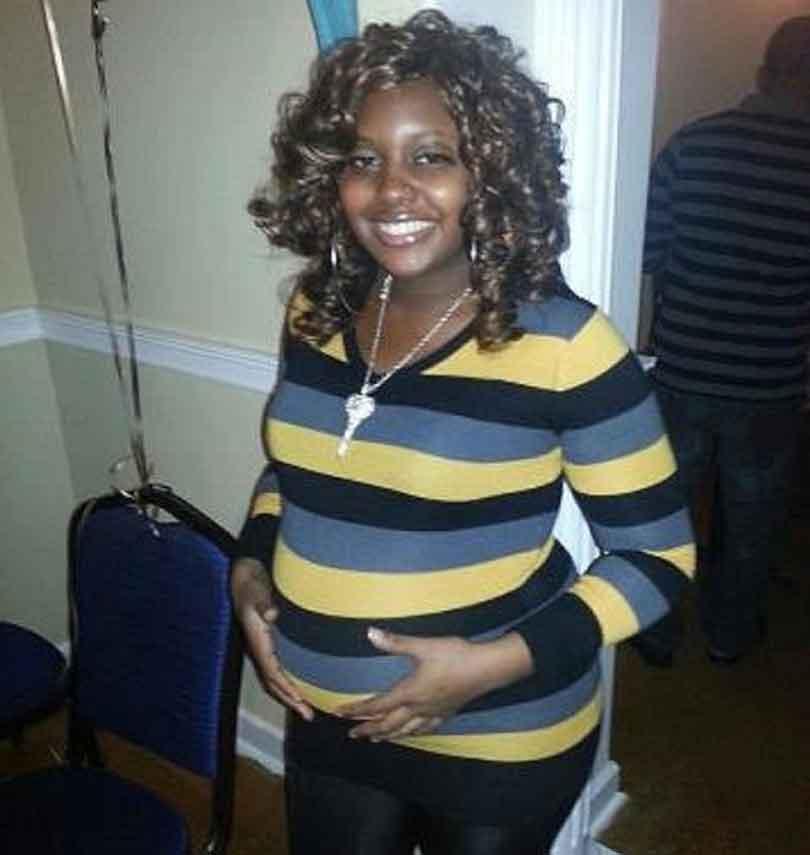
Yet that was precisely the logic beneath the indictment. Jones was treated as though pregnancy had transformed her into a public container whose every action could be judged against the survival of the fetus. Her body had been injured. Her pregnancy had ended. Still, the legal system seemed less interested in what had happened to her than in whether she had behaved like the perfectly cautious pregnant woman it expected her to be.
That expectation is impossible because no pregnant woman can eliminate every risk. She may drive, work a demanding job, remain in an abusive relationship because leaving is dangerous or miss medical care because she has no transport. Once pregnancy outcomes become evidence of criminal wrongdoing, almost any decision can be reconstructed as a crime after something goes wrong.
This is what made the case larger than one fight in one car park. If Jones could be prosecuted because her actions placed her pregnancy in danger, where would that reasoning end? Could a woman be investigated after a miscarriage because she drank alcohol or missed prenatal care? Could a survivor of domestic violence be blamed for remaining near the person who harmed her? Could grief itself become a crime scene?
There was also a cruel contradiction at the centre of the case. The grand jury apparently accepted that Jemison's use of force was legally justified, yet it still sought someone to punish for the loss of the pregnancy. With the shooter removed from criminal responsibility, blame travelled towards the easiest remaining target: the woman who had already been injured.
The fetus was described by a police lieutenant as the “only true victim.” The phrase is revealing. It did not simply recognise the loss of potential life. It erased Jones from her own shooting. She became neither a wounded woman nor a mother who had lost a pregnancy, but the accused person standing between the state and the victim it had chosen to recognise.
A legal system should be capable of acknowledging more than one form of harm at once. It can recognise the death of a fetus as tragic without pretending that Jones did not also suffer. It can criticise her conduct without turning her loss into proof of guilt. Compassion for the pregnancy does not require cruelty towards the person who carried it.
Instead, Jones was forced to survive two forms of violence. The first entered her body as a bullet. The second arrived through an indictment, handcuffs and the possibility of imprisonment.
Her treatment also cannot be separated from race and poverty. Jones was a young Black woman facing a legal system with a long history of treating Black motherhood as irresponsible and undeserving of protection. Women with wealth can often keep private crises private. Poor women are more likely to encounter police, public hospitals and social services, allowing intimate parts of their lives to become evidence. What is treated as a health issue in one woman can become a criminal case in another.

This does not mean every official consciously targeted Jones because she was Black. Injustice does not always arrive with an openly racist statement. Sometimes it appears through discretion: whose pain is minimised, whose mistakes are forgiven and whose worst moment becomes a permanent legal identity.
The timing made the indictment even more alarming. Just weeks earlier, Alabama had passed one of the most restrictive abortion bans in the United States. District Attorney Lynneice Washington later stressed that Jones's case predated that law and that the new legislation played no role in the grand jury's decision. That distinction matters. It would be inaccurate to claim that the abortion ban itself was used to charge Jones.
But laws do not exist outside culture. The case emerged in a state where fetal personhood had become an increasingly powerful legal and political idea. Once the fetus is treated as a person entirely separate from the pregnant woman, the woman can begin to look less like a rights-bearing patient and more like a potential threat. Protection of pregnancy then quietly becomes surveillance of pregnant people.
This is the danger of framing reproductive justice only as a debate about abortion. Jones was not accused of deliberately ending her pregnancy. Yet the same worldview that insists the state must protect fetal life can expand beyond abortion and punish women for miscarriages, stillbirths and behaviour during pregnancy. Control does not stop at the clinic door. It follows women into their homes, workplaces and, in Jones's case, a car park.
Public outrage was immediate. Reproductive-rights organisations, legal advocates and more than 50,000 petitioners called for the charge to be dropped. Jones's lawyers described the prosecution as unreasonable and unjust, arguing that Alabama law was being abused to prosecute a woman in relation to her own pregnancy. Even Jemison said she did not believe Jones should face manslaughter because Jones had not killed the fetus herself.
On the 3rd of July 2019, Washington announced that her office would not proceed, concluding that prosecution was not in the best interest of justice. A judge later dismissed the charge with prejudice, preventing it from being refiled.
That was the correct outcome, but it should never have required national outrage to reach it. The dismissal did not undo the arrest, public humiliation or message sent to pregnant women across the country. Jones had to live with the possibility that the state might imprison her because somebody else shot her. Her private grief became a public argument before prosecutorial discretion restored the common sense that should have existed from the beginning.
There are no winners in this story. A pregnancy was lost and families suffered. Recognising the injustice against Jones does not require pretending the fight was harmless or that every choice she made was wise. Justice is not the practice of finding someone to punish simply because the outcome was devastating. It requires a fair connection between conduct and the crime alleged. Marshae Jones did not fire the gun. She did not choose to be shot. She did not deserve to have her grief converted into evidence against her.
The most frightening part of her case is not only that prosecutors almost pursued it. It is the idea beneath it: that once a woman becomes pregnant, her humanity can become conditional. She may be protected only when she is obedient, cautious and perfect. If she is angry, poor, Black, frightened, reckless or simply human, the law may decide that what happens to her is really what she has done to someone else. A woman should not have to earn the right to be recognised as a victim. She should not lose that right because she made a mistake before someone pulled a trigger. Marshae Jones was shot once. The justice system nearly made her pay for the bullet twice.