Bawa Brothers + Donald Friend, and Garden Mania
By: Anargi Jayakody
Part III: The House as Gallery, The Garden as Memory
Every distinguished house eventually acquires a character that exceeds the intentions of its architect.
Some become repositories of furniture. Others become archives of family history. A fortunate few evolve into collections in the truest sense of the word, not because they accumulate objects, but because they cultivate relationships between them. Architecture begins to converse with painting, painting with landscape, landscape with memory, until the boundaries separating each discipline quietly dissolve.
Boutique 87 belongs to this rarer tradition.
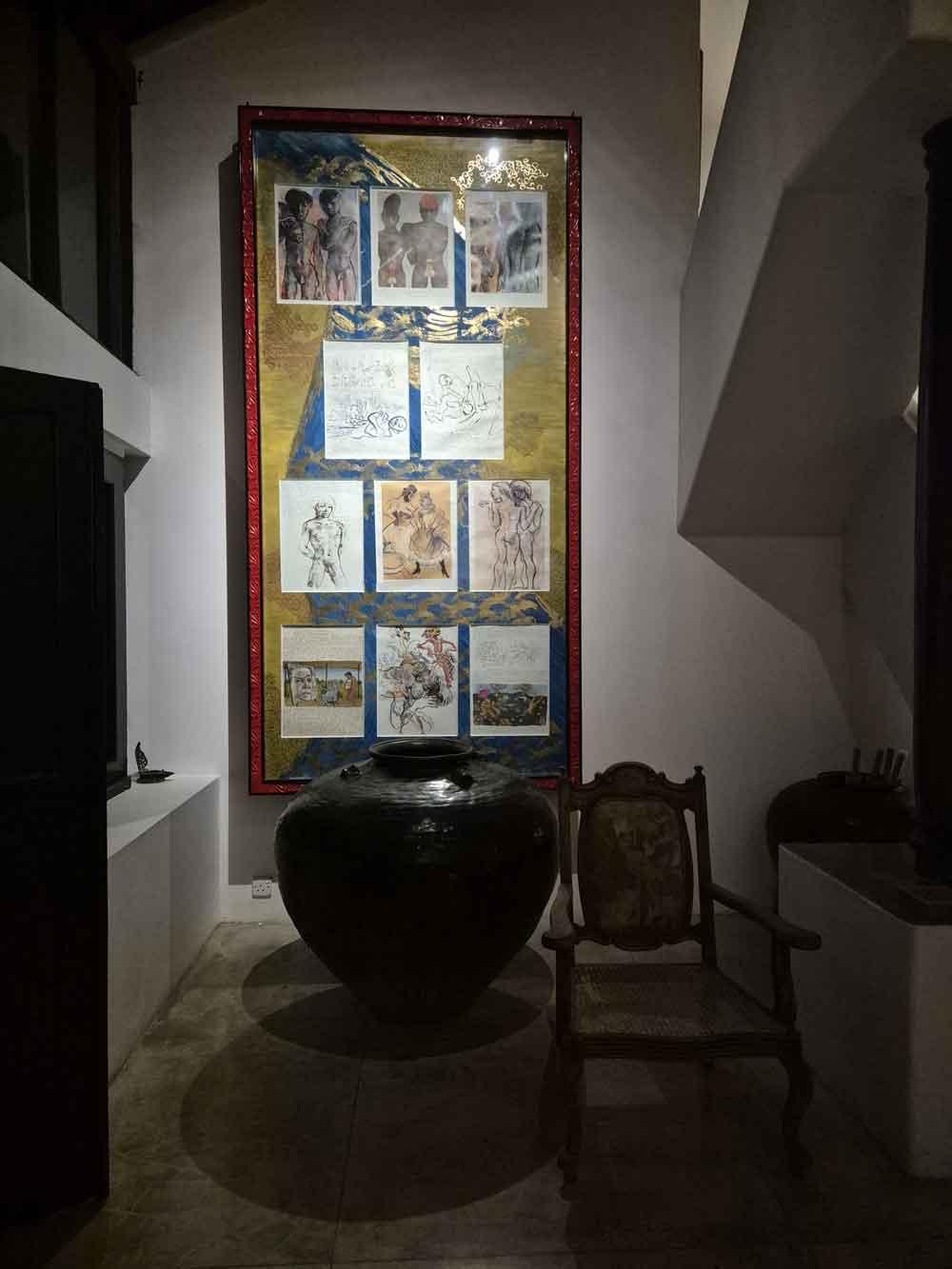
It would be a mistake to regard the forthcoming exhibition as an event temporarily inhabiting the house. The exhibition is better understood as another layer within an already evolving cultural landscape. The paintings arrive not to transform the estate, but to continue a conversation that has unfolded there for decades.
Too often contemporary exhibitions occupy spaces that remain indifferent to the works they display. The familiar white gallery wall aspires towards neutrality, isolating the artwork from everything surrounding it. Such neutrality possesses undeniable advantages. It allows painting to command uninterrupted attention. Yet it also removes art from the environments within which human beings actually experience beauty.
The older European tradition understood something rather different.
Country houses, villas and gardens rarely separated architecture, collecting and landscape into distinct categories. Paintings overlooked gardens. Sculpture punctuated avenues. Libraries opened onto terraces. The cultivated landscape became an extension of the interior, while the interior quietly borrowed the tranquillity of the landscape beyond.
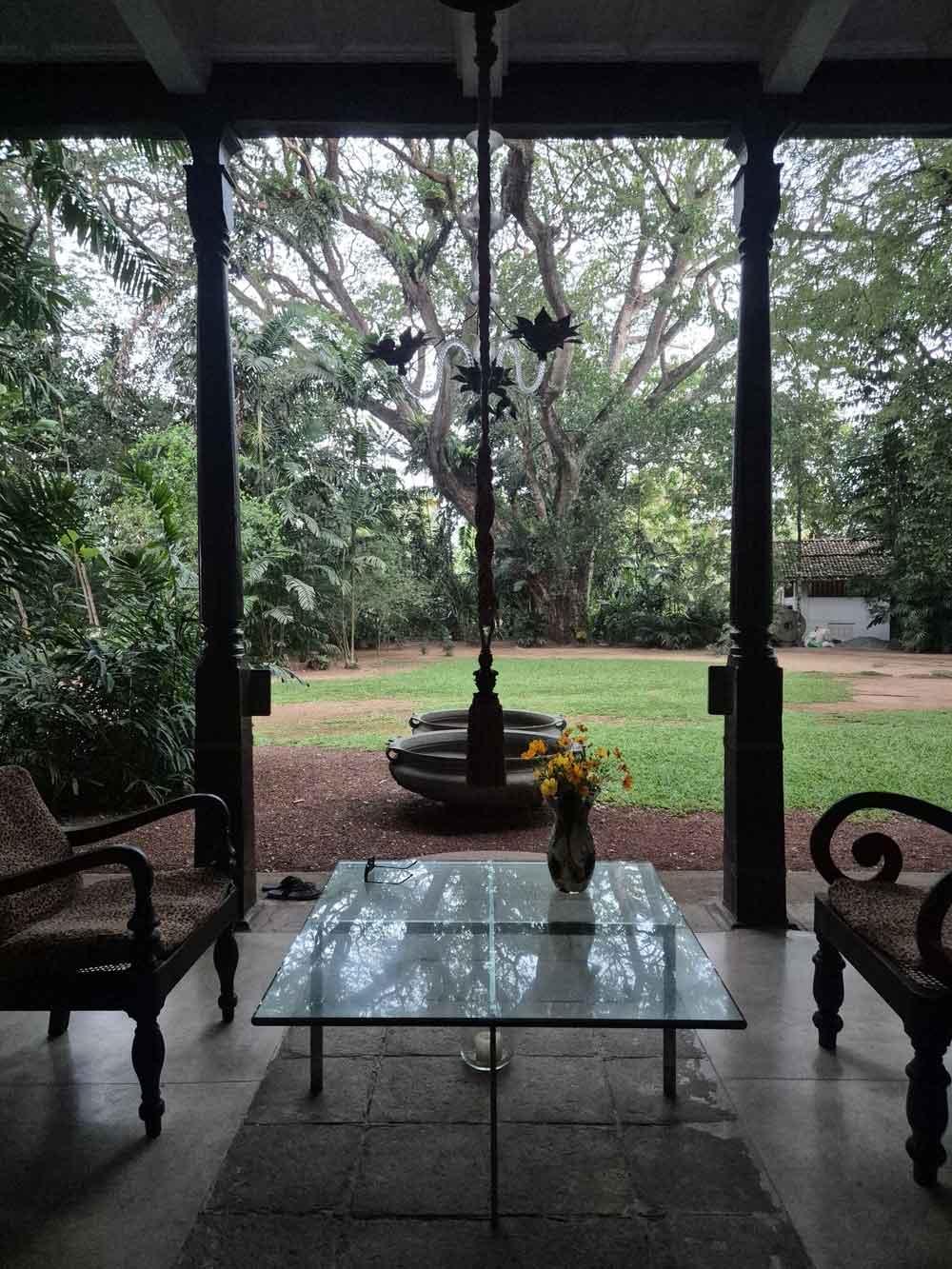
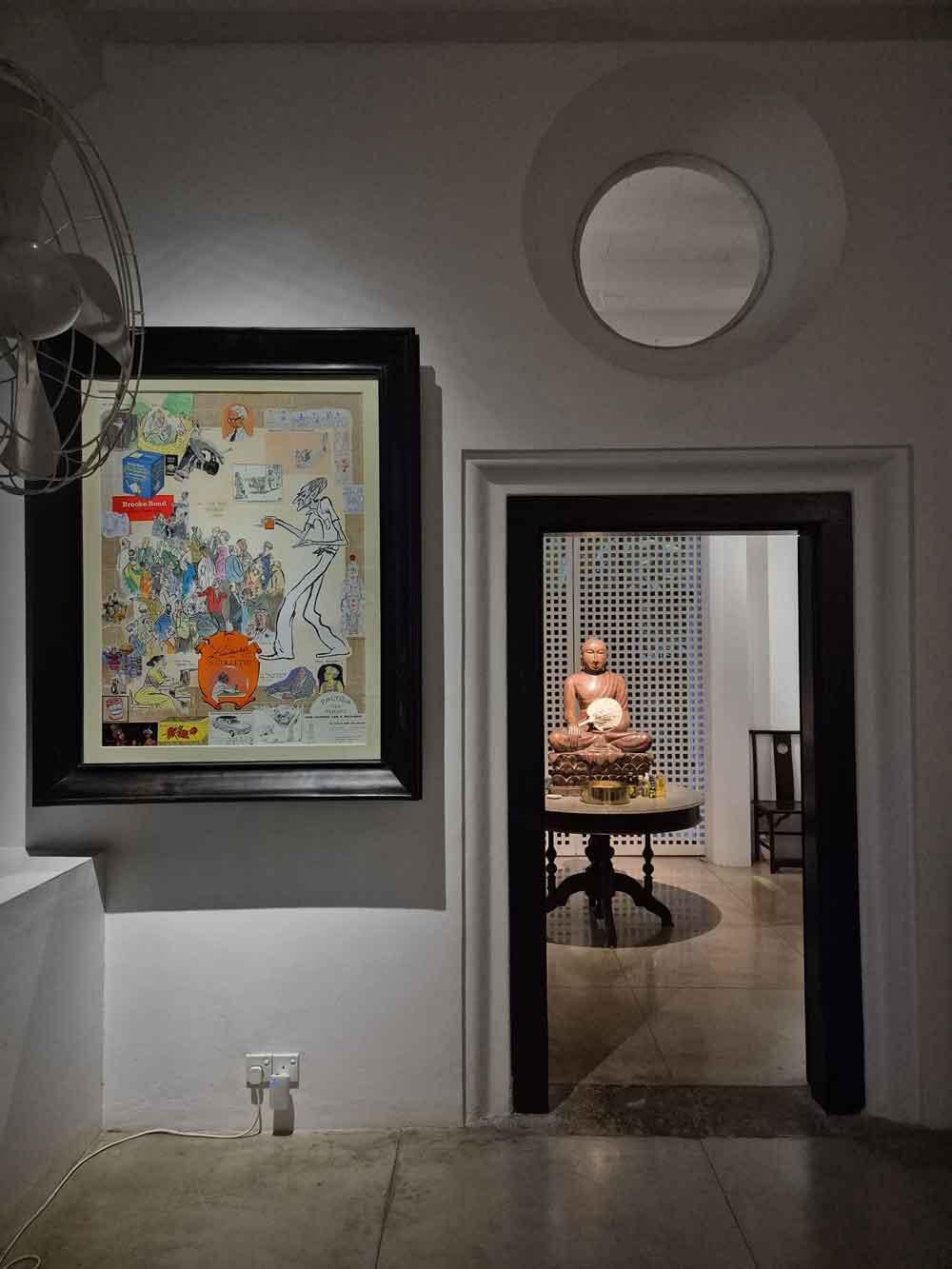
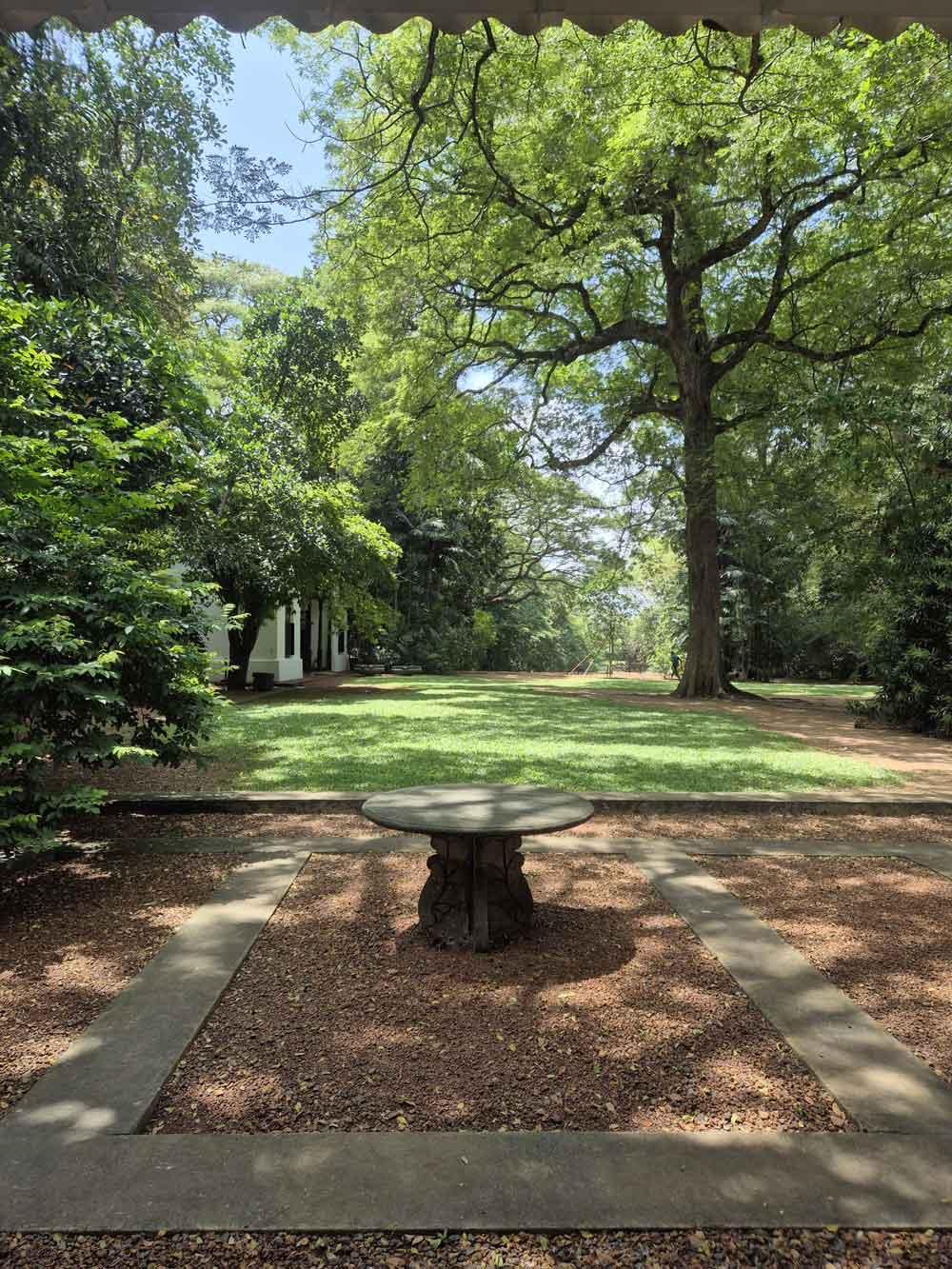
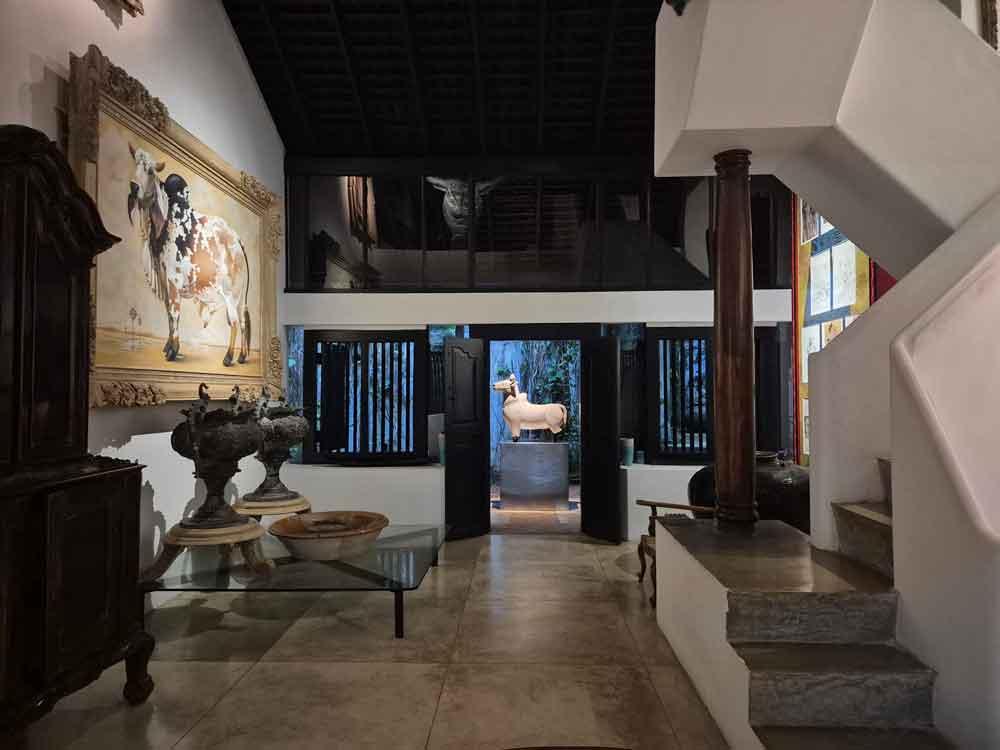
Boutique 87 participates in precisely this lineage. One moves effortlessly between pavilion and garden, corridor and courtyard, collection and canopy. There is no abrupt transition announcing that one has entered an exhibition. Instead, the visitor gradually becomes aware that art has become inseparable from its surroundings. The experience is cumulative rather than immediate, asking less to be consumed than inhabited.
This quality lends particular significance to the artists brought together for the exhibition.
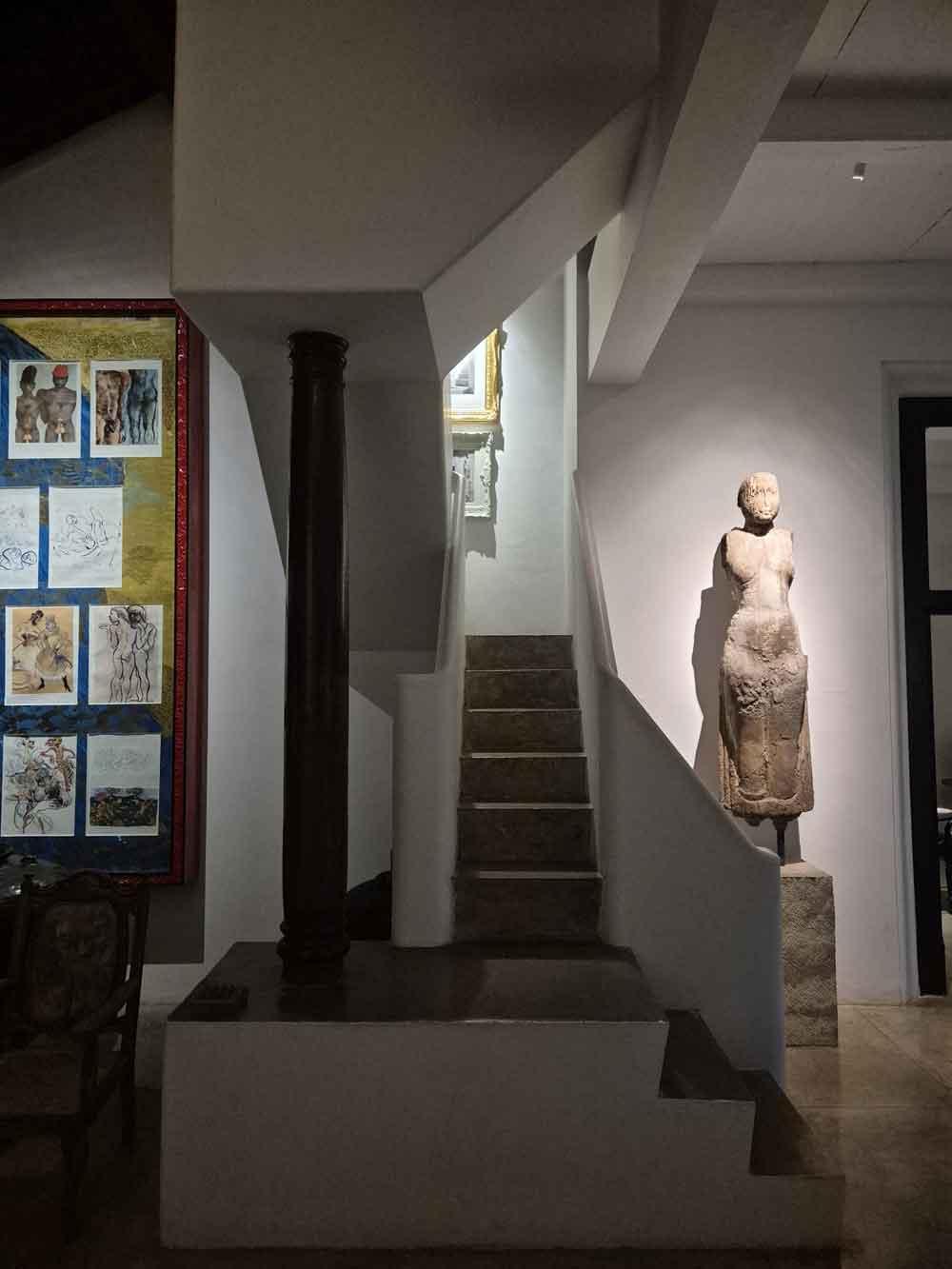
Saman Hewage's collages possess an unusual sensitivity to texture and memory, assembling fragments into compositions that reward prolonged attention rather than instant recognition. Their quiet complexity mirrors the layered history of the estate itself, where successive generations have added to a larger whole without diminishing what preceded them.
The exquisitely crafted frames of "Ebony" Damitha perform an equally important function. Too often framing is dismissed as a merely decorative craft, secondary to the painting it surrounds. Yet architecture itself teaches precisely the opposite lesson. Thresholds matter because they mediate experience. A doorway shapes entry. A window shapes vision. Likewise, a frame is not simply an ornament; it is an architectural device, determining how a work is encountered. Damitha's work restores dignity to that often-overlooked discipline, reminding us that craftsmanship frequently resides in the spaces between.
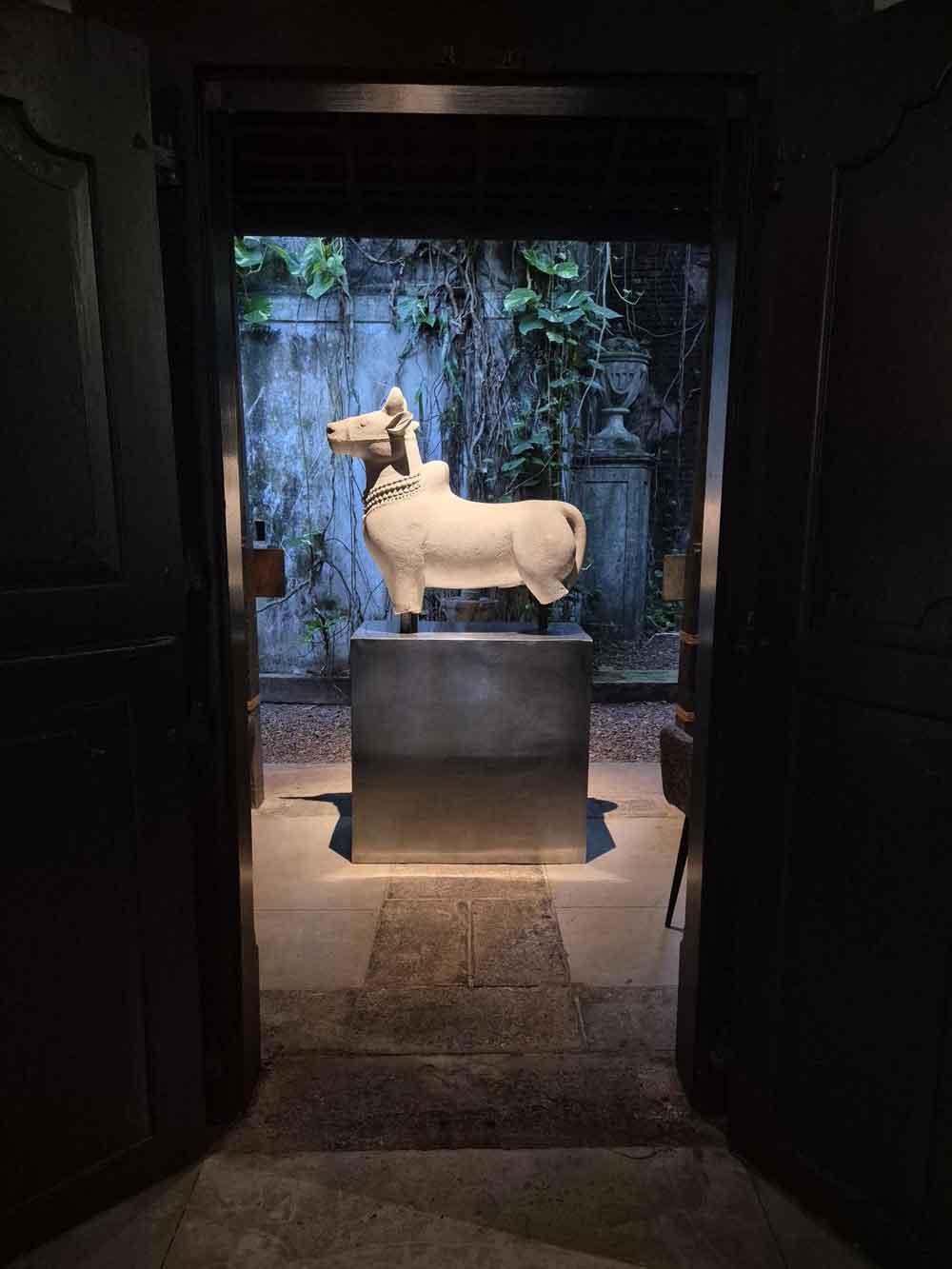
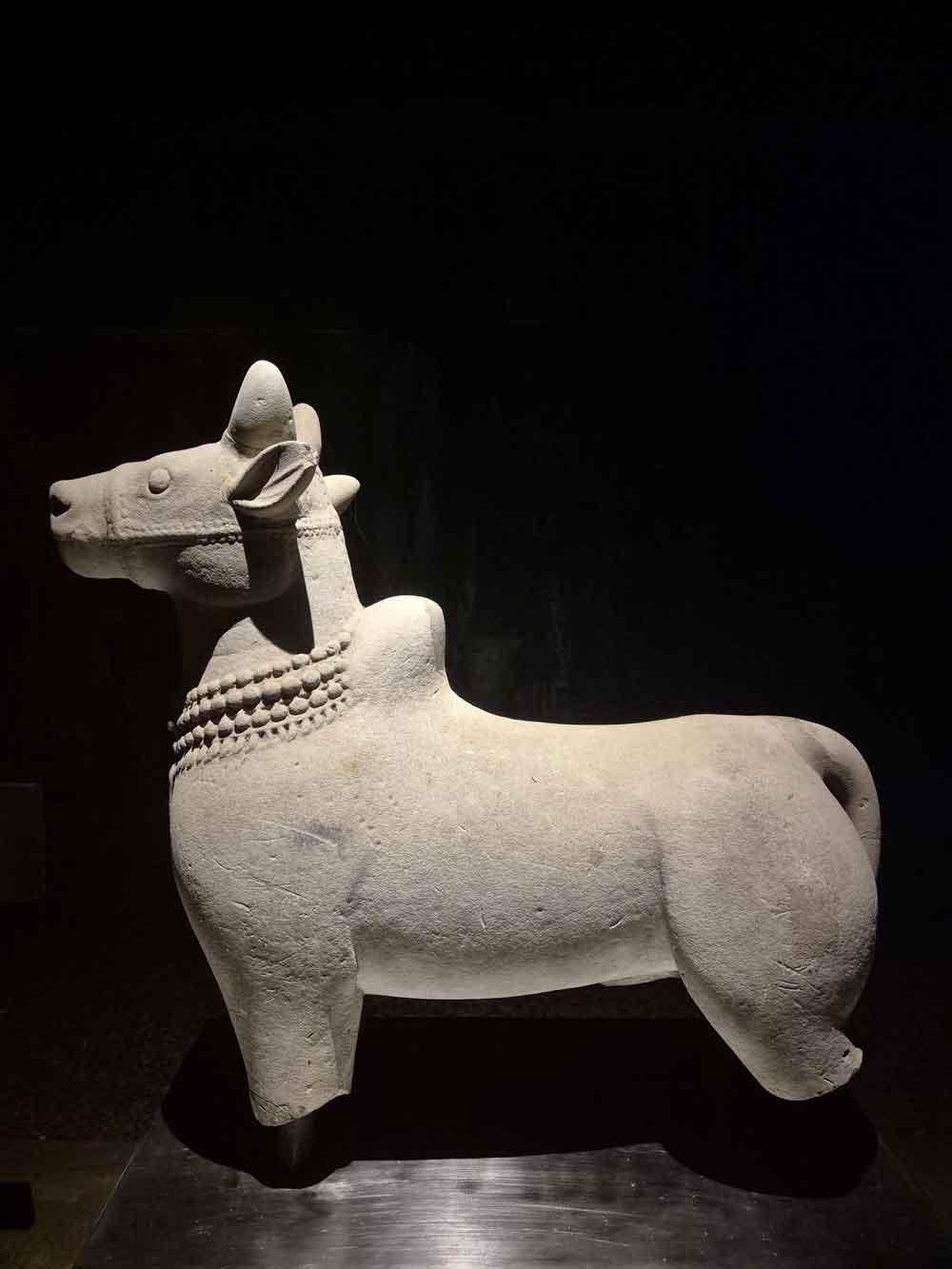
At the heart of the exhibition stands Rajith Kamalnal's monumental Nandi.
Its presence is commanding without becoming theatrical, monumental without sacrificing restraint. Situated within the architectural rhythm of the house, the painting appears less as an isolated masterpiece than as an anchor around which the exhibition quietly revolves. The image draws upon a visual vocabulary rooted in South Asian civilisation while simultaneously engaging the contemplative atmosphere of its surroundings. It asks not to dominate the house, but to belong within it.
The exhibition therefore avoids one of the great temptations of contemporary curating.
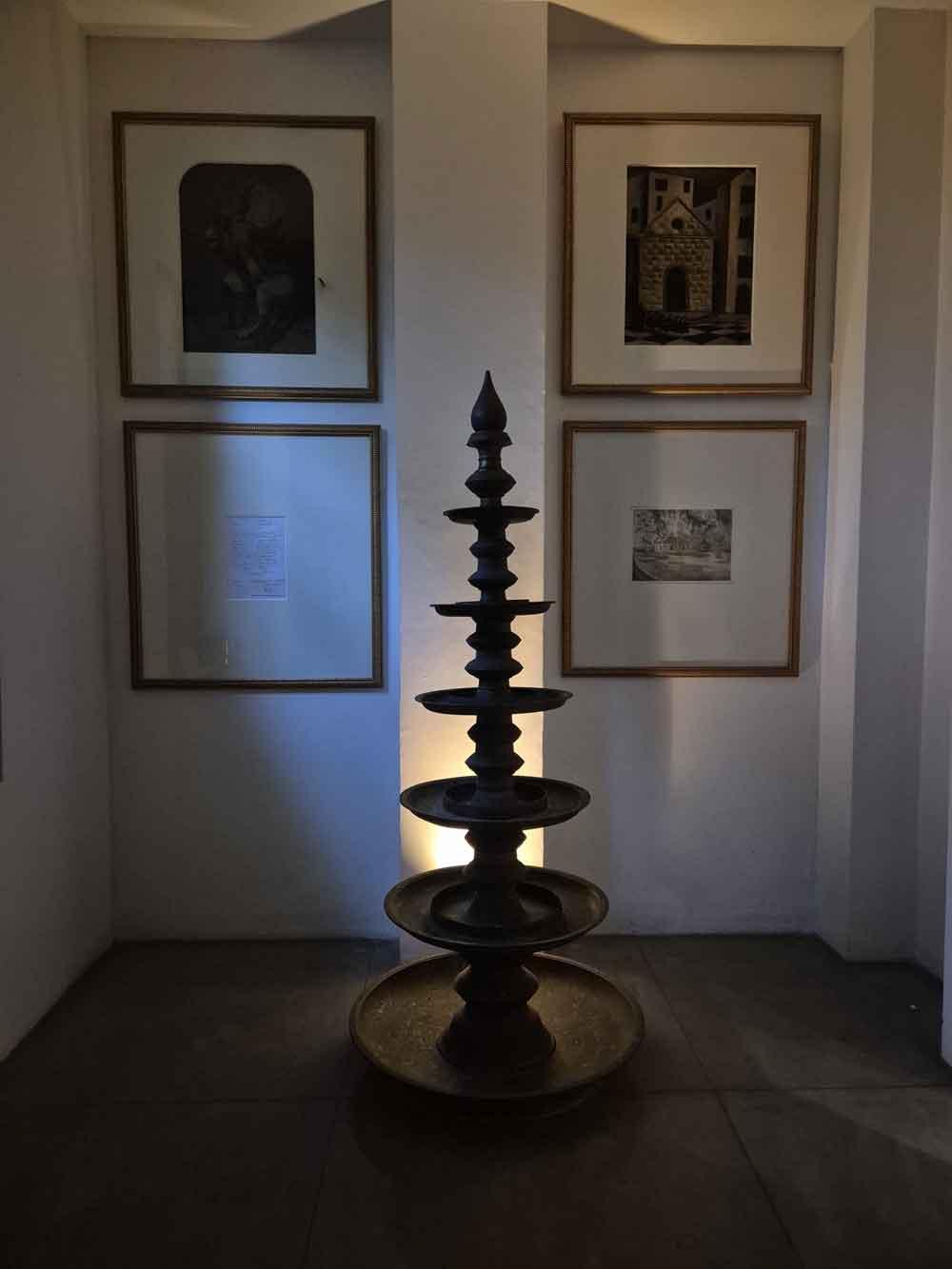
It does not seek spectacle, rather cultivating a dialogue that extends beyond contemporary art into the permanent collection itself. Throughout the house, rare first-edition watercolours from John Whitchurch Bennett's Fishes of Ceylon continue to occupy their place with understated elegance. Bennett's meticulous studies of the island's southern marine life possess a scientific precision that gradually reveals itself as artistic sensitivity. They remind the visitor that observation is itself a creative act. Before nature can be represented, it must first be understood.
Placed within Boutique 87, these nineteenth-century works acquire renewed significance. They become part of a larger meditation upon Sri Lanka as both landscape and imagination, demonstrating that artistic attention has long been directed not only towards monuments and people, but towards the remarkable natural world that has shaped the island's cultural identity.
The relationship between Geoffrey Bawa, Bevis Bawa and Donald Friend remains one of the most intellectually fertile episodes in modern Sri Lankan cultural history. It was never a formal movement, nor a shared manifesto. Rather, it resembled an extended conversation conducted across architecture, gardens, painting, collecting and friendship.
Bevis approached the landscape with theatrical imagination, delighting in surprise, narrative and moments of calculated eccentricity. Geoffrey distilled many of those instincts into an architectural language of remarkable precision and restraint. Donald Friend, painter, diarist, collector and one of Australia's most accomplished twentieth-century artists, occupied the fertile ground between them, documenting and enriching the creative world they collectively inhabited.
Friend's arrival in Sri Lanka brought with it far more than an accomplished painter. During his years in Bali he had immersed himself in one of Southeast Asia's richest artistic traditions, living among artists and craftsmen, assembling an extraordinary collection of Balinese sculpture, textiles and ceremonial objects, and developing a profound appreciation for the seamless relationship between architecture, landscape, ritual and everyday life. Bali demonstrated that art need not be confined to museums or galleries; it could inhabit houses, temples and gardens with equal ease, becoming part of the rhythm of daily existence.
It was Bevis Bawa who persuaded Friend to exchange Bali for Sri Lanka in the late 1950s, and in doing so transplanted not merely an individual but an entire artistic sensibility. Elements of Balinese spatial composition, vernacular craftsmanship and the integration of sculpture within tropical gardens found fertile ground at Brief Garden, where Friend's collecting, Bevis's exuberant imagination and Geoffrey's increasingly sophisticated architectural vision entered into continual dialogue. The resulting exchange helped shape one of the most distinctive creative circles in post-independence Sri Lanka, influencing not only architecture but attitudes towards collecting, landscape and the relationship between art and domestic life.
The significance of that dialogue lay precisely in its informality. Ideas circulated through conversation rather than doctrine, through shared meals, travels, sketches and gardens rather than manifestos. Geoffrey did not reproduce Balinese architecture, nor did Friend seek to recreate Bali in Sri Lanka. Instead, each absorbed from the other broader principles: an appreciation for craftsmanship, the choreography of movement through landscape, the expressive power of restraint and the conviction that architecture achieves its fullest meaning only when it enters into conversation with art and nature.
Each influenced the others, not by imitation but through continual exchange.
The exhibition acknowledges that dialogue while refusing nostalgia. It does not attempt to reconstruct a vanished world. Instead, it asks what aspects of that sensibility remain meaningful today. In an era increasingly characterised by accelerated development, shrinking green space and architecture driven by novelty rather than permanence, the questions posed by Bawa appear more relevant than ever.
- What deserves preservation?
- What should remain untouched?
- How much intervention is too much?
- Can landscape still teach restraint in an age devoted to excess?
These are ultimately ethical questions rather than architectural ones. They are also questions embodied by Boutique 87 itself.
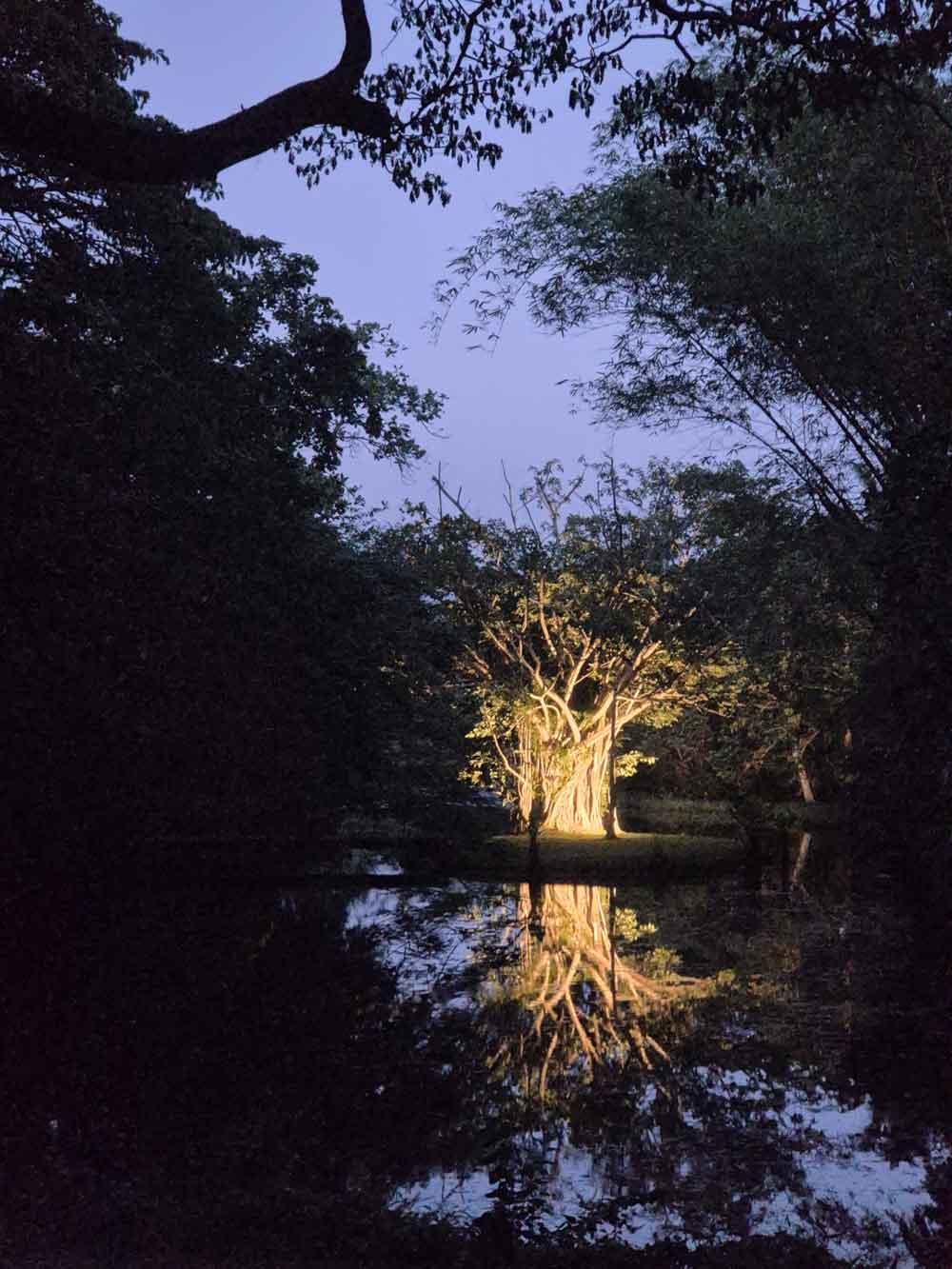
The estate has become something increasingly uncommon within contemporary cultural life: a place where architecture remains inseparable from ecology. Every mature tree contributes to the composition. Every protected canopy shelters biodiversity. Every carefully maintained vista resists the incremental erosion brought about by unchecked development. Bentota has changed dramatically over recent decades. Roads have widened, buildings have multiplied, and coastlines have become increasingly commercialised. Against this transformation, Boutique 87 has quietly continued another tradition altogether: the protection of continuity.
To preserve a landscape is therefore not simply to preserve beauty. It is to preserve memory. Visitors often speak of the extraordinary tranquillity they encounter upon entering the garden. Yet tranquillity is not a natural accident. It has been cultivated with extraordinary patience. Silence has been designed as carefully as architecture. The garden slows perception. It encourages lingering. It rewards attentiveness rather than haste. One begins to understand why visitors from across the world return repeatedly, often describing the estate less as a destination than as an experience.
The house alters according to the hour.
Morning light reveals one architecture.
Late afternoon reveals another.
After nightfall, however, something altogether different emerges.
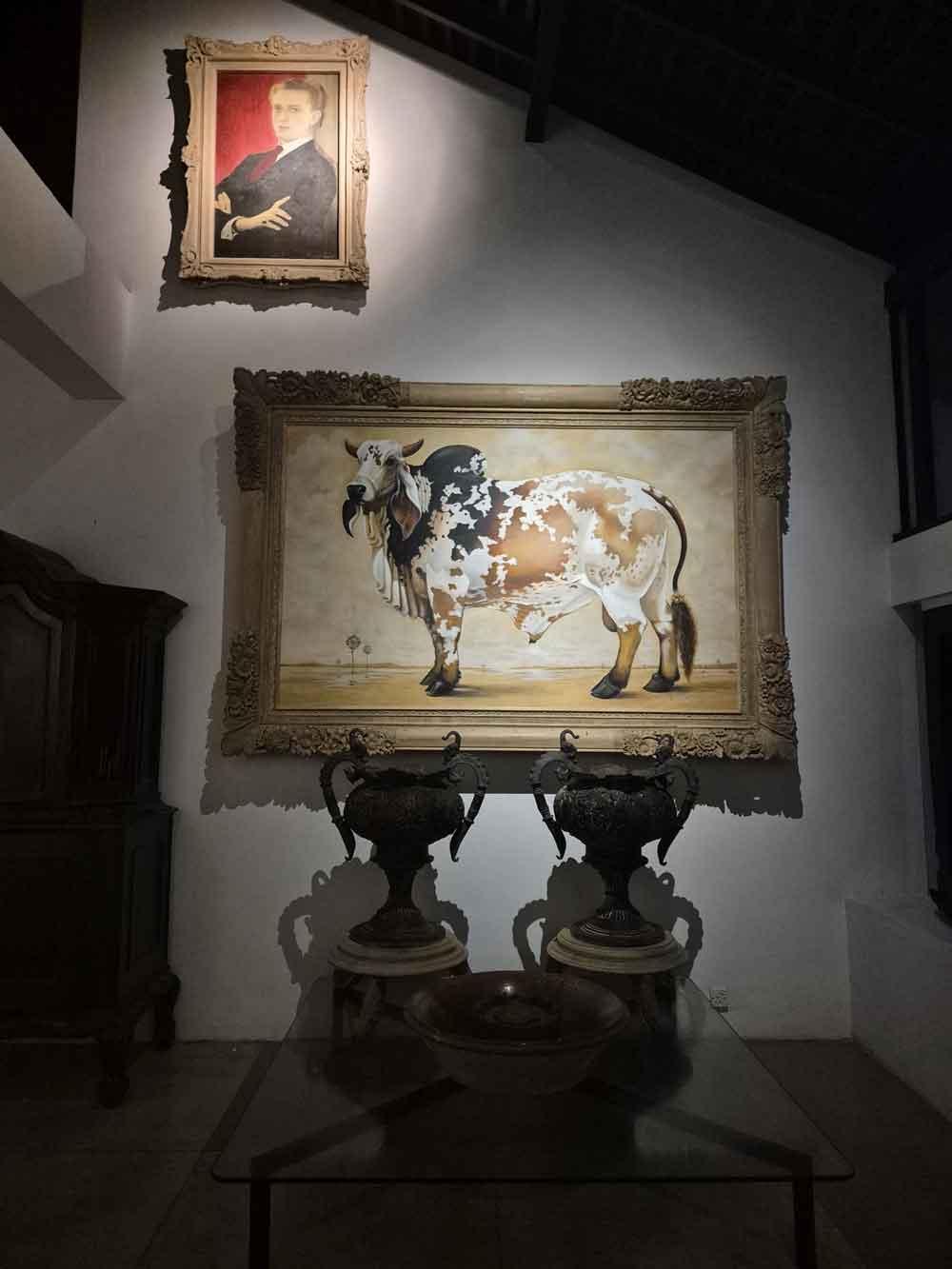
The garden retreats into darkness while reflections gather quietly upon water. Lamps illuminate paintings with remarkable restraint. Corridors become galleries. Verandas become places of contemplation. The experience recalls the extraordinary privilege of remaining alone within a great museum after its doors have closed, when artworks recover an intimacy impossible during ordinary visiting hours.
Yet unlike the museum, Boutique 87 never ceases to live. Meals continue to be served. Conversations drift across courtyards. Rain falls upon ancient tiles. Leaves gather exactly where they should. The house refuses the stillness of preservation because it has never ceased being a home.
We often imagine heritage as something frozen, protected behind barriers against the passing of time. Boutique 87 proposes something considerably more demanding. Heritage survives not because it is isolated from life, but because life itself is conducted with sufficient care to sustain it.
The exhibition, opening on 15 August before continuing thereafter as part of the house's ongoing cultural programme, is therefore more than a display of paintings. It is an invitation to participate, however briefly, in a philosophy of stewardship that extends beyond architecture and beyond art itself.
The greatest works of civilisation are rarely created in a single generation. Their authorship belongs not only to those who first imagined them, but to every subsequent custodian who possessed the wisdom to recognise that beauty is sustained not through possession, but through care.
In that sense, Boutique 87 is not merely a house, nor simply a garden. It is a evidence of a larger argument. An argument that culture, like landscape, survives only so long as there remain people prepared to cultivate it.