The Case Against Historical Exceptionalism: From Anuradhapura to Aachen

THE CITADEL ARCHIVES BY ANARGI JAYAKODY
After an absence of almost six months, it is a pleasure to return to these pages.
When I last wrote for The Sun, my intention was to take only a brief pause before resuming our exploration of Sri Lanka's remarkable past. As is often the case in academia, however, what was intended to be a short hiatus extended rather longer than anticipated. The reason for that absence was the completion of my Master of Philosophy at the University of Peradeniya, while also preparing to begin a Master of Theological Studies in History and Theology this autumn at Harvard University's Graduate School of Arts and Sciences and Harvard Divinity School under the guidance of Parkman Professor Francis X. Clooney, S.J.
My thesis, Royal Ritual and Ecclesiastical Authority: Christianity, Buddhism, and the Transformation of Kingship Virtues in the Carolingian Empire (800-877 A.D.) and the Anuradhapura Kingdom (250-180 B.C.), sought to answer a deceptively simple question: what happens when political power encounters organised religion?
Most Sri Lankans are familiar with the story of King Devanampiyatissa's encounter with Arahat Mahinda and the arrival of Buddhism upon our shores. Likewise, students of European history recognise the coronation of Charlemagne and the emergence of Christian kingship in medieval Europe. These events are usually taught as belonging to entirely separate worlds, divided by geography, language, and culture. Yet beneath those obvious differences lies a striking commonality. Both societies witnessed the transformation of kingship from an institution grounded primarily in hereditary authority and martial prowess into one increasingly defined by moral responsibility, religious legitimacy, and ecclesiastical oversight.
For the better part of six months, I found myself moving between two civilisations separated by thousands of miles and nearly a millennium of subsequent historical development. One day was spent reading the Mahāvaṃsa and the cave inscriptions of Anuradhapura; the next, the capitularies of Charlemagne, the writings of Hincmar of Reims, or the royal annals of the Carolingian court. At first glance, there could scarcely be two more different societies. Yet the deeper one ventured into both, the more familiar their political dilemmas became. Kings in both worlds sought legitimacy not merely through conquest, but through sanctity. Monastic communities emerged as arbiters of royal conduct. Sacred landscapes became instruments of political authority. Sovereignty itself acquired an increasingly moral dimension.
The experience left me with a conviction that extended well beyond the confines of my monograph. It was not simply that medieval Sri Lanka possessed fascinating parallels with medieval Europe. Rather, it became increasingly apparent that the way we choose to write history often reveals as much about ourselves as it does about the past we seek to understand.
It is therefore only fitting that this renewed series should begin not with another forgotten kingdom, archaeological discovery, or royal biography, but with historiography itself.
Historiography, put simply, is the study of historical writing. Whilst technically correct, such a definition takes a strawman’s approach as it scarcely conveys its importance. This discipline is not sequestered to only what historians know about the past, but with how they choose to organise that knowledge. It asks why certain questions are asked while others remain conspicuously absent; why one generation of historians writes political history, another social history, and another soteriological history; why some comparisons appear entirely natural whilst others seem almost inconceivable. In many respects, historiography is history turning its gaze upon itself.
The British historian E. H. Carr famously observed that historical facts never speak for themselves. They become historical only when the historian selects them, arranges them, and assigns them significance. Thousands of inscriptions survive from the ancient world, millions of pottery fragments lie buried beneath forgotten cities, and countless chronicles remain preserved in libraries across the globe. Yet these fragments do not assemble themselves into coherent narratives. Historians decide which pieces belong together. Every history is therefore, consciously or otherwise, an argument. It is an argument not merely about what happened, but about what deserves to be connected.
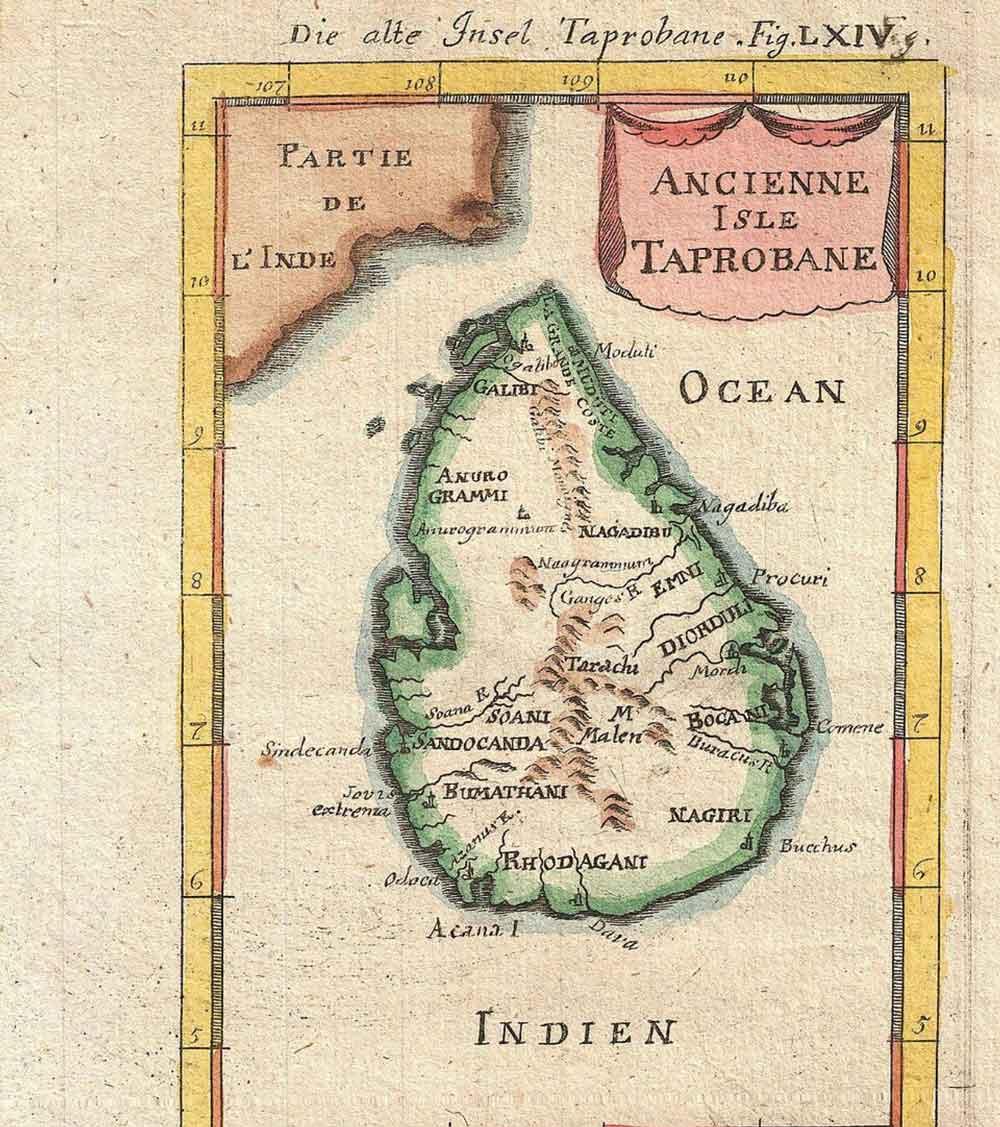
That seemingly abstract point has profound implications for the way we understand Sri Lanka.
Consider Anuradhapura. It is tempting to imagine that there exists a single, objective history of the kingdom waiting to be discovered. In reality, there have been many Anuradhapuras, each reconstructed by successive generations of scholars asking different questions of the same evidence.
For Wilhelm Geiger, whose translation of the Mahāvaṃsa introduced the island's great chronicle to generations of scholars, Anuradhapura emerged primarily through the literary tradition. The chronicles formed the backbone of political narrative. For H. C. P. Bell, the kingdom was revealed through ruined monasteries, reservoirs and excavated foundations. Archaeology, rather than narrative, became the principal means of recovering the past. Senerath Paranavitana transformed the picture once again. By treating cave inscriptions, pillar inscriptions and donative records not simply as isolated texts but as political documents, he revealed an administrative and ideological landscape that the chronicles only partially described. R. A. L. H. Gunawardana shifted attention still further, asking not merely who ruled, but how the Sinhala polity itself emerged and the ideological foundations upon which kingship rested.
None of these historians contradicted one another in any absolute sense. Rather, each enlarged the historical landscape by asking questions that previous generations had seldom considered. The result was not a single history being corrected, but a civilisation being viewed from successively broader vantage points.
For much of the twentieth century, however, one assumption remained remarkably persistent. Medieval Sri Lanka was generally examined within the intellectual boundaries of the island itself. This tendency, often described by scholars as Sinhalese exceptionalism, deserves to be understood with considerably more nuance than contemporary debates sometimes allow.
Exceptionalism, in this context, is not the assertion that Sri Lanka was somehow superior to other civilisations, nor is it the simple observation that the island possesses a distinctive historical tradition. Every civilisation is distinctive.
Rather, it describes a historiographical disposition: the tendency to treat Sri Lanka as the primary and often exclusive unit of historical analysis, explaining its institutions principally through their internal evolution rather than sustained comparison with analogous societies elsewhere.
Yet before such an approach is criticised, it ought first to be understood.
The emergence of this historiographical tradition was neither accidental nor intellectually impoverished. It reflected the circumstances under which modern Sri Lankan history itself was being written. Throughout much of the nineteenth and twentieth centuries, historians confronted a colonial scholarship that had frequently relegated the island to the margins of Indian history or interpreted its past almost exclusively through European intellectual categories. Recovering the autonomy of Sri Lanka's historical experience therefore became an essential scholarly undertaking. It required historians to reconstruct indigenous political traditions from the Mahāvaṃsa, the Dīpavaṃsa, epigraphic evidence and archaeological remains, establishing that the island possessed its own coherent historical trajectory deserving of study in its own right.
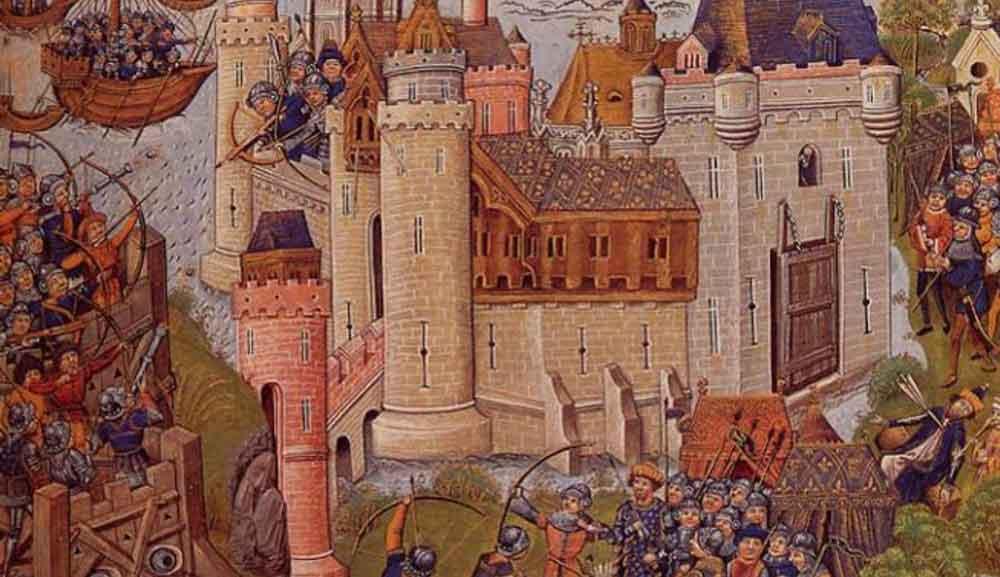
Within that context, the national histories produced by scholars such as K. M. de Silva performed an indispensable intellectual service. They provided a framework through which Sri Lanka could once again be understood as the subject, rather than merely the object, of historical inquiry. Without this generation of scholarship, much of the comparative work undertaken today would rest upon remarkably fragile foundations.
Nor should we dismiss another legitimate concern that continues to shape comparative history more broadly.
Comparison is seductive precisely because it reveals unexpected similarities. Yet similarities can also deceive. Historians have long warned against the dangers of false equivalence: of assuming that institutions performing broadly similar functions necessarily carried identical meanings within their respective societies. The Sangha was not the medieval Latin Church. The Dharmarāja was not simply a Buddhist equivalent of the rex christianissimus. The Temple of the Tooth cannot be understood merely as another version of a European relic cult, nor should Charlemagne's imperial reforms be read through categories derived from Anuradhapura. Context remains indispensable. Detached from the linguistic, theological and political worlds that produced them, comparison risks flattening difference into superficial resemblance.
This caution deserves to be taken seriously. Comparative history is at its weakest when it searches merely for parallels. It becomes little more than an exercise in collecting historical coincidences. Yet it is precisely because these criticisms are so persuasive that comparison, when undertaken carefully, becomes all the more valuable. The purpose of comparative history is not to demonstrate that civilisations were fundamentally alike. It is to ask why societies confronting analogous problems often arrived at profoundly different solutions. Medieval rulers across Eurasia wrestled with remarkably similar questions. By what authority does a king rule? How should political power relate to religious authority? Can moral failure invalidate sovereignty? Yet the answers offered by Buddhist Anuradhapura, Carolingian Francia, Byzantium, Pagan and Angkor differed in ways that reveal the distinctive assumptions of each civilisation.
Comparison therefore does not eliminate context; it depends upon it. The more carefully each society is understood on its own terms, the more meaningful comparison becomes.
It was here that Stanley Jeyaraja Tambiah made one of his most enduring contributions. Rather than abandoning local context, Tambiah deepened it by placing Sri Lanka within the wider constellation of Theravāda Buddhist kingdoms across South and Southeast Asia. The island's institutions ceased to appear isolated without ceasing to be uniquely Sri Lankan. Comparison became not a substitute for contextual history but its natural extension.
Recent historians have pushed this conversation even further. Alan Strathern's work, for example, demonstrates that the history of Sri Lanka is often illuminated precisely because it can be placed within conversations about conversion, kingship and religious change extending well beyond South Asia. Such scholarship does not ask us to abandon national history. It asks us to recognise that national histories themselves participate in larger historical processes.
Perhaps this is the point at which Sri Lankan historiography now finds itself. The first generation of modern historians established that the island possessed a history worthy of serious study. Subsequent generations refined, corrected and expanded that narrative through archaeology, epigraphy, anthropology and social history. Comparative history should be understood not as a rejection of those achievements, but as their maturation. It becomes possible only because earlier historians first gave us a Sri Lankan history sufficiently robust to enter into conversation with the wider medieval world.
These are not exclusively Sri Lankan questions, nor are they exclusively European ones. They are questions that confronted medieval civilisations across continents.
It is here, I believe, that the future of Sri Lankan historiography lies.
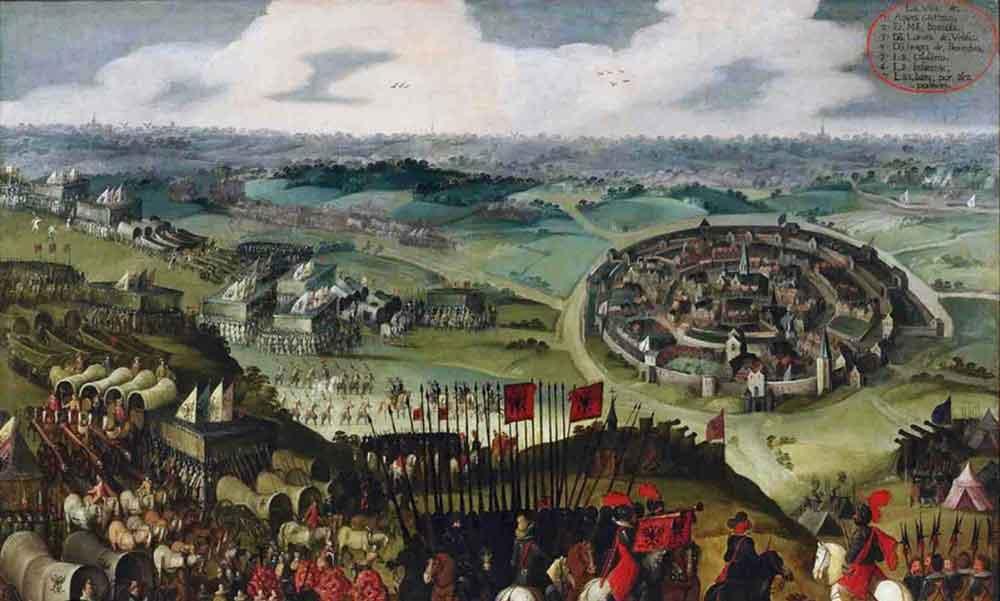
Comparison should never be mistaken for homogenisation. It is not an attempt to dissolve Sri Lanka into some vague global past. Quite the opposite. Comparison provides the only reliable means by which genuine uniqueness can be identified. We cannot know what was truly exceptional about Anuradhapura until we first understand what it shared with Aachen, with Pagan, with Angkor, with Byzantium, and with the many other societies wrestling with the universal problems of power, faith and legitimacy. If our medieval kingdoms are worthy of comparison with their counterparts, it is not because they cease to be Sri Lankan. It is because they deserve to be recognised as participants in the wider history of medieval civilisation itself.
For too long we have tended to ask how Sri Lanka differed from the rest of the medieval world. Perhaps the more fruitful question is how the medieval world helps us understand Sri Lanka, and how Sri Lanka, in turn, enriches our understanding of the medieval world itself.
Over the coming weeks, this column will continue to explore the kings, monasteries, inscriptions, forgotten cities and remarkable personalities that shaped Sri Lanka. Yet, from time to time, we shall also step beyond the island's shores. For the purpose of comparison is never to blur distinctions, but to sharpen them. It is only by placing Anuradhapura within the wider tapestry of medieval civilisation that we can truly appreciate what was uniquely Sri Lankan, what was profoundly human, and why the history of this island deserves to stand not at the periphery of the medieval world, but firmly within it.