IN CONVERSATION WITH CHARUKA DILSHAN FASHION DESIGNER | CREATIVE VISIONARY
BY YASHMITHA SRITHERAN
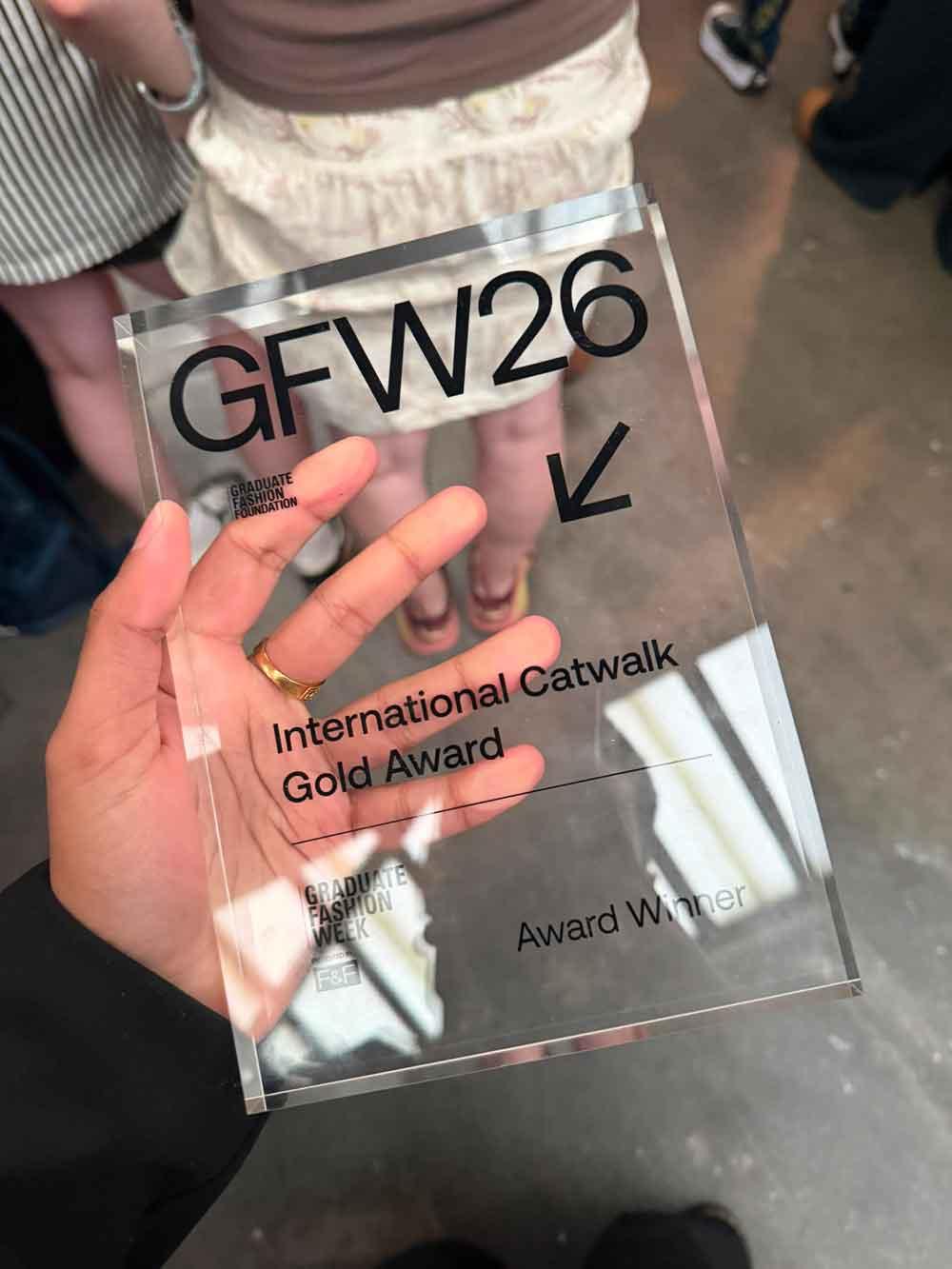
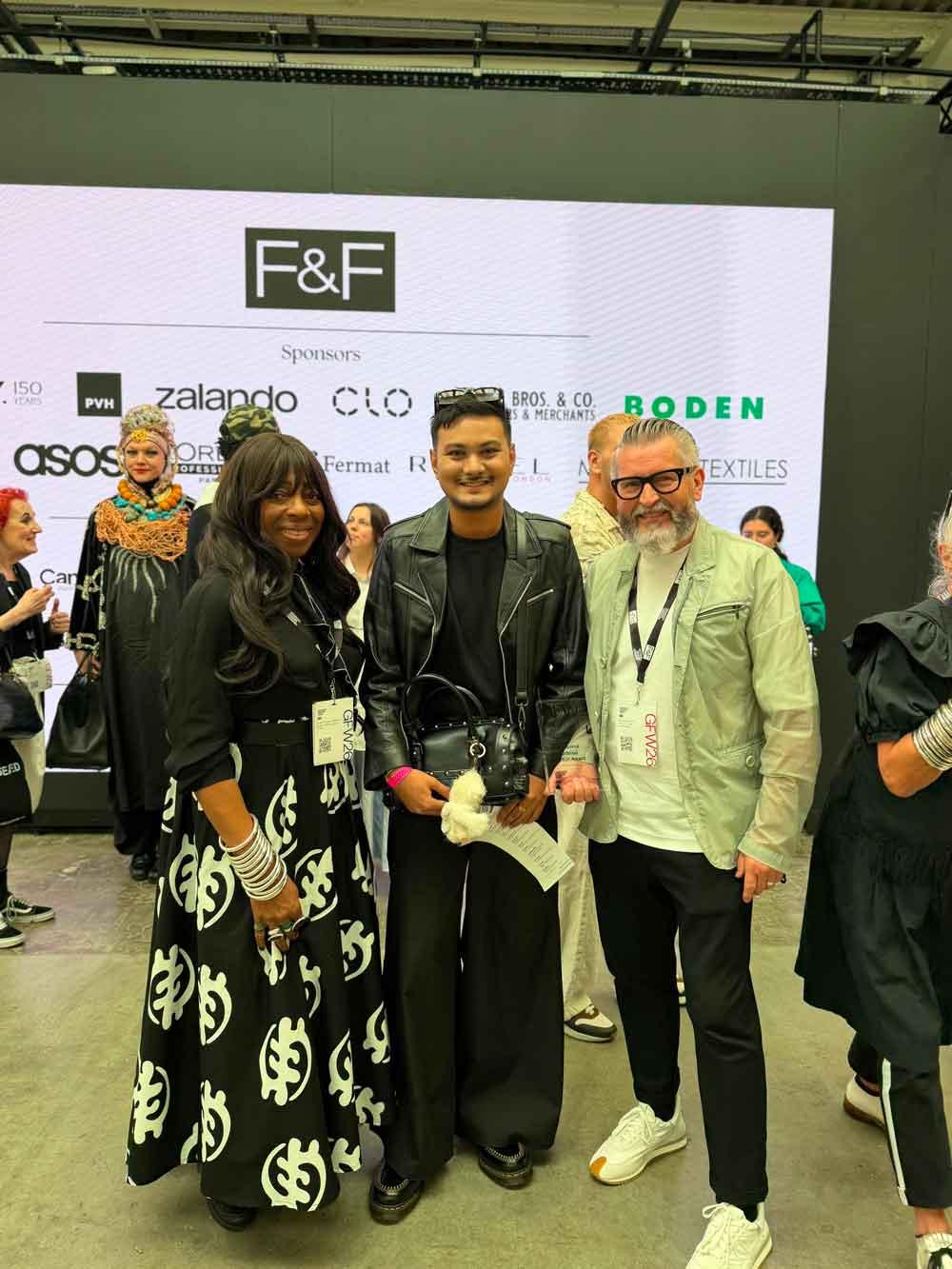
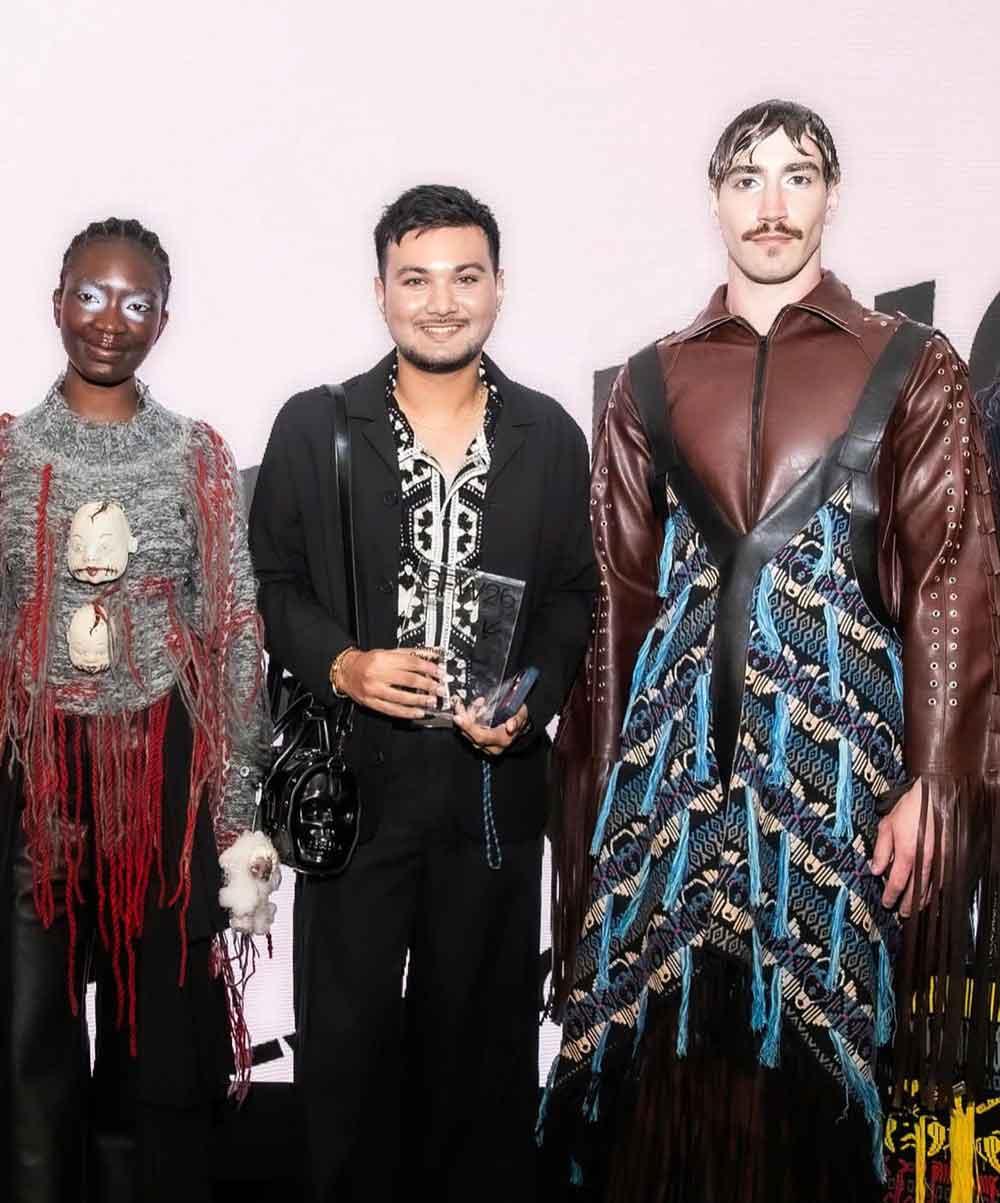
From international recognition at Graduate Fashion Week 2026 in London to a growing reputation for reimagining Sri Lanka's traditional craftsmanship through contemporary fashion, Charuka Dilshan represents a new generation of designers putting Sri Lankan creativity firmly on the global map. His work is rooted in heritage but never confined by it. Instead, he explores how centuries old techniques can be transformed into modern collections that resonate with audiences across cultures. Raised in a family connected to the garment industry, Charuka discovered his passion for design early in life before choosing fashion over a career in international business. Today, his collections tell stories that go far beyond clothing, celebrating the country's artisans while challenging conventional ideas about fashion. In this exclusive interview with The Sun (Daily Mirror), Charuka reflects on his creative journey, the philosophy behind his award-winning work, and why authenticity remains his greatest source of inspiration.
Q: Your work reflects a strong creative identity. Can you take us back to the beginning and share what first inspired you to pursue fashion as a career?
Fashion has been part of my life from the very beginning. Growing up in my father's garment business, I developed an early fascination with fabrics and the process of transforming ideas into finished garments. Although I initially studied International Business, I realised my true passion was fashion and decided to follow that path with the full support of my family. Fashion school taught me far more than garment construction. It taught me how to think creatively and develop my own identity as a designer. Today, my work continues to be shaped by research into fashion, art, architecture, traditional craftsmanship and Sri Lanka's rich cultural heritage.
Q: Your profile highlights the idea of blending tradition with innovation. What does that balance mean to you personally, and how does it influence your design process?
Sri Lanka possesses extraordinary craftsmanship, but many traditional skills are gradually disappearing as lifestyles change and younger generations move away from these professions. Whenever I research a particular craft, I think about the artisans who have dedicated their lives to preserving these techniques and how easily that knowledge could be lost. That thought has become the driving force behind my work. Rather than reproducing traditional craftsmanship exactly as it exists, I try to reinterpret it in ways that feel relevant today. My goal is to introduce these crafts to new audiences while respecting the history behind them. I would love someone on the other side of the world to discover one of my garments because they admire its contemporary design and then become curious enough to learn about the Sri Lankan tradition that inspired it. In that sense, fashion becomes a bridge between cultures. For me, innovation is never about replacing tradition. It is about giving it a new chapter and allowing heritage to continue evolving. If fashion can encourage people to value these crafts in new ways, then they have every opportunity to survive for future generations instead of becoming part of history alone.
Q: Your designs often appear bold and thought provoking. How do you approach creativity when developing a new collection, from the initial concept to the final piece?
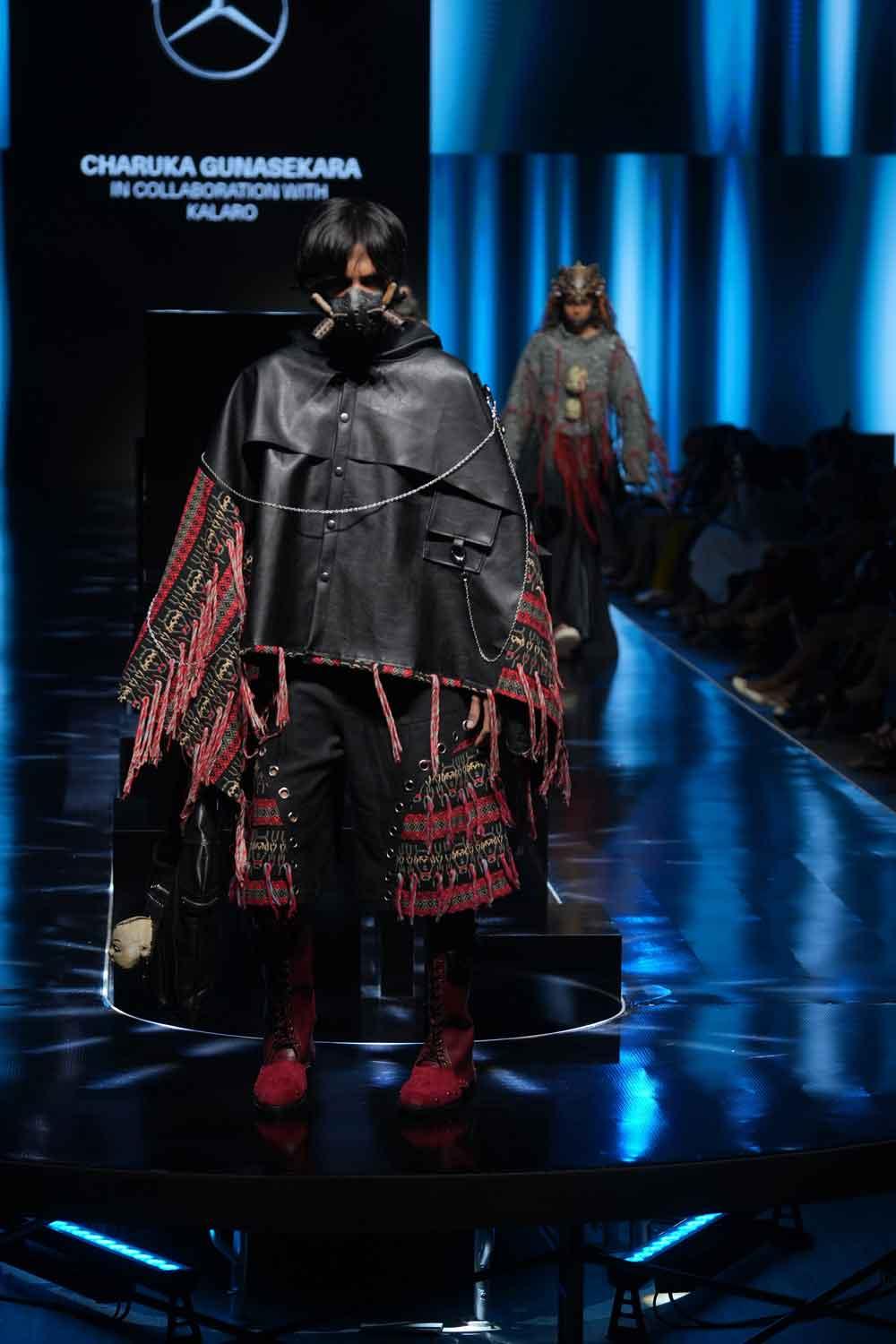
Every collection begins with a question rather than a sketch. I ask myself what story deserves to be told, and once I identify that story, I begin researching as deeply as possible. I explore history, culture, art, human behaviour and craftsmanship until I fully understand the subject I want to communicate. For me, fashion should do more than look beautiful. It should encourage people to stop, think and perhaps even begin a conversation. Every silhouette, texture, fabric and construction technique has a purpose because each element contributes to the narrative behind the collection. One craft that has become central to my creative language is Dumbara weaving. Receiving the Douglas MacLennan Scholarship for my heritage project reinforced my belief that exploring Sri Lankan craftsmanship was the right direction for my work. Since then, I have continued to investigate how this remarkable weaving tradition can be presented in a contemporary way while preserving its original character. Ultimately, success is not measured by whether people admire a garment. I want them to remember the story it tells long after they have seen it. That emotional connection is what gives fashion lasting meaning.
Q: Fashion is a highly competitive field that demands both resilience and originality. What challenges did you face in your career, and how did those experiences contribute to your growth as a designer?
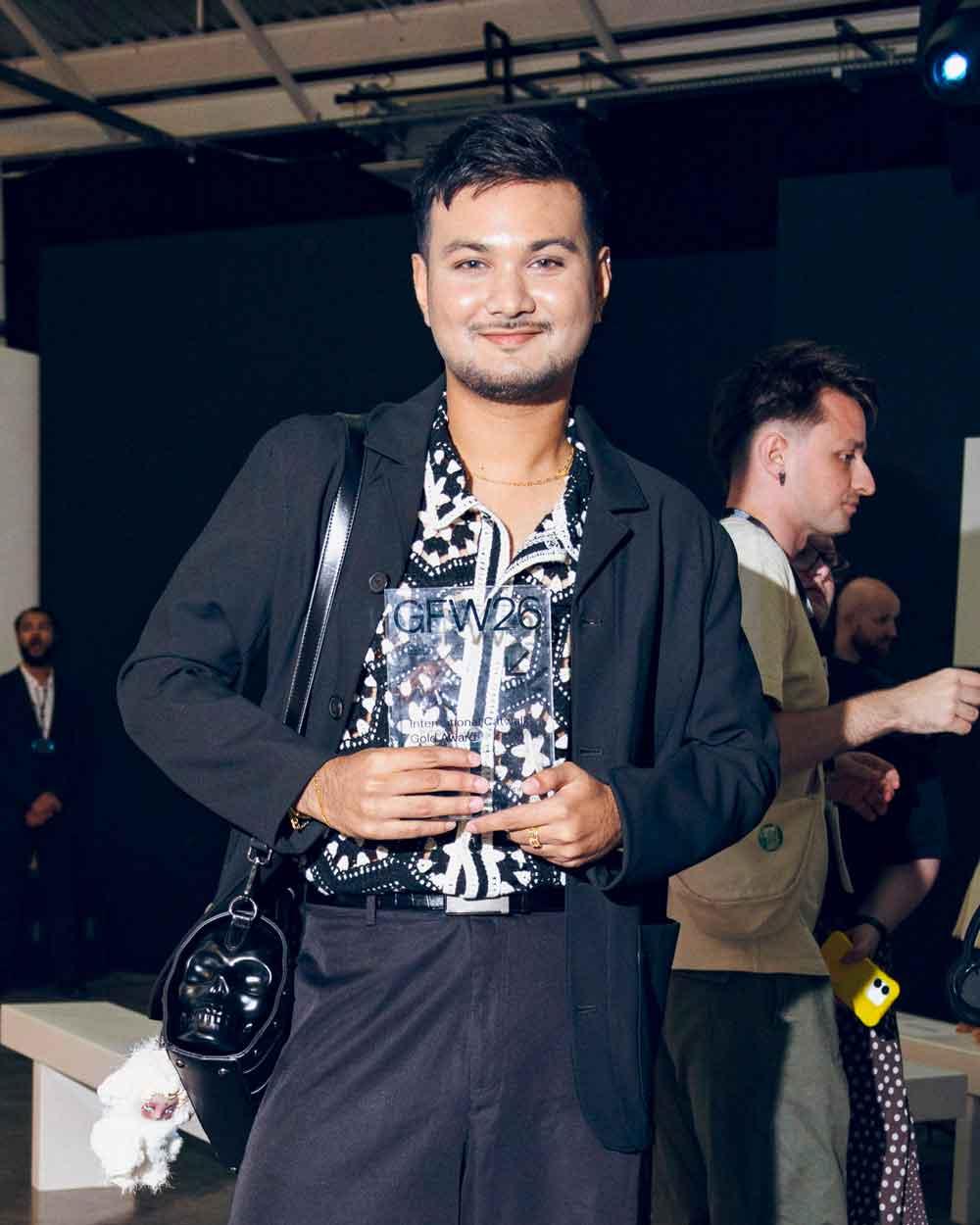
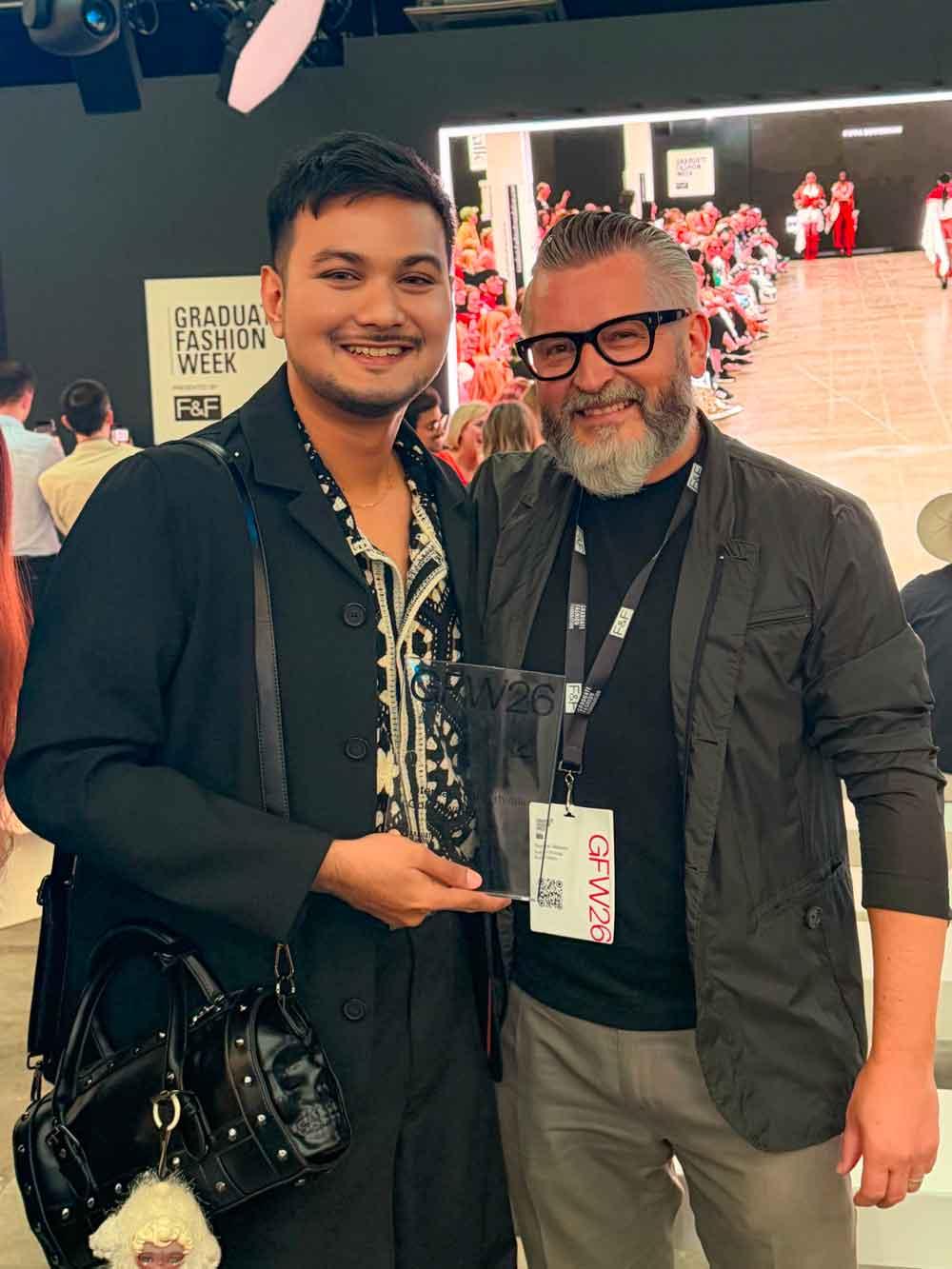
My biggest challenge was learning not to compare myself with other designers. Finding my own creative voice took time, patience and constant experimentation. Many ideas failed, collections evolved unexpectedly, and countless hours of research never reached the final garment, but every setback taught me something valuable. I realised that creativity is not about instant success, but about refining your ideas until they truly reflect who you are. Trusting my own perspective eventually led to international recognition with the Overall First Place Gold Award at Graduate Fashion Week 2026, proving that authenticity will always have greater value than simply following trends.
Q: In an era where trends move rapidly, how do you maintain a distinctive creative voice while staying relevant within the evolving fashion landscape?
I do not believe a designer's responsibility is to chase trends because fashion has always been cyclical. Almost everything we see today has roots somewhere in history, which is why I spend as much time studying the past as I do analysing the present. Understanding culture, craftsmanship, historical dress and artistic movements provides a much stronger creative foundation than simply following what happens to be popular in a particular season. Of course, I pay attention to the market because successful design must connect with people. However, I never allow trends to dictate my creative direction. I would rather build a recognisable signature that develops naturally over time than completely reinvent myself every few months. For me, staying relevant is not about following fashion. It is about contributing something meaningful to it. If my work encourages new conversations while celebrating Sri Lankan heritage in fresh and contemporary ways, then I believe it will remain relevant regardless of changing trends.
Q: Social media has transformed how fashion is consumed and appreciated. In your view, has this shift encouraged creativity and individuality, or has it increased pressure to follow trends?
I believe social media has both encouraged creativity and increased pressure to follow trends. It has given young designers unprecedented access to global ideas, cultures and creative communities, making it an invaluable tool for learning and inspiration. The challenge comes when inspiration becomes imitation, with trends quickly replicated instead of reimagined. Designers should strive to create something original rather than simply following what is already popular. Fashion has the power to shape culture and spark new conversations, which requires creativity and courage. Social media is only a tool. Used wisely, it connects people and ideas, but originality is what leaves a lasting impression.
Q: Building recognition in the fashion industry requires more than great designs. What strategies have helped you establish your identity and connect with audiences and clients?
From the very beginning, I never wanted to create clothes that simply looked beautiful. My ambition has always been to create work that people remember because of the story behind it. Every collection starts with an idea that deserves to be explored. If a garment communicates nothing beyond its appearance, I do not feel it is complete. Every decision, from the silhouette and fabric to the construction and finishing details, contributes to the message I want the collection to express. I also believe authenticity is something people recognise immediately. Clients and audiences are not only investing in a garment. They are investing in the designer's vision and values. If your creative identity constantly changes to follow every new trend, people may remember individual collections, but they are unlikely to remember the designer behind them. Building recognition has never been about seeking attention or chasing popularity. It has been about remaining consistent, producing meaningful work and staying true to my own perspective. I believe that is what creates lasting connections with people.
Q: As you continue to evolve as a designer, what ambitions or projects are you most excited to explore in the coming years?
One of my biggest ambitions is to establish my own design studio, a space that reflects my creative philosophy while demonstrating that Sri Lankan design can confidently compete on the international stage. I also hope to continue my academic journey by pursuing a Master's degree, allowing me to further develop both my creative practice and my understanding of sustainable fashion. I believe education is a lifelong process and every opportunity to learn strengthens your ability as a designer. Most importantly, I want to continue creating collections under my own name that celebrate Sri Lankan artistry in contemporary ways. I hope to work closely with local artisans, learning directly from generations of knowledge while helping introduce their craftsmanship to audiences far beyond our shores. I genuinely believe the most exciting chapters of my career are still ahead. Every project presents another opportunity to learn, evolve and share Sri Lankan stories with the world through fashion.
Q: What advice would you give to young creatives who aspire to build a career in fashion while remaining authentic to their own artistic vision?
My advice is to seek inspiration beyond the classroom and the screen. Travel whenever you can, visit museums, galleries and villages, and spend time with artisans whose skills have been refined over generations. Learn from experienced designers, stay connected with your lecturers and never stop asking questions. Fashion is built on collaboration, so respect the pattern makers, weavers, embroiderers and tailors who help bring ideas to life. Above all, create with purpose. Don't design simply to make another garment. Design to tell a story, preserve culture, solve a problem or inspire conversation. That is what gives fashion lasting meaning.
Q: If your work could leave one lasting impact on the fashion industry, what would you want that legacy to be?
I hope my legacy is measured not by the number of collections I create, but by the people I inspire to design with purpose. Fashion has the power to shape ideas, celebrate culture and preserve craftsmanship. If my work encourages others to value heritage, ask deeper questions and see creativity as a way to tell meaningful stories, I will have achieved something worthwhile. I also want to show that success does not require leaving your identity behind. By staying true to my Sri Lankan roots, collaborating with artisans and supporting emerging designers, I hope to create opportunities that continue long into the future.