“Isso Pisso” Now Serving London Apinash Sivagumaaran on the Arrival of Prawn Crazy in Canary Wharf
By Thaliba Cader
For decades, Sri Lankan cuisine has occupied an uneasy place abroad. It has often existed in the margins of larger South Asian conversations, mistaken for something adjacent rather than something entirely its own. Its curries have travelled farther than its story. Its spices have found international kitchens while the island that produced them has remained strangely anonymous. Yet every so often, a single idea emerges that attempts to correct that imbalance through ambition.
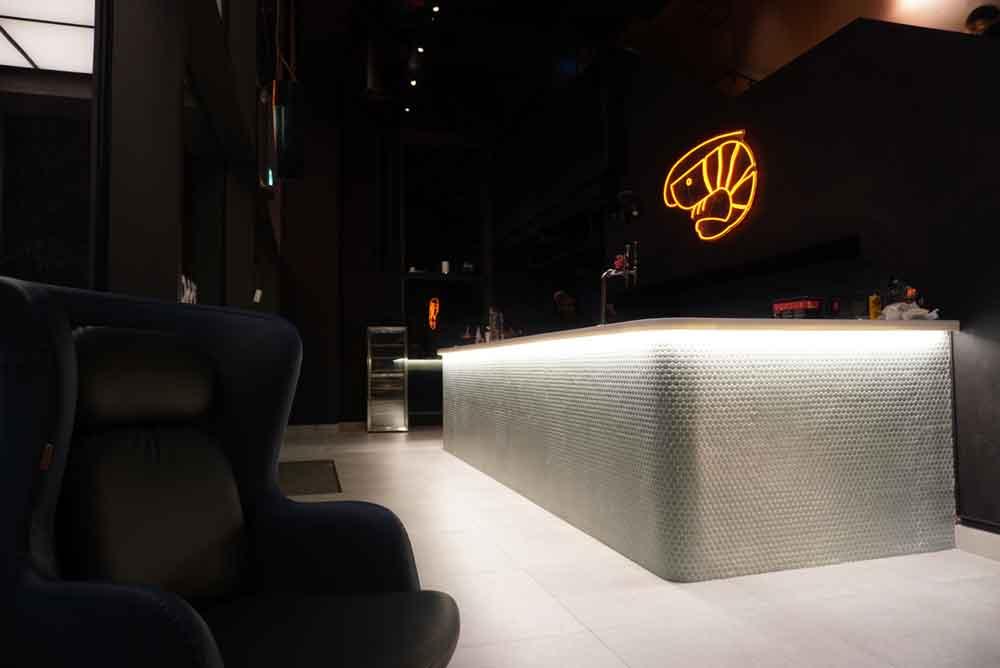
The opening of Prawn Crazy in London's Canary Wharf belongs to that rarer category. On the surface, it is a restaurant built around one ingredient: the Sri Lankan king prawn. Beneath that simplicity lies a far more complicated proposition. It asks whether a nation long accustomed to exporting its finest produce as anonymous commodities can instead export identity.
For its founder, this is not merely another overseas expansion. It is an argument about value, about branding, and about the quiet confidence that world-class ideas need not originate in the capitals that have traditionally dictated global taste. With that in mind, we sat down with Apinash Sivagumaaran to talk about the journey behind Prawn Crazy's London debut.
1. First of all, congratulations on bringing Prawn Crazy to London. How does this moment feel for you personally? Looking back at the journey from a 16-seat restaurant in Colombo to opening in Canary Wharf, did you ever imagine the brand would travel this far?
Personally, it feels surreal but incredibly validating. When we started with that humble, 16-seat outlet in Colombo, people thought hyper-focusing on a single premium protein like prawns was a risky move. But I always knew the potential of our product.
Did I imagine we’d travel this far? Absolutely. From day one, the vision wasn't just to build a local restaurant group, but to engineer a world-class, commercial framework capable of competing in the global culinary capitals and unlocking cross-border expansion. Planting the Sri Lankan flag in Canary Wharf, London’s ultimate financial power center, is the realization of that blueprint. It’s a proud win for the island.
2. The story of Prawn Crazy begins with something deceptively ordinary: the Sri Lankan king prawn. At what point did you realize you weren't simply serving seafood, but introducing an entire culture through a single ingredient?
I realized it when I saw how mass-scale, pond-raised global varieties dominated Western markets. They lack flavor and texture. In contrast, our wild, equatorial Sri Lankan prawns have a distinct crisp snap and a natural sweetness because of our pristine marine ecosystem and coastal mangroves.
Our prawns are what I proudly call "The Wagyu of the Sea." It is an elite, luxury ingredient. The moment we connected our brand directly to over 150 artisanal day-boat fishermen in Jaffna and Mannar, bypassing international wholesale middlemen entirely, I knew this wasn’t just a seafood business. This was about weaponizing our natural bounty to build high-value, consumer-facing, brand-driven demand for Sri Lanka on the global stage.
3. London has no shortage of Indian restaurants, yet Sri Lankan cuisine often remains misunderstood or overshadowed. Did you see this as an opportunity to rewrite people's expectations of what Sri Lankan food can be?
Completely. For too long, Sri Lankan cuisine has been quietly lumped under the generic "South Asian" umbrella or treated as a spin-off of Indian food. Londoners are discovering our flavors, but the narrative has largely been driven by diaspora-led, UK-born concepts.
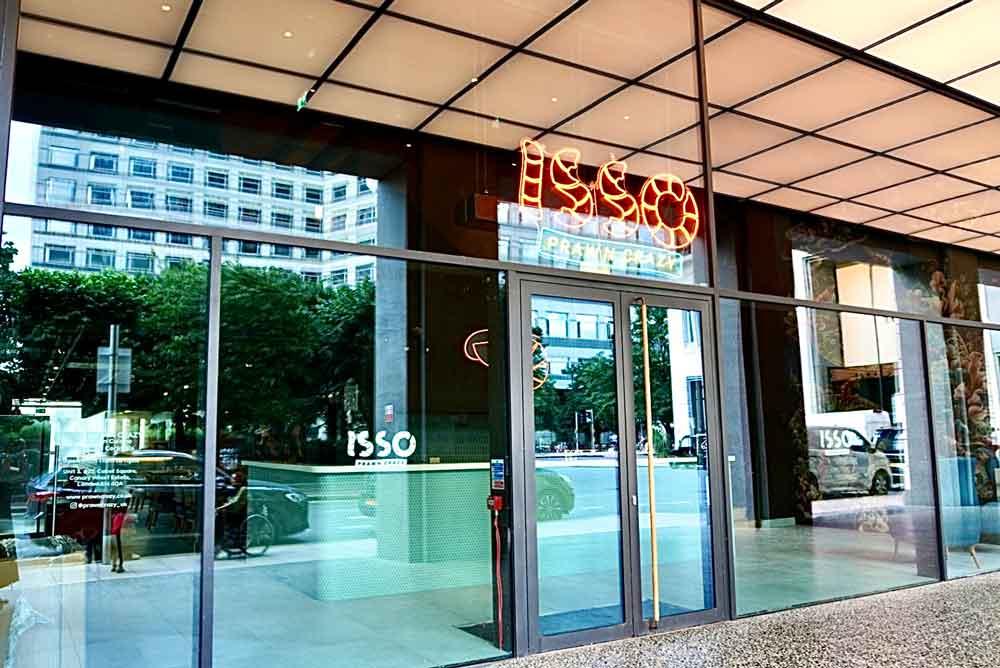
ISSO is the first-ever authentic, born-and-bred restaurant brand from the streets of Colombo to set up a corporate footprint in the West. We are rewriting the rules. We aren't doing heavy, slow, traditional dining. We are introducing high-velocity, premium-casual monoproduct mastery. We are showing the world that Sri Lankan food can be modern, incredibly premium, and operationally sophisticated.
4. Restaurants often speak about authenticity, but authenticity can sometimes become a performance. How do you decide which traditions of Sri Lankan cuisine remain untouched and which naturally evolve for an international audience?
The soul of the flavor is untouched. The profiles of our legacy recipes, the fiery Jaffna Curry, the aromatic Negombo Curry, the iconic Isso Wade, and our Isso Kottu, remain completely uncompromised. That is the baseline of our identity.
Where we evolve is in the delivery and modern execution. London is a fast-paced market. To survive the crushing labor shortages and high-velocity turn times of Canary Wharf, we have automated the line. We are exporting Sri Lankan operational innovation by deploying advanced kitchen robotics, like Robot Woks and Robot Dosa Makers. The authenticity is in the unyielding quality of the spice profiles; the evolution is the high-tech machine that serves it.
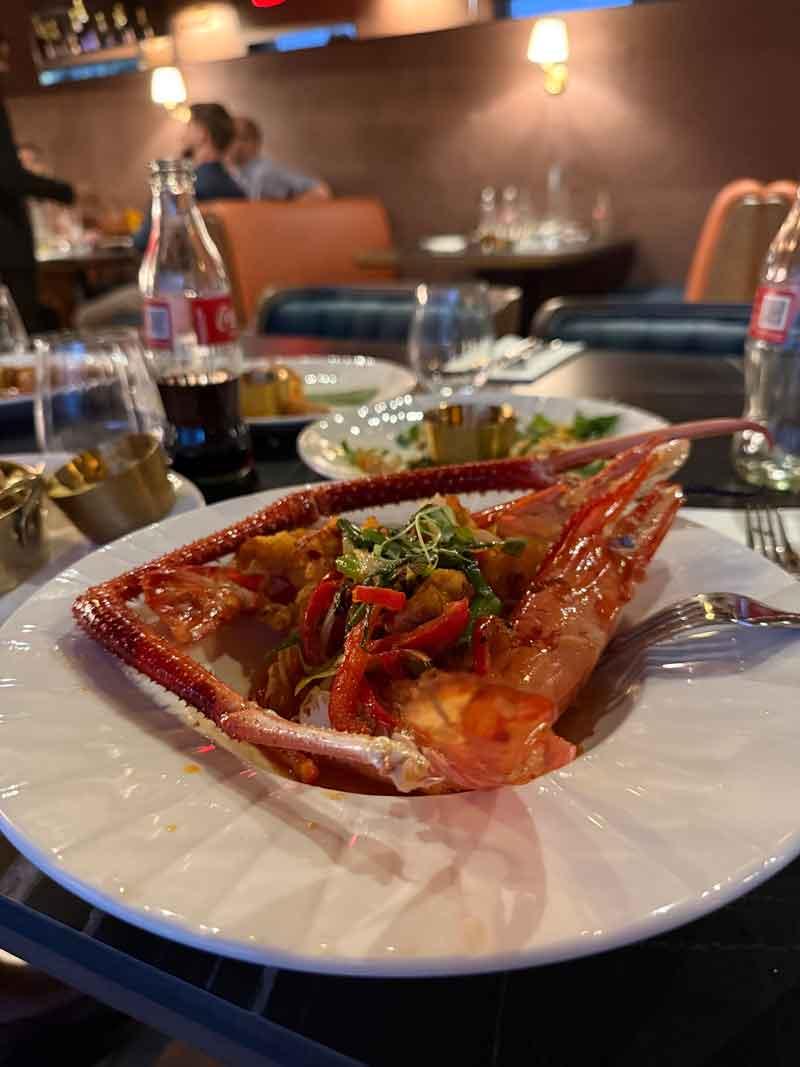
This balance lets us showcase a broader culinary narrative. Alongside legendary regional curries, we are serving high-impact street-fusion items like Hot Butter Style, innovative sweet-savory profiles like Kithul infused with garlic and chilli, and crisp textures like Coconut Crumbed Prawns. We are even introducing ultra-premium showstoppers like our Freshwater Prawn Biriyani, and finishing the experience with uncompromised traditional desserts like Pani Pol Pancakes and Wattalapan. The flavor remains purely Sri Lankan; the presentation is built for the global stage.
5. Your menu speaks of recipes passed down through generations. Whose kitchen are we really tasting when someone sits down for a meal at Prawn Crazy? Are there family memories or personal stories hidden behind the dishes?
You are tasting the collective culinary wisdom of Sri Lanka’s coastal communities, combined with intensive R&D from our island team. Our Head Chef, Karan Kashyap, who trained at the elite Taj Group and refined his craft at London institutions like Veeraswamy, spent significant time embedded with our R&D teams in Colombo to master these profiles.
Every time someone eats our Isso Kottu or breaks open an Isso Wade, they are tasting the heritage of the day-boat fishermen in the North who harvest our catch, and the traditional spice-blending techniques of the South. These are the flavor profiles I grew up with. It’s the taste of home, re-engineered for global excellence.
6. The Sri Lankan king prawn has traditionally been viewed as something reserved for special occasions. Why was making premium prawns more accessible such an important part of your vision?
Historically, export-grade prawns were shipped away in bulk as an unbranded commodity, or hidden in fine-dining menus with massive markups. I wanted to democratize that luxury.
By building a vertically integrated model, we own our cold chain from ocean to plate. Our prawns are Individually Quick Frozen (IQF) to -36°C within 8 hours of being caught. Because we own the infrastructure and bypass middlemen, we can offer the absolute world standard of seafood in a fast, premium-casual format at a price-to-quality ratio that independent Western competitors simply cannot touch. Luxury shouldn't be slow or occasional; it should be high-velocity and accessible.
7. Opening your first UK restaurant in Canary Wharf feels symbolic. It's one of London's busiest financial districts. Was that choice deliberate, and what did that location represent to you?
The choice was highly deliberate and deeply strategic. Canary Wharf is the financial engine of Europe. It demands extreme efficiency, consistent excellence, and commands premium margins.
Many brands choose a safe, quiet residential neighborhood for their first international step. We chose the ultimate corporate arena because it proves the strength of our automated kitchen model. If you can dominate the high-intensity, time-compressed corporate lunch and dinner rushes of Canary Wharf, you can scale anywhere. It represents the fact that Sri Lankan brands no longer need to play on the sidelines; we can compete directly at the center of global commerce.
8. Many successful restaurant brands eventually become victims of their own growth, where consistency replaces personality. As Prawn Crazy expands internationally, how do you protect the soul of the brand while adapting to a new market like the UK?
Most brands lose their soul because they rely on finding and training army after army of specialized kitchen staff across multiple cities, which inevitably dilutes the flavor.
We protect our soul through technology. Because our unique island flavor bases are standardized and executed via precision kitchen robotics and stringent training on the line in London, the personality and flavor are mathematically locked in. Human error is eliminated. This allows me and my leadership team to focus entirely on what matters most: raw ingredient quality and uncompromised Sri Lankan hospitality. Technology doesn't kill personality; it gives personality the room to breathe.
9. Migration often changes the meaning of food. For many Sri Lankans in Britain, a meal can be a reminder of home, while for others it is their very first introduction to the island. Do you think Prawn Crazy serves nostalgia to one audience and discovery to another?
Absolutely, and that dual identity is incredibly beautiful. For the Sri Lankan diaspora walking through our doors in London, biting into our Isso Wade or sharing a Wattalapan is an instant, emotional bridge back home. It’s an assertion of national pride that they can share with their colleagues in London's financial hub.
For the international diner, it is an entry point of pure discovery. They realize that seafood doesn't have to be bland, and that Sri Lanka possesses a level of culinary sophistication and tech innovation they completely underestimated. We are selling a bridge for one, and a destination for the other.
10. If someone walks out of Prawn Crazy remembering only one thing, what would you hope stays with them: the flavour, the hospitality, or the feeling that Sri Lanka deserves a permanent place on the world's culinary map?
I want them to walk out knowing, without a shadow of a doubt, that Sri Lanka belongs at the absolute top of the world’s culinary and business map. The flavor and hospitality are the vehicles we use to deliver that truth. I want them to realize that our island is a powerhouse of premium produce, operational genius, and entrepreneurial grit. I want them to know that anyone from a small island can dream impossibly big, refuse to compromise, and stand toe-to-toe with global industry giants.
11. Looking ten years ahead, would you rather Prawn Crazy be remembered as a successful international restaurant brand, or as the company that fundamentally changed how the world understands Sri Lankan cuisine?
The two go hand in hand. You cannot fundamentally change global perceptions without achieving massive, undisputed commercial success.
In ten years, as we systematically roll out our automated "London Cluster" across the UK and expand into continental European capitals, I want Prawn Crazy to be remembered as the brand that broke the old economic mold. We proved that Sri Lanka is no longer just a passive, unbranded exporter of raw goods. We are global operators. We are innovators. We are disruptors. We are creators of world-class brands.