Shaping the Culture, Shunning the Fan

Nichol Fernando
There is a strange rule in pop culture: the moment teenage girls begin to love something loudly; the world becomes suspicious of it.
Not curious. Not analytical. Suspicious.
A boy band becomes “cringey.” A romance film becomes “shallow.” A young adult novel becomes “not real literature.” A pop star becomes overrated the second her audience is filled with girls who know every lyric by heart. It is almost predictable at this point. If teenage girls gather around something with enough enthusiasm, the criticism will eventually stop being about the actual quality of the work and start becoming about the embarrassment of liking it in the first place.
That is where the problem begins.
Criticism itself is not the issue. Not every film, song, book, celebrity or franchise deserves endless praise. Some things are badly written. Some things are overhyped. Some things age terribly. The issue is that media associated with teenage girls is rarely allowed to simply be flawed. It is treated as proof of something larger: proof that girls are dramatic, unserious, obsessive, shallow or easily manipulated.
Meanwhile, the same level of passion looks completely different when it belongs to other audiences. A man knowing every statistic about a football club is dedication. A teenage girl knowing every detail about a singer’s discography is obsession. A male fan queuing for hours to watch a film on opening night is loyal. A young woman doing the same thing is embarrassing. One is framed as culture. The other is framed as hysteria.
That difference says more about society than it does about teenage girls.
For decades, teenage girls have shaped pop culture while being mocked for participating in it. They have turned musicians into global icons, made books into franchises, revived fashion trends, filled cinemas, driven online conversations and transformed small pieces of media into cultural events. Their attention is powerful. Their loyalty is profitable. Their enthusiasm can change the direction of an entire industry and industries know this. This is the contradiction at the centre of it all. Teenage girls are constantly ridiculed for their interests, yet they are also one of the most desired audiences in the world. Beauty brands, fashion labels, sports teams, streaming platforms, film studios and music companies all understand their influence. They build campaigns around them. They create merchandise for them. They place celebrities in carefully designed collaborations to reach them. They turn fandom into a marketplace and emotion into strategy.
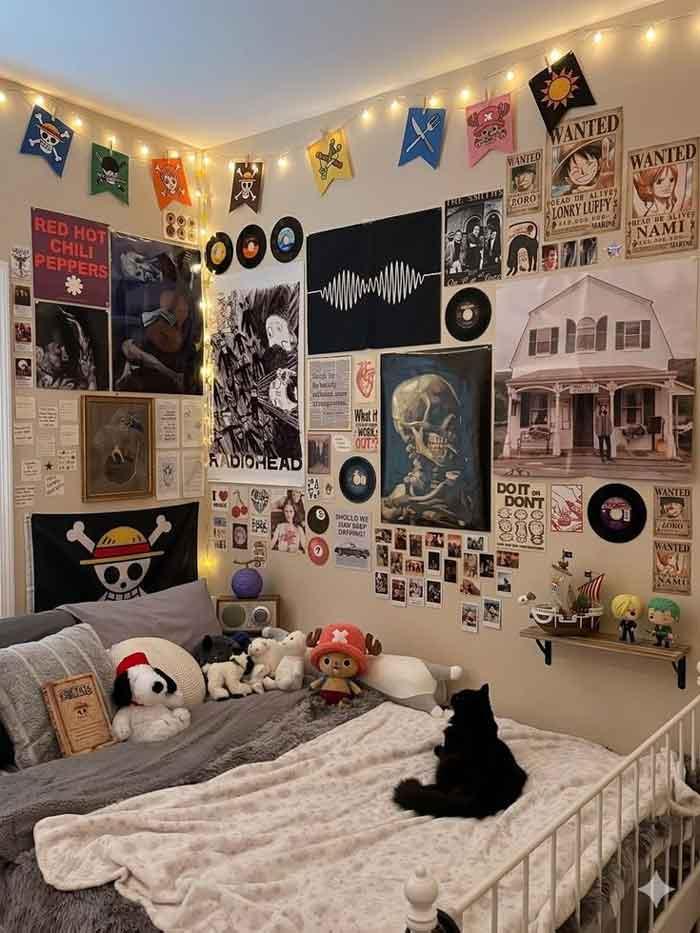
Everyone wants teenage girls when their attention can be converted into sales, streams, views, tickets and trends but when those same girls ask to be taken seriously, the respect becomes much harder to find.
This is visible across fandom spaces that were once considered male-dominated. Superhero films, comics, gaming and motorsport have all seen a noticeable rise in young female audiences. On the surface, many of these industries welcome the growth. Social media accounts become more playful. Marketing becomes more personality driven. Athletes, actors and fictional characters are turned into brands of their own. The emotional closeness that a fandom creates is not accidental. It is encouraged because it works.
Yet once young women enter these spaces, they are often treated like guests who have overstayed their welcome.
Their knowledge is tested. Their motives are questioned. Their enjoyment is reduced to attraction, aesthetics or trend-following. A girl cannot simply like a superhero film; she must prove she knows enough about the comics. She cannot casually enjoy Formula 1; she must prepare for an interrogation about its history, statistics and technical rules. She cannot appreciate a character without being accused of making the space less serious.
The message is clear: her money is welcome, her attention is useful, but her presence is negotiable.
That is the uncomfortable part. These industries benefit from young female fans while allowing fan spaces to remain hostile toward them. They enjoy the profit created by inclusion without fully addressing the disrespect that follows it. Female fans are invited in through marketing but still treated as outsiders by culture.
This double standard becomes even clearer when desire enters the conversation. Comics, film and television have always used beauty, attraction and fantasy as part of their appeal. Female characters have been sexualized for decades, often for the comfort and pleasure of male audiences. Yet when women express attraction toward male characters or actors, they are suddenly accused of being shallow. The same behaviour that was once normalized for one audience becomes embarrassing when practiced by another.
It is not really about seriousness. It is about who is allowed to enjoy things openly.
The same pattern appears in the careers of celebrities. Many actors and musicians first gain popularity through audiences made up largely of young women. Romantic films, teen dramas, pop music and emotionally vulnerable roles often become stepping-stones into wider fame. These audiences help build the foundation. They create edits, buy tickets, defend projects, attend concerts and keep names alive online. Then, once the artist becomes more established, that original audience is sometimes treated as something to outgrow.

There is nothing wrong with an artist evolving. Growth is natural. Nobody should be trapped forever in one genre, role or image. The issue is the quiet embarrassment that often surrounds female-coded audiences once fame becomes serious. The same fans who helped create cultural relevance are later dismissed as too young, too emotional or too unserious to matter.
It creates a pattern that feels painfully familiar: build a career through female attention, profit from their devotion, then distance yourself from them when respectability requires a different image.
This reflects a deeper cultural problem. Society often devalues whatever is associated with girls and women. Interests connected to masculinity are more likely to be treated as expertise, discipline or tradition. Interests connected to femininity are more likely to be treated as phases, guilty pleasures or signs of immaturity. Teenage girls experience this more intensely because their youth makes it socially acceptable to belittle them. People feel free to mock them in a way they would hesitate to mock other groups, but teenage girls are not passive consumers. They are cultural participants. They analyze, organize, create, debate, archive, promote and build community. Being a part of a fandom is not only screaming at concerts or posting edits online. It is also interpretation. It is emotional connection. It is collective memory. It is a group of people deciding that something matters enough to be kept alive.
That deserves more respect than it receives.
Of course, fandoms can become unhealthy. Parasocial relationships can be exploited. Consumer culture can manipulate loneliness, insecurity and identity. Young people, especially young women, can be targeted by brands that understand exactly how to turn belonging into profit. That should be criticized. But the blame should not fall only on teenage girls for responding to systems designed to capture their attention.
The real question is not why teenage girls care so much.
The real question is why everyone else is so eager to benefit from that care while mocking them for having it. At the end of the day, teenage girls are wanted for what they can produce: money, attention, engagement, loyalty and cultural momentum. But they are not always appreciated for who they are. Their joy is treated as excessive. Their sadness is treated as dramatic. Their criticism is treated as ignorance. Their presence is treated as a threat to spaces that were never as neutral or serious as they claimed to be.
Maybe it is time to admit that the problem was never teenage girls liking things too much. Maybe the problem is that society does not know how to respect young women when they love something loudly, unapologetically and together because pop culture would look very different without them. Quieter. Less alive. Less strange. Less passionate. Less powerful. Perhaps that is exactly why people keep trying to dismiss them. It is easier to mock teenage girls than to admit that they have been shaping pop culture all along.