Dying To Be Liked Actors, Artists and Activism

By: Chandri Peris
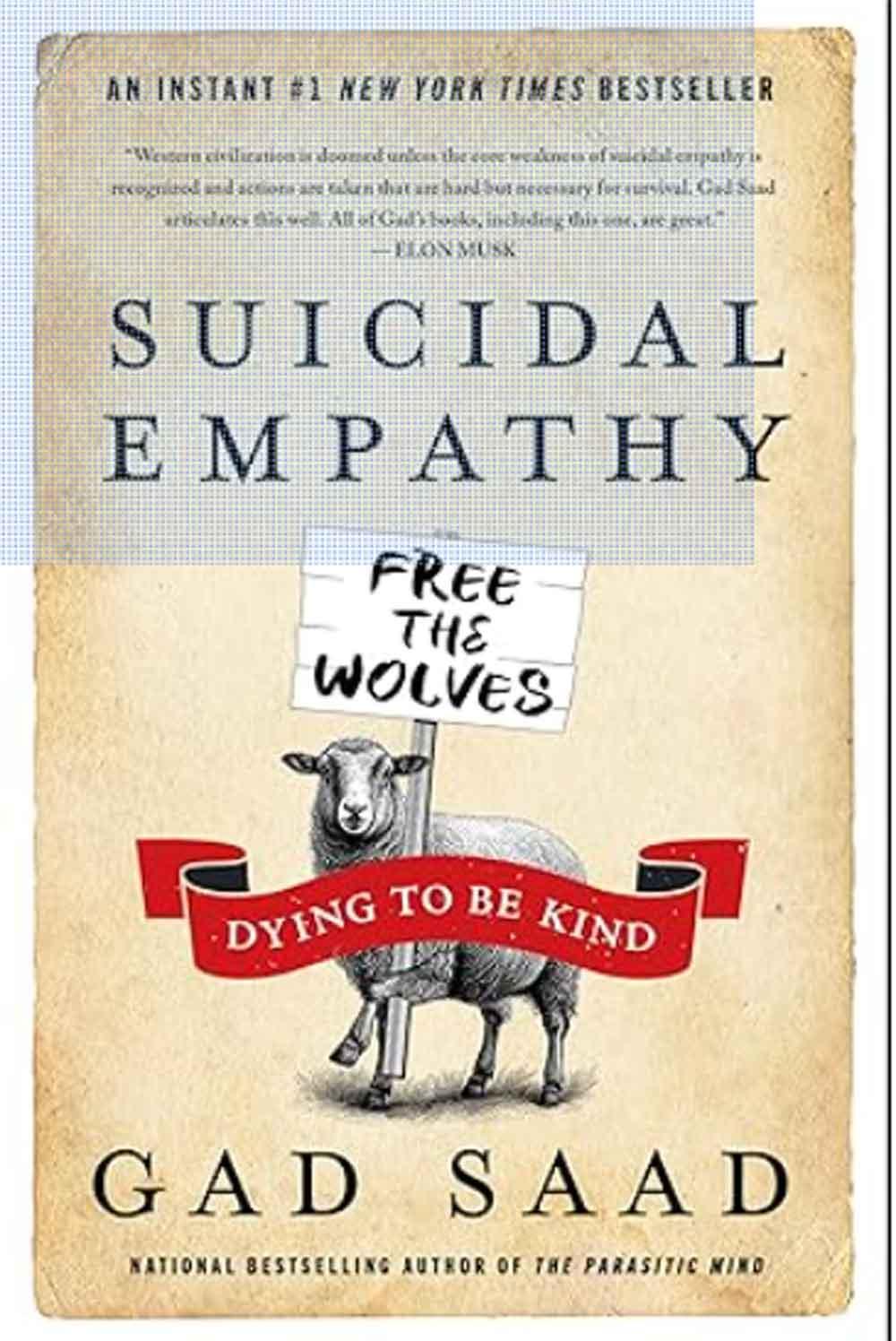
In his fascinating and timely book ‘Dying to be Kind’ Professor Gad Saad uses the term "suicidal empathy" to describe a form of compassion that, when exercised without appropriate limits or consideration of long-term consequences, becomes self-defeating. He argues that empathy should be balanced with prudence, reciprocity, and an understanding of the evolutionary and social pressures that shape our decisions and actions. He also contends that unchecked altruism can inadvertently undermine the stability, values, and resilience of the individuals or societies that extend it.
The concept of suicidal empathy is Saad's own formulation rather than an established academic construct, reflecting his interpretation of the potential risks of unbounded empathy rather than a term recognized within mainstream psychology or the social sciences.
Elon Musk has frequently echoed Saad's concept of "suicidal empathy" to support his broader political and cultural arguments. Saad uses the term to describe what he sees as excessive empathy that leads societies to adopt policies contrary to their own long-term interests. Musk has adopted this framing to argue that Western governments, media, and institutions allow compassion to override practical considerations on issues such as immigration, crime, free speech, and regulation. By invoking "suicidal empathy," Musk presents these policies not simply as misguided but as existentially self-destructive, reinforcing his broader narrative that contemporary political and cultural elites are undermining Western civilization. Critics, however, contend that Musk's use of the concept oversimplifies complex social issues, frames legitimate humanitarian concerns as weaknesses, and serves to justify a more restrictive and confrontational political agenda.
Even though many are disturbed by the fact that Elon Musk has honed in on this concept and hijacked its honest premise to back his own agenda, I feel that is unravels a stark truth about those who are overly empathetic towards particular causes that it tends to cloud their judgement. That said, there definitely is a set of people who champion causes just so that they can be seen as ‘activists’ attracting a great deal of attention (and funding) primarily to themselves while completely eclipsing the cause itself. Take Greta Thunberg for instance - she has publicly admitted to having several neurodevelopmental conditions (OCD, ADHD and Asperger Syndrome) which may be the reasons that she is so focused on herself. Even though she calls herself a climate activist all she needed was some funding from Hamas to jump on board a aid flotilla enroute to Gaza! Misguided or attention seeking – you decide!
Three key points highlighted by Professor Saad in his book can be viewed as the main reasons for the ongoing turmoil in the United Kingdom and in Europe too. These points are as follows:
- The prioritizing of offenders over victims in the criminal justice system
- Favouring humanitarian concerns without adequately weighing security risks in immigration,
- Elevating compassion for particular groups over what he considers objective evidence or fairness.
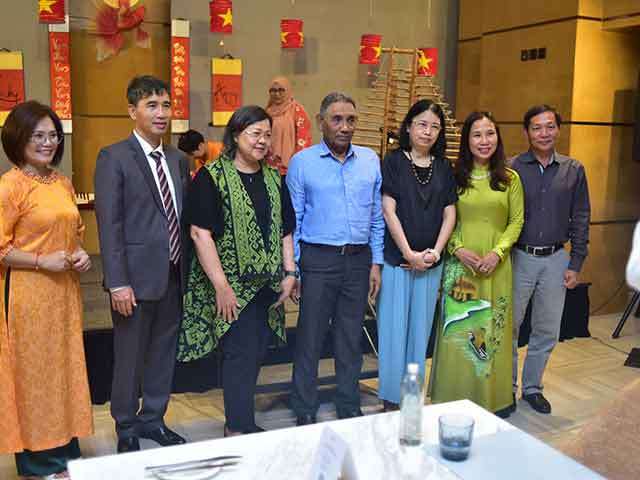
Left-wing liberals may disagree, but the UK is completely fragmented to a point that it will never be the wonderful country it was. Consider these examples :- the complete silence by government officials who deliberately covered up the truth about the Pakistani Grooming gangs, the constant media blackouts regarding the frequent stabbings on our streets caused predominantly by illegal immigrants screaming ‘Allahu Akbar’, borough councils being taking over by those with an agenda that does not comply with the British way of life (See photograph) , the early release scheme for dangerous prisoners including rapists and murders, on the grounds that they were too young, too traumatised, or have been disproportionately disadvantaged to understand the gravity of their heinous crimes, dog owners being threatened with violence because such pets are considered unclean according to the beliefs of a particular religion, the ridiculously impractical EDI agenda which has let in an endless stream of incapable workers into lucrative government jobs and the increasing number of youth Not in Education Employment or Training (NEET) can all in some way or the other be connected to people and authorities whose empathy has blinded them to reality.
The clarion call to take notice of and prevent the aforementioned issues from continuing to spread has now reached a breaking point. The current government which consists of a whole lot of ineffectual women and a few spinless men carries on regardless while paying no attention to anything at all. All they have done so far is to backstab the dimwit at the top until he resigned. Then they proceeded to install a fuckwit as a replacement to pursue their woke agenda. They have sacrificed this country in their desperation for power. Their supposed empathy is on show only to gather votes.
Meanwhile, on our own island, activism appears to be thriving. I know people who are deeply committed to causes such as environmental protection, pollution, deforestation, misogyny and social injustice. What sets them apart is their focus on issues affecting the country they call home. The concerns they raise impact all Sri Lankans, and their willingness to speak out on behalf of others is truly commendable.
Much like ‘the weeds among the wheat’ there are quite a few whose compassion is an act, and their empathy is a performance. I wonder if you have ever met people who ask you how you are and don’t wait for an answer but flit away to catch the eye of someone else?
Who among you has not encountered the self-appointed prophet, forever lecturing the impressionable, especially the young, on the correct way to live, urging them to cast off not merely bad ideas but the very obligations that bind civilised life: respect for parents, discipline, tradition, and any code that imposes limits upon the sovereign ego? Scratch the polished surface of these moral exhibitionists and one finds not a life of exemplary principle but a trail of broken loyalties and squandered lives, casualties of an insatiable appetite for admiration. They sermonise endlessly about the radiant future that awaits humanity, while their own present survives only by their ability to segue through life by making the flimsiest of excuses. There is no spectacle quite so revealing as the reformer whose greatest achievement is the careful concealment of his own failures.
Then there are those haloed hypocrites who parade their credentials as champions of equality, gay rights, and multiculturalism before every available audience, while sharing their private lives with partners busily raising funds for movements whose political inheritance is inseparable from campaigns of sectarian violence and the dream of a separate state.
When an artist with a meek, compassionate public persona continually reposts images of the horrors of a distant war, it is easy to be drawn to their apparent empathy. Yet when that same artist promotes their work with textiles under the slogan "the colours of Jaffna," I cannot help but wonder whether they are also, however subtly, promoting a separatist sentiment. One is left to assume they travelled through Kandy, Kurunegala, Anuradhapura and Galle wearing a blindfold, somehow missing the rich and vibrant palette found across the rest of Sri Lanka. If the artist is indeed Sinhalese by birth, the question becomes even more pointed: is this simply artistic branding, or a mild but deliberate attempt to advance a divisive political narrative through their artistry?
It has been observed that some affluent ladies who wear their empathy on their sleeve, are working under the radar transferring considerable funds under the guise of ‘charitable support’ towards Sri Lanka's Northern and Eastern Provinces. While every community deserves assistance, charity should benefit people across the entire country. Prioritising these regions that identify with particular ethnic groups while neglecting the rest of the island feeds into the narrative of discrimination on grounds of race. The sooner this one-sided empathy is exposed the better it will be for the unity of our country.
Nothing is quite so intolerable as the theatrical display of virtue. Those who are genuinely charitable possess the ability to help others without first assembling an audience. They do the work and quietly move on. It is the moral exhibitionists who transform every act of decency into a public event, complete with expressions of grave concern and just enough humility to ensure everyone notices. One is left with the uneasy suspicion that the point was never to feed the hungry so much as to recruit them as unwilling extras in the endless pursuit of garnishing approval for their own drama. When compassion becomes a performance, it is usually the performance, not the compassion, that receives the greater investment.
Compassion as performance has reached its purest form in an artist seemingly incapable of looking beyond the war in the Middle East. Their relentless stream of sanctimonious rants feels less like political conviction than an elaborate branding exercise, as though outrage itself were a marketing strategy. The irony is impossible to miss: every post appears crafted to draw attention back to their work, despite the obvious reality that these pronouncements will have precisely zero influence on the foreign policy of any government. The performance isn't aimed at power—it's aimed at an audience.
These activists/artists have discovered the perfect business model: convert conscience into social currency. Every fashionable cause becomes an opportunity to advertise not conviction but personal refinement. Their greatest fear is not injustice, hypocrisy, or suffering, but the prospect of creating something and not being noticed for it.
What makes these standard-bearers of public righteousness so fascinating is not merely their posturing but their complete lack of self-awareness. They seem genuinely convinced that broadcasting every charitable impulse increases its moral worth, as though ethics obeyed the laws of advertising. They confuse applause with evidence, visibility with virtue, and publicity with principle. The louder they proclaim their selflessness, the clearer it becomes that the only cause receiving consistent nourishment is their own ego.
The tragedy of our age is not a lack of compassion, but that so much of it has become performative. We have created a culture in which being seen to care often matters more than caring wisely, and where applause has replaced integrity as the measure of virtue.
The modern activist, artist and actor increasingly trades in moral signalling, wearing fashionable causes as badges of personal distinction while remaining conspicuously silent when principle demands genuine courage or consistency. Empathy without judgement is sentimentality; activism without honesty is theatre. A society that rewards appearances over substance will eventually struggle to distinguish the truly principled from the merely fashionable. History rarely remembers those who chased approval. It remembers those who had the courage to pursue truth, even when it was unpopular. The question is no longer whether we are dying to be kind, but whether we have become so desperate to be liked that we are prepared to sacrifice reason, honesty, and even our own society in exchange for applause.