IN CONVERSATION WITH HON. DAVID LAMMY, DEPUTY PRIME MINISTER OF THE UNITED KINGDOM AND FARZANA BADUEL, PRESIDENT, THE CHARTERED INSTITUTE OF PUBLIC RELATIONS, UK

Hon. Sarah Sackman, Hon. David Lammy and Farzana Baduel
By: Rishini Weeraratne
English law is one of the United Kingdom's greatest international assets. Governing around 40% of global corporate transactions and commercial agreements, it underpins international trade, investment and dispute resolution across every major market in the world. Alongside the UK's universities, financial institutions and professional services sector, it represents a significant source of British influence and soft power, helping to attract investment, build international partnerships and reinforce the UK's position as a global business hub.
Recognising the strategic importance of the legal sector to the UK's future prosperity, the Government established the English Law Promotion Panel as part of its Modern Industrial Strategy. Chaired by the Deputy Prime Minister and Lord Chancellor, Rt Hon David Lammy MP, and Vice-Chaired by Sarah Sackman KC MP, Minister for Courts and Legal Services, the Panel has been tasked with strengthening the international profile of English law and ensuring the UK remains the jurisdiction of choice for international business in an increasingly competitive global economy. The legal sector already contributes approximately £42.6 billion annually to the UK economy and supports more than 364,000 jobs across the country, making it one of Britain's most important economic assets.
Central to that ambition is the recognition that global leadership depends not only on legal excellence, but also on reputation, trust and influence. Earlier this month, the Chartered Institute of Public Relations (CIPR) announced the formation of a new working group to support the English Law Promotion Panel and ensure that the role of communications is fully represented in its work. Bringing together communications professionals from across legal, corporate, government and international sectors, the group will contribute expertise to help showcase the strengths of English law to audiences around the world and support the Government's wider growth agenda.
The working group is chaired by Farzana Baduel, President of the Chartered Institute of Public Relations and a member of the English Law Promotion Panel and includes senior communications leaders from organisations including the Association of Personal Injury Lawyers, Lansons Team Farner, DRD Partnership, Schillings and Dechert LLP, alongside representatives from global law firms and other organisations.
Minister for Courts and Legal Services, Sarah Sackman MP KC, stated: “The UK’s legal services sector is an economic powerhouse, driving growth and employing over 364,000 people across the country. The English Law Promotion Panel, together with the CIPR, will reinforce English law’s position as the destination of choice for international business - maintaining the UK legal sectors world leading status and turbocharging the economy.”
Farzana Baduel, President of the Chartered Institute of Public Relations and member of the English Law Promotion Panel, stated: “English law is one of the UK’s great competitive advantages. It underpins international trade, investment and dispute resolution, while also serving as an important source of British influence and soft power around the world. The CIPR is proud to support the work of the English Law Promotion Panel. Reputation, trust and understanding are critical to maintaining global leadership.
Through this working group, communications professionals will contribute expertise that helps showcase the strengths of English law to international audiences and supports the Government’s wider economic growth ambitions.”
Alastair McCapra, Chief Executive of the Chartered Institute of Public Relations, stated: “The CIPR welcomes the opportunity to support this important national initiative. Effective communications play a vital role in helping organisations, sectors, and nations build trust, influence, and engagement. I want to thank those who have volunteered to support this critical work. We look forward to working with our members and colleagues across government and the legal profession throughout 2026."
Against this backdrop, I spoke with Deputy Prime Minister, Hon. David Lammy MP and CIPR President, and Co-Founder of Curzon PR, Farzana Baduel about the enduring global appeal of English law, the role of communications in strengthening Britain's international influence, and the opportunities to deepen partnerships with countries such as Sri Lanka through trade, legal services, education and innovation.
DEPUTY PRIME MINISTER, HON. DAVID LAMMY
The UK and Sri Lanka share deep historical, cultural and people-to-people ties. As Sri Lanka continues its economic recovery, where do you see the biggest opportunities to deepen cooperation and drive sustainable growth between our two countries?
The UK has a strong and enduring relationship with Sri Lanka. We are connected through law, education, trade, history, culture, and the many links between our people; including the vibrant Sri Lankan community in the UK. But there are many opportunities for even closer links through trade and investment, legal and professional services, higher education and innovation. When I visited Sri Lanka earlier this year, I saw first-hand the shared ambition to build an even stronger partnership. I also saw Sri Lanka’s remarkable economic recovery, beating all expectations. We will continue to work together to deliver sustainable growth for both our countries, and the improved living standards that will bring.
The legal sector is often described as one of the UK's greatest strengths internationally. How can closer collaboration between the British and Sri Lankan legal professions support economic growth, innovation and stronger commercial ties between the two countries?
One of the areas with the greatest potential to support that growth is the legal sector. Our shared commitment to the rule of law, and the already close links between our brilliant legal professionals and students mean we’re well-placed to support stronger and more sustainable growth in both our economies.
English law governs a significant proportion of global business and financial transactions. In an era shaped by digital trade, AI and emerging technologies, why does English law continue to be trusted by international businesses, and what advantages does this offer countries such as Sri Lanka?
This is backed by the enduring prominence of English law, one of our country’s greatest assets, and one which we are proud to share with the world. It already governs around 40% of international business and financial transactions. That’s because of its unique blend of clear and trusted frameworks, and the ability to adapt and innovate. Global businesses trust it to provide certainty and stability while still being able to adapt and evolve.
But English law does not stand still. Our legal system, with the benefit of hundreds of years of case law and the common law, can meet the needs of businesses in a changing world, from digital trade and AI to financial services and emerging technologies. And we are working at pace to keep our legal system at the forefront of innovation. Through the Digital Assets Act, investment in LawtechUK, and the creation of the AI Growth Lab, we’re making sure that English law continues to support emerging technologies and new forms of commerce, while giving innovators the clarity they need.
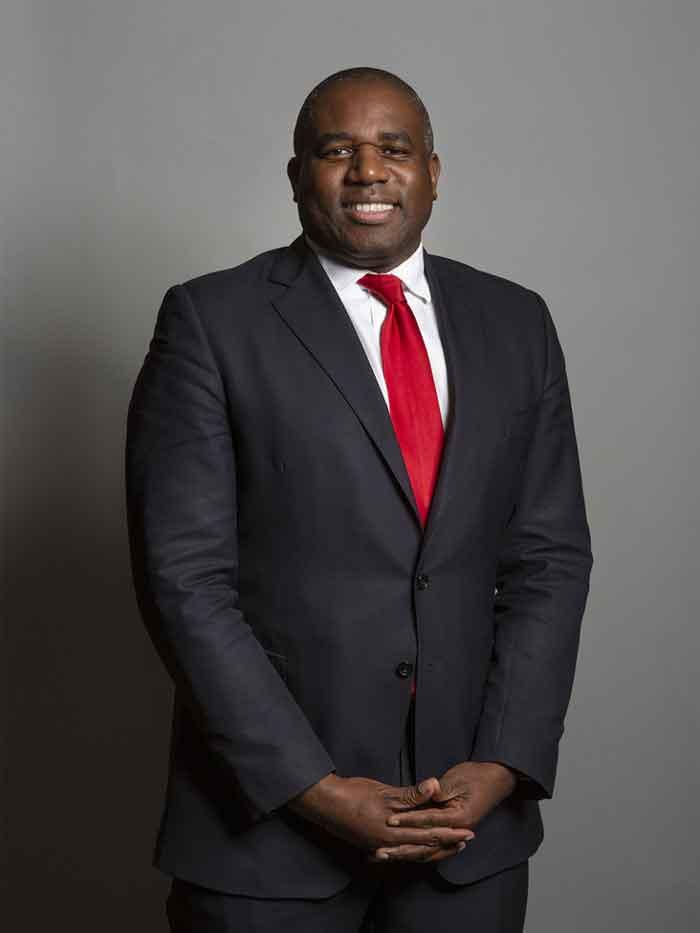
Hon. David Lammy
The UK continues to invest in its legal infrastructure and international business offering. How will developments such as the new Business and Property Division of the High Court further strengthen the UK's position as a global legal centre and support international partners such as Sri Lanka?
Later this year, we will further strengthen the international profile and accessibility of our business courts by launching the new Business and Property Division of the High Court, including a more streamlined route for international business.
What role do you see English law playing in supporting investment, trade and long-term partnerships between the UK and Sri Lanka?
For Sri Lanka, English law offers an internationally recognised framework that is understood and trusted by investors, lenders and commercial partners around the world. It helps manage risk, supports cross-border investment and gives businesses a strong platform for international growth. Coupled with the many other links between our people, our businesses, and our governments, I know that English law can help sustain and grow the partnership between our two countries for years to come.
FARZANA BADUEL, PRESIDENT, THE CHARTERED INSTITUTE OF PUBLIC RELATIONS (CIPR, UK) AND CO-FOUNDER, CURZON PR
The government has launched the new English Law Promotion Panel to strengthen the global position of English law. Why was it important for the CIPR to be involved, and what unique perspective does the communications profession bring to the Panel?
English law is one of the UK's greatest strategic assets, but even the strongest institutions cannot rely on their history alone. Reputation has to be actively maintained, particularly in an increasingly competitive global environment. That is why it was important for the Chartered Institute of Public Relations to be represented on the Panel. The legal community rightly focuses on developing world-class law and institutions, while the CIPR brings expertise in building trust, strengthening reputation and communicating those strengths to the audiences whose decisions ultimately matter.
The research supporting the Panel shows that competitor jurisdictions are investing not only in legal infrastructure, but also in stronger positioning and more targeted promotion. It also suggests the UK's messaging has often relied on statistics rather than explaining the practical benefits English law offers businesses. Communications helps bridge that gap by turning technical strengths into compelling reasons for businesses, investors and governments to choose English law. For the CIPR, this is an opportunity to demonstrate that communications is not an afterthought. It is a strategic capability that helps build understanding, confidence and long-term trust. Protecting the reputation of one of the UK's greatest national assets requires excellence in both law and communications.
Public trust is increasingly shaped by how institutions communicate. How do you see strategic communications supporting confidence in the English legal system, both in the UK and internationally?
Trust is built long before it is tested, through experience, but it is strengthened through communication. People need to understand not only how institutions work, but also the principles that guide them. That applies equally to the legal system. Strategic communications can help explain why judicial independence matters, how decisions are reached and why consistency and due process are so important. When institutions communicate with openness and clarity, they become more accessible and more resilient as people are more likely to have confidence in institutions they understand.
Internationally, confidence is also a factor in economic growth. Businesses making investment decisions, multinational companies choosing governing law, and governments considering legal partnerships all look beyond legislation itself. They also consider whether a country's institutions demonstrate consistency, stability, transparency and integrity. Effective communications helps reinforce those qualities by ensuring the values underpinning English law remain visible to audiences around the world.
English law has long been regarded as a global benchmark for legal certainty. What role can communications play in ensuring that reputation is maintained and understood by international businesses, investors and governments?
Reputation is one of the UK's greatest competitive advantages, but it cannot be assumed. It has to be earned continuously. English law has built its global standing over centuries through judicial independence, legal certainty and the quality of its institutions. Maintaining that position requires us to keep demonstrating why it remains the jurisdiction of choice for international business. Communications has an important role in helping international audiences understand the practical value English law creates. Rather than relying solely on impressive statistics, we should explain what those strengths mean in practice: how legal certainty reduces commercial risk, lowers transaction costs, supports innovation and gives businesses the confidence to invest and grow across borders. Ultimately, organisations choose legal frameworks because they inspire confidence. Communications cannot create that confidence on its own, but it can ensure the strengths of English law are understood clearly, consistently and credibly by businesses, investors and governments around the world.

Farzana Baduel
There is growing scrutiny around transparency and public engagement across all institutions. How can legal organisations communicate more effectively with audiences who may find the legal system inaccessible or difficult to understand?
The legal profession has an opportunity to make the law feel less distant without making it less rigorous. That starts with using language that people can understand. Legal accuracy is essential, but clarity should never be seen as a compromise. When legal concepts are explained in plain English, people are more likely to engage with them and have confidence in the institutions behind them. It also means listening. Communication today is not simply about publishing information. It is about responding to questions, acknowledging concerns and helping people understand how legal decisions affect everyday life. Organisations that communicate in this way are more likely to build lasting trust.
English law continues to underpin the legal systems of many Commonwealth countries, including Sri Lanka. How can the English Law Promotion Panel help strengthen those long-standing legal relationships while ensuring English law remains relevant and competitive in an increasingly global legal landscape?
Countries such as Sri Lanka have long-standing legal and commercial relationships with English law, and those relationships continue to create opportunities for trade, investment and collaboration. The work of the English Law Promotion Panel is not about looking backwards. It is about ensuring English law continues to evolve and remains the jurisdiction of choice in an increasingly competitive and interconnected global economy. At the same time, this is an opportunity to deepen collaboration with long-standing partners such as Sri Lanka. The conversation should be about sharing expertise, responding to emerging technologies and strengthening the legal frameworks that support international commerce.
I see real potential for closer collaboration in areas such as legal education, arbitration, professional development and cross-border investment. Strong partnerships are built on mutual respect and shared learning, and I hope the work of the Panel will encourage even greater exchange of knowledge and expertise, benefiting both our legal systems and the businesses they serve.
(Hon. David Lammy)