IN CONVERSATION WITH BEVAN JONATHAN DAVID
NEW GENERATION BY MALINDA PERERA
Bevan Jonathan David did not always imagine a future in architecture. Growing up, he was determined to follow in his father's footsteps and build a career in banking, even as classmates aspired to become doctors, engineers and other professionals. Everything changed while he was waiting to begin his A’Levels at Elizabeth Moir. Curious to bring his vision for his family's home to life, he taught himself Google SketchUp and created a complete digital model. Watching that design transform into a real building sparked a passion that would redefine his future. Rather than following a conventional career path, he embraced uncertainty, studied at the Academy of Design, accepted the United Nations as his very first client while still a student, and launched his own practice immediately after graduation. Today, as the founder of Beurant, Bevan has completed more than 100 projects through referrals alone, earning a reputation for creativity, commitment and client trust, along with recognition as a New Generation Top40 Award winner in 2024.
Q: As a child, you dreamed of joining the banking sector like your father. Looking back, what do you remember most about that dream, and how did it shape your work ethic?
Growing up, banking was the only career I truly imagined for myself because my father worked in the industry, and I admired what he did. Throughout my years at Elizabeth Moir, I was probably the only student who consistently spoke about wanting to join a bank. Most of my classmates were focused on becoming doctors, engineers or pursuing other professions. Many people encouraged me to reconsider my plans and explore different paths, but I remained determined to follow what I believed was the right direction for me. Although my career eventually took a completely different turn, that determination never disappeared. Looking back, I realise that the discipline and commitment I developed while pursuing that childhood dream have stayed with me throughout my professional life. Whether it was banking or architecture, I have always believed in giving everything I have to achieve my goals. That mindset has become one of the strongest foundations of my work ethic.
Q: Designing your family home while waiting to begin your A Levels changed your career path. What emotions did you experience when you first saw your design become reality?
It is difficult to describe that feeling because I was genuinely speechless. Seeing something that existed only on my computer screen become a complete physical structure was an unforgettable experience. Every room, every space and every detail reflected what I had imagined during countless hours of learning and designing. One moment stands out clearly in my memory. Before construction began, the architect reviewed my design and told me it was good enough to be used as the basis for the project. Hearing that gave me enormous confidence. Until then, architecture had simply been something I enjoyed exploring.
Suddenly, I realised that my ideas could become real places where people would live. That experience completely changed how I viewed my future and inspired me to pursue architecture professionally.

Q: What inspired you to teach yourself Google SketchUp, and what advice would you give young people about self-learning?
My motivation was very simple. I wanted to show my family exactly how I imagined our future home. I searched for software that would allow me to create accurate drawings, and Google SketchUp was the first programme I discovered. I had no formal training, so everything I learned came through experimenting, making mistakes and gradually improving. I believe self-learning is one of the most valuable skills anyone can develop. Educational institutions provide an excellent foundation, but they can only teach the basics. Real understanding comes when you continue exploring independently. The more you experiment with software, technology or any subject, the more possibilities you discover. Trial and error often become your greatest teacher because every mistake reveals something new. Young people should never be afraid of learning beyond the classroom. Curiosity, patience and persistence will often take you much further than simply relying on formal education.
Q: How did your time at the Academy of Design and your involvement in student activities prepare you for entrepreneurship?
The Academy of Design played a significant role in preparing me for both architecture and business. During my studies, we were encouraged to participate in design competitions and real-world projects where we worked together to develop proposals for actual clients. Those experiences introduced us to the practical side of the profession long before graduation. Another important part of the programme was a compulsory three-month internship. I completed mine at JAT Holdings, where I gained valuable exposure to how projects move from concept to construction. That experience helped me understand not only design but also implementation, communication and problem solving. Outside the classroom, I was actively involved in the student committee. Organising events, working with different personalities and managing responsibilities taught me leadership, teamwork and planning. Looking back, those experiences gave me confidence and prepared me for the challenges of starting my own business.
Q: Receiving a United Nations project while still a student with no professional experience was an extraordinary opportunity. What convinced you to accept the challenge?
The biggest reason was the confidence the United Nations placed in me. I was completely honest with them. I explained that I had no professional experience, no completed projects and no network of contractors because I was still studying. Despite all of that, they encouraged me to take on the project.
That belief gave me confidence in myself. I realised that if an organisation like the United Nations was willing to trust me, I should trust myself too. Of course, it was a frightening decision because I had no guarantee that everything would go according to plan. At the same time, I knew this was an opportunity that might never come again. The thought that my very first completed project could be for the United Nations was something I simply could not ignore. Saying yes required courage, but it also became one of the most important decisions of my career.
Q: You launched Beurant immediately after graduation instead of joining an established architectural practice. What were the biggest challenges during those early days?
Starting my own practice straight after graduation was exciting, but it also came with a great deal of uncertainty. My biggest concern was whether I would continue receiving clients. Unlike joining an established firm, there was no guaranteed salary or steady pipeline of work. Everything depended on my ability to build relationships and deliver results. I also questioned whether I could manage clients independently. During my internship, I had experienced working within an organisation where there were experienced professionals to guide me. Running my own business meant making decisions alone and taking full responsibility for every project. Financial stability was another concern. Like many entrepreneurs, I wondered whether I could generate enough income to keep the business operating. Thankfully, by God's grace, things gradually came together. Each completed project led to another opportunity, and every challenge became a valuable learning experience.
Q: Beurant has now completed more than 100 projects, largely through referrals rather than advertising. What do you believe has earned your clients' trust?
I believe referrals are one of the strongest compliments any professional can receive because they reflect genuine client satisfaction. When someone recommends you to their family or friends, they are placing their own reputation behind your work. One reason I have earned that trust is because I remain involved throughout the entire journey. My responsibility does not end when the design is completed. I continue working alongside clients during construction to ensure that what was envisioned on paper becomes reality. That ongoing commitment gives clients confidence that they will be supported from beginning to end. Flexibility is another important factor. Every client has different needs, budgets and expectations. I try to adapt while maintaining the integrity of the design. Building relationships based on communication, honesty and reliability has been just as important as creating beautiful spaces.
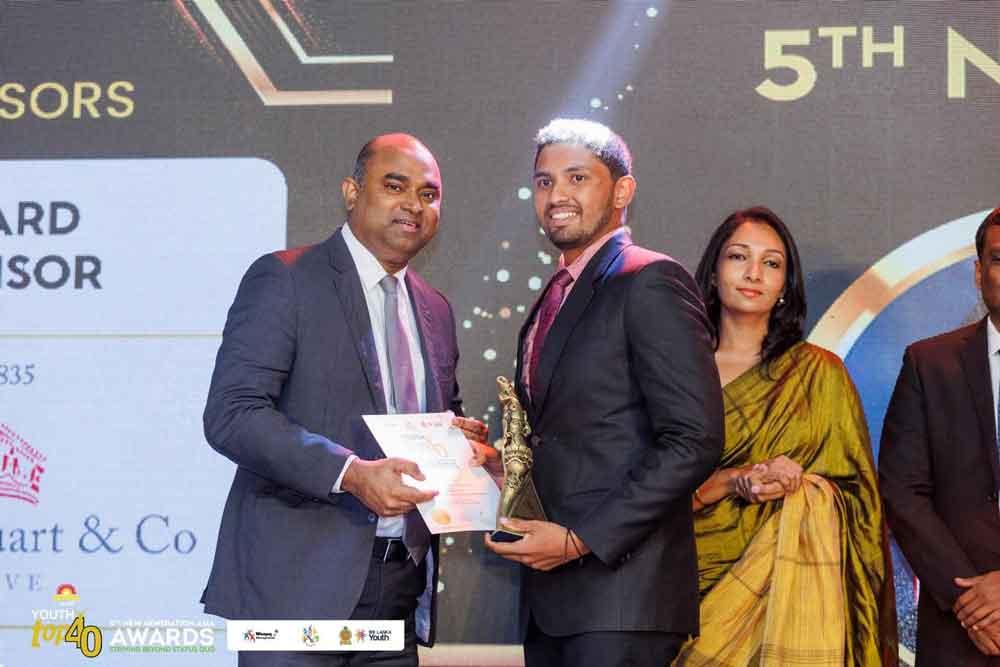
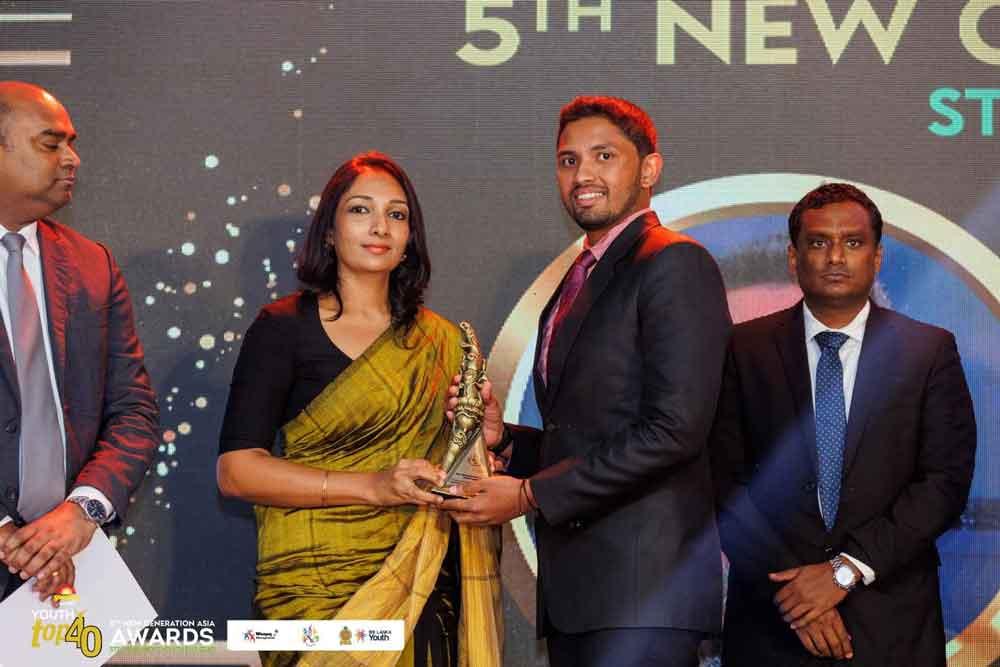
Q: Winning the New Generation Top40 Award in 2024 marked an important milestone. What did that recognition mean to you personally?
Receiving the award was incredibly meaningful because it recognised the work, I had invested over more than six years.
Like many entrepreneurs, I spent countless hours working behind the scenes without expecting recognition. The award reminded me that consistent effort eventually produces results. Although I am naturally not someone who enjoys talking about achievements, this recognition became something deeply personal. Rather than making me feel satisfied, it motivated me to work even harder. It reminded me that I still have many goals to achieve and encouraged me to pursue larger and more ambitious projects. Recognition is valuable not because of the title itself, but because it reinforces your belief that your work is making an impact. For me, it strengthened my confidence and inspired me to continue growing both professionally and personally.
Q: Outside architecture, you enjoy music and nature photography. How do these interests influence your creativity and approach to design?
Music and photography provide a healthy balance to my daily life. Architecture requires constant focus, decision making and problem solving, so having creative outlets outside work allows me to recharge both mentally and emotionally. Photography encourages me to observe details that others might overlook. Whether it is natural light, textures, landscapes or composition, those observations often influence the way I think about design and space. Music has a different effect. It helps me relax, clear my mind and reset after particularly demanding periods. Rather than directly influencing individual projects, these hobbies give me the opportunity to step away from work and return with a fresh perspective. Sometimes the best ideas emerge after allowing yourself time to disconnect and experience something completely different.
Q: What message would you like to share with young Sri Lankans who are afraid to pursue unconventional dreams?
The first thing I would say is to be honest with yourself about what you truly want. Too often, people allow fear or the expectations of others to determine the direction of their lives. If you genuinely believe in your dream, do not let uncertainty stop you from pursuing it. Failure is not the end of the journey. Every setback teaches you something valuable that success often cannot. Whenever you fall, learn from the experience, stand up again and keep moving forward. Growth comes from resilience, not perfection. Most importantly, never lose your individuality. You do not have to follow the same path as everyone else to build a successful career. My own journey began with a childhood ambition to become a banker before unexpectedly leading me into architecture. If I had been afraid to change direction, none of the opportunities that followed would have happened. Believe in yourself, work hard, stay humble and keep learning. Your journey will not always be easy, but with perseverance and determination, you can create opportunities that once seemed impossible.