Know Your Rights: Family Land Disputes and What You Need to Know

BEHIND CLOSED DOORS BY NUHA FAIZ
There's always a weird silence that falls over a Sri Lankan family gathering when someone brings up "that piece of land." Whether it is your parents' land or your grandparent's old property. Someone mentions a plot number. Someone else corrects them. A third person says that they heard the surveyor was coming to measure your uncle's plot. And just like that, the room shifts.
We as a 'casual' generation have grown up treating inherited land disputes as a kind of national inevitability. We joke about it. We rarely talk about it properly.
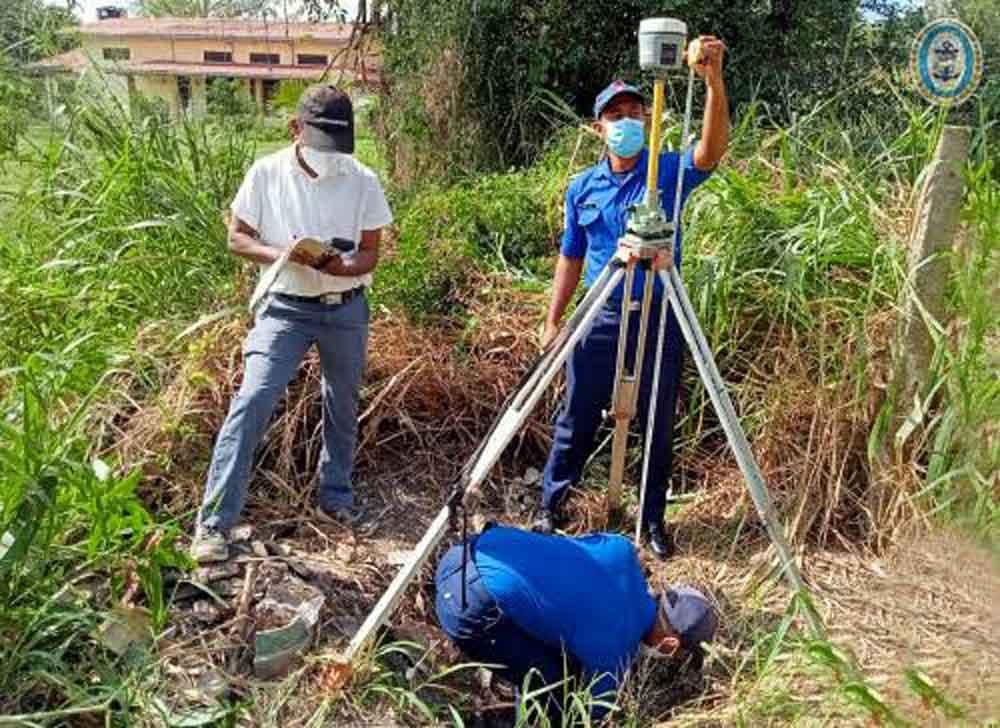
I have spent the last few weeks inside one of these disputes myself, helping my mother navigate a boundary issue on a piece of family land that was subdivided decades ago. A surveyor is now measuring the entire original block, plot by plot, from scratch, because nobody is entirely sure anymore where one person's portion ends and another's begins. My family is not unusual. If anything, we are painfully typical. And that is exactly the point I want to make here, because somewhere in the middle of financial literacy conversations about EPF contributions, fixed deposits, and stock market investing, we have quietly left out one of the most consequential financial assets many Sri Lankan families will ever hold: land that was never properly divided on paper.
Why this keeps happening
Land gets subdivided informally, often generations ago, based on a verbal understanding among siblings. Perhaps the eldest brother built his house on the eastern side, the second brother took the middle, and the sister's portion was set aside "for later." No survey plan was drawn up at the time, or if one was, it was never formally registered. Everyone understood the arrangement because everyone was present when it was made. The problem is that understanding does not transfer automatically to the next generation, and land does not stay still. Fences move a few feet over the years. Trees get planted on what someone remembers as the boundary. A new road gets cut through and changes what used to be a clear reference point.
Then the generation that remembers the original agreement passes away, and what is left is a piece of land with no formal partition, multiple families with a claim to some part of it, and nothing but memory and goodwill holding the boundaries in place. Goodwill, as it turns out, does not survive contact with property value increases, inheritance anxiety, or a cousin who wants to sell.
There is also a deeper, more uncomfortable reason this keeps happening, and it has nothing to do with law. In most Sri Lankan households, talking about inheritance while parents are still alive is treated as something close to bad manners. Asking your father where the deed is kept can feel like you are asking him to think about his own death. So families avoid the conversation entirely, sometimes for decades, until a death or a health crisis forces the issue into the open at the worst possible time, when grief and money are tangled together and nobody is thinking clearly.
The paperwork nobody has seen
Do you know what document actually proves your family's ownership of the land your parents or grandparents live on? Could you find it in a drawer tonight if you needed to? Most people my age cannot answer that question, and that gap is where these disputes are born.
In Sri Lankan property law, the document that matters most when land has been divided among multiple owners is called a deed of partition. This is a formally registered legal document that divides a larger block of land into specific, individually surveyed portions, each with its own plan number, and assigns each portion to a named owner. Once registered, it becomes the legal record of who owns what, regardless of what anyone privately remembers or agreed to verbally around a dinner table years earlier.
A verbal family agreement, no matter how sincere or long-standing, does not carry the same legal weight. It might work perfectly well for thirty years. It becomes fragile the moment someone disputes it, because at that point what you have is one person's memory against another's, rather than a plan and a deed that a court can simply read.
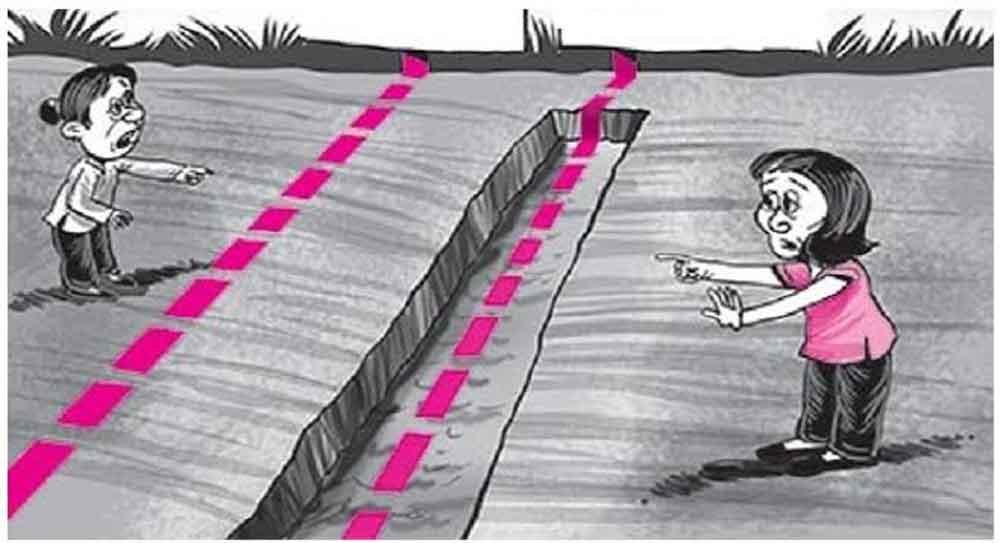
This is also where a proper land survey earns its importance. A surveyor's role is not just to measure distances. Under the relevant subdivision and survey regulations, a licensed surveyor produces a plan that gets approved through the Survey Department, and it is this approved plan, not a fence or a hedge or someone's recollection, that legally defines where a boundary sits. When my family's surveyor was brought in, his job was essentially to reconstruct, with legal precision, a boundary arrangement that had existed only informally for years. That is a slow, sometimes tense process, because it forces everyone to confront exactly how much of their sense of ownership was based on paper and how much was based on habit.
There is one more legal concept worth understanding here, because it comes up constantly in boundary disputes: prescriptive rights. Under Sri Lanka's Prescription Ordinance of 1871, someone who has occupied and used a piece of land openly, without interruption, and under a claim adverse to or independent of the true owner for ten years can, in certain circumstances, acquire a legal right to it strong enough to defeat the original owner's paper title entirely. This is precisely why encroachment issues become so charged. A boundary that shifted a few feet decades ago and was never challenged can, over time, harden into something with real legal standing, even if it started as an honest mistake or a small, unspoken accommodation between neighbours or relatives. It is worth knowing, though, that possession which began with permission, such as a relative letting you use a portion of land out of goodwill, does not automatically ripen into a prescriptive claim, because the law treats permissive possession differently from possession that is genuinely adverse. This distinction has decided real cases in Sri Lankan courts, which tells you how often families end up arguing over exactly this point.
What happens when co-owners cannot agree
If your family land is jointly owned and everyone genuinely cannot reach an agreement on how to divide it, Sri Lankan law does provide a formal route, though it is one best avoided if possible. Under the Partition Law No. 21 of 1977, any co-owner, no matter how small their share, can file a partition action in the District Court asking the court to either divide the land physically among the owners or order it sold and the proceeds distributed. The person filing the case has to identify every single individual with any claim to the land, including anyone with a mortgage, lease, or life interest in it, and the case has to include a description of the land along with a pedigree showing how ownership passed down through the family. The court then appoints a licensed surveyor to prepare a plan, and the final decree, once entered, legally binds every party named in the case.
Two things about this process are worth knowing before anyone considers it. First, once a partition action is filed and properly registered as a pending case, nobody can legally sell, lease, or mortgage their share of the land until the case is resolved, so filing one effectively freezes the property. Second, this process can take years, sometimes over a decade, and the legal costs are usually shared among the co-owners in proportion to their interest in the land. A partition action exists as a safety net for when families genuinely cannot agree, not as a quick fix, and most lawyers will tell you it should be the last option considered rather than the first.

What happens if there was never a will
A separate but closely related problem shows up when a parent or grandparent dies without leaving a valid will, because this is often exactly the moment a dormant land dispute turns into an active one. Sri Lanka does not have a single inheritance law that applies to everyone. Most people are governed by the Matrimonial Rights and Inheritance Ordinance of 1876, sometimes called the general law, under which a surviving spouse is entitled to one half of the estate, with the remaining half divided among children or, if there are none, among other relatives in a set order. Kandyan Sinhalese families are governed by a separate Kandyan law framework, which distinguishes between different categories of property and treats a surviving wife's rights differently, generally giving her only a life interest rather than outright ownership of her husband's acquired property. Tamils of the Northern Province who fall under Thesawalamai have their own rules distinguishing between property acquired during a marriage and property inherited from other relatives. Muslims in Sri Lanka are governed by the Muslim Intestate Succession Ordinance of 1931, which applies Islamic principles of inheritance and divides the estate among a defined set of heirs in fixed shares.
The reason this matters for a land dispute specifically is that when there is no will, every eligible heir automatically becomes a co-owner of the land the moment the person dies, whether or not they ever intended to be involved in managing it, living on it, or fighting over it. An estate above a certain value has to go through a formal testamentary process in the District Court before any land within it can be legally transferred, which is often the single biggest reason families discover, sometimes years after a death, that the property was never really "theirs" to sell or divide in the way they assumed.
What to actually do about it
None of this needs to be complicated or morbid to bring up. Ask a parent, gently and without ceremony, whether the family land has a registered deed of partition, and if there is more than one owner involved, ask whether that partition was ever formally surveyed and registered rather than agreed upon informally. Ask, too, whether a will exists, and if it does, where it is kept and whether it has ever been updated since it was written. If subdivision has never been done, raising the idea of doing it now, while everyone involved is alive, informed, and reasonably agreeable, is far cheaper and far less painful than doing it later through a courtroom.
If you are ever in a position to commission a survey, treat it as preventive rather than reactive. Waiting until there is already a dispute means the surveyor's report becomes evidence in a conflict rather than a simple administrative step everyone can agree to calmly. And if you inherit land jointly with siblings or cousins, resist the temptation to let an informal arrangement stand indefinitely just because it is easier in the moment. Easier now is usually more expensive later, in money and in family peace.
The land our parents and grandparents fought over does not have to become the land we fight over too. But avoiding that outcome takes something most of us are reluctant to do, which is to have the conversation early, put it on paper, and treat inherited land with the same seriousness we would give any other major financial asset. The memes will keep coming either way. Whether your family ends up as the punchline is, to a surprising extent, still within your control.