Her Story. Her Strength. By: Dr. Sulochana Segera In Conversation with Bani Chandrasena
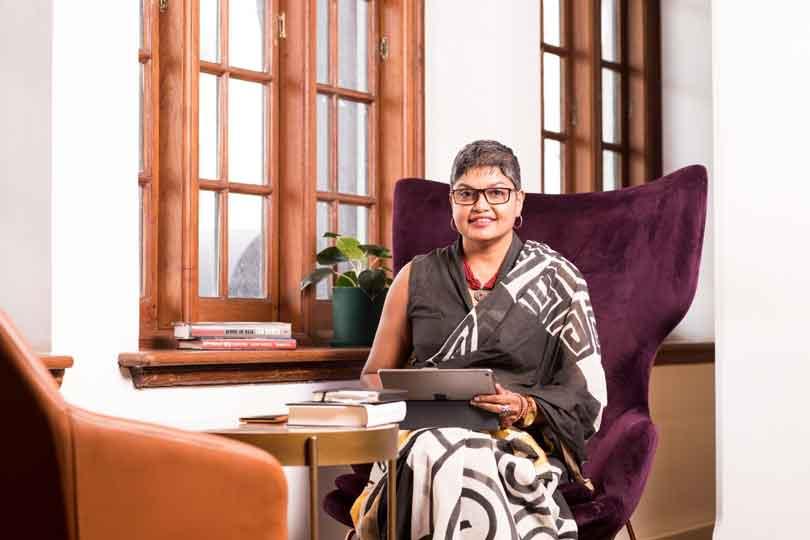
Bani Chandrasena has built a career that defies conventional labels. She has moved seamlessly between global corporate leadership, human resources, diversity and inclusion advocacy, leadership development, process transformation, career coaching, and sustainable farming, bringing the same philosophy to each space. Rather than seeing people, systems, and communities as separate disciplines, she believes they are deeply interconnected. Her work has ranged from shaping talent strategies in multinational organisations to leading conversations around Diversity, Equity and Inclusion, while also creating meaningful impact through rural livelihood development at Thambiliwatte Sustainable Farms. Throughout every stage of her journey, Chandrasena has remained focused on one central idea that sustainable success is created when individuals are given the opportunity to contribute authentically within systems designed to help them thrive. In this conversation, she reflects on leadership, equity, organisational culture, communication, sustainability, and the lessons she has learned from working across boardrooms, communities, and agricultural landscapes.
Q: You have shaped people strategies across global corporate environments and grassroots initiatives. What has remained the most consistent truth about human potential across all these spaces?
The greatest lesson I have learned is that people flourish when they are genuinely given opportunities and trusted to be themselves. Every organisation speaks about talent, but talent only reaches its full potential when people feel comfortable expressing ideas, asking questions, and thinking differently. One of the biggest obstacles we create is assuming we already understand other people. That assumption often leads us to dismiss perspectives simply because they are unfamiliar. We decide an idea is unsuitable before we have truly listened to it. Those missed opportunities become invisible barriers to innovation. Interestingly, I understood this much more deeply through my work in Diversity, Equity and Inclusion than I did during many years working in traditional human resources. DEI forces you to question assumptions and actively seek perspectives that may not naturally emerge. Once you create that environment, you begin to realise how much untapped potential exists within every organisation. People have always had the ideas. They simply needed an environment where they felt safe enough to share them.
Q: During your leadership at the London Stock Exchange Group in Sri Lanka, you championed Diversity, Equity and Inclusion in a highly regulated corporate environment. What does meaningful inclusion look like when it moves beyond policy into daily behaviour?
Meaningful inclusion begins long before a policy document is written. At the London Stock Exchange Group, I witnessed a deliberate effort at group level to recruit people from different races and backgrounds across the organisation. Over seven years, the global workforce changed significantly because that commitment was intentional rather than symbolic. Initially, it was not always easy. Global meetings became more challenging because people communicated differently. There were different accents, different cultural references, and different ways of expressing ideas. Those differences can feel uncomfortable when organisations are used to operating within familiar communication styles.
However, that discomfort eventually becomes one of the organisation's greatest strengths. If your customers come from every corner of the world, then your workforce should also reflect that diversity. When products and services are designed by people representing different cultures and lived experiences, organisations gain broader perspectives and produce better outcomes. Inclusion therefore becomes something employees experience every day rather than something they simply read in an employee handbook.
Q: In your experience, why do many organisations still struggle to translate diversity into genuine equity at leadership level?
The answer is surprisingly simple. Equity requires time, patience, and effort, and those qualities often compete with business pressures for immediate results. Creating equity means understanding that different individuals require different forms of support. That is not always convenient because it involves listening carefully, designing customised solutions, and remaining flexible throughout the process. There is rarely a standard formula. The organisations that succeed approach equity collaboratively and authentically. They invest sufficient time in planning, communication, and relationship building before expecting measurable outcomes. Too often organisations become impatient. They rush implementation because they want immediate success. When foundations are weak, the initiative loses momentum, people become frustrated, and leaders conclude that equity programmes do not work. In reality, the problem is usually not the objective. It is the lack of preparation at the beginning.
Q: As President of Diversity Collective Lanka, how do you challenge organisations that treat respectful workplaces as a compliance exercise rather than a cultural transformation?
My first priority is simply getting organisations to join the conversation. Whether they initially participate because of regulatory compliance or because they genuinely want to improve culture is actually less important than many people think. The important thing is that they are willing to begin. Once organisations start discussing compliance issues through focus groups and employee conversations, something interesting happens. Leaders begin hearing directly from employees about their daily experiences. Those conversations introduce perspectives that may never have reached senior management otherwise. Gradually, compliance transforms into understanding. Organisations begin recognising that accessibility, inclusion, and psychological safety are not simply legal obligations. They improve employee wellbeing, engagement, and ultimately business performance. I also encourage realistic expectations. Cultural transformation cannot happen overnight. Sustainable workplace change is built through consistent conversations, continuous learning, and steady improvements rather than dramatic short-term interventions.
Q: What are the biggest systemic barriers preventing women and underrepresented groups from advancing into decision making roles in Sri Lanka and similar markets?
Many of the barriers begin with unconscious assumptions that have become normalised over generations. People often accept existing systems because they believe they have always functioned this way. Unfortunately, those inherited assumptions shape our physical infrastructure, organisational structures, and leadership expectations. Take disability as an example. Public transport remains a major obstacle for many Persons with Disabilities.
Before discussing executive leadership opportunities, we must first ask whether people can comfortably attend school, access higher education, or travel independently to work. Those foundational barriers influence everything that follows. We also need to rethink how we define professional success. Many organisations still reward constant availability rather than meaningful contribution. If leadership is measured only by working around the clock, individuals requiring flexibility or reasonable accommodation will always be disadvantaged. Success must become broader than financial outcomes alone. Organisations should also evaluate how business is conducted, how employees and families are supported, and how operations affect society and the environment. That broader definition creates fairer opportunities for everyone.
Q: Leaders often say they want collaboration and inclusion, but if an organisation's daily processes are flawed, how do those systems shape employee behaviour regardless of leadership intentions?
Processes often influence behaviour far more than speeches or vision statements. A leader may genuinely believe in collaboration and inclusion, but unless daily systems reinforce those values, employee behaviour will remain unchanged. Organisations need to deliberately create opportunities for self-reflection, unconscious bias awareness, and inclusive decision making. Without those mechanisms, people naturally return to familiar habits. A simple example involves junior employees taking responsibility. Many leaders complain that younger staff constantly escalate decisions instead of solving problems themselves. However, when you observe the process, managers frequently reinforce that behaviour. A junior employee presents an issue, and the manager immediately provides the answer or takes control. Every time that happens, the system teaches employees that independent decision-making carries risk while dependence receives reward. Eventually people stop taking initiative because the organisation has unintentionally trained them not to. The process quietly overrides leadership intentions, no matter how inspiring those intentions may sound.
Q: In career counselling and leadership development, what is the most dangerous misconception people hold about career success today?
Many people believe that qualifications alone determine career success. Education and technical expertise certainly matter, but they are only part of the equation. Organisations can teach technical skills relatively quickly. In many cases, those capabilities can be developed within a few months. Mindset is entirely different. Attitude influences how individuals approach learning, collaboration, resilience, accountability, and change. Those qualities take much longer to develop because they involve personal growth rather than technical instruction. People who remain curious, adaptable, and willing to learn consistently outperform those who rely solely on qualifications. Career progression ultimately depends less on what you already know and more on your willingness to keep evolving.
Q: Having worked across executive and operational workforce levels, what is the single biggest communication gap that undermines organisational trust?
Authenticity. Leaders sometimes believe they need to project certainty at all times, but genuine trust grows when leaders are willing to be human. Showing vulnerability requires courage because it means acknowledging uncertainty, admitting mistakes, or asking for help. However, those moments create stronger relationships than carefully rehearsed corporate messaging ever can. Employees recognise authenticity very quickly. When leaders communicate honestly, people become more willing to contribute ideas, raise concerns, and engage openly. Trust grows because communication becomes genuine rather than performative. Without authenticity, even the most polished communication strategies struggle to build lasting credibility.
Q: Your transition into Thambiliwatte Sustainable Farms reflects a shift towards community and ecological impact. What does sustainability mean to you beyond environmental language?
Sustainability means creating long term value for people as much as for the environment. For me, it is about applying everything I have learned throughout my career to improve the livelihoods of the people working alongside me while also building a financially sustainable business. Livelihoods extend well beyond salaries. They include teaching life skills, creating opportunities for personal growth, and helping people understand restorative organic farming at a time when genuinely natural products are becoming increasingly rare. It is also about changing our relationship with nature. Rather than viewing land simply as a commercial asset, we should learn to work with nature respectfully and responsibly. That philosophy extends beyond our own farm. We hope to share knowledge with neighbouring farmers and strengthen the wider community because sustainability only becomes meaningful when its benefits spread beyond a single organisation or business.
Q: Looking across your journey from corporate leadership to Diversity, Equity and Inclusion advocacy to rural livelihood development, what does legacy mean to you today?
Legacy has become much simpler than titles or achievements. To me, it means leaving behind the knowledge I have gained and the positive behavioural changes I have experienced throughout my own journey. If my team, my son, and the people whose lives intersect with mine continue applying those lessons long after I am gone, then I have created something meaningful. Legacy is also deeply connected to personal growth. None of us ever truly arrive at a final destination. We continue learning, improving our standards, and becoming better versions of ourselves throughout life. If that continuous commitment to improvement encourages others to grow alongside us, then our influence extends far beyond our own careers. That, ultimately, is the legacy I hope to leave behind.