THE PRINCE WHO NEVER BECAME KING: NEYMAR’S UNFINISHED WORLD CUP DREAM
You do not always notice when an ending begins. Sometimes, it does not arrive with a final whistle, a dramatic silence, or a stadium holding its breath. Sometimes, it begins years earlier, in a tackle that leaves a body broken, in a penalty shootout that refuses to be kind, in a tournament where hope keeps returning only to leave through the same door.
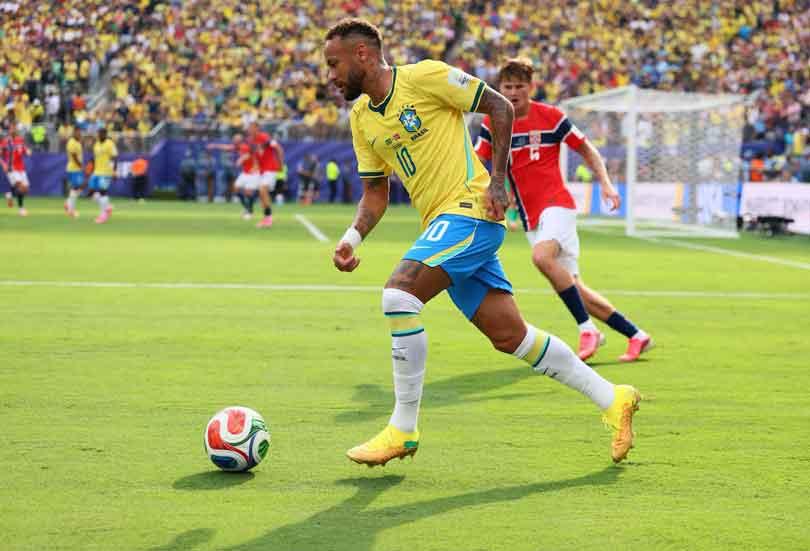
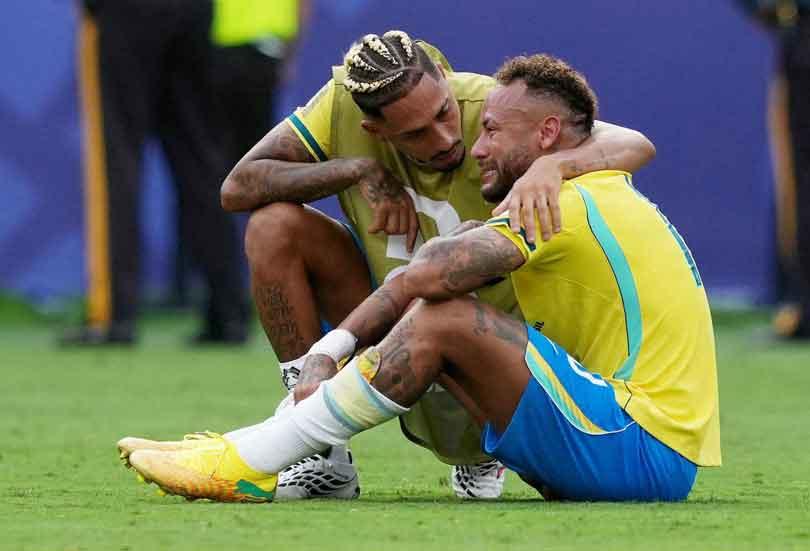
For Neymar, the ending came at MetLife Stadium in New Jersey. It was almost cruelly poetic. The same place where he first announced himself to Brazil in 2010, scoring on his international debut against the United States, became the place where he seemed to say goodbye. Sixteen years later, older, slower, injured too often, loved too intensely and criticized too easily, Neymar walked off the pitch in tears after Brazil’s 2-1 defeat to Norway in the last 16 of the 2026 World Cup.
He had come on in the 67th minute with the match tied at 0-0. There was still a flicker of theatre in it. Neymar entering the field, the yellow shirt on his back, the name carrying all the weight of old promises. For a moment, it may have felt like the script was preparing one last miracle, but football does not always care for romance.
Erling Haaland scored twice late, first in the 79th minute and again in the 90th minute, turning Neymar’s return into something crueller. Brazil, the five-time world champions, were chasing a game that was slipping away from them with every passing second. Neymar did eventually score, converting a penalty deep into stoppage time but it was not a rescue. It was a farewell dressed as a consolation.
The goal made it 80 for Brazil, extending his record as the country’s all-time leading goalscorer. Yet, somehow, even that number felt small beside the sadness of the moment. There are achievements that look enormous on paper but feel incomplete in the heart. Neymar’s Brazil career may end with 80 goals, 130 appearances, Olympic gold, and a Confederations Cup. Still, the absence of the World Cup will always sit beside those numbers like an unfinished sentence.
After the match, Neymar’s words were simple.
- “I tried. I tried.”
There was no long speech, no attempt to decorate the pain, no need to explain what everyone could already see on his face. Then came the line that made the night feel heavier: “I started here, I finished here.” That is the strange thing about sporting heartbreak. It can turn a stadium into a circle. What once felt like a beginning can suddenly become an ending. The same place that witnessed the arrival of Brazil’s next great hope had now witnessed his quiet surrender to time.
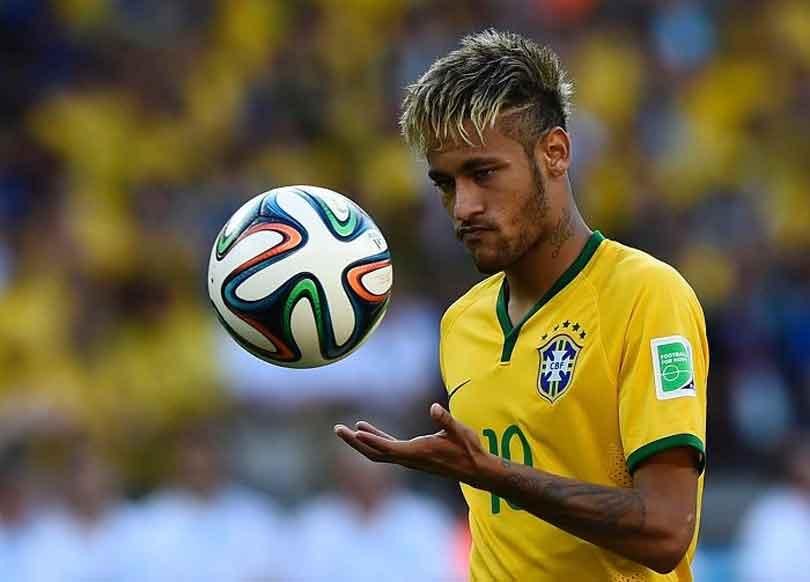
Neymar’s story with Brazil was never ordinary because Neymar was never allowed to be ordinary. From the moment he broke into the national team as a teenager, he was not treated simply as a gifted footballer. He was treated as an answer. Brazil did not only see skill in him. They saw inheritance. They saw the continuation of Pelé, Romário, Ronaldo, Ronaldinho and Kaká. They saw the boy who would bring back the sixth star.
That is a beautiful thing to carry until it becomes too heavy.
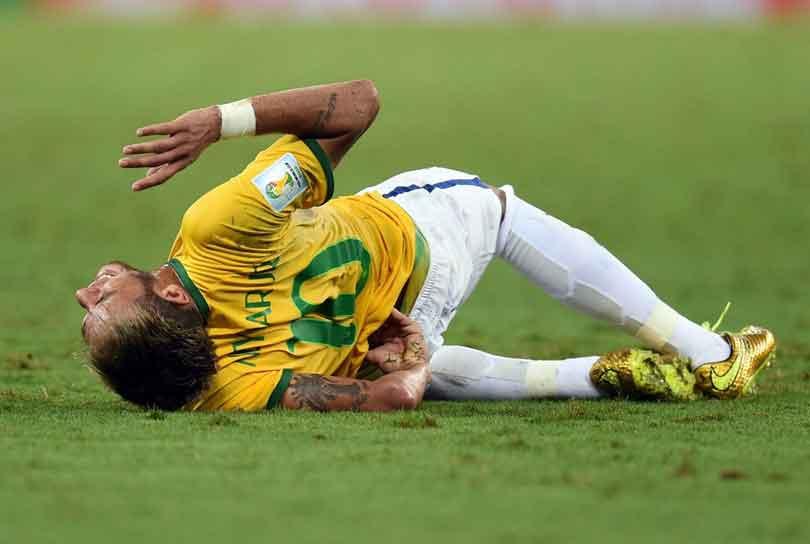
In 2014, on home soil, the dream looked possible. Neymar played with the energy of someone who understood the size of the shirt but still had the courage to enjoy it. He scored, danced, celebrated and carried a nation’s expectation with a smile that seemed almost too bright for the pressure around him. Then, against Colombia, a knee to the back ended his tournament.
Brazil continued without him but not really. His body was absent, yet his absence filled the stadium. When Germany beat Brazil 7-1 in the semi-final, it was not only a defeat. It was a national wound. Neymar had to watch from the side as the dream collapsed in the most painful way imaginable.
In 2018, he returned to the World Cup with his body still not fully trusted. Brazil had talent but the ending was familiar. Belgium won 2-1 in the quarterfinals, and once again, Neymar’s tournament ended before the story had reached the chapter everyone expected.
Then came 2022.
Against Croatia, Neymar scored in extra time. For a few minutes, it felt like the old promise had finally found its moment. He had equalled Pelé’s official Brazil goal record, and Brazil were close to the semi-finals, but football can be unbearably cold. Croatia equalized. Brazil lost on penalties. Neymar never even got to take his spot-kick.
That image remained: Neymar standing there, unable to change anything, trapped inside a heartbreak he had not been given the chance to answer. By 2026, the dream had changed shape. Neymar was no longer the central force of Brazil’s attack. Injuries had taken too much from him. An ACL injury in 2023 kept him away from the national team for years, and by the time he returned for the World Cup, he was more symbol than certainty. He came on late against Scotland in the group stage. He came on late again against Norway. It was not the Neymar Brazil had imagined when he was 18 but maybe that is what made it sadder.
We were not watching the unstoppable boy from Santos anymore. We were watching what time does to even the most gifted bodies. The tricks were still somewhere inside him. The imagination was still there. The desire was clearly still there but the body, the one thing every athlete depends on, had stopped obeying the way it once did. Neymar’s career has always existed between beauty and frustration. At his best, he played football like it was something between dance and rebellion. He made defenders look foolish. He turned matches into performances. He carried that rare kind of talent that made people lean closer to the screen because something unexpected might happen at any second.
Yet his career also became a conversation about what was missing. No Ballon d’Or. No World Cup. Only one Champions League. Too many injuries. Too many almosts. Too many moments where the story seemed ready for greatness, only to bend toward disappointment.
Still, reducing Neymar to what he did not win feels too easy. There are players who are remembered because they completed everything. Neymar may be remembered because he made incompletion feel human. His story is not clean. It does not fit neatly into the usual language of legacy. He was brilliant but not always available. Loved but not always forgiven. Successful but somehow still spoken about as if success had escaped him.
That is the paradox of Neymar.
He achieved what almost every footballer can only dream of, yet his career still feels haunted by the one thing Brazil wanted most from him. Perhaps that says less about Neymar and more about the cruelty of expectation. When a country with five World Cups gives a player its longing, he is no longer judged only by what he does. He is judged by what everyone hoped he would become.
Now Brazil must move forward without him. Carlo Ancelotti has spoken of a new cycle, of using this defeat as fuel, of continuing the work. Brazil will rebuild, because Brazil always rebuilds. New players will come. New names will be placed under impossible light. New children will wear yellow shirts and imagine themselves as the answer, but Neymar’s chapter will be difficult to close.
Not because it ended perfectly but because it did not.
Maybe that is why the tears mattered. They reminded everyone that beneath the brand, the fame, the criticism and the statistics, there was still a boy who wanted to win the World Cup for Brazil. A boy who tried. A boy who kept coming back. A boy who gave his body to a dream that never fully gave itself back to him.
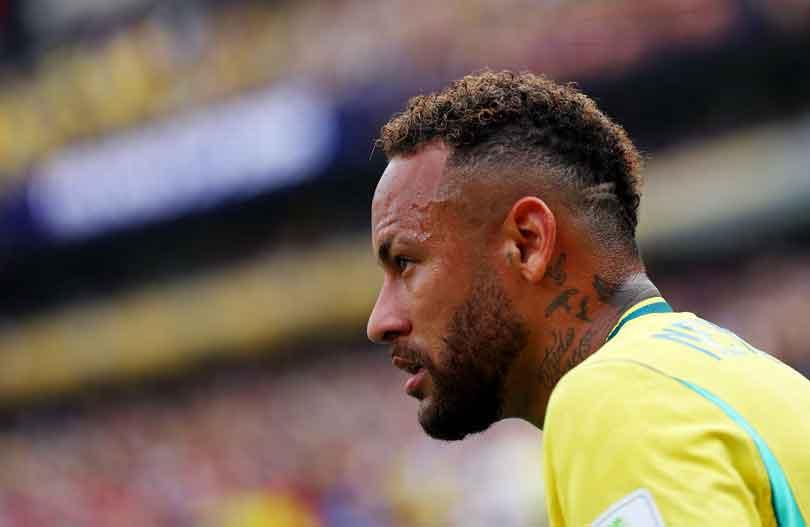
In the end, Neymar’s last World Cup did not give him the crown many expected. It gave him something much quieter: a painful symmetry. He started in New Jersey. He finished in New Jersey. Between those two points lived 16 years of genius, pressure, injury, beauty, blame, hope and heartbreak.
Maybe football does not always give its most gifted players the ending they deserve.
Sometimes, it only gives them an ending and sometimes, that ending is a man in Brazil yellow, standing in tears under stadium lights, after scoring one final goal that changed nothing on the night but said everything about the career.
He tried.
He really did.