How Sri Lanka’s Porn Addiction Crisis Is Fueling a National Breakdown

June is Men's Mental Health Awareness Month, and if we're going to talk about men's mental health in Sri Lanka, we need to talk about how pornography addiction is eating the men in this country from the inside out. I'm not here to moralize or preach. I'm here to state what too many of us have observed in our homes, our relationships, our courtrooms, and our hospitals but have been too polite or too afraid to say out loud. Porn addiction is not a private vice. It is a public health crisis with devastating social consequences, and in Sri Lanka, it is inextricably linked to the rising tide of divorce, domestic violence, sexual assault, and the mountain of rape cases that will never see justice. So, let's talk about it without the hedging or the "correlation does not imply causation" disclaimers and the fear of offending the sensibilities of a society that would rather look away.
The Addiction
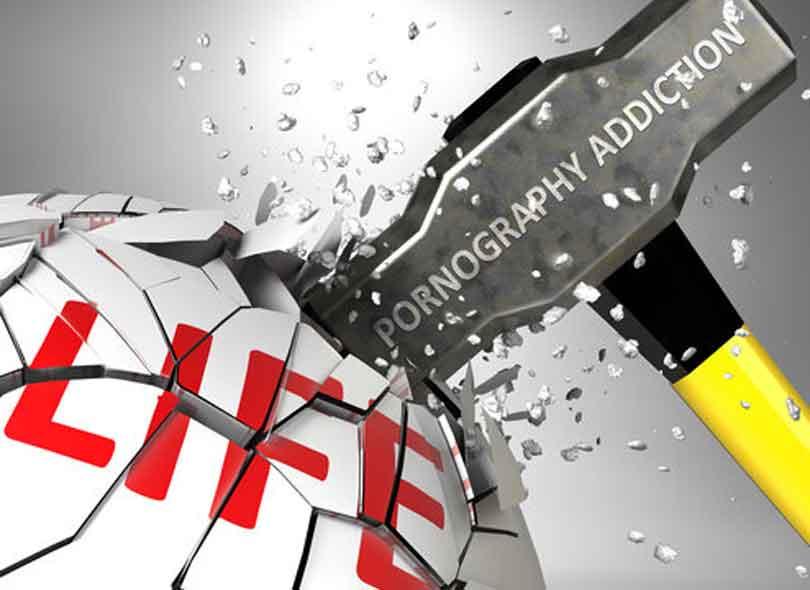
A 2024 study in the International Journal of Environmental Research and Public Health found that men scored significantly higher than women on problematic pornography use scales, and that this use was directly associated with elevated anxiety, depression, stress, and loneliness. Let that sink in. The very thing marketed as a solution to male sexual frustration is making men more alone. Neurologically, the brain doesn't distinguish between a pornography compulsion and a substance addiction. The same reward pathways are hijacked. The same desensitization occurs. The same escalation follows what satisfied yesterday is boring today, and the user chases increasingly extreme, increasingly violent, increasingly degrading content to achieve the same dopamine hit. This is not "just watching videos." This is “rewiring the male brain to associate sexual gratification with domination, with violence, with the erasure of another person's humanity”. And then we act shocked when those same men bring those rewired expectations into their marriages, their relationships, their encounters with women on buses and streets and in darkened rooms.
The Marriage Killer
Sri Lanka's divorce rates have been climbing, and while the data is fragmented, every family lawyer, every marriage counsellor, every woman sitting in a magistrate's court waiting to explain why she cannot live with him anymore will tell you the same story: he changed. He withdrew. He wanted things she couldn't give, things no human being should be asked to give. Pornography addiction destroys marriages not because wives are prudes or because sex is shameful. It destroys marriages because it replaces ‘intimacy’ with ‘performance’, ‘connection’ with ‘consumption’. The addicted husband is not present in the bed he shares with his wife. He is performing a script he learned from a screen, expecting a response that no real woman can authentically give, resenting her for failing to be the pixelated fantasy he has trained himself to desire.
The secrecy compounds the damage. The lies. The deleted browser histories. The financial deceit. The emotional absence that descends like a fog over the household. Research consistently shows that problematic pornography use, especially when hidden, erodes trust, destroys intimacy, and leaves partners feeling betrayed, inadequate, and abandoned. And in Sri Lanka, where divorce still carries crushing social stigma, where a woman's economic security is often tied to her marriage, where family honour is weaponized against women who speak up, the wife doesn't leave easily. She stays. She suffers. She endures the emotional violence of a husband who is physically present and spiritually absent, until she breaks, or he breaks her.
The Violence Connection
A question often overlooked because it is too uncomfortable to be answered is if porn addiction spills over into physical violence. I am not just talking about how BDSM turns into sexual violence against men or women, but actual connection. The cautious academic answer is that causation is complex, that many factors contribute to domestic violence and sexual assault, that we cannot draw a straight line from a man's browser history to a woman's bruised face.
Well, I reject that caution. Not because I dismiss the complexity, but because I refuse to let complexity become an excuse for silence. We already know that pornography normalizes aggression. It eroticizes coercion. It teaches men, particularly young, impressionable men with no counter-narrative, no sexual education, no healthy male role models, that women exist for male pleasure, that "no" is a performance, that pain is pleasure, that dominance is sexy.
And then we place those men in a society where 2,000 rape cases are reported annually and only ONE ends in conviction. Where the WHO documented that in 2014, out of 2,008 reported rape and incest cases, exactly one conviction was secured in the same year. Where cases languish for fifteen years in a court system that has normalized serial postponements and revictimized survivors.
What message does that send? It sends the message that you can get away with it. That a woman's body is not protected by the state. That the law is a fiction, and the courtroom is a theatre where victims perform their trauma for judges who still ask, in 2026, for "evidence of struggle", which is a requirement that was removed from the law of evidence decades ago but lives on in the minds of men who have never questioned their own entitlement. When you combine a brain rewired by violent pornography with a justice system that functions as an enabler of impunity, you do not get "complex causation." You get rape. You get domestic violence. You get sexual assault on buses and streets and in homes where women are told to keep quiet for the sake of the family.
The Invisible Male Victims
Men are victims too. Not just the men struggling with addiction, though they are victims of a system that tells them seeking help is weakness. I'm talking about male survivors of sexual violence in Sri Lanka, who are rendered completely invisible by a legal system that defines rape in a way that excludes them, and by a culture that equates male victimhood with emasculation. The Global Survivors Fund documented how male survivors of conflict-related sexual violence in Sri Lanka experience "a feeling of emasculation and of lack of sexual identity." These men cannot report their abuse without risking prosecution under Sections 365 and 365A of the Penal Code, colonial-era laws criminalizing homosexuality that remain on our books in 2026. So, they suffer in silence. Their trauma festers. And untreated trauma in men does not stay buried. It emerges as rage, as addiction, as violence against others, as the very cycle we claim to want to break. The UN's 2026 brief on accountability for conflict-related sexual violence documents case after case where perpetrators walked free: the Chemmani case, where a female student was raped and murdered at an army checkpoint and no officials in the chain of command were investigated; the Kumarapuram massacre, where six accused were acquitted in 2016 despite eyewitness identifications; the Vishvamadu case, where four soldiers convicted of raping two Tamil women were acquitted of all charges in 2019. Fifteen years. Some of these cases have been pending for fifteen years. And in those fifteen years, how many young men have grown up watching violent pornography, absorbing the lesson that women's bodies are consumable, that Tamil women's bodies are especially consumable, that there is no consequence for taking what you want?
The Economic Collapse and the Digital Escape
The economic collapse shattered Sri Lanka's social fabric. Youth unemployment skyrocketed. Dreams evaporated. Young men who expected jobs, marriages, futures found themselves with nothing, no money, no prospects, no dignity. And into that void stepped the algorithm. Pornography is free. It is accessible. It offers a simulation of power, of pleasure, of control in a life that offers none of those things. It is the opiate of the economically dispossessed male, and we are feeding it to an entire generation. The research shows that problematic pornography use is associated with higher loneliness scores in men. But loneliness is not just a feeling. It is a social condition that breeds extremism, that breeds violence, that breeds the kind of nihilistic rage that looks at a woman on a bus and sees not a person but an object to be claimed. We have created a generation of young Sri Lankan men who are economically castrated, emotionally illiterate, and sexually indoctrinated by an industry that profits from their degradation. And then we wonder why they are angry. Why they are violent. Why they are breaking.
What Men's Mental Health Month Should Actually Mean
If Men's Mental Health Awareness Month means anything in Sri Lanka, it must means we need to stop lying to men. We need to stop telling them that strength means silence. That masculinity means consuming without feeling. That their pain is weakness, and their addiction is shameful, but their violence is understandable. We need to talk about pornography addiction not as a moral failing but as a mental health crisis that demands intervention. Cognitive behavioral therapy, acceptance and commitment therapy, mindfulness-based interventions, these have been shown to significantly reduce problematic use. But they require men to admit they need help, which requires a cultural revolution in how we define male strength. We need to demand that the Attorney General's Office clear the backlog of sexual violence cases, not in fifteen years, not in five years, but NOW. Every pending case is a message to every man with a screen and a compulsion that there is no consequence for acting on his worst impulses. We need to reform the Penal Code to recognize male survivors of rape, to decriminalize same-sex relations, to stop using colonial shame as a weapon against the most vulnerable men in our society. We need comprehensive sexual education in schools, not the embarrassing biology lesson, but real conversations about consent, about healthy relationships, about the difference between pornography and intimacy, about what it actually means to be a man who respects women and respects himself.
The Uncomfortable Truth
I know there will be pushback to this article. "You're oversimplifying." "You're moralizing." "You're blaming pornography for systemic failures." Well, in all honesty, I have even had people that have told me porn addiction is ‘normal’ but I am blaming all of it. I am blaming the pornography industry that profits from male misery. I am blaming the justice system that functions as an accomplice to rape. I am blaming the cultural norms that silence male vulnerability and normalize male entitlement. I am blaming the economic system that has abandoned an entire generation of young men to despair and digital addiction. I am blaming every adult who has seen a young man disappearing into a screen and said nothing, done nothing, because it was easier to look away. This is not about shame. This is about salvage. We are losing our men. We are losing our women. We are losing our marriages, our families, our social fabric to an addiction that we refuse to name and a violence that we refuse to confront. Men's Mental Health Awareness Month is not a hashtag. It is not a ribbon. It is an urgent call to look at what we have done to our sons and to decide, finally, that we will do better. The answer is courage. The courage to name the addiction. The courage to reform the courts. The courage to teach our boys that strength is not domination, that sex is not consumption, that a man's worth is not measured by what he can take but by what he can give.