Free Sameera Mehboobdeen: Israeli Forces Detain Sri Lankan Humanitarian in International Waters
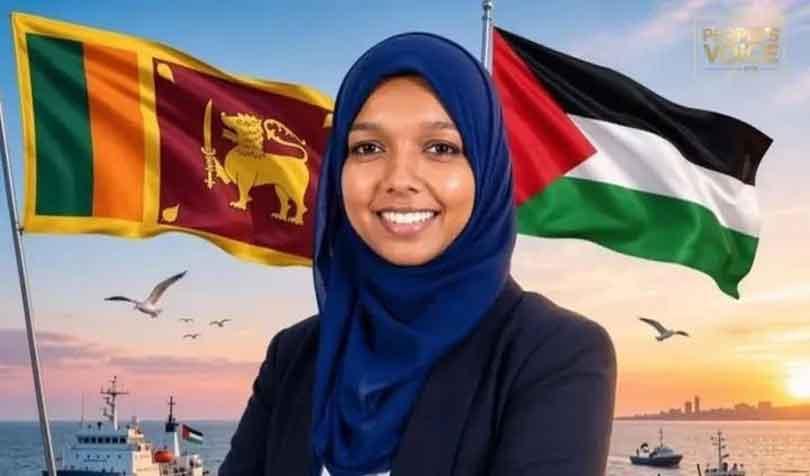
Sameera Mahboobdeen is a Sri Lankan medical professional and humanitarian activist. As of Tuesday 19th May 2026, she is in Israeli military custody, detained in international waters while aboard the Global Sumud Flotilla. She has not been heard from since the livestream from her boat cut out on Monday morning. This article is written with the purpose of creating awareness on Sameera’s detention, the current situation and to create an urgency on the matter.
What happened
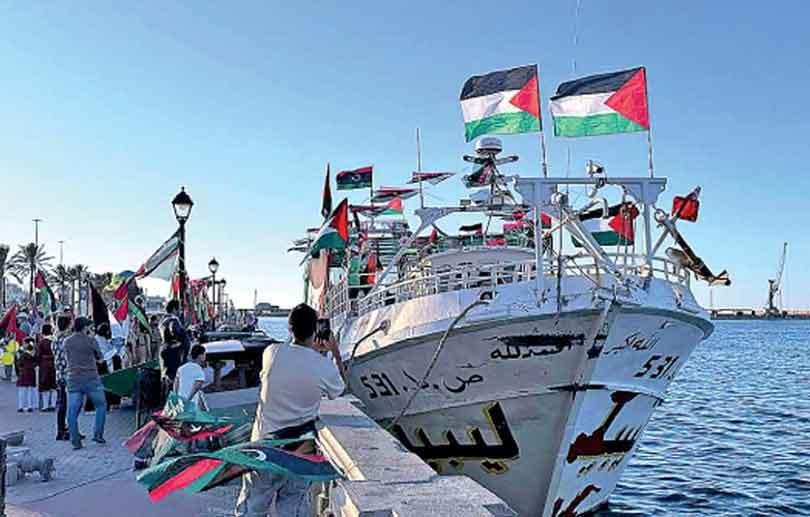
The Global Sumud Flotilla with 54 vessels, nearly 500 participants from 45 countries, carrying food, medicine, and medical equipment departed from Marmaris, Turkey last week on its final approach to Gaza. "Sumud" means steadfastness in Arabic. It is the word Palestinians use to describe endurance under occupation. The flotilla chose it deliberately. Sameera Mahboobdeen was the only Sri Lankan on the mission. She left Sri Lanka on April 21. Her role was specifically medical, first aid training and delivery of supplies. Before she departed, she gave a press conference in Colombo. She also recorded a message to be released in the event of her capture. She knew what she was sailing into. On the morning of May 18, Israeli naval commandos began boarding the flotilla's vessels one by one, off the coast of Cyprus in international waters. Communications were jammed. On at least one vessel, the IDF took over the boat's radio and played music through the speakers to block mayday calls. By the end of the day, 41 vessels had been intercepted and over 300 activists detained. As of Tuesday, ten ships were still sailing toward Gaza and interceptions were continuing, the vessel Andros was boarded just hours ago as this is being written, 82 nautical miles from Gaza. Sameera's boat was among those taken. She is presumed to be in Israeli custody. Her condition and exact location are not confirmed.
What Israeli detention has actually looked like and why it matters
This is the part of the story that has not been told clearly enough in Sri Lanka.
The April 2026 flotilla interception, a previous mission before this one, was not a clean detain-and-deport operation. According to Al Jazeera and flotilla organisers, at least 30 people were injured during that interception. At least four participants have since come forward reporting incidents of sexual assault in Israeli custody. Two key organisers; Saif Abu Keshek and Thiago Ávila, were taken to Israel, charged with terrorism, and subsequently reported being beaten and tortured while detained.
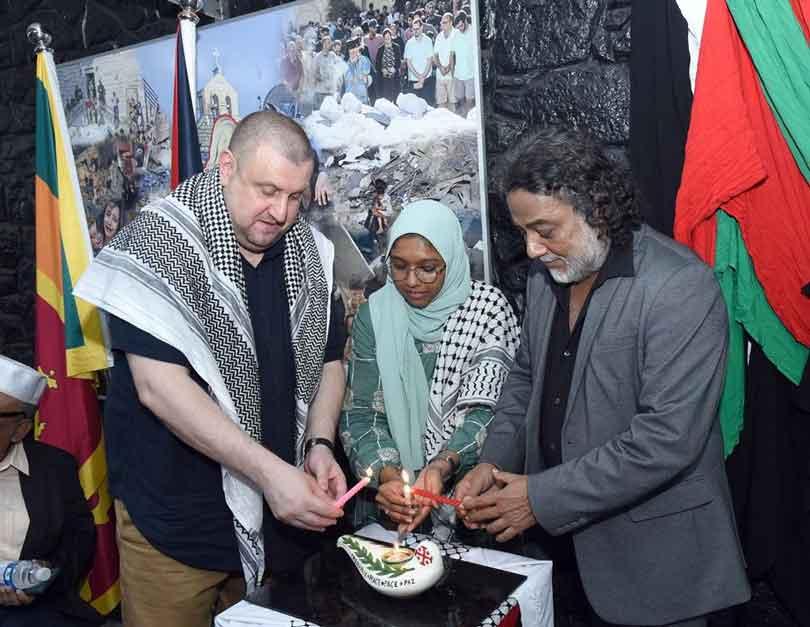
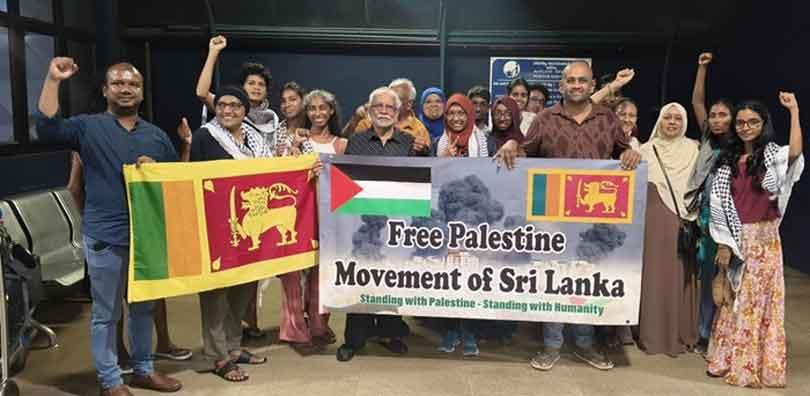
The Free Palestine Movement of Sri Lanka raised all of this at their May 13 press conference in Colombo, a week before Sameera's interception, specifically as a warning of what the risks were. The government was told. The public was told. This context matters because the framing of "she'll probably be deported in a few days”, which has been the dominant assumption, is not backed by the record of what Israeli detention has actually involved. It also matters because Sameera is in a medical capacity, unarmed, with no political role in the flotilla's leadership. But the April precedent shows that Israeli authorities have not consistently distinguished between organisers and participants when deciding how to treat those in their custody.
What the government has and has not done
The Dissanayake administration confirmed on Tuesday that it has begun taking diplomatic steps to secure Sameera's release. Government MP Najith Indika has publicly expressed support. SJB MP Mujibur Rahman called on the public to pressure the government. The Free Palestine Movement gathered opposite the Foreign Ministry in Colombo at 3:30pm Tuesday to demand action.
That is the public picture.
The private picture is more complicated. While Sameera was at sea, and while the risks of Israeli interception were publicly known, the government was simultaneously meeting with the Israeli Ambassador and finalizing expanded agreements to send Sri Lankan workers to Israel. Swastika Arulingam, President of the United Federation of Labour, condemned this directly at the May 13 press conference, pointing out that these agreements materially support the same state now holding one of Sri Lanka's citizens in detention.
This is not a minor contradiction. It is the central one. A government cannot credibly demand the release of a Sri Lankan citizen from Israeli custody while actively deepening bilateral cooperation with Israel. It does not have to choose its foreign policy position on Palestine to act correctly on Sameera's behalf, but it does have to acknowledge the tension, publicly, and the public is entitled to ask which position represents the actual policy.
What has also not been answered publicly: has Sri Lanka formally requested consular access under the Vienna Convention? Has Israel confirmed Sameera's location and condition? Has Colombo joined or endorsed the joint ministerial statement already signed by ten countries: Turkey, Indonesia, Bangladesh, Brazil, Colombia, Jordan, Libya, the Maldives, Pakistan, and Spain condemning the detentions as violations of international law and calling for immediate release?
The Foreign Ministry has not said.
What is happening internationally right now
The interceptions are not over. As of this writing, Israeli forces are still actively boarding flotilla vessels. The situation is live. Turkey has called the interceptions "a new act of piracy." The joint ministerial statement from ten countries describes the detentions as "blatant violations of international law and international humanitarian law." Malaysia's Prime Minister Anwar Ibrahim said he is personally working to secure his nationals. Indonesia's Foreign Minister issued a public demand. Ireland, whose president's sister, a doctor, is among those detained, responded at the highest levels of government. And the United States has now imposed sanctions on four flotilla organisers, with Treasury Secretary Scott Bessent calling it "a pro-terror flotilla attempting to undermine President Trump's progress toward peace." This is a significant escalation. It means any government defending the flotilla or demanding the release of its participants is now implicitly in tension with Washington as well as Tel Aviv. Sri Lanka will have to decide whether its diplomatic response reflects that reality or ignores it.
What we still don't know
We do not know where Sameera is being held. We do not know her condition. We do not know whether she has had consular contact with Sri Lankan officials. We do not know whether the government has formally communicated with Israel through official channels, or whether Israel has responded. We do not know whether the government intends to join the international condemnation or issue its own statement. Every one of those unknowns is answerable. They require the government to answer them publicly.
What is being asked and what the clock looks like
Based on the April precedent, participants may be deported to a third country within days. But that precedent also involved torture and sexual assault of those Israel designated as organisers. We do not know how Sameera is being classified. The window for consular access, for formal demands, for joining an international coalition of governments that is already moving, that window does not stay open indefinitely. Each day the government responds in generalities is a day a specific door may close. The Free Palestine Movement's warning from May 13 was precise: "be ready to take concrete action rather than empty statements." The government said it supported Sameera. Now it has to show what that means in practice, specifically, with names, dates, and a response from the Israeli side that can be reported. Sameera Mahboobdeen boarded a ship carrying medicine. She recorded a goodbye message before she left. She is now in the custody of a military that has, in documented recent cases, beaten and sexually assaulted people in that same custody. The government has begun to act. That is not the same as having acted enough. We are watching.