Does Aloka Know Sri Lanka’s 2.5 Million Dogs Have No Animal Welfare Law?
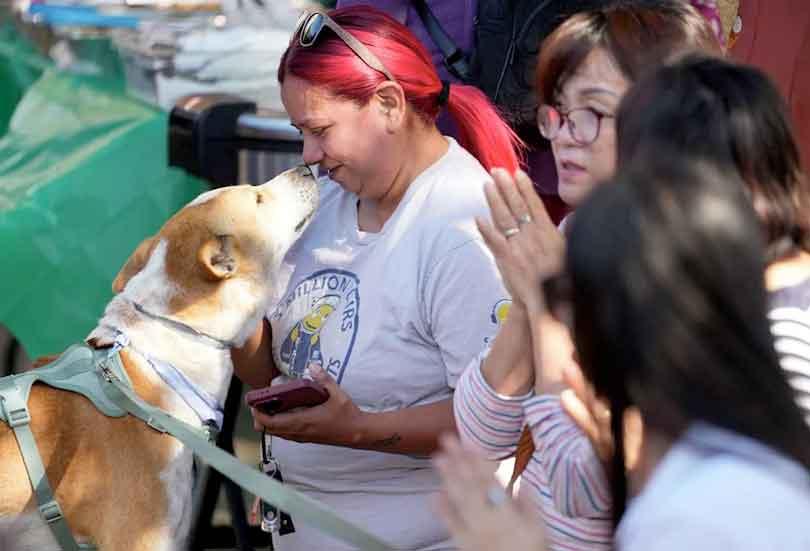
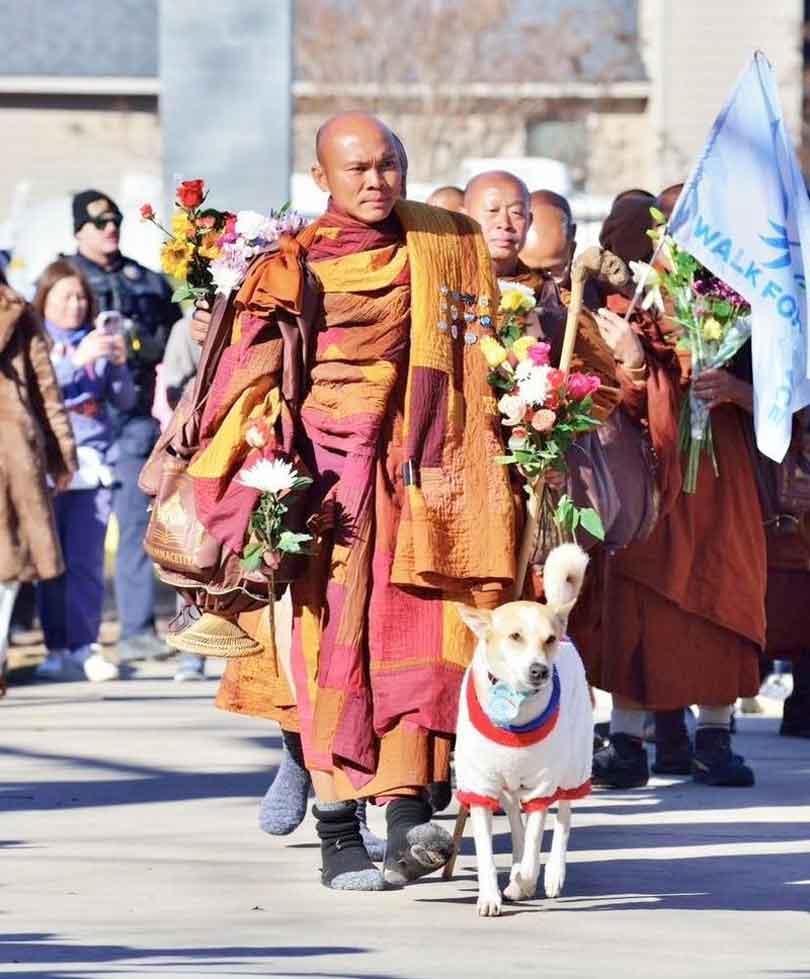
The Walk for Peace concluded at Independence Square in Colombo. Aloka, the Indian Pariah dog who has become a global symbol of compassion, who walked 2,300 miles from Texas to Washington D.C. alongside nineteen Buddhist monks, who underwent knee surgery in January after a ligament tear and was back on the road within days, crosses the finish line in a country that has spent this entire week mobilising around her. A veterinary ambulance trailed her the length of Sri Lanka.
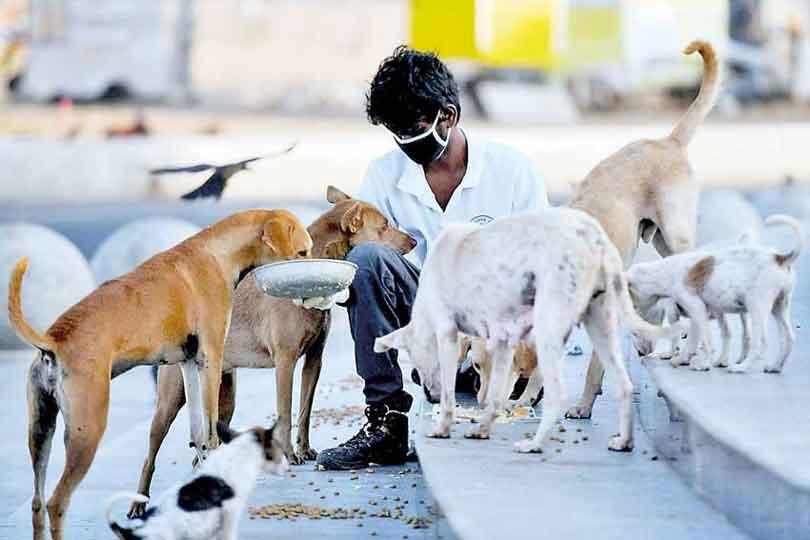
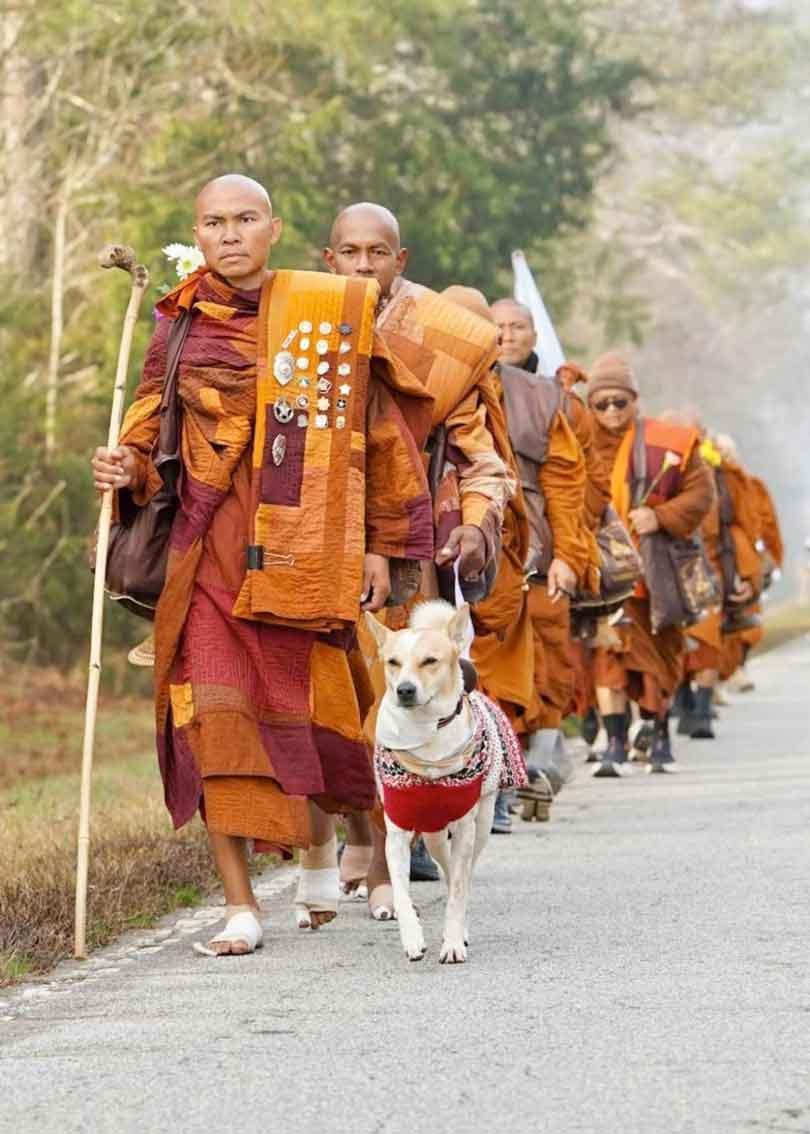
The Sri Lanka Veterinary Association conducted health checks on arrival. Elite army commandos flanked her as she walked. The police kennels department was mobilised along the route, not to help the 2.5 million stray dogs living on those same roads, but to keep them away from Aloka.
The President of the republic extended the invitation. The President's Secretary and the Police Chief exchanged WhatsApp messages about the disruption to her walk when crowds in Dambulla became unmanageable. She flew in the passenger cabin, not cargo, with a reserved seat beside her monk, because, organisers noted, transporting her from Texas to Colombo cost ten times a standard passenger fare.
I want to be clear about something before I continue: I am not cynical about Aloka.
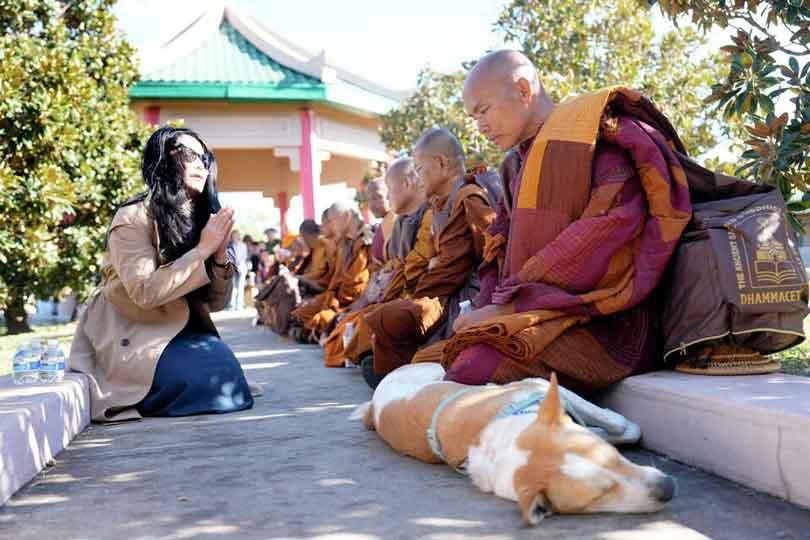
Her story is genuinely moving. A stray dog from the roads of India, hit by a car, left for dead, who crawled back to a group of monks and refused to be left behind. That is the kind of loyalty that reminds you why humans and dogs found each other in the first place. The monks did not want her to remain in pain. They funded her surgery because compassion, for them, is not a word, it is a budget line. That is not nothing.
But it is not just about what a story makes us feel, it is to ask what the story reveals. And what this week reveals about Sri Lanka is something this country urgently needs to sit with, today.
The question is not whether Aloka deserved care. Of course she did. The question is what kind of country celebrates compassion for one dog this lavishly while maintaining, by law, that torturing any other dog on this island is worth a fine of one hundred rupees?
The Outdated Law
The legal framework protecting every animal in Sri Lanka right now is called the Prevention of Cruelty to Animals Ordinance, No. 13 of 1907. This law was written when Sri Lanka was still Ceylon, still a British colony. It predates every democratic institution this country has built, dismantled, and rebuilt since 1948.
And it is still, today, as Aloka walked into Independence Square, the primary legal protection for every dog being pelted with stones on a Colombo street, every puppy being deliberately crushed under a vehicle, every stray being poisoned in a neighbourhood where someone finds their presence inconvenient.
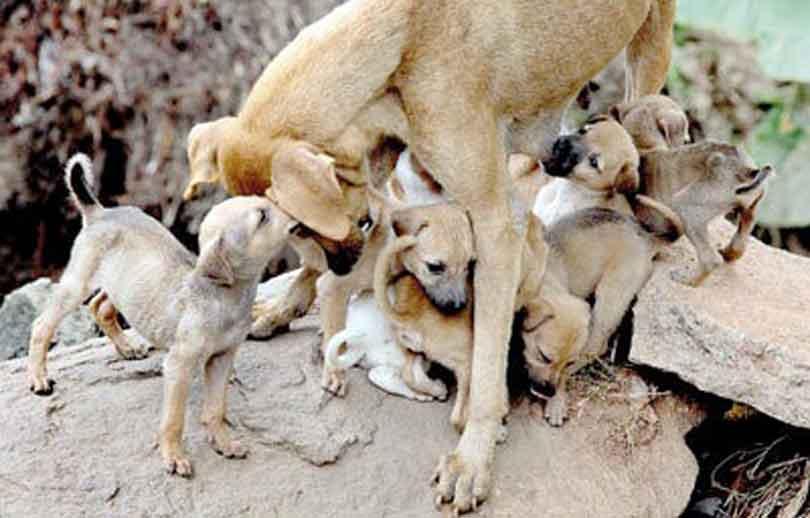
The maximum punishment under this law: one hundred rupees. At current exchange rates, that is approximately thirty-two cents. A man can drive over a litter of newborn puppies deliberately, in front of witnesses, and if prosecuted to the full extent of Sri Lankan law, he walks away with a fine smaller than the cost of a bus ticket. I know this is not hypothetical. Many of us have seen it happen.
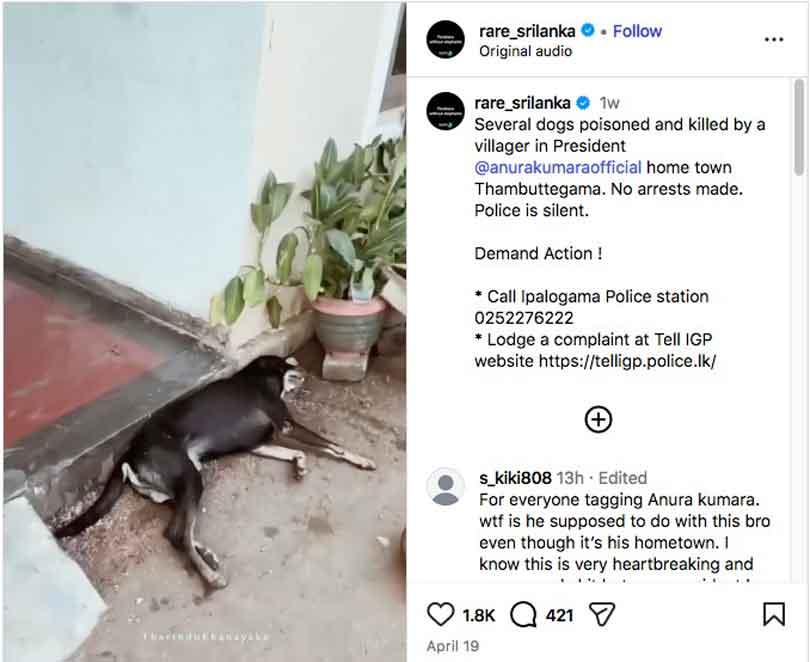
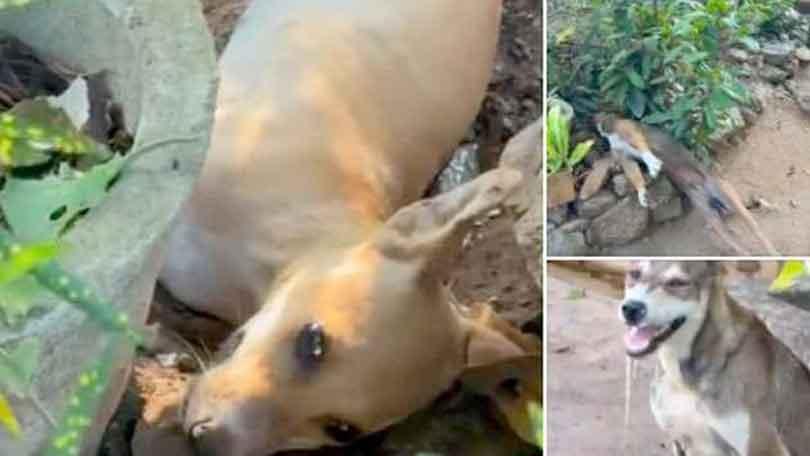
And here is the detail that should stop you completely: just days before Aloka arrived in Sri Lanka, ten stray dogs were poisoned in Kalawewa in the North Central Province. The suspect was reportedly identified. The likely consequence, under the 1907 ordinance? Thirty-two cents. The same week that Sri Lanka deployed army commandos to protect one dog, ten dogs were poisoned within the country's borders, and the law had almost nothing to say about it.
There is one more layer. The ordinance's definition of "animal" is so narrow that stray dogs may not even be clearly covered by it. The animals your neighbour kills with impunity. The ones being kept off Aloka's walking route by the police kennels department this week. They may not have legal standing as "animals" under the law supposedly protecting them. The apparatus of the state mobilised to protect Aloka from the street dogs. The law has barely mobilised to protect the street dogs from anything.
The Animal Welfare Bill
The Animal Welfare Bill was first commissioned by the Law Commission of Sri Lanka in 2000. In 2010, fourteen religious and animal welfare organisations filed a Court of Appeal case to compel legislative action. Cabinet gave the bill its first approval in January 2016. Over 140 sitting members of parliament recorded video pledges of support, enough votes to pass it three times over. The Bar Association of Sri Lanka's own president declared the existing law "as good as non-existent." A Buddhist monk, Ven. Dr. Omalpe Sobhitha Thero, said at a public press conference: "There is no religion here." The consultant who drafted the bill said of parliament plainly: "No political party will come forward and introduce the bill. Animals have no votes, no money and no power."
That last sentence is the entire explanation. It is also the entire indictment.
The bill would raise the maximum fine to Rs. 150,000 and introduce imprisonment of up to four years for serious cruelty. It would broaden the definition of "animal" so that stray dogs are unambiguously covered. It would allow any citizen to institute a prosecution in court directly, without first making a police complaint, which matters because anyone who has tried to file an animal cruelty complaint at a Sri Lankan police station knows the particular experience of watching an officer decide, in real time, whether this is worth his afternoon.
But the story gets worse. By 2022 and 2023, a version of the bill re-emerged from the parliamentary process, and it had been hollowed out. The amended draft included sweeping exemptions for anything done in the name of food production, science, and culture. International advocates and local activists described it as an anti-animal welfare act wearing the name of a welfare bill: a document that would, if passed in that corrupted form, grant state-sanctioned legal cover to the very practices the original bill was designed to stop. Animal welfare groups in Sri Lanka found themselves fighting to block their own bill. The law that was supposed to be the solution had been rewritten to protect the problem.
As of today, as Aloka arrived at Independence Square under full state patronage, the bill has still not passed. Panchali Panapitiya, President of Rally for Animal Rights and Environment, put it directly this week: "We welcome Aloka with love and compassion, and we hope the same compassion can be extended to all animals." They are asking Sri Lanka to mean what it is performing.
Peace for All Beings
The monks' message, repeated throughout this walk, is "peace for all beings, including animals." It is a beautiful message. It is also, in the Sri Lankan context this week, a message the state has responded to in a way that is worth examining closely, because the state's response has been entirely about one being.
Aloka flew in the passenger cabin. Aloka received specialist veterinary care on arrival from the Sri Lanka Veterinary Association. Aloka had army commandos. Aloka had the police kennels department. Aloka had WhatsApp messages between the President's Secretary and the Police Chief. Aloka's transport from Texas to Colombo cost ten times a standard passenger fare, and that figure was noted admiringly, not critically, in almost every news report.
The 2.5 million stray dogs on this island, including the ones who had to be managed, kept at distance, kept away from Aloka's path so she would not be disturbed by her own kind, have the 1907 ordinance. They have a Rs. 100 fine standing between them and whoever wishes them harm. They have a bill that has been tabled and abandoned forty-four times. They had ten of their number poisoned in Kalawewa last week with effectively no legal consequence.
The irony is not that Sri Lanka loves Aloka. The irony is that Sri Lanka has used the language of peace and compassion as the staging for a celebration that, examined honestly, is one of the most vivid illustrations of how this country actually treats animals that has ever been put on public display. Every detail arranged for Aloka's comfort; the ambulance, the commandos, the in-cabin seat, the specially measured water in the heat, is an implicit acknowledgment that animals feel pain, need protection, and deserve care. And every one of those details stands in direct contradiction to a legal system that values that care at thirty-two cents. The monks advocate peace for all beings. Sri Lanka offered it to one.
Personally…
I keep returning to a memory of once being a child who watched a neighbour deliberately drive over puppies to kill them, who went to their father in tears and asked: is there a law against this? Can we do something if we have proof?
The answer, then and, shamefully, today, is: technically yes, practically no. The law exists. The punishment makes it meaningless. The police complaint process makes it exhausting. The absence of any enforcement culture makes it optional.
What this week has done, whatever else it is, put that gap on public and presidential display. Sri Lanka has shown, in live, documented, photographed detail, that it knows exactly how to care for a dog. It knows how to monitor, protect, transport, treat, escort, and celebrate one. It knows how to contact the Police Chief when a dog is uncomfortable. It knows how to deploy commandos when a dog needs protection. This is not a country that does not know how to value an animal. It is a country that has decided, in law and in practice, which animals are worth valuing and has enshrined that decision in a 119-year-old ordinance it will not replace. Sri Lanka ended this walk having celebrated, loudly, in front of the world, the idea that a dog's life matters. The question must now answer whether it meant it.
If it did, then pass the Animal Welfare Bill - the real one, not the version hollowed out by industry exemptions. Fund enforcement. Make it cost something real to harm an animal in this country. Fund the CNVR programme properly so the 2.5 million dogs on these streets are vaccinated and sterilised rather than poisoned in Kalawewa. Establish a National Animal Welfare Authority with actual powers. Give the activists who spent this week fighting for street dogs to stay on their own streets the legislative tools they have been asking for since 2006.
If it did not mean it, if the ambulance goes home, the commandos stand down, Aloka flies back to the United States, and the bill sits untabled for the forty-fifth time, then what Sri Lanka staged this week was not compassion. It was the most expensive, most visible, most nationally endorsed proof that this country knows exactly what compassion looks like, and has chosen, deliberately and repeatedly, not to extend it.
The 2.5 million dogs on these streets, the ones kept off the route, the ones poisoned in Kalawewa, the ones outside every temple and every police station in this country, will know the difference. They always do.