Did You Know Marital Rape Is Not a Crime in Sri Lanka?
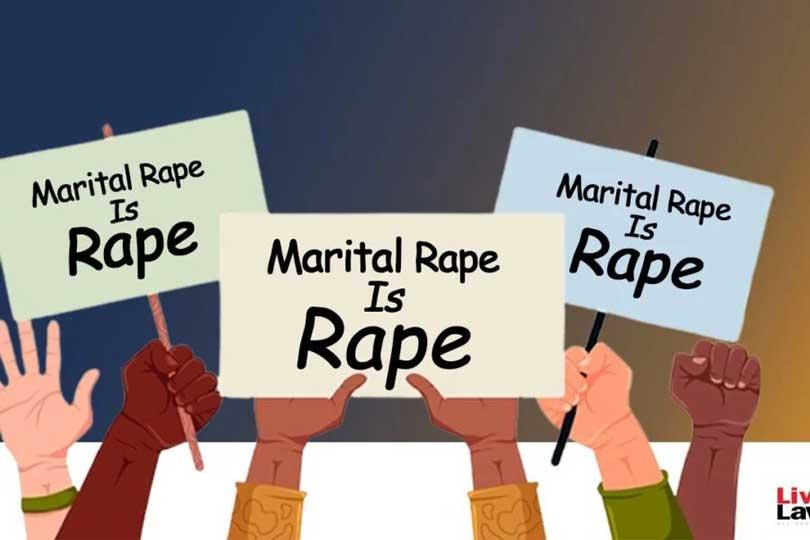
Last week I watched Chiraiya and by the third episode I had stopped watching the screen and started thinking about the law. The law that made Pooja's husband untouchable. Chiraiya is about India, but the law is ours too. Word for word. Section for section.
In February 2025, the Sri Lankan government stood before the UN Committee on the Elimination of Discrimination Against Women and confirmed, as a fact about the present state of the law, that a man in this country can rape his wife and face no criminal consequence for it. As a deliberate, active, defended feature of the legal system. Section 363(d) of the Penal Code exempts husbands from rape charges except where the couple is judicially separated. The separation has to be formalised by a court. The woman has to have already partially dismantled the marriage in the eyes of the law before the law will agree to see what is being done to her body inside it.
We confirmed this before the United Nations. Then we went home.
Who Wrote This Law?
The law that Sri Lanka confirmed to the UN in 2025 was not written in Sri Lanka. It was written in England, in 1736, by a man named Matthew Hale, and it went like this: a husband cannot be guilty of a rape committed by himself upon his lawful wife, for by their mutual matrimonial consent and contract the wife hath given up herself in this kind unto her husband, which she cannot retract. That is not a paraphrase. That is the doctrine of Coverture, and it is the oldest piece of legal plumbing in the Sri Lankan Penal Code, which was not written for Sri Lanka but assembled by Thomas Babington Macaulay for the whole of British India in 1860, applied to Ceylon by the colonial administration, and has been sitting inside our statute books, quietly, ever since, through independence and constitutions and women's ministries and national action plans and 130,000 domestic violence complaints a year.
Hale wrote that sentence in 1736. It is now 2026. The sentence is still the law.
The British themselves buried it in 1991. In the case of R v R, the House of Lords ruled unanimously that the marital rape exemption had no place in the modern law of England and Wales, that the common law fiction of implied consent was a legal anachronism, and that it went. Done. Thirty-five years ago. Britain looked at the thing Macaulay had embedded in the law, recognised it for what it was, and removed it.
Then, in February 2026, the Deputy Prime Minister of the United Kingdom came to Colombo.
What David Lammy Did Not Say
David Lammy arrived in Sri Lanka on February 17th of this year. He met President Anura Kumara Dissanayake. He signed a letter of intent for Sri Lanka to join the Global Charter on Children's Care Reform. He praised Sri Lanka's economic progress. He expressed regret about Cyclone Ditwah. He departed the same evening.
This is not an attack on David Lammy. I wrote him an open letter in March about FGM in this country, and I hold out some hope he read it, and I will continue to hold out that hope until I have reason to stop. This is an observation about the geometry of the visit: a representative of the country that in 1860 built the law that still makes marital rape legal in Sri Lanka came to Colombo to discuss child protection and economic cooperation and reconciliation, and the law was not mentioned, and he left, and the law remains.
The Global Charter on Children's Care Reform is a good initiative. Children need protecting. Family-based care matters. But I want to sit with the particular quality of irony involved in the United Kingdom arriving on this island with a child protection charter while the legal infrastructure it left here in 1860 continues to treat adult women inside marriages as property that cannot be wronged by its owner. The two things are not unrelated. A country that cannot say the words marital rape in its own legal framework is not a country that has understood what protection actually means.
The India Mirror
Across the Palk Strait, Chiraiya is trending because India is having a version of the same conversation, louder and longer and still unresolved. Exception 2 to Section 375 of the Indian Penal Code, the direct descendant of the same Macaulay doctrine, exempts a husband from rape charges where his wife is over eighteen. In October 2024, the Indian government filed a 49-page affidavit before the Supreme Court formally opposing the removal of this exception. It argued that classifying forced sex within marriage as rape would be "excessively harsh and therefore disproportionate." The Indian government did not argue that marital rape is not happening. It argued that calling it rape is too severe a description.
The Supreme Court is still hearing the case. The case has been heard since 2022. The Delhi High Court delivered a split verdict that year: one judge ruled the exception unconstitutional, another ruled that sexual relations within marriage carry a "legitimate expectation," which is a legal phrase that means what you think it means. The matter went to the constitutional bench. Petitions have accumulated. In January 2026, the Court confirmed the exception still stands. Chiraiya released in March 2026. The show ends not with a law changed but with women walking away from a room of men sitting with their guilt, because there is no other ending available. The law did not give them one.
This is the thing that the India comparison illuminates, if you hold it up correctly: Sri Lanka and India are not in different places on this issue because of different cultures or different values or different levels of development. They are in the same place because they were given the same law by the same administration in the same century, and neither country has had the political will to fully remove it, and in both countries the women paying the price for that political inertia are the same women who have always paid: the ones behind closed doors, inside marriages the state has decided it does not need to enter.
The difference is that India is at least having the fight in the open. The Supreme Court is hearing petitions. NGOs are litigating. A Hindi streaming series just went viral for naming the thing by its name. Sri Lanka confirmed the position before the UN and came home to silence.
The 2024 Withdrawal
The silence has a specific moment. In 2024, the then-Justice Minister announced intentions to introduce legislation criminalising marital rape. There was public backlash, unrelated provisions in the proposed bill became the story, and the story consumed the proposal, and the proposal was retracted. I do not know how many women were raped by their husbands in Sri Lanka between the announcement and the retraction. The number does not exist, because the crime does not exist, and if the crime does not exist, neither does the count.
What I do know is that one in five women in this country has experienced physical or sexual violence from a partner, according to the only national survey that has ever been conducted on the subject, the Women's Wellbeing Survey of 2019, which remains the only such survey because we have not done another one. What I know is that the fraction of those cases involving sexual coercion within marriage is not tracked, because we have not built the legal or statistical framework capable of seeing it. You cannot count what you have decided not to name.
The backlash that killed the 2024 proposal was about politics. What it cost was a law. What it continues to cost is borne by women in bedrooms in Kandy and Batticaloa and tea estates in Nuwara Eliya and housing schemes in Colombo North, women who do not have the luxury of a political calculation, who have only the fact of what is happening to them, and the additional fact that the government of this country has looked at that thing and decided, on multiple occasions, that the institutions protecting marriage matter more than the women living inside it.
The Question No One Wants to Be Asked
The question I keep returning to is the one that Chiraiya forced me to sit with, watching Kamlesh rationalise what Arun was doing to Pooja because the language of consent had not yet reached her and the law had told her it was not a crime, is this: what does it mean to keep a law you know is wrong?
It is not ignorance. Sri Lanka knew. It told the UN. The government knew in 2024 when it drafted the bill. The Justice Ministry knew. The women's rights organisations that have been making the case for years are not operating in obscurity. The information is there. The argument is not in dispute. The only thing in dispute is the political cost of acting on it, and that cost has consistently been calculated as higher than the cost of leaving the law in place, which is to say, higher than the cost paid by women who have no legal language for what is being done to them.
David Lammy came here carrying a child protection charter and a message about economic cooperation, and he said nothing about this, and I am not sure what I expected him to say, except that the country that wrote Section 363(d) has had thirty-five years to say something. The countries that inherited it have had longer.
The Fire and the Charter
I want to be precise about what I am asking for, because I have noticed that precision gets lost when this subject is raised, and people begin arguing about culture and religion and the sanctity of marriage and the risk of false accusations, and the woman in the specific bedroom is quietly left out of the argument again.
I am asking for the legal removal of Section 363(d) of the Sri Lankan Penal Code. I am asking for the thing that England did in 1991, that the country that wrote the law did thirty-five years ago. I am asking for a wife's body to be recognised by the state as her own, and for the removal of her husband's legal immunity from the consequences of ignoring that. I am not asking for the end of marriage. I am asking for the end of the legal doctrine that a woman's consent to marriage is a perpetual consent to everything that happens inside it.
David Lammy came here to sign a charter about protecting children. The children of this country are being raised inside a legal architecture that tells them, from the beginning, that what happens inside a marriage is not the law's business. The Global Charter on Children's Care Reform is an agreement about family-based care and ending violence against children. I do not know how a country signs that in good conscience while its Penal Code explicitly protects a specific category of violence, the sexual violence committed by husbands against wives, from criminal consequence.
Maybe someone should ask him. He has not left yet, in the sense that matters: the relationship continues, the partnership continues, the UK's investment in Sri Lanka's recovery continues. The law Britain wrote and then abandoned is still operating here. That seems like something worth noting, in one of these bilateral conversations about reconciliation and humanitarian priorities and the strength of the UK–Sri Lanka relationship. Somewhere between the economic cooperation and the cyclone relief and the photo opportunity outside Temple Trees.
The fire is still burning. We keep being told to keep it indoors.
If you are experiencing sexual or domestic violence: National Helpline — 1938