Three Generations of Female Genital Mutilation Trauma

When survivors of FGM in Sri Lanka speak about their psychological trauma, of the PTSD, the dissociation, the complicated relationship with their own bodies, the response they most often receive from institutions is, "There are no recorded cases." FGM is a documented practice in this country. CEDAW raised concerns about it in 2017. Peer-reviewed research published in Reproductive Health in 2021 documented it across multiple districts. The Ministry of Health issued a circular in 2018 prohibiting medical practitioners from performing it, which is, itself, an acknowledgement that it was happening in clinical settings. The question is not whether this practice exists. The question is why Sri Lanka still does not have a specific law criminalizing it, and why survivor testimony about psychological harm keeps getting dismissed as insufficient evidence.
What the Psychological Harm Actually Looks Like
FGM is performed on girls in infancy or early childhood, most often without explanation or warning. Studies of survivors globally document PTSD, chronic anxiety, depression, and dissociation as primary outcomes, not side effects. The WHO's clinical framework lists psychological harm alongside physical harm as a core consequence, not an afterthought.
What clinical language doesn't fully capture is the specific nature of the betrayal. In the majority of FGM cases, the procedure is arranged by the mother, global surveys put this figure above 70%, with grandmothers accounting for most of the remainder. This means the psychological injury is not only about what was done to the child's body. It is about who did it. The women who were her earliest source of safety, love, and protection are also the ones who organized the violation. That particular damage; to attachment, to trust, to the foundational understanding of what love looks like, does not resolve easily. Research consistently shows it often does not resolve fully.
Survivors also describe a protracted process of not having language for their experience. Many were cut before they were old enough to form explicit memories. They spend years, sometimes decades, carrying a bodily unease they cannot name until they encounter the term FGM and recognize themselves in it. That recognition is frequently described as both clarifying and re-traumatizing.
And when they bring that to a community institution or a religious leader or a doctor, the answer they receive is that their experience is unverifiable because it was never formally recorded.
Why the Mother Cuts Her Daughter
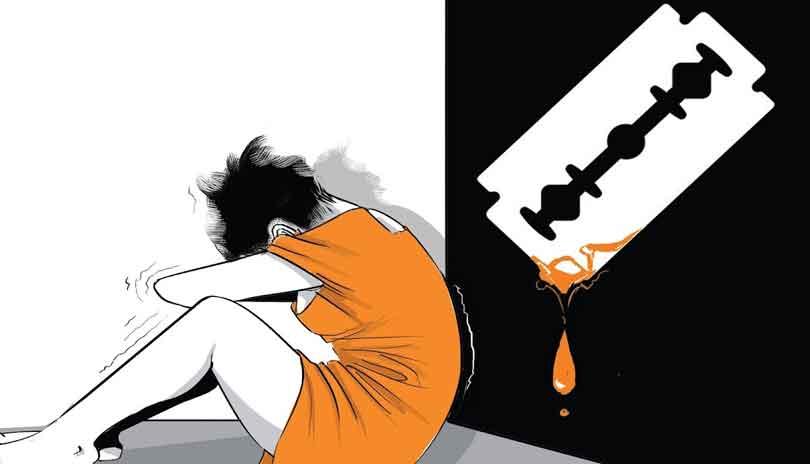
This is the part of the conversation that tends to get avoided, because it is uncomfortable and does not fit a clean perpetrator-victim framework. The reality is that loving mothers, women who were themselves cut, who live with the physical and psychological consequences of that, arrange for their daughters to be cut too. Not because they don't love them. Because they do, within a system that has given them no other option.
The mechanism at work is what researchers describe as dissociation in service of social survival. In order to function within a community that treats FGM as a prerequisite for marriage, belonging, and respectability, a woman must make peace with what happened to her. The only way most women in these systems can do that without access to therapy, without a community that will hold their grief, without language for what was done to them is to decide it was necessary. If it was necessary for her, it is necessary for her daughter. The logic holds from inside the trauma. This is not a defence of the practice. It is an explanation of why criminalization needs to be paired with accessible psychological support because you cannot ask women to break a cycle, they have never been given the resources to name.
The Three-Generation Theory
The most significant scientific development in understanding FGM's impact in recent years is the growing body of research on intergenerational and transgenerational trauma transmission. The distinction matters: intergenerational refers to effects observed in direct offspring of those exposed; transgenerational refers to effects observed in later generations with no direct exposure. The mechanism is epigenetic. Trauma creates chemical modifications on DNA, specifically, methylation tags, that alter how genes are expressed without changing the genetic sequence itself. These modifications are heritable. A woman who has experienced FGM (F0) develops a measurably dysregulated stress response system: altered cortisol levels, chronic HPA axis dysregulation, physiological hyperarousal. Her daughter (F1), developing in the womb of a traumatized mother, is prenatally exposed to that altered biology. Her granddaughter (F2) was present, as eggs in F1's fetal body, during that prenatal exposure. The great-granddaughter (F3) is the first with no biological contact with the original event.
Research published in 2025 on Syrian refugee families found measurable epigenetic signatures of war-related trauma in third-generation offspring, people with no direct exposure to the original event. The grandmother's stress response had altered the molecular biology of grandchildren she may not have lived to meet.
FGM is not a single acute trauma. It is a chronic, recurring one. A woman with infibulation, the most severe form, experiences pain during menstruation, during intercourse, and during childbirth. Her stress response system is not dysregulated once. It is dysregulated repeatedly, across her entire reproductive life, during the precise period when her children's epigenomes are forming inside her. The biological transmission of harm does not require a conversation or a decision. It happens in the body, regardless of what is spoken or kept silent.
Dismissing Psychological Testimony Is Not a Neutral Position
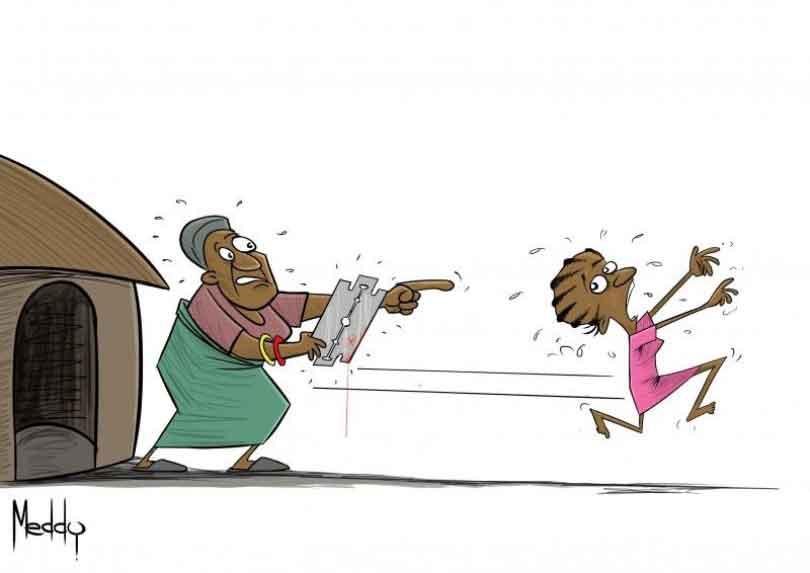
Psychological trauma is legally recognized as valid harm under international frameworks Sri Lanka has signed. The Rome Statute includes psychological injury in its definition of serious bodily harm. CEDAW, which Sri Lanka has ratified, explicitly names psychological harm within the scope of gender-based violence. The WHO recognizes it as a primary outcome of FGM. When a Sri Lankan institution responds to survivor testimony about PTSD, dissociation, or sexual dysfunction by saying there are no recorded cases, it is not applying an evidentiary standard. It is applying a standard that was never designed to capture this kind of harm and using that gap to avoid accountability. Lack of formal records in a system that provides no safe mechanism for reporting is not evidence that harm didn't occur. It is evidence that the system was not built to see it. The same community structures that perform and normalize FGM are the structures survivors would have to navigate to formally report it. The same religious and social frameworks that frame cutting as necessary are the ones that would judge a woman for naming it as harm. Demanding formal documentation under these conditions is not rigor. It is deflection.
Sri Lanka Needs a Specific Law
59 countries where FGM is practiced have specifically prohibited it, including 18 African countries with majority Muslim populations and deep cultural ties to the practice. The argument that criminalization drives the practice underground ignores that it is already underground. The absence of a law has not made FGM visible in Sri Lanka.
It has made it protected. Criminalization does not push harm into hiding. It removes the legal cover that currently exists for those who practice it. The argument that criminalization will alienate communities positions community comfort above child protection. A child's body is not subject to community consensus. The same communities that are cited as reasons to delay legislation include the survivors who are asking for the law to exist.
Criminalization is not the full solution. Survivors need trauma-informed psychological services. Healthcare providers need training to recognize and respond to FGM without retraumatizing patients. Community dialogue needs to happen intergenerationally, with survivors at the centre, not as cautionary cases but as the people whose testimony is the only thing that has ever actually shifted this practice. Bodily autonomy needs to be part of what children are taught. None of that is structurally coherent without the law first establishing that this is a crime. Sri Lanka has been a signatory to international human rights instruments that call for the elimination of FGM for years. CEDAW raised specific concerns in 2017. It is now 2026. What is being waited for?
The psychological trauma survivors are describing is real, it is documented in the global research literature, and it is recognized as valid harm under international law. Dismissing it because there are no local records is a choice, and it is a choice that protects the practice over the people it harms. Sri Lanka needs a specific anti-FGM law in its penal code. Survivor testimony needs to be treated as evidence, not as anecdote. And the three-generation science needs to be part of how this country understands what is at stake, because the harm being done right now will not stay with the girls being cut today. It will travel.