Why Vijay’s Victory Felt Personal to Fans
By Yashmitha Sritheran
As a Sri Lankan fan of Vijay, I can honestly say I have never been this emotionally invested in an election before. Even elections in my own country never made me sit with my phone refreshing updates every few minutes with nervous excitement. But the 2026 Tamil Nadu Chief Minister election felt completely different. For many fans like me, this was not simply about politics or political strategy. It felt deeply personal. As someone who has admired Vijay for years, I genuinely wanted him to succeed.
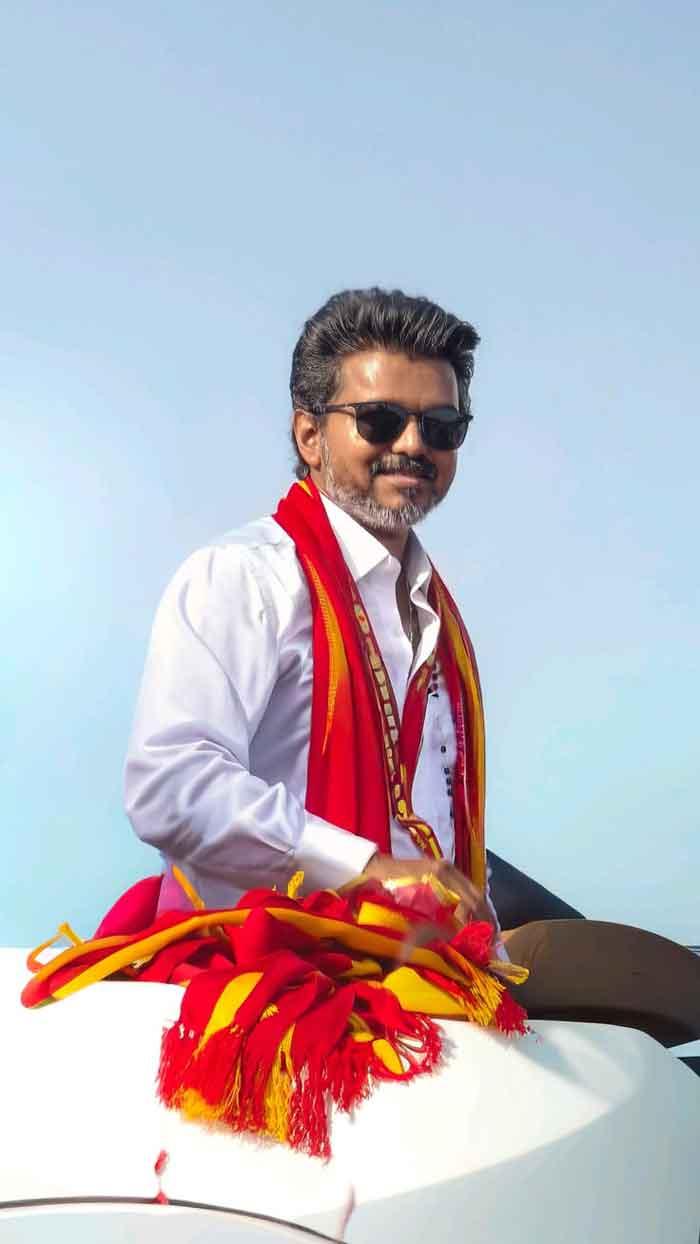
For decades, Vijay has been much more than an actor to millions of people across the world. He became an emotion, a symbol of confidence, resilience, and mass appeal. Through blockbuster films, unforgettable dialogues, emotional stories, and energetic dance numbers, he built a connection with audiences that extended far beyond cinema halls. Fans did not simply watch his films. They grew up with them. His movies became part of childhood memories, friendships, celebrations, and even difficult moments in life. That emotional bond slowly transformed into something much larger than fandom.
When Vijay officially entered politics through Tamilaga Vettri Kazhagam, many people immediately understood that his fan base would become a powerful force. Yet at the same time, there were also doubts, criticism, and endless debates surrounding his political future. Some people believed he would never survive the pressure of real politics. Others dismissed him as just another celebrity attempting to use popularity for political gain. But fans viewed the situation differently. To them, this was not just an actor trying politics. This was someone they had supported emotionally for years stepping into an entirely new battlefield.
Of course, being a Sri Lankan fan of Vijay also came with uncomfortable questions recently. Many people asked me, “Do you know Vijay demanded Katchatheevu? And you still support him?” My answer always remained simple. I became a fan of Vijay long before political statements or territorial debates entered the conversation. Admiring someone for their work, influence, and inspiration does not suddenly disappear overnight because of political controversy. Emotions connected to fandom are not as simple as changing television channels.
At the same time, supporting someone does not mean blindly agreeing with every political opinion they express. Politics naturally creates disagreements, especially in South Asia where historical, cultural, and emotional connections run very deeply. Every public figure entering politics faces scrutiny. Vijay was no exception. But his rise was never built around one statement, one controversy, or one political demand. His journey reflected years of influence, popularity, public connection, and one of the strongest fan communities in Indian cinema.
That journey, however, was far from smooth.
Before becoming Chief Minister, Vijay faced constant criticism, rumours, and public scrutiny from every direction. Discussions surrounding his personal life became regular topics online. There were rumours regarding a divorce petition involving his wife Sangeeta Sornalingam.
There were also widespread allegations linking him romantically with actress Trisha Krishnan, creating endless online debates and trolling across social media platforms. Every photograph, public appearance, or rumour immediately became viral content for discussion. Then came the devastating Karur stampede incident, which reportedly left dozens of people dead during a public gathering associated with Vijay’s fan activities. The tragedy intensified criticism surrounding his public appearances and fan culture. Questions emerged about crowd management, celebrity influence, and public responsibility. Social media became filled with blame, anger, and emotional reactions.
At the same time, fans were also emotionally preparing for what was promoted as Vijay’s final film before entering full time politics, Jana Nayagan. Expectations surrounding the film were enormous because many fans believed it would mark the end of an era. However, delays, leaks, and production issues disappointed audiences who were waiting eagerly to celebrate one last cinematic experience with their favourite superstar before his complete political transition. Throughout all these controversies, Vijay fans faced constant trolling online. Every setback became an opportunity for critics to mock both Vijay and his supporters. Social media turned into a daily battlefield where fans defended him continuously against accusations, memes, rumours, and criticism. Yet despite everything, Vijay’s core fan base remained loyal. That loyalty became one of the biggest reasons behind his political success.
When TVK secured 108 seats in the Tamil Nadu assembly elections, it immediately changed the political atmosphere of the state. Although the party fell short of a majority in the 234-member assembly, the results were already historic because a relatively new political movement had managed to challenge deeply established political structures. Within days, support arrived from smaller parties including the Communist Party of India, Communist Party of India Marxist, Viduthalai Chiruthaigal Katchi, and Indian Union Muslim League. Together, this support pushed TVK beyond the majority mark and officially cleared the path for Vijay to become Chief Minister.
For Tamil Nadu politics, this moment felt historic because the political landscape had long been dominated by two powerful Dravidian parties, the Dravida Munnetra Kazhagam and the All-India Anna Dravida Munnetra Kazhagam. For decades, these two parties controlled the state’s political structure while newer political movements struggled to create major breakthroughs. Yet Vijay’s party managed to disrupt that long standing political pattern completely. For fans, the entire victory felt cinematic in the best possible way.
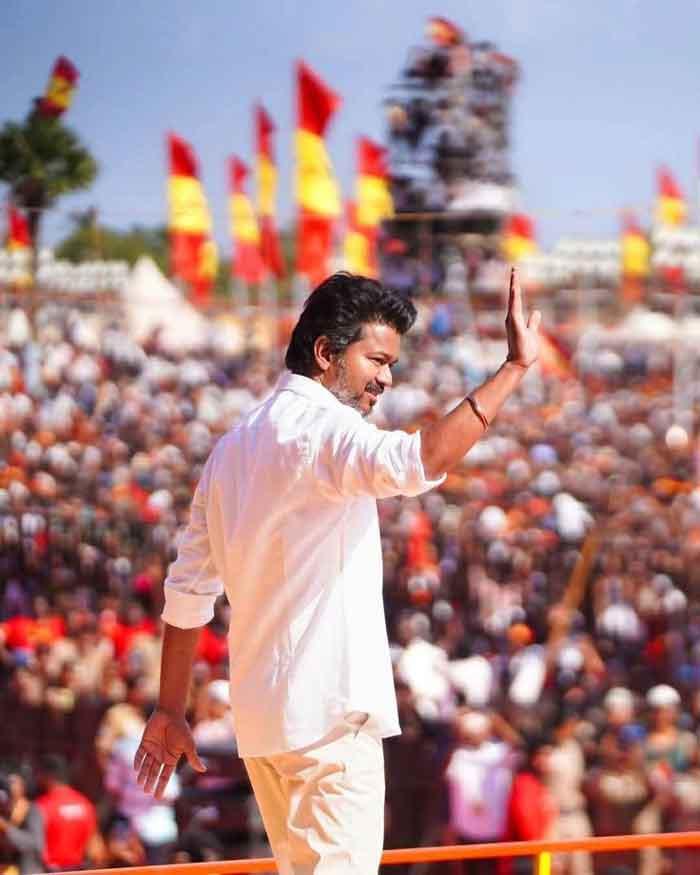
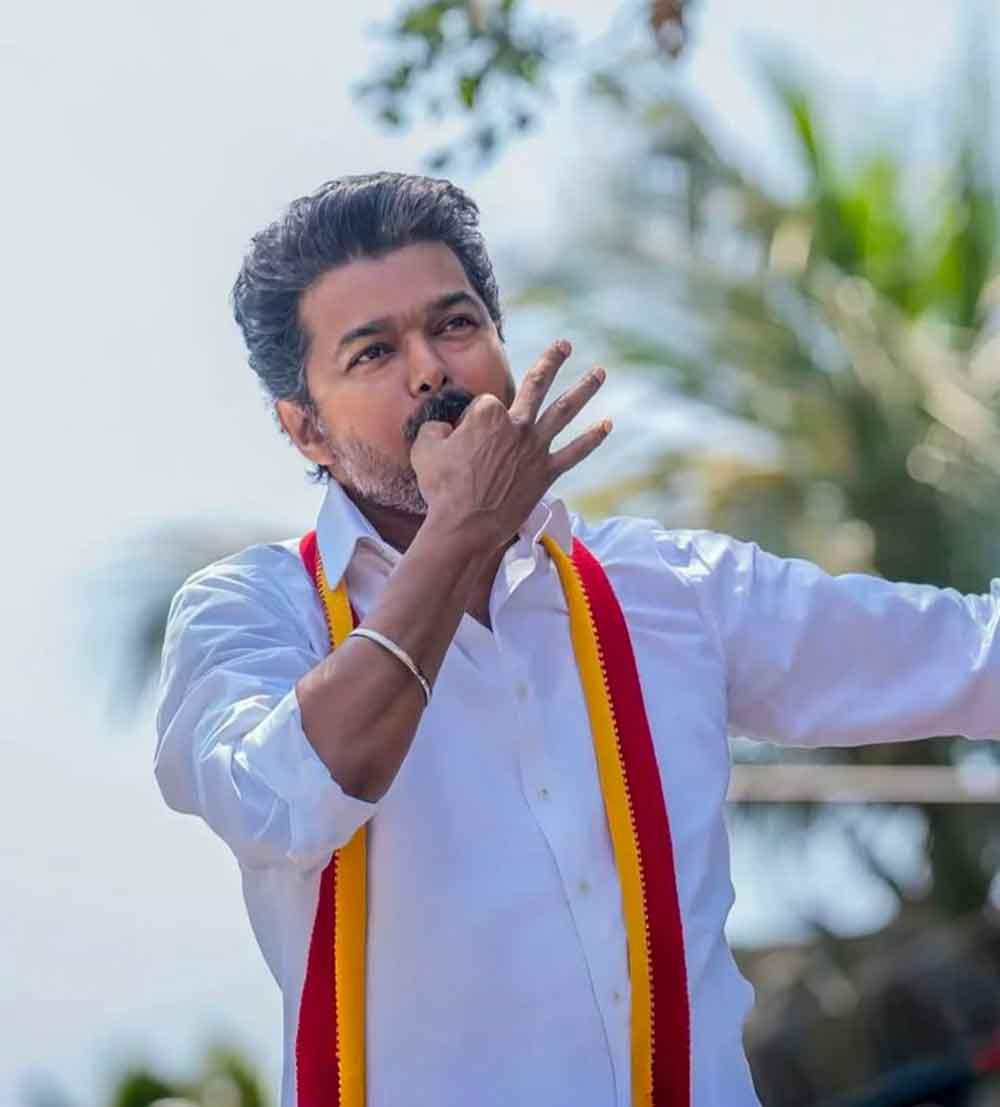
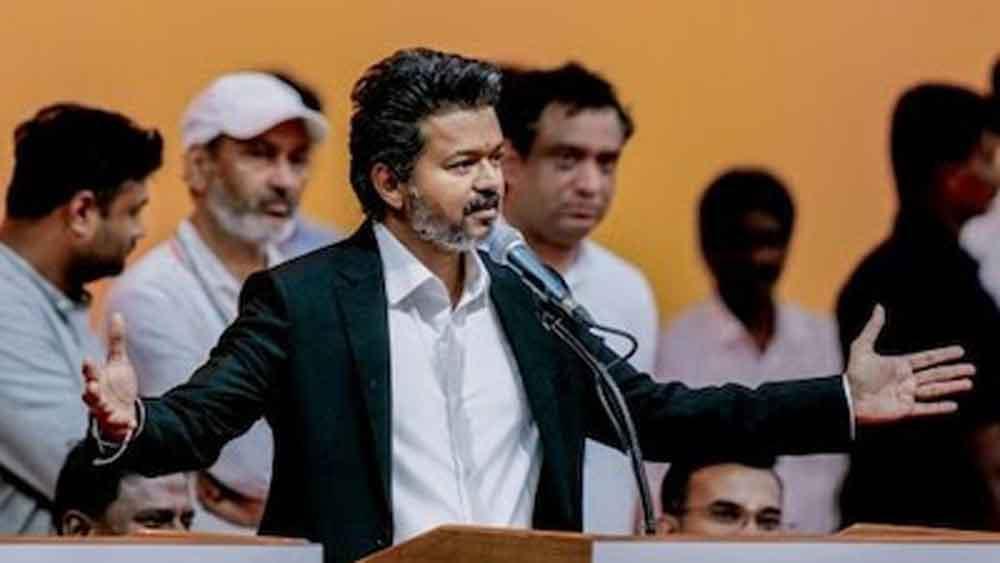
The oath taking ceremony at Jawaharlal Nehru Stadium looked less like a traditional political event and more like the climax scene of a mass entertainer film. Vijay arrived wearing a blazer over a white shirt, moving away from the traditional white shirt and dhoti image commonly associated with Tamil Nadu politicians. Even while taking oath, his delivery carried the dramatic energy and confidence fans instantly recognised from his films. Crowds erupted into cheers after almost every sentence he spoke. The atmosphere felt electric. Supporters celebrated not simply because a politician had won an election, but because someone they had emotionally connected with for years had reached the highest political office in the state.
There was even a brief moment during the oath ceremony when Vijay accidentally went slightly off script and was corrected by the Governor. Yet instead of embarrassment, fans viewed the moment as human and genuine. It reminded people that despite the massive public image surrounding him, he was still navigating a completely new role under enormous pressure. The cheering never stopped because for supporters, this was not an actor pretending to lead on screen anymore. This was their hero standing as the officially elected Chief Minister of Tamil Nadu.
What makes Vijay’s rise especially fascinating is how unconventional it feels compared to previous actor politicians in Tamil Nadu. Figures like M G Ramachandran and J Jayalalithaa spent years building political structures, gaining organisational experience, and learning governance before fully establishing themselves politically. Vijay, however, transitioned almost directly from being one of India’s biggest film stars into the highest political office in the state. Naturally, many people doubted whether that transition was possible. But perhaps those doubts made his victory even more meaningful for younger audiences and longtime fans. Vijay represented something unpredictable and unconventional. He brought celebrity influence, mass popularity, youthful energy, and emotional connection into a political environment many people considered repetitive for decades. Younger supporters especially saw him as a figure capable of changing traditional political patterns.
For fans like me, the emotional impact of this victory came from witnessing the entire journey closely. We watched the criticism, the online trolling, the controversies, the rumours, the public pressure, and the constant scrutiny surrounding him. Yet through everything, Vijay continued moving forward without stepping away from the spotlight. That persistence mattered emotionally to fans because they felt they had grown alongside his journey. Supporting Vijay was never only about films. Over time, it became connected to memories, emotions, friendships, celebrations, and personal admiration. Watching him finally achieve political victory therefore felt rewarding on a deeply emotional level. Today, after all the uncertainty, criticism, and drama, one statement has officially become reality. Yes, Thalapathy Vijay is now the Chief Minister of Tamil Nadu. But for fans, this historic victory also carries emotional sadness. CM Vijay mode is now fully active. The political leader has officially taken over. Yet somewhere within that victory exists the painful understanding that Thalapathy Vijay, the larger-than-life superstar many of us grew up watching in cinemas, may never truly return to the big screen again.