House of the Dragon Season 3: Detailed Review
By: Yashmitha Sritheran
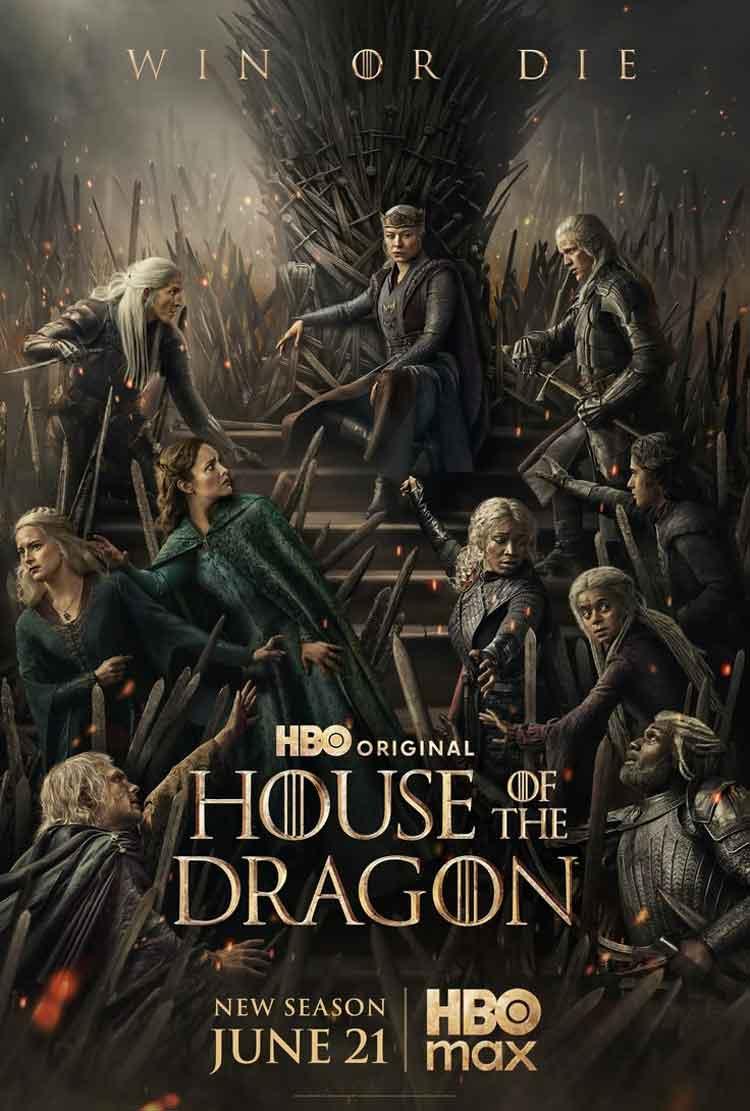
House of the Dragon enters its third season carrying enormous expectations. The first season established the complicated relationships within House Targaryen and showed how disagreements over succession gradually divided the royal family. The second season transformed those disagreements into an increasingly dangerous political conflict. Season 3 takes the next logical step by allowing the Dance of the Dragons to develop into a devastating civil war. The result is a darker, faster and more emotionally intense season that finally delivers many of the confrontations the previous seasons had been preparing for.
One of the greatest strengths of Season 3 is that it successfully combines political drama with large scale warfare. The series does not abandon the conversations, betrayals and personal rivalries that made the earlier seasons compelling. Instead, those political decisions now have immediate consequences. A disagreement in a council chamber can result in thousands of soldiers marching to their deaths, while a decision made by a dragonrider can change the balance of power within minutes. This connection between personal ambition and widespread destruction gives the season much of its dramatic power.
The War Takes Centre Stage
The most noticeable improvement in Season 3 is its pacing. Season 2 was heavily focused on preparation, diplomacy and characters deciding whether they were willing to commit fully to war. Although this created important character development, it occasionally made the story feel as though it was delaying the inevitable. Season 3 benefits enormously from having completed much of that preparation. The war is no longer approaching. It has arrived, and nearly every important character must deal with its consequences.
The conflict also becomes much larger than the personal rivalry between Rhaenyra and the Greens. Armies move across Westeros, noble houses are forced to choose sides, and ordinary people suffer because of decisions made by powerful families. The series increasingly demonstrates that the Dance of the Dragons is not simply a disagreement about who should sit on the Iron Throne. It is a national catastrophe created by a ruling family that possesses weapons powerful enough to destroy entire armies and communities.
This wider perspective makes the conflict feel more significant. The audience sees how quickly political ambition can become uncontrollable once violence begins. Characters who originally believed that they could manage the conflict gradually discover that war develops its own momentum. Alliances change; commanders pursue personal interests and acts of revenge create further acts of revenge. By the middle of the season, the possibility of a peaceful settlement feels almost impossible.
Rhaenyra Targaryen
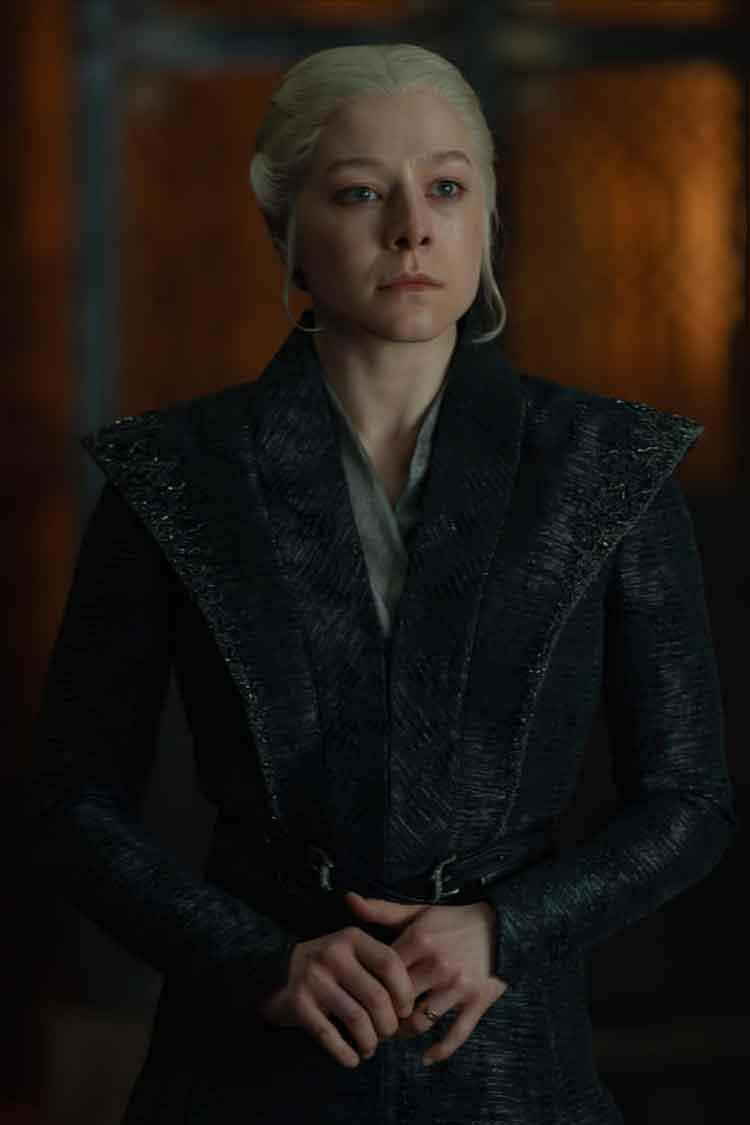
Rhaenyra remains the emotional centre of the series, and Season 3 gives her one of her most complicated character journeys. Earlier seasons frequently presented her as someone attempting to prevent unnecessary destruction. She believed that possessing a legitimate claim to the Iron Throne did not automatically justify destroying the kingdom in order to obtain it. Season 3 gradually challenges that belief as the demands of leadership force her to make increasingly difficult decisions.
What makes Rhaenyra's transformation effective is that it happens gradually. She does not suddenly become cruel or irrational. Instead, she repeatedly convinces herself that harsher actions are necessary for victory. Every compromise creates another problem, and every military setback encourages her to exercise greater authority. She begins to understand that claiming to be queen and actually ruling during a civil war are very different things.
Emma D'Arcy gives an excellent performance throughout this development. Rhaenyra can appear confident and commanding when surrounded by her supporters while revealing uncertainty when she is alone or speaking with someone she trusts. Her growing authority is impressive, but it is also disturbing because that confidence is accompanied by a gradual erosion of the principles that once distinguished her from her enemies.
By the end of the season, Rhaenyra is no longer simply fighting to recover something that was taken from her. The war has become part of her identity. That transformation gives the character greater complexity and raises an uncomfortable question about whether obtaining the throne is worth what she is becoming in the process.
Daemon Targaryen
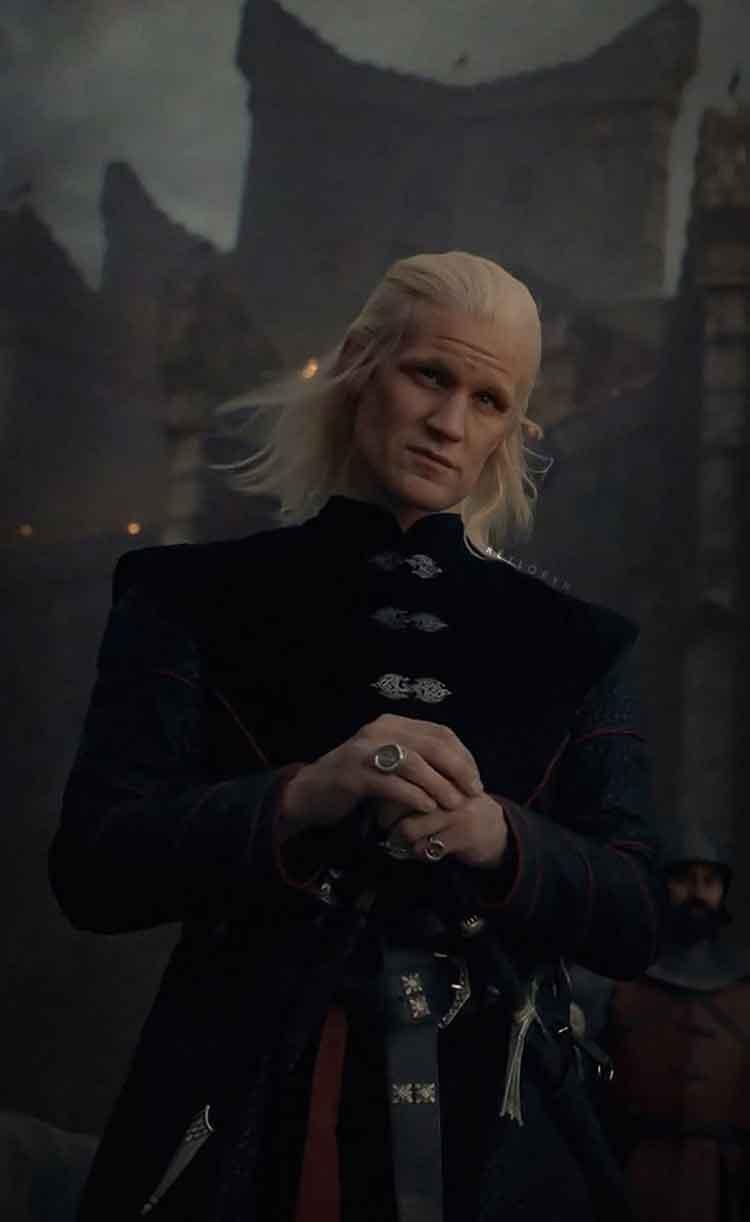
Daemon continues to be one of the most unpredictable and entertaining characters in House of the Dragon. Matt Smith has always played him as a man capable of moving rapidly between affection, arrogance, violence and vulnerability. Season 3 develops this personality by forcing Daemon to confront the difference between being a dangerous warrior and being an effective leader.
Daemon has spent much of the series behaving as though war is the environment in which he naturally belongs. He is courageous, experienced and willing to use violence when others hesitate. However, Season 3 demonstrates that bravery alone does not make someone a brilliant commander. Warfare requires patience, diplomacy, organisation and an understanding of other people's motivations. These qualities do not always come naturally to Daemon.
His relationship with Rhaenyra remains particularly fascinating. Their marriage contains affection, resentment, political necessity, attraction and competition at the same time. Daemon loves Rhaenyra but accepting her authority requires him to control an ego that has shaped most of his adult life. Rhaenyra needs his strength but understands that his independence can become dangerous. Their relationship therefore reflects the wider instability of the Black faction.
Daemon's failures are especially meaningful because they challenge his understanding of himself. He has always viewed himself as a man created for conflict, yet the war demonstrates that enjoying danger and understanding strategy are very different qualities. This gives his storyline greater emotional depth than simply presenting him as the fearless Targaryen warrior.
Alicent Hightower
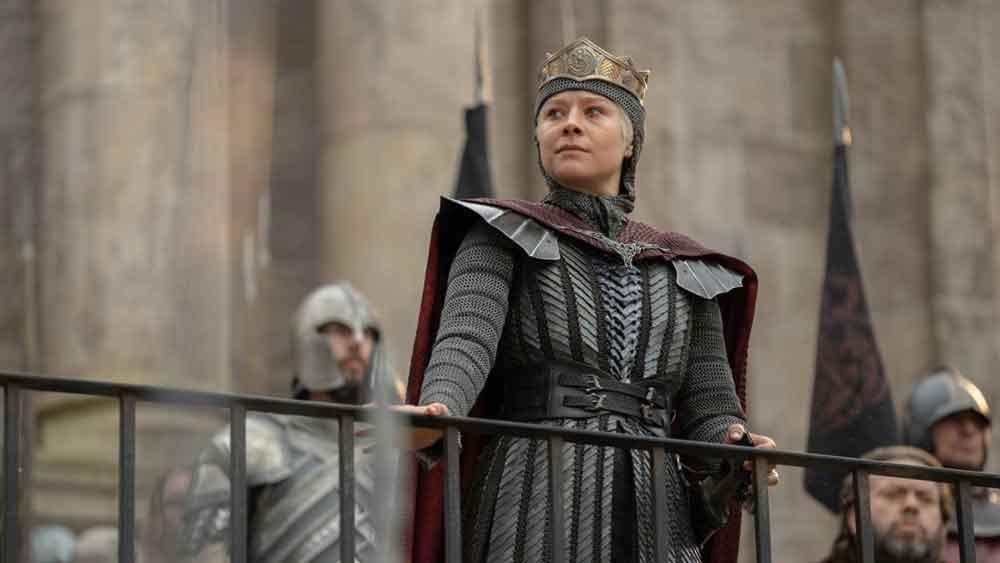
Alicent's storyline is among the most tragic because she gradually discovers that the political system, she helped create no longer requires her. Earlier in the series, Alicent possessed considerable influence as the wife of King Viserys and later as the mother of the king.
Her relationships gave her political authority. Once the civil war becomes dominated by armies, commanders and dragonriders, however, that authority becomes increasingly fragile.
Olivia Cooke portrays Alicent as someone trapped between responsibility and regret. She helped create the circumstances that allowed the Green cause to challenge Rhaenyra, but she cannot fully control what that cause becomes. The men surrounding her increasingly make decisions according to military necessity, personal ambition and revenge. Alicent therefore becomes a witness to the consequences of choices she once believed she could manage.
Her relationship with her children makes this situation even more painful. Much of Alicent's political behaviour has been motivated by a desire to protect them, yet the struggle for the throne places those same children in extraordinary danger. Her attempts to preserve her family become increasingly desperate as she realises that royal power has made them targets rather than protecting them.
Alicent also serves as an interesting parallel to Rhaenyra. Both women once believed that they could restrain the violent impulses of the people around them. Season 3 demonstrates that neither can completely control the forces they helped unleash. Their personal rivalry has become something much larger than either woman.
Aemond and the Green Cause
Aemond remains one of the most intimidating characters because his personal insecurities are combined with extraordinary military power. His connection with Vhagar makes him capable of changing the outcome of battles almost single handedly. Yet the season repeatedly demonstrates that possessing enormous power does not necessarily mean knowing how to use it wisely.
Aemond continues to be shaped by the humiliations and resentments of his childhood. He wants recognition, respect and fear, and his dragon gives him the ability to demand all three. However, many of his decisions remain influenced by personal emotions. This makes him extremely dangerous because the consequences of his anger can extend far beyond the people who originally caused it.
The Green faction consequently suffers from internal tensions similar to those affecting Rhaenyra's supporters. Personal rivalries interfere with military strategy, while individual ambitions weaken collective goals. The tragedy of the Dance becomes increasingly clear because neither faction is damaged only by its enemies. Both sides repeatedly create their own problems.
The Dragons
The dragons are among the greatest visual achievements of Season 3, but their importance extends far beyond spectacle. The series increasingly presents them as weapons of mass destruction rather than simply magnificent fantasy creatures. Earlier seasons often encouraged the audience to admire the beauty and power of dragons. Season 3 deliberately complicates that admiration by showing what happens when those creatures are used extensively in warfare.
Dragon battles are exciting, but they are also horrifying. Ordinary soldiers can be destroyed within seconds by conflicts in which they have little personal involvement. Buildings, ships and armies become vulnerable whenever a dragon appears. The series constantly reminds the audience that the Targaryens possess a level of military power that fundamentally changes the nature of warfare.
The relationship between dragons and political authority is also explored effectively. A person who controls a dragon can suddenly become extremely important regardless of previous status or experience. This creates additional instability because traditional ideas about inheritance, military rank and noble birth become less important when someone possesses the ability to destroy an army from the sky.
The visual effects successfully communicate the enormous scale of these creatures. The best scenes often show dragons from the perspective of ordinary people on the ground. Seeing a dragon from below makes its size and destructive capability far more frightening than simply watching two dragons flying through the sky.
Battles and Action
Season 3 contains some of the most ambitious battle sequences in House of the Dragon. These scenes combine dragons, soldiers, ships and large environments while generally maintaining a clear sense of what is happening. The battles rarely feel like action included simply for entertainment. They usually represent the consequences of political decisions made earlier in the story.
The strongest battle sequences also remain focused on individual characters. Large scale fantasy warfare can become emotionally distant when the audience is watching thousands of anonymous soldiers. House of the Dragon avoids this problem by connecting major events to characters whose motivations and relationships have already been established. The audience therefore understands not only what is happening but why the outcome matters.
Sound design contributes significantly to these sequences. Dragons sound enormous, while the combination of wingbeats, flames, armour, collapsing structures and frightened soldiers gives the battles considerable physical intensity. The series creates the impression that dragon warfare would be overwhelming and terrifying for anyone experiencing it from the ground.
Politics, Loyalty and Betrayal
Despite the increased action, political intrigue remains essential to the season. House of the Dragon understands that armies alone cannot win a civil war. Armies require commanders, commanders require allies and allies require reasons to remain loyal. Every important character therefore has personal ambitions, relationships and grievances that influence the wider conflict.
This creates a constantly changing political situation. An alliance that appears secure in one episode can become uncertain in the next. Characters frequently claim to act out of loyalty while secretly protecting their own interests. The throne may be the official objective, but survival, revenge, family and personal advancement are often equally important motivations.
The moral uncertainty created by these shifting loyalties is one of the show's greatest strengths. Rhaenyra may possess the stronger claim to the throne while still making destructive decisions. The Greens may contain sympathetic individuals despite having helped create the succession crisis. Daemon can be charismatic and frightening at the same time. Alicent can simultaneously be a victim of the political system and one of the people responsible for strengthening it.
Season 3 works best when it allows these contradictions to remain unresolved. There is no completely comfortable side to support because almost every major character is capable of both understandable and terrible actions.
Production and Cinematography
From a technical perspective, Season 3 is extremely impressive. The production design continues to make Westeros feel like a large and historically developed world. King's Landing feels crowded, dangerous and politically suffocating, while Dragonstone feels isolated and severe. Battlefields are presented as dirty and chaotic rather than glamorous environments.
The cinematography is particularly effective during the dragon sequences. The filmmakers understand that scale is best communicated through comparison. Showing an enormous dragon beside a castle, ship or human being gives the creature a convincing physical presence. The camera often places ordinary people beneath the dragons, emphasising how powerless most inhabitants of Westeros are against Targaryen warfare.
Costume design also contributes to the storytelling. Clothing reflects political allegiance, social status and changing psychological states. The Blacks and Greens become visually distinct factions without the costumes appearing excessively artificial. These details help the audience navigate a story containing a very large number of characters.
Weaknesses
Season 3 is a strong season, but it is not without problems. The enormous cast remains difficult to manage, and some supporting characters disappear for long periods while other storylines dominate several episodes. This can make certain developments feel less emotionally powerful than they might have been with more consistent attention.
The political geography of Westeros can also become confusing. The season introduces and discusses numerous houses, castles, commanders and armies. Viewers who have not read the books or who do not remember every detail from previous seasons may occasionally struggle to understand why a particular location or alliance is important.
There are also moments when characters make questionable strategic choices. Most of these decisions can be explained through arrogance, fear, anger or ambition, but some appear designed primarily to move the story toward a particular disaster. These moments are noticeable because the rest of the political writing is generally careful and convincing.
Nevertheless, these weaknesses do not seriously damage the season. The faster pacing and greater sense of consequence make Season 3 considerably more engaging than the slower sections of Season 2.
My Final Thoughts
House of the Dragon Season 3 succeeds because it finally transforms years of political tension into the tragedy that the series has always promised. The first season introduced a divided family; the second season pushed that family toward war and the third demonstrates the devastating consequences of allowing personal hatred to become a national conflict.
The battles are larger, the dragons are more terrifying, and the political consequences are more severe. However, the greatest strength of the season remains its characters. Rhaenyra's transformation is compelling because it develops gradually. Daemon's failures matter because they challenge his understanding of himself. Alicent's suffering is powerful because she helped construct the political system that now threatens her family. Aemond is frightening because enormous military power has been placed in the hands of someone still influenced by deeply personal resentments.
Most importantly, Season 3 understands that the Dance of the Dragons is not simply a story about determining who deserves to sit on the Iron Throne. It is a story about what happens when a powerful family possesses enough military strength to transform private disagreements into a catastrophe affecting an entire kingdom. The throne becomes increasingly less important as the human cost of obtaining it continues to grow.
The dragons provide the spectacle and the battles provide excitement, but the people provide the tragedy. That combination is what makes Season 3 such a compelling continuation of the Targaryen story and one of the strongest seasons of House of the Dragon.
Rating: 9 out of 10