IN CONVERSATION WITH NIKITA RAZEEN
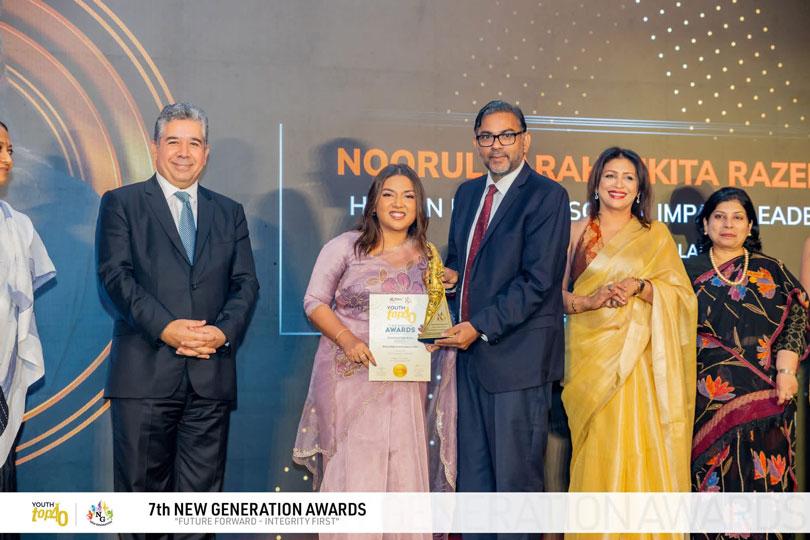
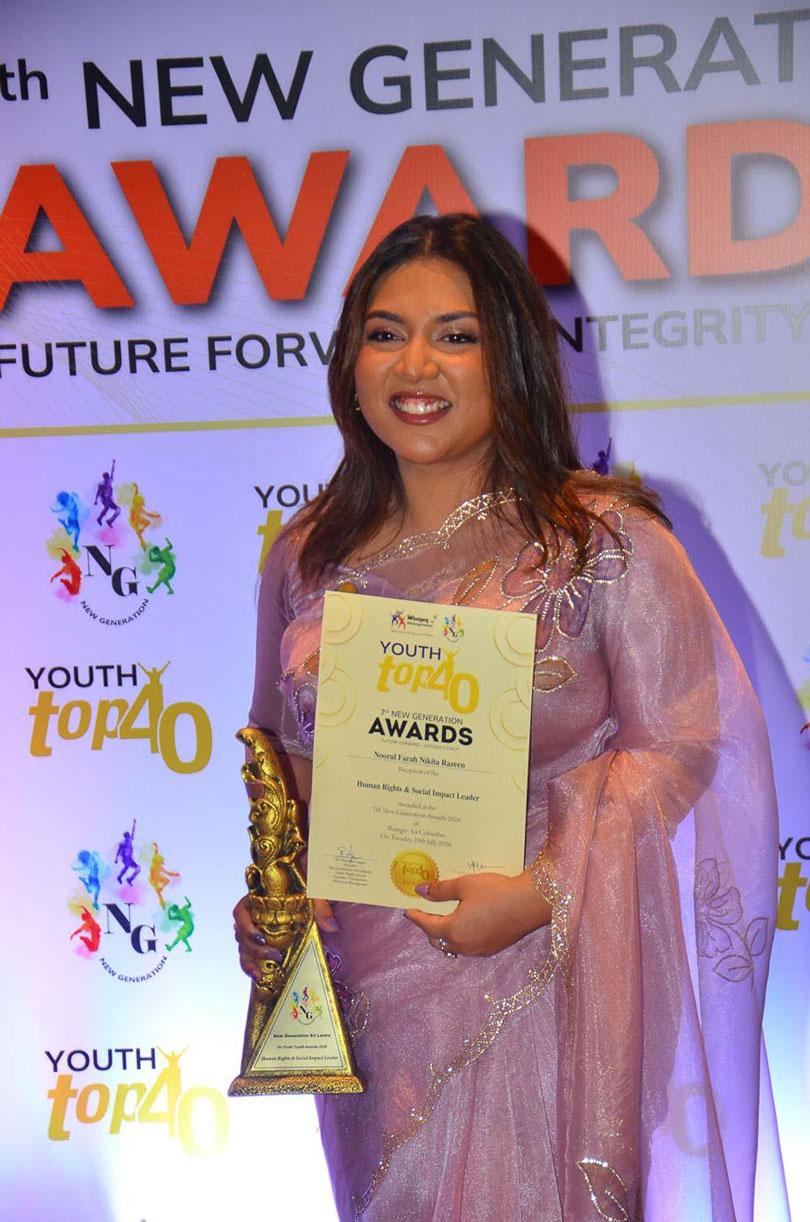
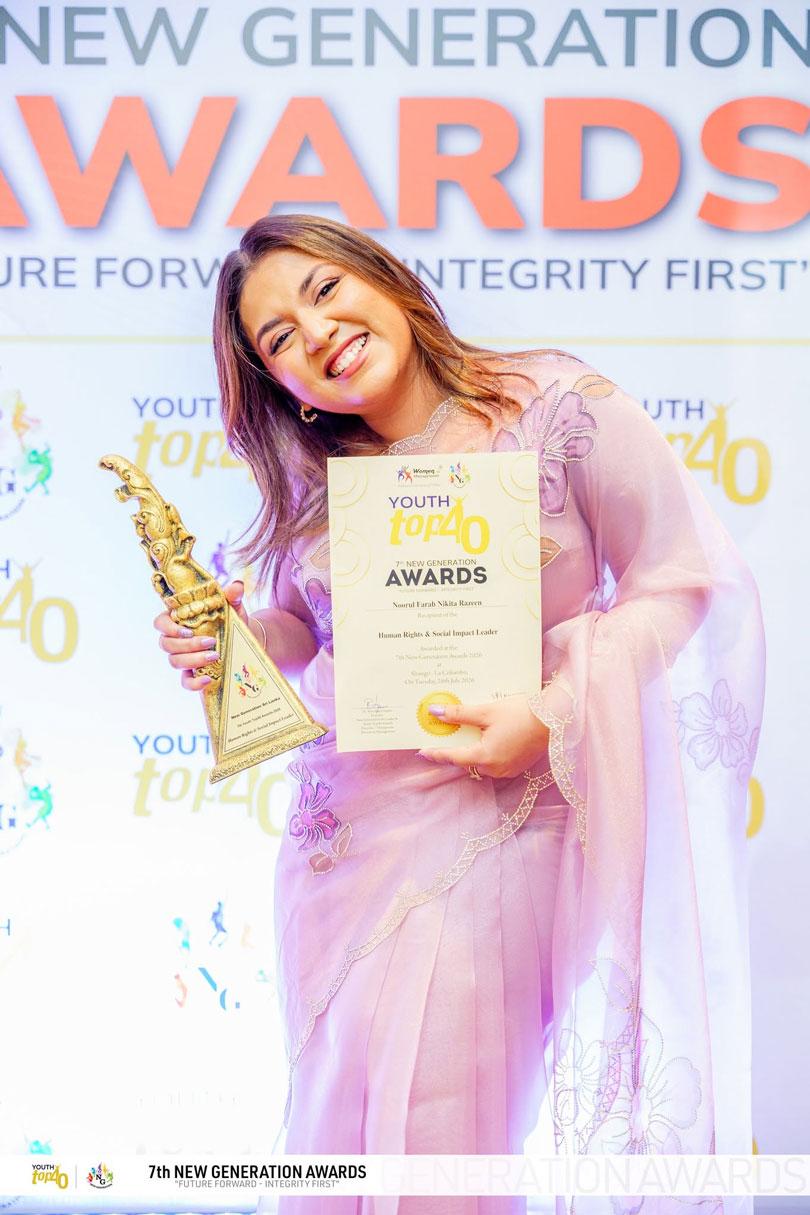
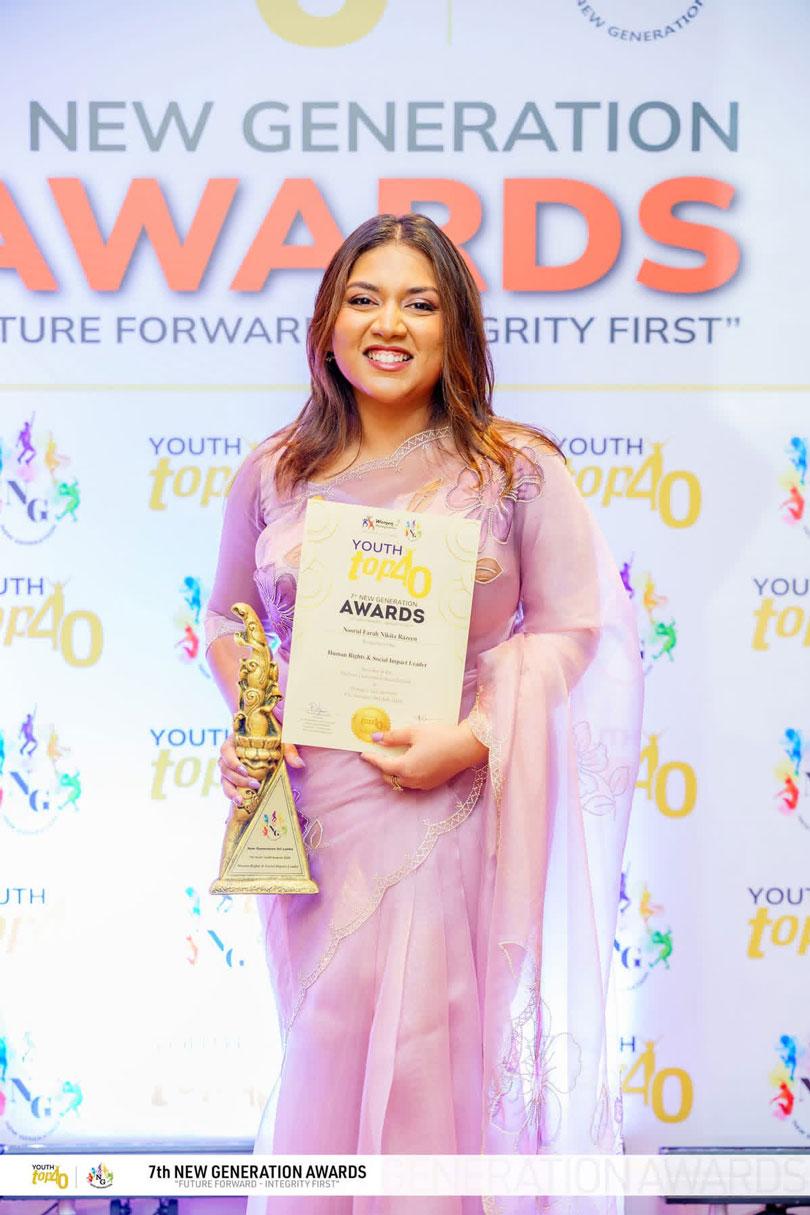
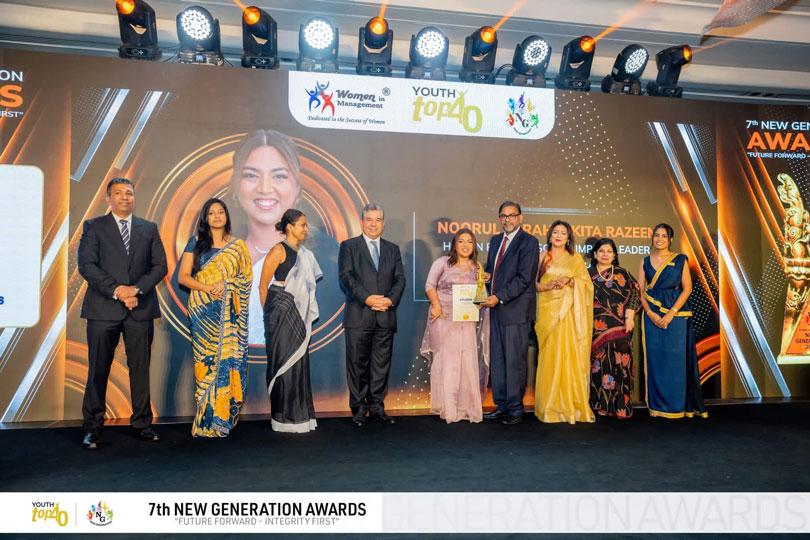
For Nikita Razzen, being recognised with the Human Rights and Social Impact Award at the 7th New Generation Youth Top40 Awards represents more than a personal milestone. It is an acknowledgment of sustained work grounded in people-centred advocacy, justice, and the conviction that every individual deserves to be heard. Nikita’s work in the legal and human rights sector has taken her through some of Sri Lanka’s most significant institutions, including the Supreme Court and the Presidential Commission of Inquiry into Human Rights Violations. Her experience also extends to supporting survivors of gender-based violence and facilitating access to legal assistance for individuals affected by domestic violence. Beyond her legal practice, she has been actively engaged in youth leadership initiatives, including serving as Chairperson of the G17 Summit and as a Youth Representative to Parliamentary Sectoral Oversight Committees. This combination of legal expertise, advocacy, and youth leadership makes her recognition in the Youth Top40 particularly meaningful. It underscores the important role young people play in shaping discussions on justice, policy, and social progress. At the core of Nikita’s journey is a guiding principle: to use her voice in service of those who do not have one. Through her continued work, she brings this principle into practice.
Congratulations on winning the Award for Human Rights & Social Impact at the 7th New Generation Youth Top40 Awards! What does this national recognition mean to you personally, and how does it strengthen your commitment to serving marginalized communities?
Receiving this Award affirms the values that have guided my journey: purpose, service, and responsibility. I have always believed advocacy is not about recognition but using every entrusted platform to advance meaningful change. This honour recognizes work supporting women and children, survivors of gender-based violence, human rights, and communities facing barriers to justice and opportunity. For me, it is not an endpoint, but a renewed responsibility to help make justice a lived reality. I remain committed to using my legal training and advocacy to amplify unheard voices, choosing purpose over comfort, service over recognition, and empowering others to lead.
You’ve mentioned a core conviction that, ‘the law should not exist merely as an instrument of governance, but as a tool for protecting dignity.’ What pivotal experience or moment inspired you to pursue law as a vehicle for social justice?
In many respects, the law found me before I found it. As a third-generation lawyer, I was raised in a family deeply devoted to the profession, making law both a legacy and a natural path. Yet, through my legal education and work in youth advocacy, civil society, human rights, and social impact, I began shaping that legacy into a purpose of my own. Witnessing inequality and the divide between rights in law and justice in practice strengthened my conviction in law’s transformative power. I believe law must protect dignity, advance equality, challenge injustice, and make justice accessible to all.
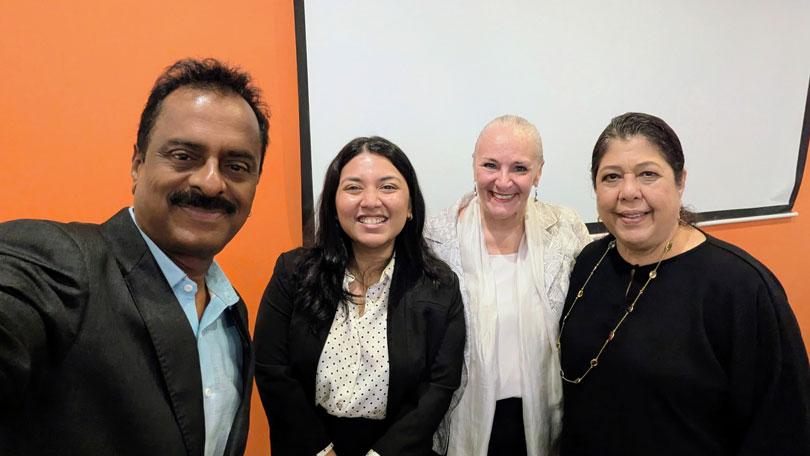
Having served as a Judicial Law Clerk at the Supreme Court of Sri Lanka and Lead Research Officer to the Presidential Commission of Inquiry into Human Rights Violations, how have these high-level institutional roles shaped your understanding of systemic justice and legal reform?
Serving as a Judicial Law Clerk at the Supreme Court of Sri Lanka deepened my appreciation for judicial independence, constitutional scrutiny, institutional integrity, and the sovereignty of the people. My work on Supreme Court determinations reinforced that with great power comes great responsibility. At the Presidential Commission of Inquiry into Human Rights Violations, I encountered transitional justice and the importance of truth, accountability, reparations, reform, and reconciliation. I learned that justice may mean conviction, but sometimes it means finding answers that enable healing and release. Ultimately, legal reform must build institutions that protect dignity, uphold rights, restore trust, and prevent injustice.
Your work extensively involves supporting survivors of gender-based violence and connecting domestic violence survivors with free legal assistance. What are the key systemic barriers these survivors face, and how can young lawyers help bridge the legal aid gap?
Survivors of gender-based violence frequently encounter a profound divide between the rights afforded to them in law and their ability to realise those rights in practice. The cost of legal representation, limited awareness, fear of reprisal, social stigma, economic dependence, and the complexity of legal institutions can render justice seemingly beyond reach. Often, the impediment is not the absence of legal protection, but the inability to access and effectively invoke it. Through my work with The Arka Initiative’s “Virya” Project, which connects survivors of domestic violence with free legal assistance, I have witnessed how timely and accessible legal support can become a vital avenue towards protection and redress. It has strengthened my conviction that young lawyers have a particular responsibility to bridge this divide - not merely through pro bono representation, but by making the law intelligible, connecting survivors with essential support, and advocating for more responsive and survivor-centred institutions. As young lawyers it is our duty is to ensure that the law does not remain a right upon paper, but becomes a tangible instrument of protection, dignity, and justice for those who need it most.
From serving as Chairperson of the G17 Summit of the Road to Rights to being a Youth Representative to the Sectoral Oversight Committees of Parliament, you’ve been at the forefront of youth governance. Why is it vital to move youth participation from tokenism to active policy decision-making?
I believe youth leadership is vital because young people ought not to wait for tomorrow to become stakeholders in the decisions that shape their lives today. Securing a seat at the decision-making table is not the end in itself; what matters is the impact one is able to make from that seat. Through the G17 Summit, I witnessed first-hand the capacity of young people to lead, mobilise, and effect meaningful change when entrusted with the requisite space and confidence. My experience as a Youth Representative to the Sectoral Oversight Committees of the Parliament of Sri Lanka further demonstrated the importance of bringing young people into formal decision-making spaces - not merely as voices to be consulted, but as stakeholders whose perspectives can meaningfully inform policy and governance.
I began my journey because The Road to Rights gave me a seat at the table, recognised my potential, and entrusted me with the opportunity to lead. That experience shaped my enduring conviction that when young people are entrusted with responsibility and afforded a genuine opportunity to contribute, they can do far more than occupy a seat; they can influence, innovate, inspire, and effect meaningful change.
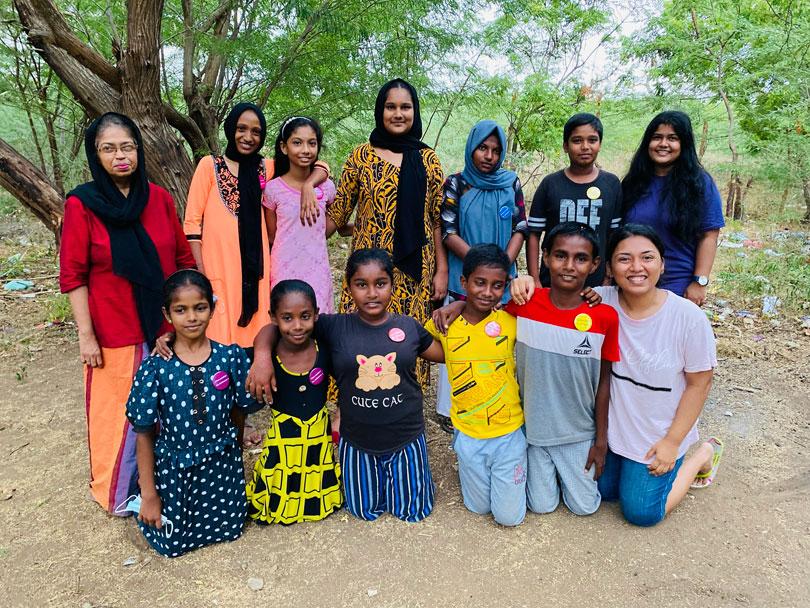
As Country Lead for Sri Lanka at The Road to Rights for the UN Global Week to #Act4SDGs 2021and contributor to Sri Lanka’s Universal Periodic Review (UPR), how do you translate broad international frameworks like the UN Sustainable Development Goals into tangible, community-level impacts?
I believe international frameworks find meaning when they improve people’s everyday lives. As Country Lead for Sri Lanka at The Road to Rights for the UN Global Week to #Act4SDGs, and through contributing to Sri Lanka’s Universal Periodic Review, I learned the importance of connecting global commitments with national priorities and community realities. My work with marginalized women and children reinforced that implementation must be people-centric, locally responsive, and grounded in lived experience. Whether addressing violence, poverty, inequality, education, climate change, or access to justice, we must bridge commitments and communities. The SDGs must become realities people experience.
Advocating for human rights requires both analytical legal rigour and deep personal empathy. How do you maintain emotional resilience and stay grounded while handling sensitive and emotionally taxing human rights cases?
What keeps me grounded is remembering that I am not merely there to witness suffering; I am there to do something about it. Human rights work often reveals how widespread injustice remains, and its scale can feel overwhelming. I have learned, however, that I cannot remedy every injustice at once. What I can do is bring clarity, strategy, and action to the person before me, making a meaningful difference one person, one case, and one step at a time. For me, resilience means knowing no act of justice is insignificant, holding empathy and hope together, and allowing suffering to deepen my resolve.
Through your role at the HYPE Policy Tank and civic platforms, you advocate for building more accountable institutions. In your view, what key policy or legislative reforms should Sri Lanka prioritize to make justice truly accessible to all rather than a privileged few?
I believe Sri Lanka must move from a justice system accessible primarily to those who know how to navigate it, towards one deliberately designed to be accessible to all. This requires strengthening the architecture of access to justice through affordable legal aid, simpler legal processes, stronger institutional accountability, and the effective implementation of laws already upon our statute books. We must also strengthen independent institutions and create meaningful avenues through which citizens may hold them to account. Laws are only as effective as the institutions entrusted with their implementation, and rights are only meaningful when people can effectively enforce them. For me, the deeper reform is a shift from a system that asks citizens to find their way through justice, to one that brings justice closer to the citizen; particularly women, children, and communities historically excluded from power and representation.
Ultimately, justice ought not to depend upon who one is, what one earns, or whom one knows. A just society is one in which the law operates with equal force for the least powerful as it does for the most powerful - this is not merely an ideal; it is the very essence of democracy.
Many young individuals aspire to create social impact but feel overwhelmed by complex political or legal structures. What practical advice would you give to young leaders looking to turn their passion for justice into actionable advocacy?
Take the first step. You shall never know what awaits on the other side if you remain where you are. I have learnt that one need not have the entire path mapped out before beginning; one simply needs the courage to take the next step. Young people too often hold themselves back, believing they are not experienced, qualified, or ready enough. Yet waiting until one feels entirely prepared may mean waiting indefinitely. Take the leap. Take the chance. Release the fear of failure, and permit yourself to learn, stumble, grow, and try again. Find the cause that troubles your conscience, the injustice you cannot overlook, and begin there. You need neither a title nor a position to effect change. Every great movement begins with one person who looks upon the world as it is and dares to believe it can be better. Your first step may seem small, but history has never been altered by those who waited for the perfect moment. As Stephen King aptly put it: “You can, you should, and if you’re brave enough to start, you will.”
You expressed a powerful desire to 'be a voice for those who needed one most, not an echo of what already existed.' Looking ahead, what legacy do you hope to build, and what is your vision for the future of youth leadership and human rights in Sri Lanka?
My vision is of a Sri Lanka where children are educated and protected, women are empowered, survivors find justice, and our environment is safeguarded. At their heart, the SDGs reflect values already embedded in our constitutional heritage: freedom, equality, justice, human rights, and the well-being of future generations. The principles are already ours; what remains is the courage to translate them into lived realities. I hope my legacy is one of purposeful service; questioning what was accepted, acting where needed, and helping build a more just Sri Lanka, while choosing to be a voice for those who need one most.