PAHANI ATTANAYAKE: DRIVEN BY CURIOSITY, DEFINED BY LEADERSHIP
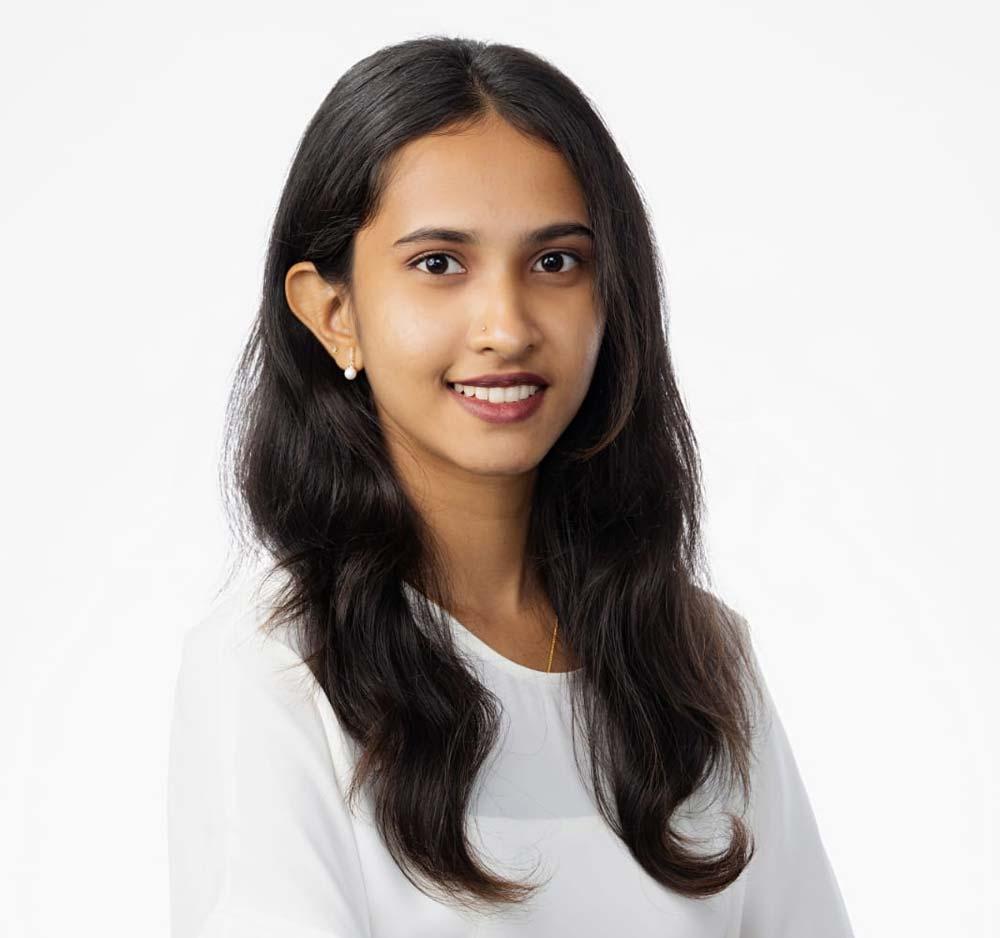
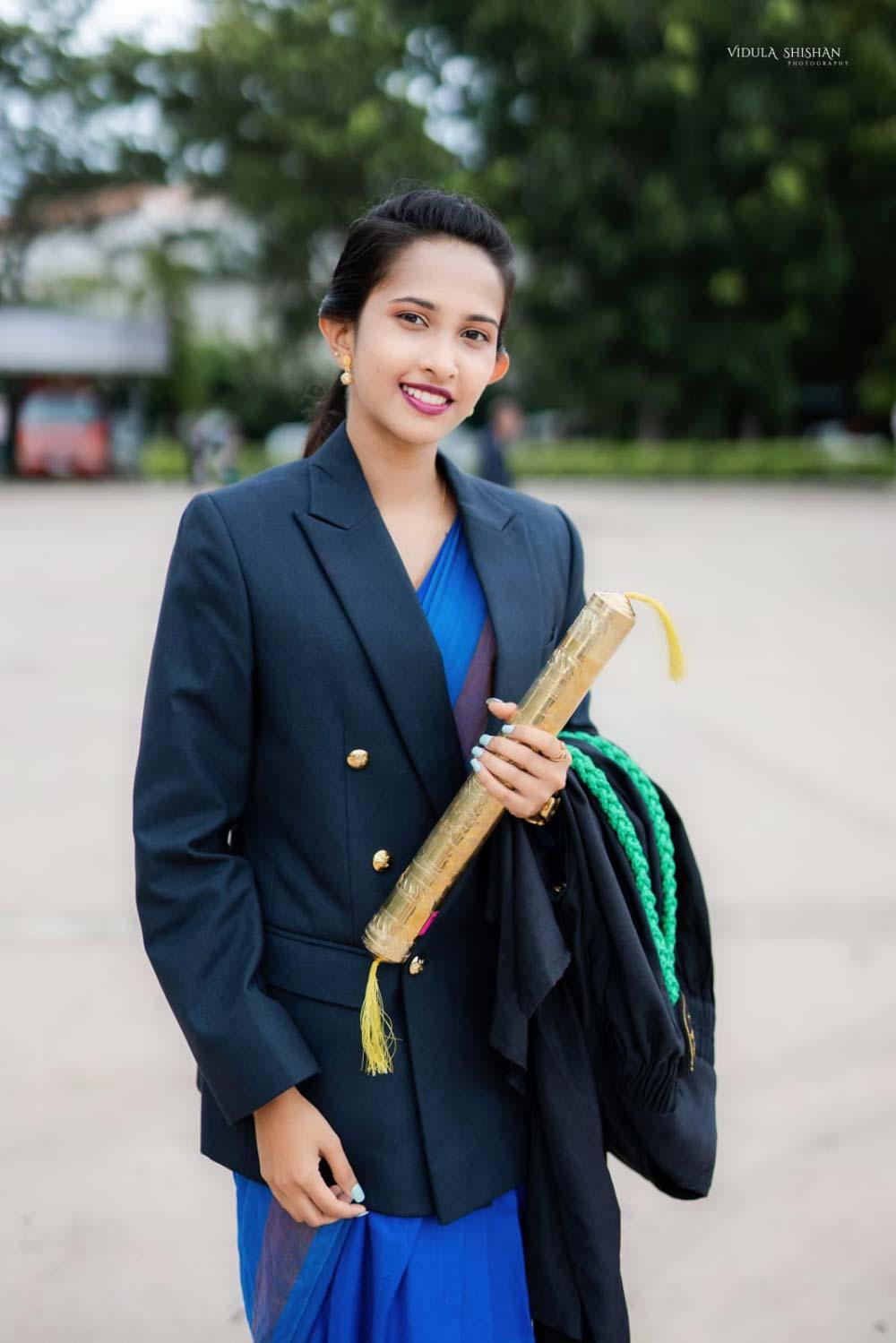
Curiosity has always been the foundation of Pahani Attanayake’s journey. From an early age, she was fascinated by people, cultures, languages and the intricate relationships that shape societies and nations. What began as a natural interest in understanding the world gradually evolved into a passion for international relations, diplomacy and security studies.
 Today, she stands as an emerging professional whose experiences span academia, research, corporate leadership and youth empowerment. As a member of the inaugural batch of the Bachelor of Science in Strategic Studies and International Relations at General Sir John Kotelawala Defense University, she embraced the challenge of pioneering a new academic pathway while developing expertise in global affairs. Alongside her academic achievements, she has built a successful professional career, contributed to international research discussions, led global youth initiatives and mentored aspiring young leaders. In this interview, Pahani reflects on the experiences that have shaped her journey, the lessons she has learned along the way and her vision for creating meaningful impact through leadership, learning and service.
Your academic journey has focused heavily on international relations, diplomacy and security studies. What first inspired your interest in these fields?
My interest in international relations and diplomacy began during my school years because I was always fascinated by people, cultures, languages and the way countries interact with one another. I knew from a young age that I wanted to pursue something beyond conventional career paths and find a profession that connected me with global affairs and international engagement. During my Advanced Level studies at Visakha Vidyalaya, I started researching careers related to foreign service and speaking with professionals who worked in the field. Through those conversations and my own research, I was introduced to international relations as an academic discipline. The more I learned, the more I realized that it brought together everything that interested me, including politics, history, communication, critical thinking, human behaviour and global problem solving. What attracted me most was understanding that international relations is not only about governments and policies. It is also about understanding people, cultures, conflicts, cooperation and the factors that shape our increasingly interconnected world. That realization strengthened my desire to pursue this path both academically and professionally.
You were part of the inaugural batch of the Bachelor of Science in Strategic Studies and International Relations at General Sir John Kotelawala Defense University. What was that experience like, and how did it shape your perspective on global affairs?
Being part of the inaugural batch was both exciting and challenging. Since there was no previous batch to guide us, we were essentially helping to build the identity and culture of the programme while exploring a relatively new field ourselves.
The programme exposed us to subjects such as international politics, diplomacy, strategic communication, security studies, conflict analysis, foreign policy, economics and geopolitical developments. Through these studies, I developed a much broader understanding of global affairs and learned how interconnected societies, economies and security environments truly are. One aspect I value greatly from that period is the culture of independent learning. At that time, artificial intelligence tools were not widely available, so students relied heavily on books, academic journals, discussions and extensive research. We spent hours in libraries and searching for reliable sources to understand complex international issues. Looking back, those experiences helped shape my ability to think independently, evaluate information critically and develop strong analytical skills. University life also strengthened my confidence, adaptability and leadership abilities. Through research forums, student projects and event organization, I gained practical experiences that complemented what I learned in the classroom and prepared me for future professional challenges.
Your undergraduate thesis explored the dual role of education in violent extremism. What motivated you to research such a complex and important topic?
The motivation for this research came largely from observing the national conversations that emerged in Sri Lanka following the Easter attacks in 2019. During that period, there were significant discussions about radicalization, identity, social cohesion and the factors that influence individuals to adopt extremist ideologies. What particularly interested me was the role of education in shaping beliefs, values and worldviews. Education is often described as one of the most powerful tools for positive change and social development. However, history has also demonstrated that educational environments lacking critical thinking, inclusion and diversity can sometimes contribute to intolerance, polarization and extremist thinking. This contradiction fascinated me academically because it highlighted the immense influence education has on individuals and societies. Through my research, I examined how education can promote peacebuilding, awareness and social integration while also exploring the risks associated with exclusion, misinformation and ideological manipulation. The research required me to analyze social, political, psychological and ideological dimensions simultaneously. More importantly, it reinforced the importance of approaching sensitive topics with empathy, objectivity and critical thinking. It remains one of the most meaningful academic projects I have undertaken.
You have presented research at both local and international academic forums. How have these experiences contributed to your professional confidence and growth?
Presenting research at academic forums has played a significant role in my personal and professional development. One of my most memorable experiences was presenting my research on extremist exploitation of social media at the International Studies Convention organized by the Nepal Institute for International Cooperation and Engagement. It was my first opportunity to engage with an international academic audience and discuss a topic that continues to be highly relevant globally. The research examined how extremist groups use digital platforms to spread propaganda, recruit followers and influence vulnerable audiences through strategic communication techniques.
Presenting these findings before researchers, students and professionals from different countries was an empowering experience. It challenged me to communicate complex ideas clearly and defend my arguments in intellectually rigorous discussions. Another research project that was particularly meaningful to me examined Chinese and Sri Lankan experiences in counterterrorism and the role international media plays in shaping global perceptions. What fascinated me most was understanding how narratives influence legitimacy, political discourse and international opinion. Having my work published was incredibly rewarding because it validated the countless hours spent researching, analyzing and connecting theory with real world developments. These experiences strengthened my public speaking abilities, academic writing skills and confidence in engaging with diverse perspectives.
Alongside your degree, you completed a Higher National Diploma in Business Management and pursued studies in operations and people management. How do you balance the analytical side of academics with the practical side of business?
I have always viewed academics and business as complementary rather than separate disciplines. My degree helped me develop analytical thinking, research skills and the ability to examine problems from multiple perspectives. At the same time, my business and management studies taught me how to transform ideas into practical outcomes through planning, coordination, communication and execution. These qualifications became especially valuable when I entered the corporate sector. Professional environments require individuals to manage multiple responsibilities, adapt quickly and work effectively with diverse teams. Having exposure to both academic and operational learning allowed me to become more versatile and adaptable.
I strongly believe that professional success today requires both analytical thinking and practical execution. Understanding theories is important, but the ability to manage people, organize projects, communicate effectively and solve problems under pressure is equally essential. Looking ahead, I hope to pursue a master's degree when the timing is right. I wanted to gain substantial professional experience first because I believe postgraduate education becomes even more meaningful when approached with both academic knowledge and real-world insights.
You have progressed through several roles at The American Chamber of Commerce in Sri Lanka. What have been some of the biggest lessons you have learned in the corporate environment?
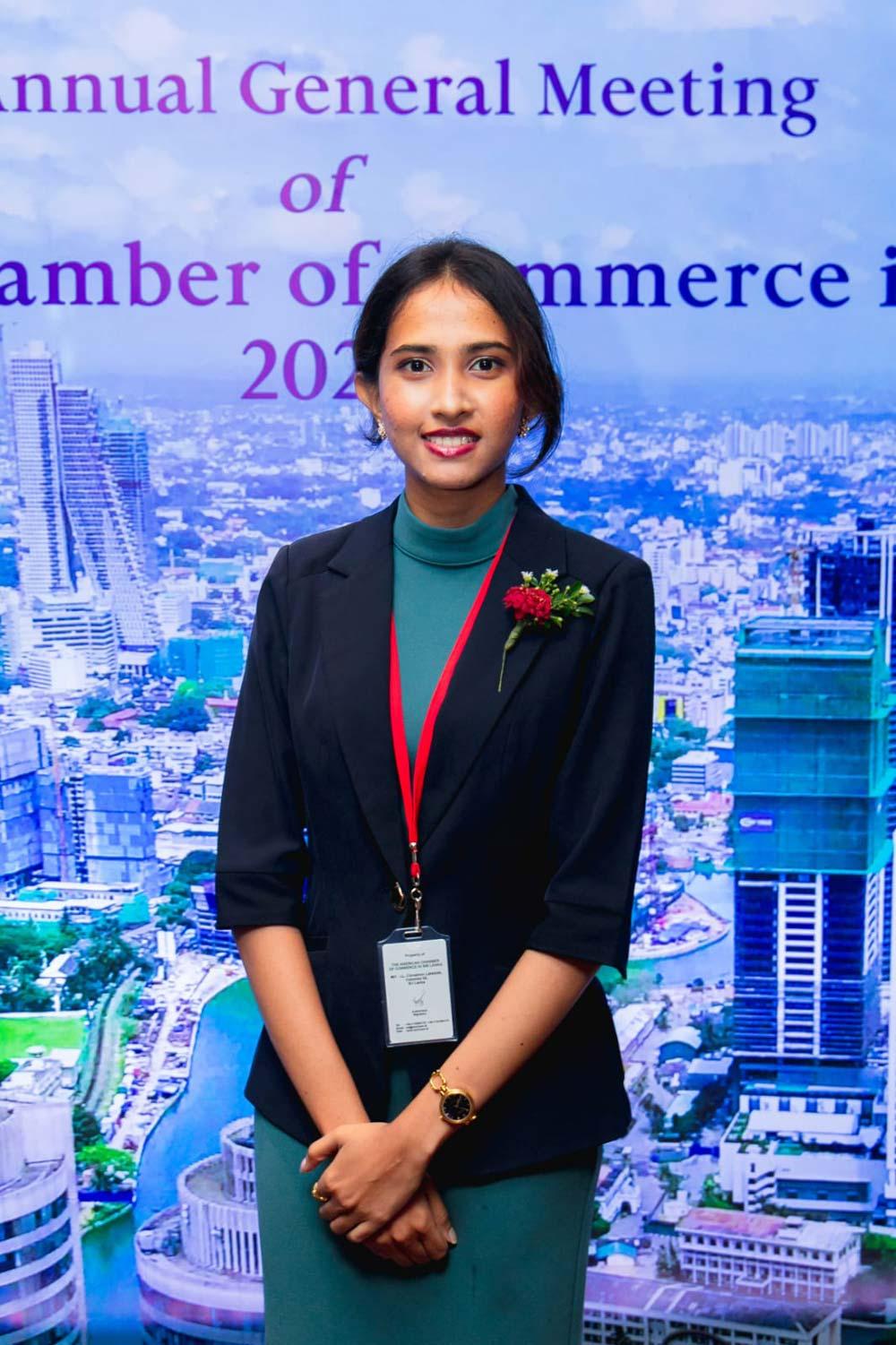
One of the most important lessons I have learned is that professionalism extends far beyond qualifications and technical expertise. It is equally about consistency, reliability, accountability and communication. When I joined AmCham Sri Lanka as an intern, it was my first exposure to a fast-paced professional environment. Although I was only required to work three days a week, I chose to be present every day because I genuinely wanted to learn and contribute. Looking back, I believe that willingness to learn created many opportunities for growth. Working within a relatively small but highly active team meant I gained experience across operations, finance, marketing, communications, publications, procurement and event management. This exposure gave me a deeper understanding of how different functions contribute to organisational success.
The corporate environment also taught me resilience and adaptability. Priorities can shift rapidly, unexpected challenges can emerge, and multiple responsibilities often need to be managed simultaneously. Learning how to remain calm, organized and solution oriented during these situations has been one of the most valuable professional skills I have developed.
Your involvement in international Model United Nations platforms and FRIWMUN reflects strong leadership and diplomacy skills. How did these experiences prepare you for managing international teams?
My journey through Model United Nations platforms was transformative. It began with a curiosity about international affairs but eventually became one of the most influential experiences of my life. Participating in International Model United Nations exposed me to global discussions and taught me how to negotiate, think critically under pressure and communicate professionally in highly competitive international environments. Winning the Best Position Paper Award in the UNHRC committee was a particularly memorable achievement that strengthened my confidence. However, my greatest growth came through FRIWMUN. I initially joined as a technical assistant and gradually progressed into leadership positions including Under Secretary General of Delegate Affairs, Chief of Staff and eventually Secretary General. Managing international teams remotely taught me valuable lessons about leadership, communication and cultural awareness. Working with individuals from different countries required adaptability, emotional intelligence and respect for diverse perspectives. These experiences taught me that leadership is not about authority. It is about listening, building trust, creating opportunities and ensuring that every individual feels valued. They also provided practical exposure to people management, crisis handling, event coordination and multicultural teamwork, skills that continue to benefit me professionally today.