IN CONVERSATION WITH DR. SEAN AMARASEKERA
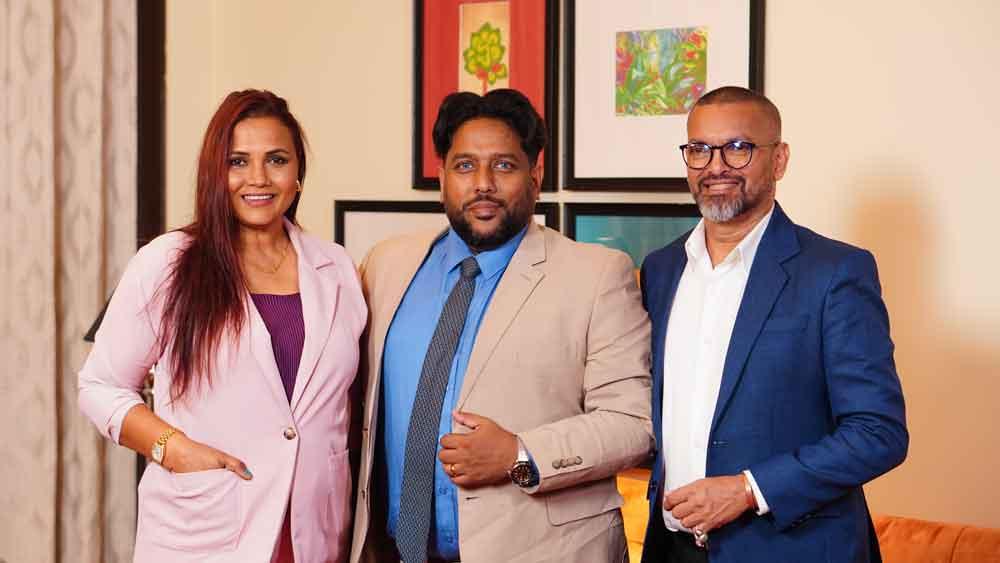
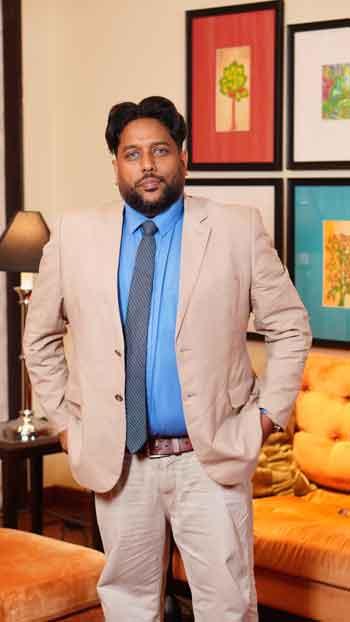 Few people successfully balance two demanding professions, but Dr. Sean Amarasekera has managed to do exactly that. A respected consultant anesthetist by profession and one of Sri Lanka's most accomplished stage actors by passion, he has spent decades saving lives in operating theatres while captivating audiences on theatre stages. Appearing on The Fame Game with Kumar de Silva and Rozanne Diasz, Dr. Amarasekera spoke candidly about medicine, theatre, family, fatherhood, and the values that have shaped his remarkable journey.
Q: You are both a doctor and an actor. Which role do you identify with more?
A: Both professions have become inseparable parts of who I am. Medicine is my profession and allows me to serve people in one of the most meaningful ways possible. Theatre, however, has always been my passion. If acting alone could provide a sustainable livelihood in Sri Lanka, I believe many stage actors, including myself, would happily pursue it full-time. Unfortunately, that is not the reality here. Medicine gives me purpose because I can genuinely improve people's lives. Theatre gives me creative fulfilment. Rather than competing with each other, they complement each other beautifully.
Q: As an anesthetist, is there still a sense of nervousness every time you put a patient to sleep?
A: At the beginning of my career, it was certainly nerve-racking. You're speaking to someone who is fully awake, and moments later you're responsible for placing them under anesthesia. That responsibility naturally creates anxiety. However, with experience comes confidence. Anesthesia is a highly scientific discipline. It is carefully controlled, monitored, and designed to be completely reversible. We administer a combination of hypnosis, pain relief, and muscle relaxation, all of which are managed with precision. People often think that putting someone to sleep is mysterious, but there is a tremendous amount of science behind every step. The goal is always to ensure the patient wakes up safely after the procedure.
Q: Have you ever had a patient who did not wake up after anesthesia?
A: Fortunately, no. I often compare anesthesia to flying an aircraft. Taking off is important, but landing safely is what truly defines a successful flight. In the same way, putting someone to sleep is only one part of the process. Ensuring they recover safely is equally important. Different procedures require different recovery times. For example, patients undergoing major cardiac surgery may remain sedated for many hours before being awakened. Every case is carefully monitored throughout.
Q: How do you reassure patients before surgery?
A: Communication is incredibly important. Patients are often frightened before surgery, so speaking calmly and reassuringly helps ease their anxiety.
When working with children, I always make an effort to learn and use their names. A person's name has tremendous emotional significance. It builds trust and creates comfort. Even when waking children after surgery, hearing their own name often helps them respond more naturally.
Q: Do your colleagues at the hospital take your acting career seriously?
A: Absolutely. In fact, many of them are genuinely interested in theatre and regularly ask about upcoming productions. Hospitals are full of creative people. Many doctors have artistic talents that people rarely get to see. Medicine itself is often described as both a science and an art. Surgery, for example, requires extraordinary precision and creativity. In operating theatres, you will often hear music playing in the background. Some enjoy classical music, while others prefer jazz or contemporary artists. There is a surprisingly strong artistic community within the medical profession.
Q: Which stage role has been closest to your heart?
A: Playing the Phantom in The Phantom of the Opera was a dream come true. It has always been one of my favourite musicals, and performing that role was a major milestone in my career. However, if I had to choose the role that felt most personal, it would be Tevye in Fiddler on the Roof. As a father of four daughters, I found myself relating deeply to Tevye's journey. Performing alongside three of my own daughters made the experience even more meaningful. Sharing the stage with family created memories that I will treasure forever.
Q: You seem to remember lengthy scripts effortlessly. How do you do it?
A: I suppose I've always had a good memory. Growing up, my parents introduced me to classic musicals, and those recordings became a part of everyday life. We listened to them repeatedly, and eventually the lyrics and dialogue simply became part of us. When you've heard beautiful writing often enough, it stays with you. Great playwrights and lyricists express emotions better than most of us ever could, and performing their words becomes a privilege.
Q: After speaking to people close to you, everyone seems to describe you as someone with very little controversy surrounding him. Who is the real Sean Amarasekera?
A: That's actually quite a difficult question. There's a famous story about Peter Sellers saying that he could play countless characters but struggled to describe himself outside those roles. Actors spend so much time becoming other people that defining themselves isn't always easy. If I had to answer honestly, I would say my family defines me more than anything else. My wife, my daughters, and my parents are the centre of my life. COVID-19 reinforced that lesson. During that period, many of us realized that family, health, and relationships matter far more than professional success or public recognition.
Q: Have you ever doubted yourself while performing on stage?
A: Every actor experiences moments of uncertainty. Sometimes a cue is missed, or a line slips your mind, but theatre teaches you to remain present and continue. Live performance has a remarkable quality. Once you're on stage, instinct takes over. Time almost feels different during a performance. Moments can seem incredibly long to the actor but pass in seconds for the audience. The beauty of theatre lies in its unpredictability. Every performance is unique because the audience influences the actors just as much as the actors influence the audience.
Q: Is there still a dream role you hope to perform one day?
A: Absolutely. One character I've always wanted to play is Sweeney Todd from Stephen Sondheim's Sweeney Todd: The Demon Barber of Fleet Street. Sondheim's work is extraordinary, and I feel his musicals deserve greater recognition here. Performing Sweeney Todd remains firmly on my personal bucket list.
Q: How do you manage such demanding schedules between medicine and theatre?
A: It certainly isn't easy. Some years have been particularly hectic, balancing hospital responsibilities while directing productions, performing in musicals, and supporting charitable theatre initiatives. Good planning helps but so does having understanding colleagues and family members who support what I do.
Q: With such a busy career, do you still make time for your wife and family?
A: Family always comes first. My wife and I make an effort to spend time together whenever possible, even if it's something as simple as going to the cinema. Life with four daughters is wonderfully busy. Between school activities, examinations, rehearsals, and daily routines, we're almost like a transport service. Despite the hectic schedule, these are precious years, and I wouldn't trade them for anything.
Q: What do your daughters mean to you?
A: Everything. Coming home after a long day and being greeted by my children is one of life's greatest joys. As my older daughters grow up, I know they will gradually become more independent. Every parent eventually has to accept that children find their own paths. As a father, I simply hope to set an example through my actions. Being present, sharing responsibilities at home, helping with everyday tasks, and treating family with love and respect are values I hope they carry into their own lives. I want them to know what a caring, dependable partner looks like through my actions rather than my words.
Q: Have you ever wanted to write your own play?
A: Writing is an entirely different discipline. I have directed productions, but writing requires a very different creative process. I admire playwrights immensely because creating compelling stories from scratch is incredibly challenging.
Theatre has always been a collaborative art form for me. I enjoy working with talented people, sharing ideas, and learning from others. No single person creates a successful production alone.
Q: Have you considered acting in Sinhala productions?
A: While I appreciate the richness of the Sinhala language, I don't feel sufficiently fluent to perform comfortably in Sinhala theatre. Medical training has introduced me to many complex Sinhala medical terms, but acting demands a much deeper level of linguistic confidence. It's something I respect greatly, and I believe actors should perform in the language they can express themselves most naturally.
Q: As President of the Workshop Players, how would you describe Jerome de Silva's contribution to Sri Lankan theatre?
A: Jerome has made an enormous contribution to English theatre in Sri Lanka. I first worked alongside him as a fellow actor before later collaborating with him as a director. Throughout the years, he has consistently shared his knowledge with younger performers and supported countless productions. Even during periods of ill health, he remained committed to teaching and mentoring the next generation. His willingness to pass on decades of experience ensures that his contribution will continue long into the future.
Q: Finally, what role have your parents played in your journey?
A: I owe them everything. They supported every ambition I had, whether it was becoming a doctor or pursuing theatre. They never asked me to choose between my dreams. That encouragement allowed me to build a life where both professions could coexist. Looking back, I realise that none of my achievements would have been possible without their faith, my family's support, and the many people who believed in me along the way.
------------------------
As the conversation drew to a close, it became evident that Dr. Sean Amarasekera is far more than an accomplished consultant anesthetist or an award-winning stage actor. His journey is one of balance, humility and purpose. Whether he is caring for patients in the operating theatre or bringing memorable characters to life on stage, his commitment to excellence remains unwavering. Grounded by the unwavering support of his family and driven by a genuine passion for both medicine and the performing arts, Dr. Amarasekera continues to inspire through his dedication, compassion and authenticity. His story is a reminder that success is defined not by choosing between two passions but by embracing both with equal commitment and integrity.