John Balmond’s Search for the Soul of Sri Lankan Hospitality
By Thaliba Cader
On Christmas Eve, while families gathered around dinner tables and cities settled into the comforting rhythm of the holidays, John Balmond was walking through an unfinished building on Sri Lanka's southern coast. He moved quietly from room to room, studying the grain of timber, adjusting finishes, checking proportions, and questioning whether every detail fulfilled the vision he had carried for years. That was just one example of his focus.
Few guests would ever notice the curve of a handcrafted headboard or the precise relationship between a balcony and the horizon. Fewer still would imagine that these seemingly inconspicuous decisions occupied the thoughts of the man behind the project on one of the year's most celebrated evenings. Yet that Christmas Eve tells us almost everything about John Balmond.
It reveals a designer who understands that architecture is never defined by its largest gestures. Rather, it is shaped by countless small decisions that collectively determine whether a place merely functions or quietly lingers in memory. It reveals an entrepreneur who refuses to surrender creative ownership once construction begins. Most importantly, it reveals an optimist; one who has repeatedly chosen belief over certainty, even when logic suggested otherwise.
Across more than fifteen years in Sri Lanka, John has established himself as one of the country's most distinctive voices in hospitality design and boutique development. His projects, including Palagama Beach, Gal Oya Lodge, Jetwing Surf, and Southbeach Weligama, resist the temptation to imitate international luxury. Instead, they search for something far more enduring: an architecture that grows naturally from Sri Lanka's landscapes, materials, and communities.
Luxury, in John's world, is not measured through imported marble or theatrical excess. It is found in the confidence to allow local craftsmanship, tropical light, and generous space to speak for themselves.
That philosophy has become increasingly rare within global hospitality, where destinations often appear interchangeable despite occupying vastly different cultures. Walk into enough contemporary hotels around the world, and the experience begins to blur into familiar palettes, fashionable furniture, and predictable notions of sophistication. John has spent much of his career resisting precisely that homogenization.
Ironically, his journey towards creating unmistakably Sri Lankan places began thousands of kilometres away. Growing up in London, creativity was not treated simply as a profession but as a way of understanding the world. His father, Cecil Balmond, occupies an extraordinary place within contemporary architecture and engineering, celebrated internationally for redefining the relationship between mathematics, structure, and artistic expression.
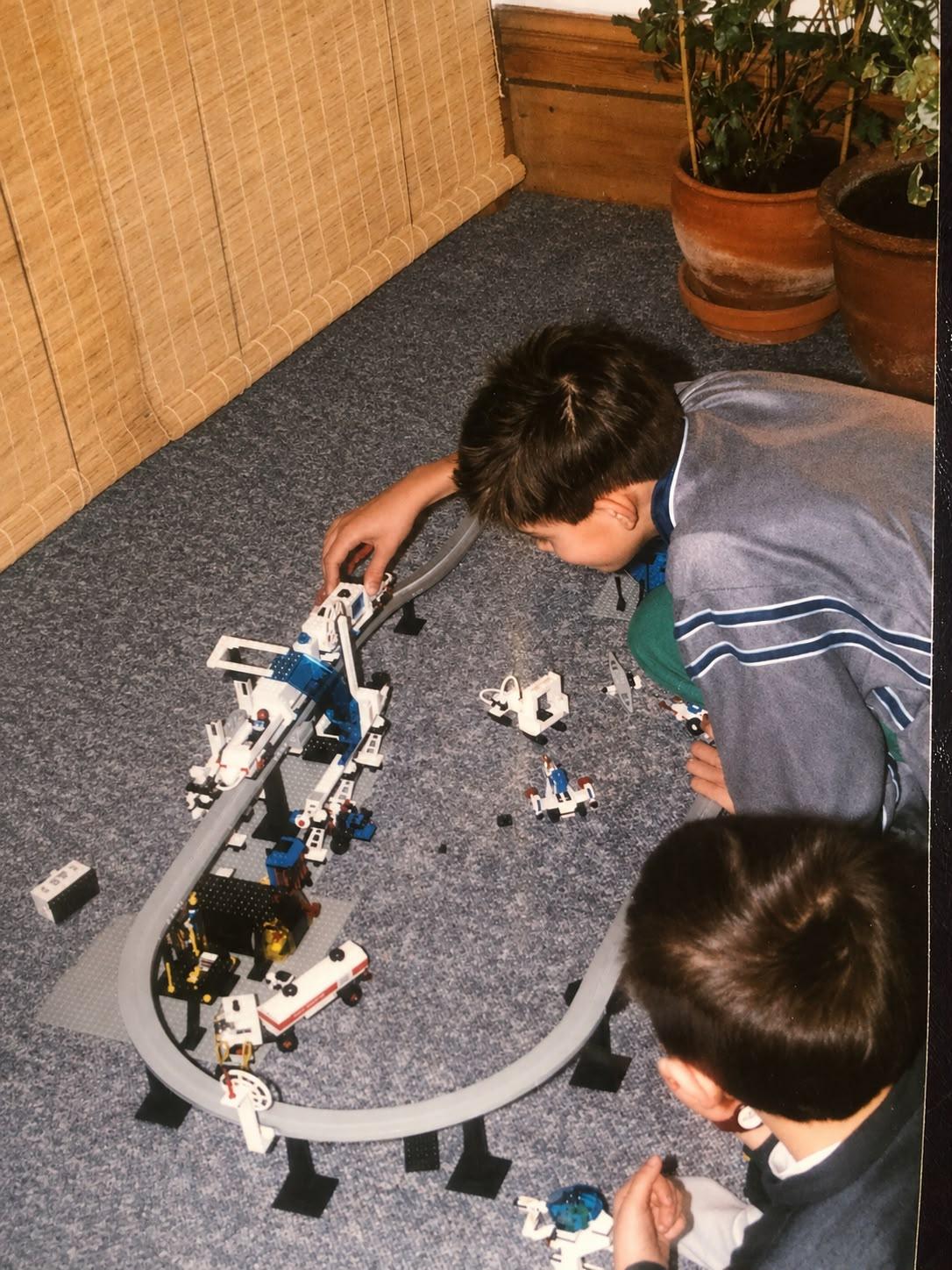
Yet within the Balmond household, intellectual achievement rarely announced itself with ceremony. John often recalls sitting beside his father as drawings slowly emerged across blank sheets of paper. Rather than explaining what he intended, Cecil would simply ask, "What do you think?"
It was an education built not upon instruction but invitation. Rather than encouraging imitation, his father challenged him to discover his own way of seeing. Paradoxically, Cecil also discouraged him from entering design professionally. Creative work, he believed, demanded total commitment. Unless it became impossible to imagine another life, it was better not pursued at all. The advice was not intended to diminish ambition but to protect it.
John listened.
Instead of following directly into architecture, he entered the corporate world, building a successful career within London's advertising industry. For more than a decade, he worked with international clients, managing campaigns that demanded communication and relentless execution. The experience proved invaluable. Advertising taught him how to coordinate multidisciplinary teams, negotiate competing priorities, and deliver complex projects under unforgiving deadlines. It cultivated commercial discipline that many designers never acquire.
Yet success brought with it an uncomfortable realization. He had become exceptionally skilled at helping others realise their ambitions while quietly neglecting his own. The corporate world rewarded efficiency. His imagination demanded creation.
There comes a moment in many careers when competence is no longer enough. For John, that moment arrived gradually. Childhood visits to Sri Lanka had never faded from memory. The island's landscapes remained vivid long after he returned to London. More importantly, so too did its extraordinary traditions of building.
Unlike many visitors captivated by beaches or wildlife alone, John found himself fascinated by ordinary village architecture. Palm leaves woven into walls. Timber shaped entirely by hand. Roofs constructed from locally gathered materials whose forms had evolved through centuries of practical wisdom.
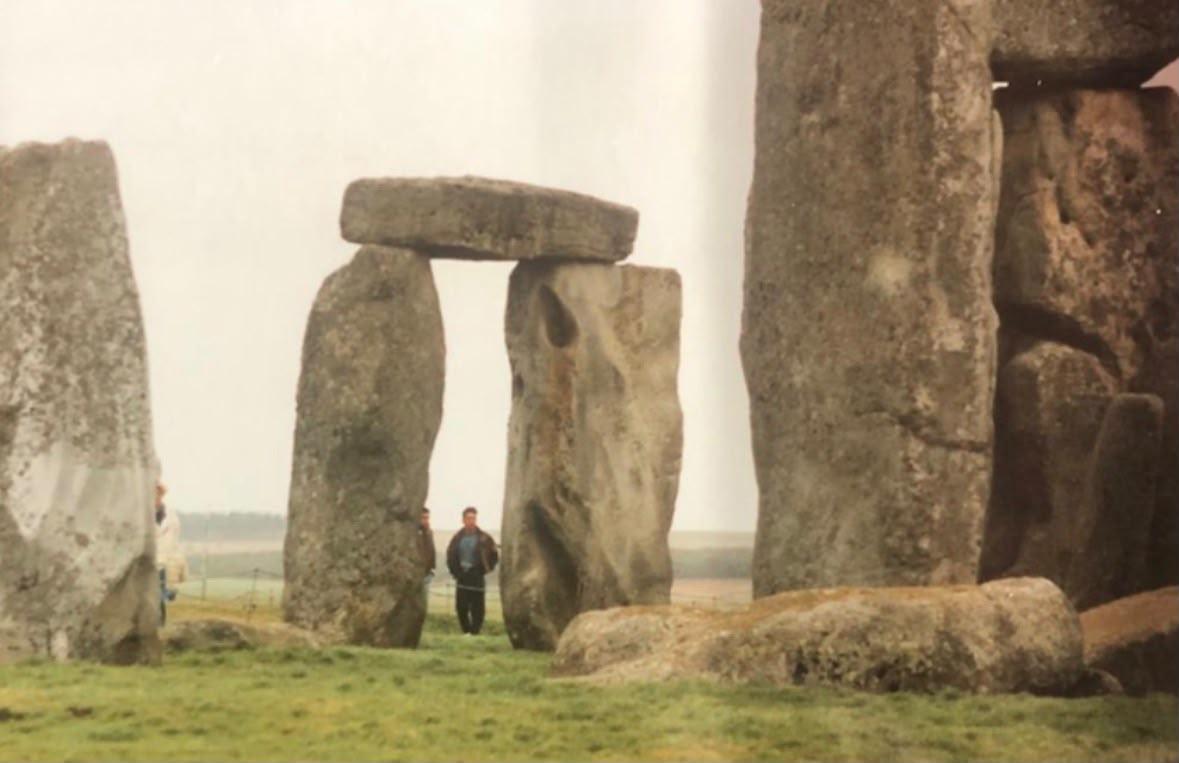
He recognized something many overlooked. These were not primitive structures awaiting modernization. They represented architecture at its most intelligent, responding naturally to climate, available resources, and human need without unnecessary excess.
The longer he remained in London, the stronger that fascination became. Eventually, curiosity evolved into conviction.
In 2009, John left behind the certainty of corporate life and moved permanently to Sri Lanka. It was a decision that bewildered many around him. He possessed no formal architectural education. He had never designed a resort. He knew little about construction or tourism.
Friends questioned the wisdom of abandoning a secure career for an uncertain future on an island where he intended to create something he had never built before.
His response was remarkably simple. They were right. He knew almost nothing. What he did possess, however, was belief.
Not blind optimism, but an instinctive confidence that Sri Lanka offered possibilities few others had yet recognised. That belief would soon be tested. His first project would ask him not simply to design buildings, but to rethink what architecture itself could become. If leaving London required courage, building Palagama Beach demanded something even greater: humility.
The island became his classroom. Its craftsmen became his teachers. Every conversation with a carpenter, mason, or thatcher revealed knowledge that no textbook could have offered. These were techniques refined not in design studios but through generations of responding to Sri Lanka's climate, geography, and materials.
Palagama Beach, near Kalpitiya, became the first expression of this philosophy. Rather than imposing an imported aesthetic, John chose to reinterpret vernacular architecture with contemporary restraint. Cabanas emerged from handcrafted timber, woven palm thatch, and open-air planning that encouraged sea breezes to replace mechanical cooling wherever possible.
Luxury was defined not by excess but by authenticity.
The project also taught him an important lesson. People rarely remember buildings in isolation. They remember how those buildings made them feel.
Architecture, he realized, was ultimately about memory.
That understanding became even more profound when he encountered another landscape that would transform both his career and his philosophy.
Gal Oya.
Nestled beside one of Sri Lanka's largest reservoirs, where elephants famously swim between forested islands, the site possessed a raw beauty that felt almost untouched by time. Many questioned the wisdom of creating a lodge there. It was remote, difficult to access, and lacked the infrastructure developers typically seek.
For John, those perceived disadvantages were precisely its greatest strengths. Extraordinary places, he believed, should not be simplified for convenience. They should be experienced on their own terms.
Construction demanded complete immersion. There was no electricity. No running water. No comfortable office from which decisions could be made remotely. Instead, John lived alongside the people building the lodge.
Days unfolded beneath intense tropical heat as villagers mixed cement by hand, lifted enormous tree trunks into place, and solved practical problems through experience rather than engineering software. Evenings were spent in conversations that gradually dissolved the distance between designer and builder.
Those months fundamentally reshaped his understanding of creativity. Architecture was not the solitary act often portrayed in glossy magazines. It was profoundly collaborative.
The designer might sketch the first idea, but carpenters, welders, artists, masons, and countless others ultimately gave that idea physical life. Every successful building became a collective achievement. That respect for craftsmanship continues to distinguish John's work today.
At Gal Oya, the indigenous Vedda people became collaborators in shaping the visitor experience. Their intimate understanding of the forest and its rhythms brought a depth of authenticity impossible to manufacture.
Hospitality, John realised, extends far beyond architecture.
It encompasses people, stories, and place. The buildings merely provide the stage.
This philosophy explains why his completed projects often resist fashionable trends. Rather than pursuing visual spectacle, they create quiet confidence. Interiors remain restrained. Materials retain their natural texture. Views are carefully framed instead of overwhelmed. Space is allowed to breathe.
There is an unmistakable calmness running through his work. It reflects not minimalism for its own sake but an understanding that landscapes often speak more eloquently than architecture ever could.
By the time opportunities began arriving from larger hospitality brands, Balmond had already established a design language distinctly his own. One of the most significant came through Jetwing Surf in Pottuvil.
Again, he returned to handcrafted construction, reimagining traditional Sri Lankan cabanas through contemporary forms. Sweeping curves replaced conventional boxes, demonstrating that vernacular architecture could evolve without abandoning its identity.
The project earned international recognition, including honours at the Asia Property Awards, yet the award itself seemed less significant than what it represented. Sri Lankan design had begun attracting global attention without pretending to be anything other than Sri Lankan.

As Balmond's reputation grew, another development quietly emerged alongside his architectural practice. He was becoming an entrepreneur. Increasingly, he found himself drawn towards development because it offered something architects often struggle to preserve: creative control.
When a designer also assumes responsibility for finance, planning, investment, and delivery, difficult compromises inevitably arise. Yet so too does the opportunity to protect the original vision from being diluted.
His years in advertising suddenly revealed their unexpected value.
Skills once acquired in London's corporate world now became essential foundations for building ambitious projects in Sri Lanka. Looking back, what once appeared a detour now seemed like preparation. The creative and commercial sides of his career had never been separate journeys. They had always been moving towards each other.
That convergence would find its fullest expression on a stretch of coastline in Weligama, where John would attempt his most ambitious project yet.
Southbeach would become more than another boutique development.
It would become a manifesto for everything he had learned.
Southbeach Weligama began, quite literally, as an empty piece of beachfront land. There was an abandoned house that had stood largely untouched for years, a sweep of sand facing the Indian Ocean, and, beyond that, the promise of a coastline that was only beginning to reveal its potential.
Where many developers saw another opportunity for luxury real estate, Balmond saw something more nuanced. He envisioned a place that belonged as much to Sri Lanka's creative community as it did to international travelers.
"I always wanted it to be a cool place to hang out," he has said, describing his earliest ambitions for the project.
The statement appears deceptively casual. Behind it sits an unusually sophisticated understanding of hospitality. For John, hotels should never exist solely as destinations for overnight guests. The most memorable places become part of the cultural fabric of their surroundings.
They attract musicians, artists, surfers, entrepreneurs, neighbors, and travelers with equal ease. They blur the line between hotel and community, between visitor and resident.
That philosophy is immediately evident throughout Southbeach.
The lobby functions almost like a contemporary gallery, filled with work by Sri Lankan artists whose pieces are allowed to speak without theatrical staging. Furniture has been carefully selected to complement rather than dominate the architecture. Large openings dissolve the boundary between interior and exterior, inviting the landscape to become part of everyday life.
One of the building's most striking features is not architectural at all.
It is musical.
Hidden above the coastline is a recording studio, an idea that initially surprised many observers. Yet for John, music has always been inseparable from architecture.
Growing up, vinyl records formed part of the soundtrack of daily life. His father's extensive collection introduced him to everyone from The Beatles and The Rolling Stones to jazz, blues, and classical composers. Music taught him rhythm, atmosphere, and emotion long before he consciously understood design.
Architecture, he believes, possesses a rhythm of its own.
Like music, good architecture understands pacing. It creates anticipation before revelation. The recording studio therefore represents far more than an additional amenity. It embodies John's conviction that creativity flourishes when different disciplines meet.
He imagines internationally acclaimed musicians retreating to Sri Lanka not merely for leisure but to write, collaborate, and produce new work alongside local artists. The island, in his mind, possesses all the qualities necessary to become a creative sanctuary, offering privacy, natural beauty, and an authenticity increasingly difficult to find elsewhere.
Few chapters in Sri Lanka's recent history have been as turbulent as the economic crisis that unfolded while Southbeach was under construction.
Inflation accelerated at extraordinary speed. Foreign exchange shortages paralyzed supply chains. Daily power cuts interrupted businesses across the country. Construction materials became almost impossible to price with confidence as costs shifted dramatically from one week to the next.
Steel prices, John recalls, tripled almost overnight. Board meetings took place under candlelight because there was no electricity. Many developers paused their projects indefinitely. Others abandoned them entirely.
John considered doing neither.
Construction slowed where necessary, but work continued because he believed momentum itself carried value. Investors who had placed their confidence in Sri Lanka deserved evidence that confidence could be justified.
Halting the project completely, he feared, would undermine belief far more profoundly than enduring temporary financial losses.
Looking back today, Southbeach stands not simply as a completed development but as a monument to persistence.
When John speaks about Sri Lanka, he rarely begins with statistics or market forecasts. Instead, he talks about people.
The carpenter who finally mastered an impossibly curved timber chair after repeated attempts. The local sculptor in Weligama whose extraordinary work now occupies pride of place within Southbeach's lobby. The villagers who built Gal Oya Lodge entirely by hand. The musicians he hopes will one day collaborate with Sri Lankan artists overlooking the Indian Ocean.
These stories reveal where his attention naturally rests.
Buildings matter. People matter more.
It is a holistic way of thinking that reflects John's own journey. He is neither purely an architect nor purely a developer. Neither solely an entrepreneur nor solely a creative. Instead, he moves comfortably between those identities, recognizing that contemporary placemaking demands all of them at once.
The finest buildings are rarely those that demand admiration. They are the ones that quietly become part of people's lives, leaving behind memories that endure long after the journey has ended.
For John Balmond, architecture has never simply been about constructing places.
It has always been about constructing possibility.