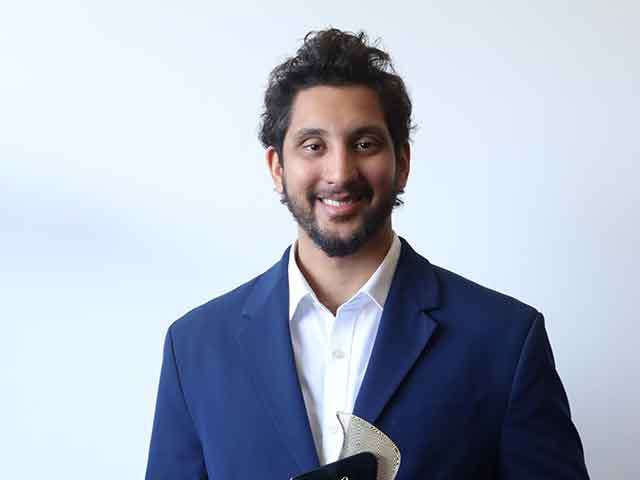
Understanding Minds, Empowering Futures: In Conversation with Teshani Attanayake

At a time when conversations around mental health and child development are becoming increasingly important, young professionals like Teshani Attanayake are stepping forward to make a meaningful difference. A Trainee Child Psychologist, youth advocate, and founder of the charitable initiative Sereni, Teshani represents a new generation of changemakers who combine academic knowledge with empathy, purpose, and action. Her journey has been shaped by a deep curiosity about human behaviour, a commitment to supporting children with diverse needs, and a desire to create lasting social impact. From working with neurodivergent children to contributing to community development initiatives and advocating for improved early childhood education, she continues to demonstrate how passion and perseverance can drive meaningful change. In this conversation, Teshani reflects on her professional journey, the inspiration behind Sereni, and her vision for empowering future generations through mental health advocacy, education, and community engagement.
Q: What first inspired you to pursue a career in psychology, and how has that passion evolved over the years?
Growing up, I was like many children who dream of becoming doctors. More specifically, I wanted to be a surgeon because I was fascinated by the human body and curious about how different organs functioned together. Over time, however, that curiosity gradually shifted from understanding the physical workings of the body to understanding what happens inside the mind. I became increasingly interested in questions such as why people think the way they do and why they behave differently in similar situations. At that stage, I was not fully aware that psychology existed as a distinct field of study, but I found myself naturally drawn towards understanding human thoughts, emotions, and behaviour. A significant influence on this growing interest was my experience of growing up alongside one of my close childhood friends who has Down syndrome. Watching her interact with the world sparked a deep sense of curiosity in me. I wanted to understand how she perceived her surroundings and experienced life differently from others. That experience strengthened my desire to look beyond surface-level behaviour and appreciate the complexities of individual experiences. Today, as I work with children with neurodivergent needs, that passion has only deepened. Every child I meet has a unique story and perspective. Working with them requires patience, empathy, and a willingness to learn continuously. Psychology is an evolving field, and every experience reinforces my belief that understanding the human mind is both a lifelong journey and a meaningful way to contribute to society.
Q: You have academic backgrounds in both Psychology and Teaching English as a Second Language. How have these two fields complemented each other in your professional journey?
After completing my Advanced Level examinations, I pursued a Higher National Diploma in Child Psychology, which later progressed into a BSc in Psychology from the University of Northampton in the United Kingdom. Studying Teaching English as a Second Language (TESL), however, was not initially part of my plan. It was a path I discovered after deciding to enrol at the University of Kelaniya.
Initially, I did not see any obvious connection between psychology and TESL. They appeared to be entirely separate disciplines. Over time, however, I realised that my TESL background became an invaluable tool that enabled me to connect with children in more practical and meaningful ways.
Language plays a fundamental role in learning, emotional expression, and social interaction. Through TESL, I gained insights into communication and learning processes that have directly supported my work with children who experience speech, language, and comprehension difficulties. It has also strengthened my understanding of how communication influences cognitive and emotional development.
Looking back, I am grateful that I embraced both educational opportunities. Experiencing both private and state university systems gave me broader perspectives on different learning environments and academic approaches. What I once thought were unrelated fields have ultimately complemented each other in ways I never anticipated and have significantly enriched my professional journey.
Q: What has been the most rewarding aspect of your work as a Trainee Child Psychologist?
The most rewarding aspect of my work is witnessing children become increasingly independent and confident in their abilities. Many children with neurodivergent needs initially require significant support, guidance, and reassurance. Seeing them gradually develop the skills to complete tasks independently and rely less on external assistance is deeply fulfilling.
I believe our role is not to create dependence but to equip children with the skills and confidence they need to navigate life more independently. Every milestone, no matter how small, represents meaningful progress.
Working with children with neurodivergent needs can also be emotionally demanding because progress often requires sustained effort and carefully tailored support. However, seeing them discover their strengths and achieve goals that once seemed challenging makes every effort worthwhile.

Equally rewarding is the relationship we build with parents and families. Supporting a child is a collaborative process, and listening to parents' experiences and concerns often reminds me that our work extends beyond the child alone. Knowing that I can contribute to a child's growth while also providing reassurance and support to their family has been one of the most fulfilling aspects of this profession.
Q: Can you share a memorable experience that reinforced your commitment to supporting children's mental wellbeing?
One experience that remains particularly memorable involved a young boy who was frequently labelled as 'difficult' because of his behaviour and emotional responses. I had the opportunity to work with him through several therapy sessions and wanted to understand the reasons behind his behaviour rather than focusing solely on the behaviour itself. As I spent more time with him, I realised that many of his reactions stemmed from feeling misunderstood and unheard. Instead of trying to correct his behaviour immediately, I focused on building trust, listening to him, and creating a safe environment where he felt accepted.
Over time, I began to see a different side of him. As our relationship developed, his behaviour gradually changed. He became more engaged, responsive, and comfortable expressing himself. The people around him also noticed the transformation, and his family was incredibly happy with the progress he had made. That experience reinforced my belief that behaviour is a form of communication. Behind every behavioural challenge is often an emotion, experience, or unmet need that deserves understanding and compassion. It reminded me that children should always be understood before they are judged.
Q: How did your experience at UNDP Sri Lanka shape your perspective on community development and social impact?
Working for the United Nations had always been a long-standing aspiration of mine, so my internship at UNDP Sri Lanka was an incredibly valuable experience and an important first step towards that goal. The experience gave me practical insights into community development and social impact. I realised that development work is not solely about policies or large-scale programmes. Rather, it is about ensuring that these initiatives create meaningful and measurable improvements in people's lives. As a Coordination and Support Assistant at the Country Office, I had the opportunity to work across different teams and support the Resident Representative's Office. This provided exposure to both the operational and administrative dimensions of development work and gave me a deeper understanding of how different stakeholders collaborate to achieve common objectives. Most importantly, the experience demonstrated how coordinated efforts at various levels can collectively produce meaningful social impact. The lessons I learned at UNDP continue to influence the way I approach my work today.
Q: What motivated you to establish Sereni, and what challenges have you faced in building the initiative?
Sereni was established in 2022 with the vision of uplifting early childhood education in Sri Lanka. As I became increasingly involved in working with children on an individual level, I began thinking about how I could create a broader and more sustainable impact within communities.
I have always been passionate about psychology and early childhood development, and Sereni became a way of translating that passion into practical, community-centred action. Although the initiative originated from my own vision, I have also been fortunate to receive unwavering support from a close childhood friend who has been actively involved throughout this journey.
Our work focuses on several interconnected aspects of child development, including preschool infrastructure, health and nutrition, and emotional and psychological wellbeing. We also work closely with teachers, parents, and communities because we believe that supporting a child requires a collective effort.
Over the past few years, we have implemented several small-scale projects across the Western Province and are now working towards expanding our reach to other parts of the country.
One of our greatest challenges has been securing sustainable funding and resources. Finding consistent financial support is difficult, particularly for emerging initiatives. Nevertheless, through fundraising activities and generous donations, we have been able to continue our projects and support the communities we serve.
As Sereni grows, our goal is not simply to expand geographically but also to strengthen the quality, sustainability, and long-term impact of our work.
Q: What advice would you give to young people who want to build meaningful careers while making a positive impact in their communities?
I would encourage young people to remain open to learning, even when life does not unfold according to their original plans. Most of us begin with a specific vision for our future, and having goals is important because they provide direction and motivation. However, meaningful careers are rarely built in a straight line. They are shaped by experiences, opportunities, challenges, and our willingness to adapt. Sometimes the experiences that seem least connected to our goals end up contributing the most to our personal and professional growth. I also believe that creating an impact does not always require grand gestures. Meaningful change often begins through small and consistent actions within our own communities. Real change takes time, and it unfolds gradually through perseverance and genuine commitment. Finally, guidance and support from others play an essential role in our journeys. Being open to feedback, learning from mentors, and embracing constructive criticism allows us to grow beyond our own perspectives. I have been fortunate to receive immense support from my family and mentors, and opportunities through initiatives such as New Generation Sri Lanka have broadened my understanding of leadership and community engagement. Ultimately, a meaningful career is built through continuous learning, adaptability, consistency, and a genuine commitment to creating positive change wherever we are.