In Conversation with Chandi Dharmaratne
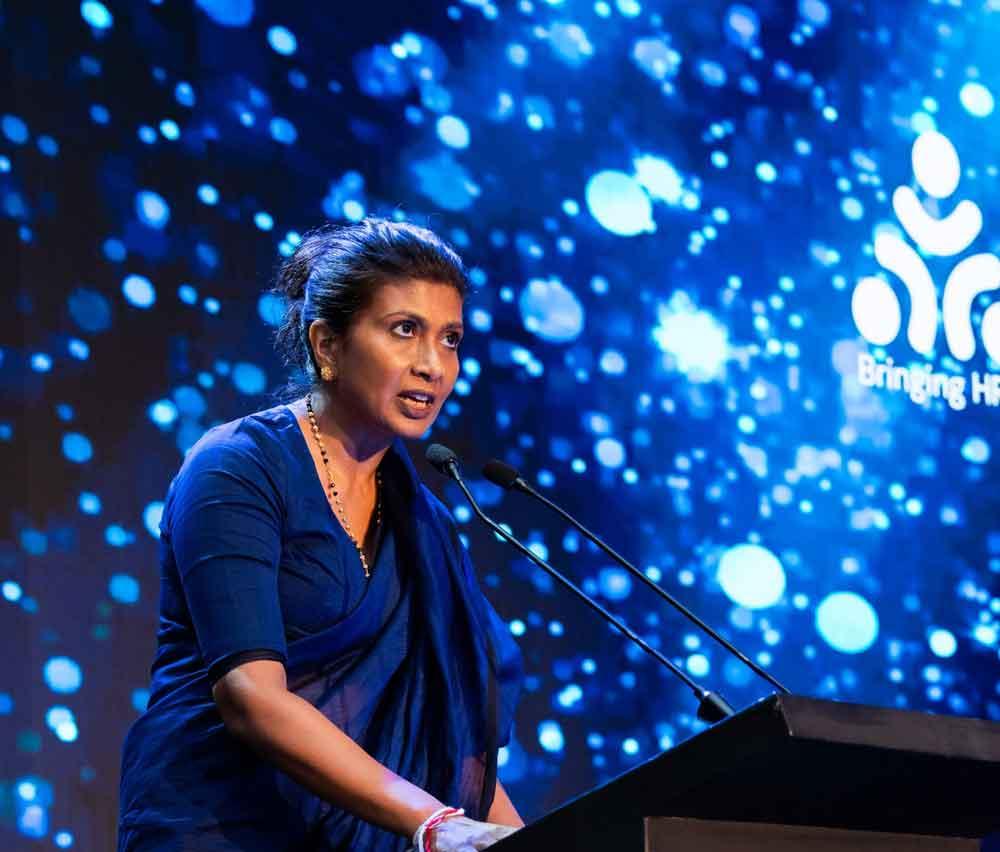
HER STORY, HER STRENGTH. BY: DR. SULOCHANA SEGERA
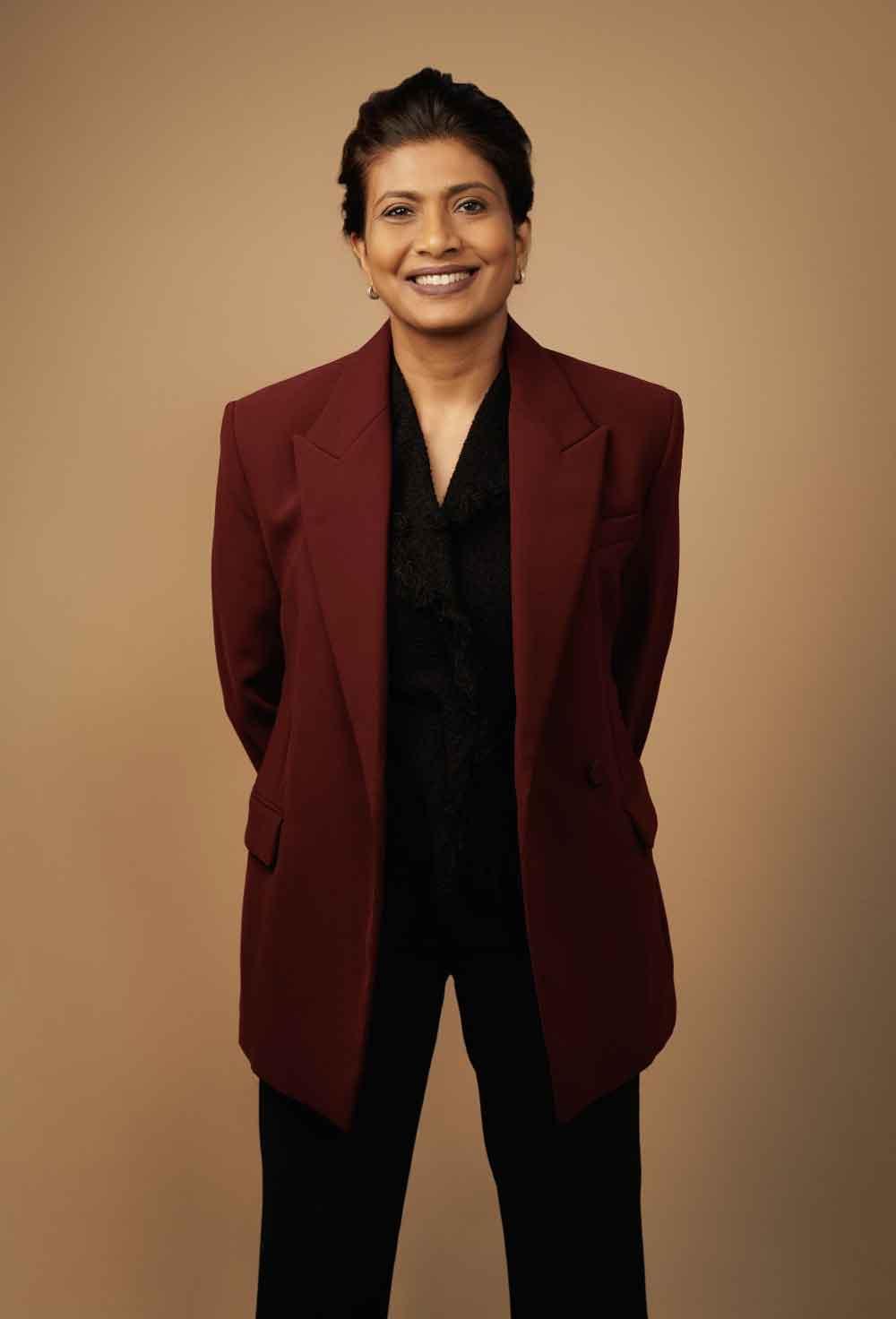
With a career spanning more than 25 years across human resources, leadership, technology, entrepreneurship and organizational transformation, Chandi Dharmaratne has built a professional journey shaped by curiosity, courage and a deep belief in people. From beginning her career in New York to holding leadership roles across Sri Lanka, India, Malaysia, Indonesia, Australia and the Philippines, her experience has given her a truly global perspective on what it means to lead. Yet for Chandi, leadership has never been about titles or reaching a particular destination. It is an ongoing responsibility to learn, listen and remain worthy of the trust others place in you. A former Chairperson of the Lankan Angel Network and a passionate advocate for developing people and creating opportunity, she speaks candidly about leadership, workplace culture, digital transformation, entrepreneurship, family and the values that have guided her journey.
Looking back over your remarkable career spanning more than 25 years, what defining moment made you realize that leadership was your true calling?
Honestly, I do not think leadership works that way. I do not believe there is necessarily one defining moment when you suddenly realize you have become a leader. Leadership is a becoming, and it is never really finished. For me, it begins the moment you realize that someone else's wellbeing, growth or future rests, even partly, in your hands, and you make a conscious choice to hold that responsibility with care. Over the past 25 years, I have not found one defining moment. I have found a thousand small ones. Some were moments of success, when I saw people grow, step into opportunities and achieve things they perhaps did not initially believe were possible. Others were moments when I got things wrong. Those experiences taught me just as much, if not more. Leadership is not about always being right or having every answer. It is about being trustworthy enough that people feel safe walking beside you, even when you stumble. It is about having the humility to acknowledge mistakes, learn from them and keep moving forward. So, I do not think of myself as someone who became a leader at a particular point in time. There is no arrival. I am still learning how to be worthy of the people who place their trust in me, and I genuinely hope I never stop.
You began your career in New York before returning to Sri Lanka. How did those international experiences shape your leadership philosophy?
New York taught me two lessons that I still carry with me today. The first was humility. There will always be someone who knows more than you, has more experience than you or sees something from a perspective you have never considered. I learned not to find that intimidating or discouraging. In fact, it is incredibly freeing because it means there is always something more to learn. The second lesson was about belonging. I worked alongside Ivy League graduates and highly accomplished entrepreneurs, people whose intelligence, ambition and experience challenged me to rise to an entirely new level. It would have been very easy to feel intimidated or to question whether I belonged in those rooms. Instead, I learned something that has stayed with me throughout my career. Where you come from does not determine your worth or your ability to contribute.
You have to show up with confidence, be willing to learn and know that your perspective has value. That experience gave me the confidence to walk into unfamiliar environments without feeling that I had to become someone else to belong there.

Having led organizations across Sri Lanka, India, Malaysia, Indonesia, Australia and the Philippines, what cultural differences have influenced your approach to leading people?
Working across different countries and cultures has taught me that the fundamentals of good leadership do not really change. Authenticity matters everywhere. Developing people matters everywhere. Creating opportunities for individuals to learn, grow and fulfil their potential is universal. What does change is how you communicate, connect and build alignment. Every culture has its own values, expectations and ways of interacting. As a leader, I believe it is my responsibility to understand those differences rather than expecting everyone else to adapt to my way of working. You have to listen and observe. You need to understand what motivates people, how they communicate and what trust looks like within their cultural context. Leadership cannot be a one size fits all approach. Digitalization has also transformed the way we work globally. Many of the barriers that once made international collaboration difficult have quietly disappeared. Today, teams can work across borders and time zones far more seamlessly. But technology does not replace cultural understanding. If anything, it makes the ability to connect authentically with people even more important.
As an HR leader with decades of experience, how do you view the current state of workplace harassment? Do you believe organizations are doing enough to create truly respectful and psychologically safe workplaces?
Honestly, I think the picture is mixed. For many organizations, harassment prevention is still driven largely by compliance or client requirements. It appears on an ESG checklist and is addressed because it has to be, rather than because the organization genuinely believes in creating a safe and respectful workplace. One thing I have realized over the years is that a policy tells you an organization is compliant. It does not tell you whether an employee actually feels safe. Those are two very different things, and we often make the mistake of treating them as though they are the same. Having a policy is only the starting point. Employees need to know that if they speak up, they will be heard. They need confidence that concerns will be taken seriously and handled responsibly. Some organizations have moved beyond compliance. They are training people proactively, creating trusted reporting mechanisms and, importantly, acting on what is reported rather than simply documenting it. To me, that is the real marker of organizational maturity. Compliance gives you a document. Trust gives you a workplace where people genuinely feel safe.
What role should CEOs, boards and senior leaders play in preventing workplace harassment, rather than leaving it solely to HR?
Prevention has to start at the top. CEOs, boards and senior leaders set the tone for what is acceptable within an organization. That cannot happen only through a policy document or an annual training session. It has to be visible in how leaders behave, the decisions they make and the standards they consistently uphold. Leaders must be willing to hold people accountable when incidents occur, regardless of seniority or position. They need to invest in proper training and ensure that reporting channels are genuinely trusted. At the same time, the process itself must be fair and transparent for everyone involved. Harassment prevention should protect people. It should never become a mechanism that can be misused to unfairly penalize someone without a fair process. HR can design policies, processes and systems, but those systems only work when leadership stands behind them. Without leaders modelling respectful behaviour, taking concerns seriously and protecting the integrity and fairness of the process, even the best designed systems will eventually fail.

Digital transformation has become a necessity rather than a choice. What advice would you give organizations struggling to embrace digital change while keeping people engaged?
Start with why, not what. People do not necessarily resist change itself. Very often, they resist change they do not understand. If you introduce a new technology or system without explaining why it matters, people naturally become uncertain about what it means for them. I have always made it a point to explain the value behind transformation. What is the return on investment? What problem are we solving? How will this improve the organization? Most importantly, what does it mean for the people expected to use it? The next step is understanding who will be impacted and where the real capability gaps exist. I believe strongly in investing in reskilling and cross skilling before rolling out transformation, not after. That sequence matters. People need to feel equipped for the change rather than feeling as though technology has simply arrived and they are expected to catch up. When organizations treat digital transformation as an exercise in building capability rather than simply implementing technology, they create a workforce that is more confident, agile and future ready.
As the former Chairperson of the Lankan Angel Network, what qualities do you look for in entrepreneurs and startups with the potential to succeed?
I look for confidence, but never arrogance. I am interested in entrepreneurs who can sit across the table from someone who may know more than they do and genuinely listen. The idea matters, of course. The market potential matters. But over time, I have learned that the person behind the idea is often just as important. I look for people who keep learning and who are self-aware enough to know what they do not know. I also believe entrepreneurs need to want it big. I do not mean success purely in financial terms. I mean having the courage to pursue the full potential of an idea rather than settling immediately for the safest, smallest version of it. Passion and grit may get an entrepreneur started, but they are not enough on their own. Confidence, collaboration, adaptability and a genuine hunger to learn are often what determine how far they can ultimately go.
Today's younger generation places great importance on work life balance and mental wellbeing. Do you see this as a positive shift, and how can organizations support it without compromising productivity and accountability?
Yes, absolutely. I see it as a positive shift and, honestly, one that was long overdue. For many years, we equated the number of hours someone spent sitting at a desk with commitment and productivity. I do not think that was ever the right measure. The key is finding the right balance between flexibility and accountability. Give people the autonomy to manage how they work, but at the same time, be very clear about outcomes, responsibilities and expectations. Wellbeing and productivity are not opposing forces. A team that feels mentally healthy, respected and genuinely supported is often able to perform better, not worse. Where organizations sometimes get it wrong is by treating the conversation as though they have to choose between caring for people and achieving results. You can do both.
The organizations that get this right create cultures where people are trusted to deliver and supported while they do it. That combination of autonomy, clarity and care can be incredibly powerful.
As a wife and mother, what values have you tried to instil in your own family, and how have those values influenced your leadership style?
The values I have tried to instil at home are very simple: honesty, empathy and hard work. I want my children to be kind, but I also want them to be resilient. I want them to care deeply about other people without losing themselves in the process or feeling that they have to please everyone. Those same values have shaped the way I lead. I try to be honest with my teams, even when the conversation is uncomfortable. I try to lead with empathy because everyone is carrying something that you cannot necessarily see. And I still believe deeply in hard work, but never at the cost of losing who you are. Being a mother taught me a level of patience that I do not think I had before. Leadership, in turn, taught me that patience is not a weakness. It is often one of the greatest strengths you can bring to difficult situations. Motherhood and leadership have shaped each other in ways I never expected. Both have taught me to listen more carefully, to give people room to grow and to understand that sometimes the most important thing you can do is simply be present.
Finally, the title of this column is Her Story, Her Strength. What does "strength" mean to you, and what message would you like to leave for women building their own leadership journeys?
To me, strength is staying true to your values, especially when the easier option would be to compromise them. It is learning to become comfortable with discomfort because that is often where the greatest growth happens. Take the opportunities that scare you. Walk into rooms where you are not completely certain you belong and trust yourself enough to discover that you do. Stop comparing your journey with someone else's. Success is deeply personal, and you have the right to define what it means for you. There will be moments when progress feels slow and times when nobody is watching or applauding what you are doing. Keep going anyway. Trust the process, one day at a time. Learn from the difficult moments as much as the good ones. Stay curious. Stay grounded. Know what you stand for. And above all, keep moving forward, even when no one is clapping.