THE MISSING LINKS: WHY PRIMARY EDUCATION MUST TEACH CHILDREN TO CONNECT THE DOTS
BY SHALEEKA JAYALATH
Some of the greatest discoveries in history were not made because someone knew more facts than everyone else. They happened because someone recognised a connection that nobody else had seen. Isaac Newton connected a falling apple with gravity and consequently, the movement of the moon. Charles Darwin connected countless observations from geology, zoology and botany into a single theory of evolution. Leonardo da Vinci saw no boundary between art and science. The world's greatest thinkers have rarely been experts confined to a single box. They have almost always been master’s at joining the dots. Yet this is precisely the ability our education systems often fail to cultivate.
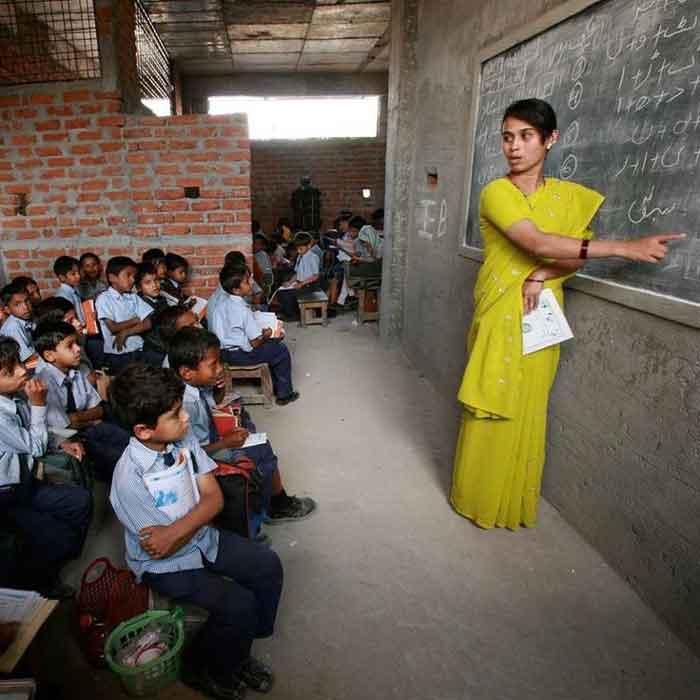
In many primary classrooms, children spend one hour learning mathematics, another memorising facts for environmental studies, another practising English grammar and another colouring a picture in art. Each lesson begins and ends as though it exists in complete isolation from the others. The message children unconsciously receive is that knowledge lives in separate compartments. Real life, however, does not. And this is therefore where thematic learning becomes one of the most powerful approaches in primary education.
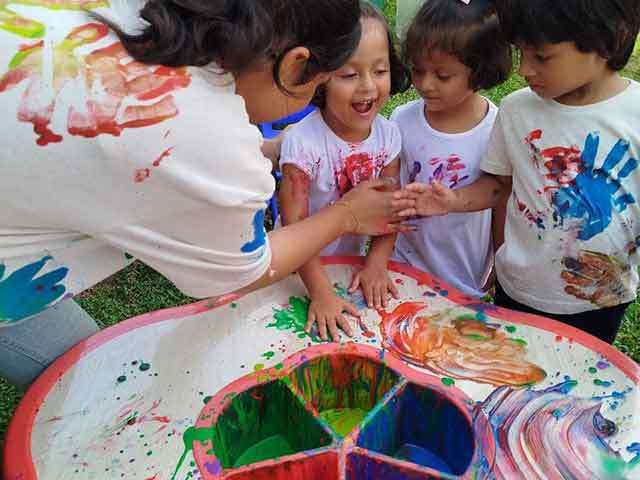
At its simplest, thematic learning organises learning around a central idea rather than around individual subjects. A theme such as water, journeys, communities or change becomes the lens through which children explore mathematics, science, language, history, geography, art and even music. Instead of treating subjects as separate destinations, thematic learning allows children to travel through them on the same journey. The result is not simply more enjoyable lessons. It is better thinking.
Young children naturally learn by making connections. They do not wake up wondering whether they are observing biology or geography when they see a butterfly. They simply ask questions. Why does it fly? Where does it live? How far can it travel? What colours does it have? Good primary education should preserve this natural curiosity rather than replace it with artificial academic boundaries.
Research consistently shows that children remember information more effectively when they understand the relationships between ideas. Knowledge acquired in meaningful contexts is far easier to retrieve than isolated facts memorised for an examination. When children repeatedly encounter the same concept from different perspectives, they develop deeper understanding instead of superficial recall. More importantly, they begin developing one of the most valuable cognitive skills of all: transfer.

Transfer is the ability to apply knowledge learned in one situation to solve problems in another. It is what allows a student who has learned about patterns in mathematics to recognise patterns in music, language or nature. It is what enables scientific reasoning to strengthen historical enquiry or persuasive writing to improve public speaking. Education should not merely fill children's minds with information; it should help them recognise when existing knowledge can solve new problems. This becomes increasingly important as students move into secondary education.
Secondary school demands far greater analytical thinking than primary school. Students are expected to compare texts, interpret scientific evidence, solve unfamiliar mathematical problems and construct reasoned arguments. Those who have spent their early years learning to connect ideas often make this transition with greater confidence because cross-curricular thinking already feels natural. They understand that knowledge is interconnected rather than fragmented.
Unfortunately, many students experience the opposite. Having spent years memorising disconnected facts, they suddenly find themselves expected to analyse, evaluate and synthesise information. We ask them to think critically without first teaching them how ideas relate to one another. Nor does this disconnect disappear once they leave school.
In an earlier article, I argued that employers today are no longer searching simply for people who possess technical knowledge. Increasingly, they seek individuals who can communicate, collaborate, solve unfamiliar problems, think creatively and adapt to change. Artificial intelligence can retrieve information within seconds. What remains uniquely human is the ability to interpret information, combine perspectives and generate original solutions.
These are not skills that suddenly appear during university or employment. They are habits of mind developed over many years. A child who has explored sustainability through science, economics, literature and art is already learning to approach problems from multiple perspectives. A child who has investigated ancient civilisations through history, engineering, mathematics and storytelling is unconsciously developing systems thinking. These experiences cultivate flexibility, curiosity and intellectual confidence long before anyone speaks about employability.
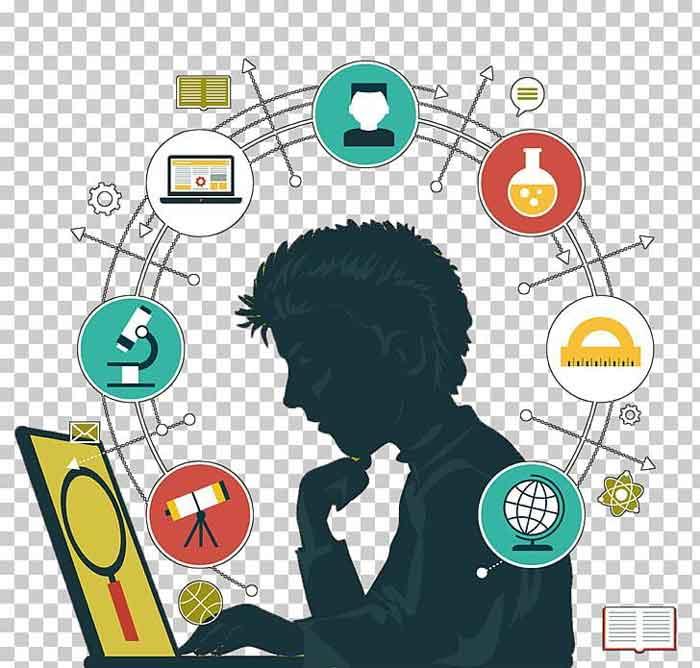
Ironically, thematic learning is sometimes criticised for being less academically rigorous because it does not fit neatly into traditional subject divisions. The opposite is true. Effective thematic learning demands careful planning from teachers, ensuring that curriculum objectives from multiple subjects are addressed while maintaining meaningful connections. Done well, it requires greater professional expertise, not less.
So why do relatively few schools embrace it, particularly in Sri Lanka? Part of the answer lies in our examination culture. Schools are often judged by measurable examination results, encouraging rigid timetables and subject-centred teaching from increasingly younger ages. Teachers already face crowded syllabuses and heavy administrative responsibilities, leaving little time to collaboratively design integrated learning experiences. Many were themselves educated in compartmentalised systems and have had limited opportunities to experience thematic teaching during their own training.
Perhaps the greatest obstacle, however, is mindset. We have become accustomed to believing that education is about covering content rather than constructing understanding. We ask whether children have completed the syllabus before asking whether they have actually made sense of it. Thematic learning is not about abandoning subjects. Mathematics remains mathematics. Science remains science. Literature remains literature. It is about helping children recognise that the world does not divide itself according to our timetables. Climate change, public health, technological innovation and social justice are not single-subject problems. They demand people who can integrate knowledge across disciplines and see relationships where others see boundaries.
If we truly want future generations who can innovate rather than imitate, who can solve problems rather than simply pass examinations, then perhaps the conversation should begin much earlier than secondary school or university. It should begin in the primary classroom, where children first discover that learning is not about collecting disconnected pieces of information, but about seeing how those pieces fit together to form a much bigger picture.