VINCENT
BY SHALEEKA JAYALATH
We are often far kinder to people after they die than while they are alive. We erect statues in their honour. We hang their portraits in museums. We study their words in classrooms and celebrate their achievements in documentaries, biographies and commemorative anniversaries. Yet while they are alive and need our understanding most, we frequently offer judgement instead.
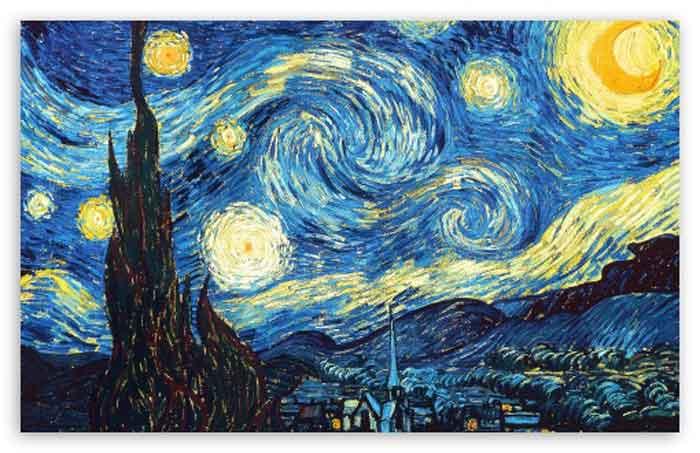
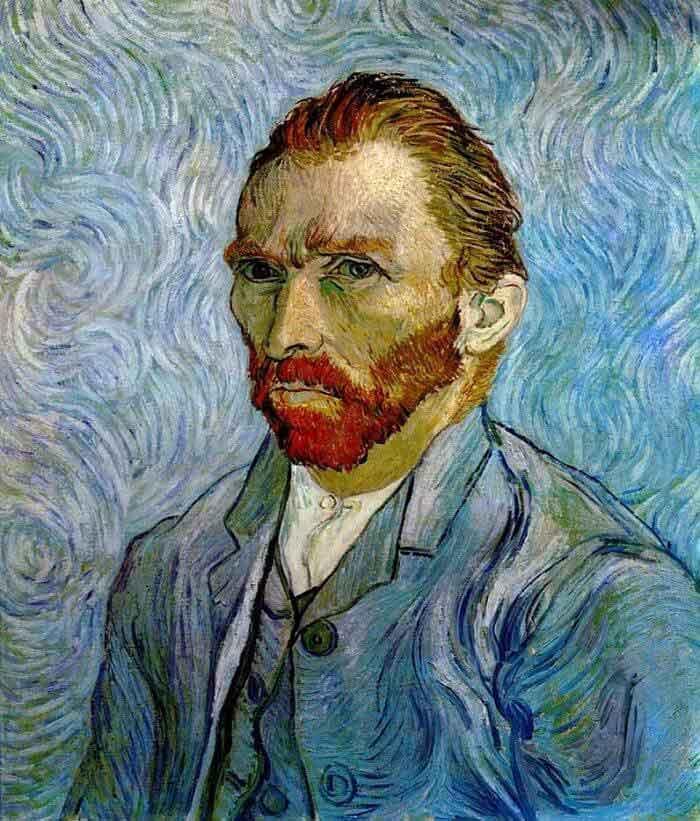
This paradox is seen quite clearly in the life of Vincent van Gogh. Today, his paintings sell for millions. His work hangs in some of the world's most prestigious galleries. His face is instantly recognisable. More than a century after his death, he is widely regarded as one of the greatest artists who ever lived. Yet during his lifetime, Van Gogh was largely dismissed as troubled, unstable and unsuccessful. It is one of history's cruellest ironies. And perhaps nowhere is that irony more visible than in The Starry Night, the painting that would eventually become his most celebrated work.
At first glance, the painting feels strangely comforting. Even those who know very little about art recognise it instantly. The swirling sky. The glowing moon. The stars that appear to pulse with life. It has become so familiar that it is easy to forget the circumstances under which it was created.
In June 1889, Van Gogh was a voluntary patient at the Saint-Paul-de-Mausole asylum in SaintRémy-de-Provence, France. Historians believe he struggled with severe depression, anxiety and episodes of psychosis throughout much of his life. He often felt isolated from the world around him, unable to find the stability and belonging that seemed to come naturally to others. And yet it was during this period of confinement that he produced some of his most remarkable work. During his year-long stay at the institution, he completed around 150 paintings. Art was not merely a profession. It was a means of survival.
The inspiration for The Starry Night came from the view outside his east-facing window. In a letter to his beloved brother Theo, Vincent described waking before sunrise and seeing the morning star shining brightly over the countryside. Yet the painting itself is far more than a landscape. The village below is largely imaginary. The church resembles those from his native Netherlands rather than southern France., memory blending with observation, and emotion with reality. The result is a painting that seems to exist somewhere between the world as it is and the world as Van Gogh experienced it.
For generations, people have interpreted the painting as evidence of madness. The swirling sky is often presented as a visual representation of a troubled mind. Yet the longer one studies the canvas, the less convincing that interpretation becomes. The sky is turbulent, but it is not chaotic. The brushstrokes are deliberate, and the composition balanced, with every movement appearing purposeful. This was not a man surrendering to disorder. Rather, it was a man attempting to organise it. The painting feels less like a breakdown and more like an act of resistance.
Its colours tell a similar story. Deep blue dominates the canvas, a colour long associated with melancholy, loneliness and introspection. Yet Van Gogh refuses to leave us there. Brilliant yellows and glowing whites break through the darkness. The stars do not simply illuminate the night sky. They challenge it, leaving us with the proverbial “silver lining” that even in darkness, there is light, and likewise, even in suffering, there is beauty.
More than eighty years later, another artist looked at the same painting and saw something that many others had overlooked: Vincent.
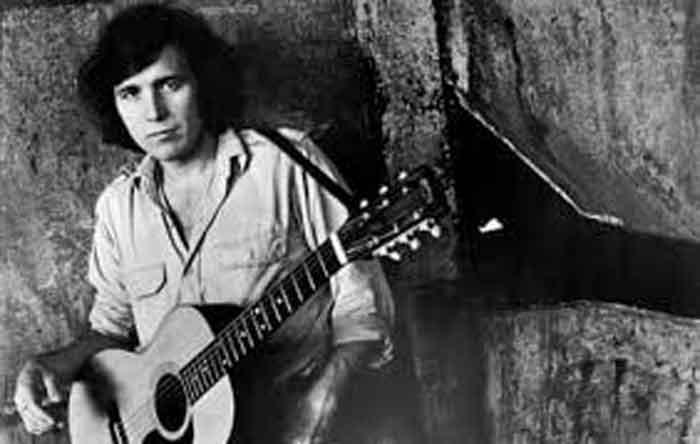
Singer-songwriter Don McLean first encountered Van Gogh through a biography he read during a difficult period in his own life. Looking at a print of The Starry Night, he found himself drawn not only to the painting but to the man who painted it. The result was Vincent, one of the most moving tributes ever written by one artist to another.
Starry, starry night
Paint your palette blue and grey
Look out on a summer’s day
With eyes that know the darkness in my
soul…
Now I understand
What you tried to say to me
And how you suffered for your sanity
And how you tried to set them free
They would not listen, they did not know how
Perhaps they’ll listen now…
Don McLean
What makes the song Vincent remarkable is not its admiration; rather, it is its empathy. Millions had admired Van Gogh's talent. However, McLean wanted to understand his pain. The opening lines immerse listeners in the painting itself. "Starry, starry night. Paint your palette blue and grey." The colours become emotional language. The blues and greys speak of sadness and loneliness. The flashes of light become symbols of resilience and hope. The swirling clouds become a mind searching desperately for peace. Then comes perhaps the most profound line in the entire song.: “How you suffered for your sanity." Not from your sanity. For your sanity. The distinction changes everything.
McLean rejected the simplistic image of Van Gogh as the archetypal mad genius. Instead, he presented us with a man struggling to preserve his sense of self in a world that continually misunderstood him. A man whose heightened sensitivity allowed him to see beauty where others saw ordinary landscapes, colour where others saw darkness, and possibility where others saw nothing at all.
The song is often described as a tribute to Van Gogh. In truth, it is something rarer. It is an attempt to listen which may explain why Vincent continues to resonate more than fifty years after its release.
We live in an age that celebrates visibility. Everyone wants to be seen. Yet what most people crave is not attention but understanding. There is a difference. Many people saw Van Gogh, but very few understood him. Perhaps that is why McLean's song feels so personal. One artist recognised something of himself in another. Both knew loneliness. Both understood what it felt like to move through the world carrying thoughts and emotions that others struggled to comprehend.
Sometimes empathy requires more than observation. Sometimes it requires recognition. History remembers Van Gogh for a painting and McLean for a song. Both are masterpieces in their own right. One transformed paint into emotion. The other transformed emotion into music. Yet perhaps the most extraordinary achievement belongs to neither canvas nor melody.
Rather, it lies in the connection between them.
Today, a copy of McLean's lyrics has been placed near Van Gogh's final resting place. It is a fitting tribute. Not because the song explains Van Gogh's suffering, but because it honours his humanity. Nearly a century separated the two artists. They never met. They never spoke. And yet, through a swirl of blues and yellows and a handful of carefully chosen words, one finally managed to tell the other: "Now I understand." For Van Gogh who spent much of his life feeling misunderstood, there may be no greater tribute than that.