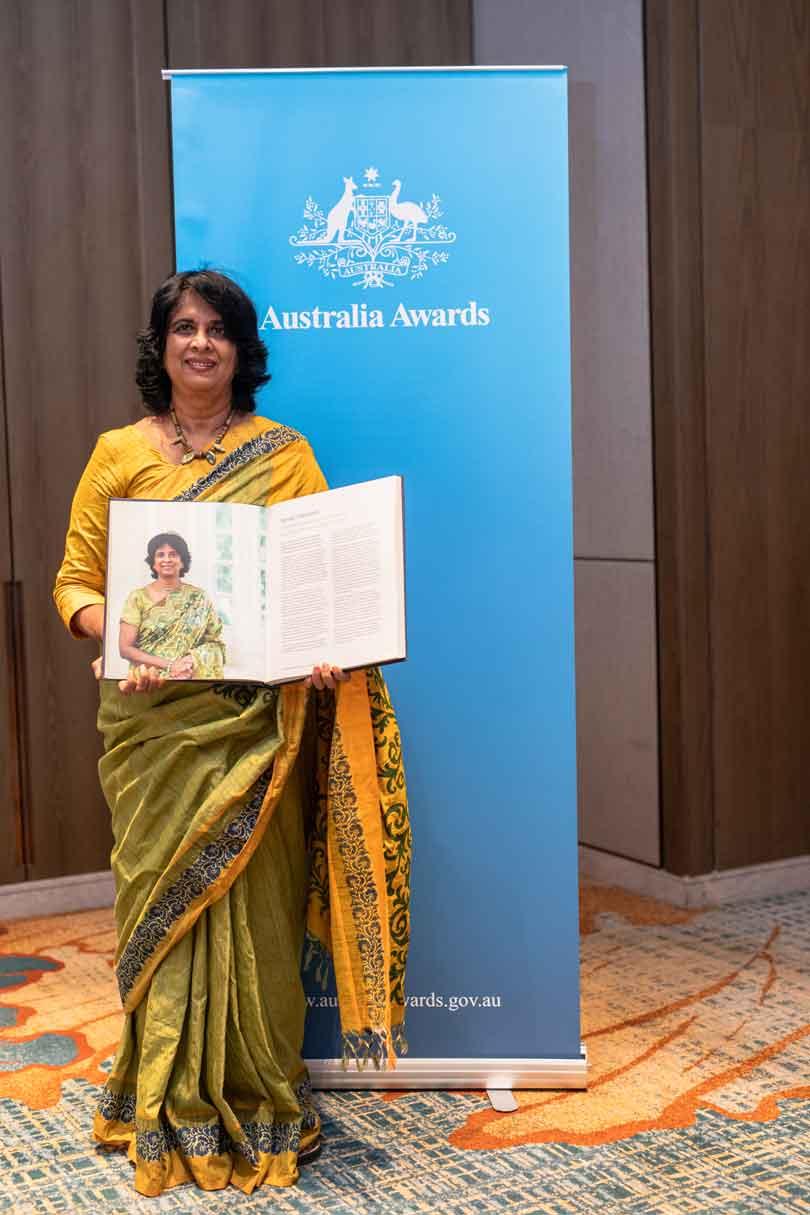
IN COVERSATION WITH KUSUM ATHUKORALA

Water has shaped civilizations, sustained communities, and defined the history of Sri Lanka for centuries. Yet in an era marked by climate uncertainty, growing demand, and environmental degradation, safeguarding this resource has become one of the country's most urgent challenges. Few people have dedicated their lives to this cause as passionately as Kusum Athukorala, a pioneer in water governance and one of South Asia's most respected voices on community-based water management and gender equity in the sector. Holding a BA Honours in English from the University of Kelaniya and an MSc in Managing Rural Development from Imperial College London, Kusum’s career has bridged the worlds of academia, development, policy, and grassroots activism. As a founding member of the Global Water Partnership South Asia and a champion for women in water leadership, she has spent decades advocating for inclusive and sustainable approaches to managing one of humanity's most precious resources. In this conversation, she reflects on the experiences that shaped her journey, the challenges facing Sri Lanka and South Asia, and the actions needed to secure the country's water future.
Q: You left a successful career in academia to champion water security. What was the turning point that changed your life's direction?
While teaching at university, I was also involved with a research organization conducting studies on rural development and irrigation management. It was during this period that I witnessed the remarkable contribution women made to agricultural productivity and rural livelihoods. Women were working in the fields, managing household water needs, and sustaining communities, yet their voices were almost entirely absent from decision making processes. This disconnect had a profound impact on me. I realized that development could not be sustainable if the people carrying much of the responsibility were excluded from shaping the solutions. That experience encouraged me to focus on community participation in water management and, in particular, the importance of gender equity in water governance. What began as an academic interest gradually became a personal commitment. The more communities I visited, the more convinced I became that water security was not only an environmental issue but also a question of justice, representation, and inclusion.
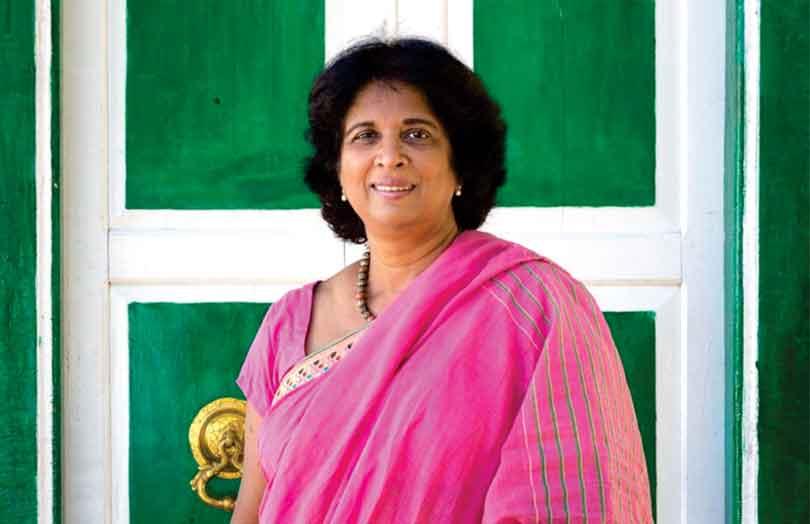
Q: How has your humanities background shaped your approach to solving today's water and climate challenges?
My background in the humanities has helped me understand that water issues are fundamentally human issues. Technical expertise is important, but without understanding society, culture, and inequality, solutions often fail to reach those who need them most. Literature has always reflected the realities of society. Premchand's, The Thakur's Well, illustrates the painful struggle of marginalized communities seeking access to safe drinking water. Henrik Ibsen's An Enemy of the People examines the consequences faced by those who speak out against environmental pollution and public health risks. Sinhala literature has also provided important lessons about our relationship with nature and community life. These stories remind us that access to water is closely linked to dignity, social justice, and human wellbeing.
The humanities encourage empathy and critical thinking. They help us see beyond infrastructure and engineering and understand the people whose lives are directly affected by water scarcity, pollution, and climate change.
Q: You often speak about women's invisible role in water management. Why is it time to bring their contribution into national policy?
This change is long overdue. Women are often the primary managers of water within households and communities. They collect water, manage its use, support agricultural activities, and ensure the wellbeing of families. Yet their experiences and knowledge remain underrepresented in policy discussions. We need to move beyond symbolic recognition and ensure women participate meaningfully in both policymaking and implementation. Representation cannot simply exist on paper. Women must be involved in planning, decision making, leadership, and governance structures at every level. The climate and water challenges we face today are becoming increasingly complex. They cannot be solved by only half of society. Sustainable solutions require diverse perspectives and collaborative leadership. Women bring practical knowledge and lived experience that are essential for creating policies that work in reality rather than only in theory.
Q: What inspired you to establish the Network of Women Water Professionals, and what barriers were you determined to break?
Perhaps urged is a better word than inspired. The Dublin Rio Principles recognized the central role of women in water management and conservation. As a founding member of the Global Water Partnership Steering Committee in 1995, I strongly advocated for equal representation within all Global Water Partnership related organizations. However, when Regional Water Partnerships were established, there was considerable reluctance in South Asia to include women water professionals in leadership roles and decision-making processes. This resistance highlighted the need for a dedicated platform where women could connect, contribute, and be heard. The journey was not easy. There were institutional barriers, cultural assumptions, and deeply ingrained attitudes that questioned women's leadership in technical fields. Fortunately, I was supported by a number of progressive colleagues who understood the importance of inclusion. I am particularly grateful to Wouter Lincklaen Arriëns of the Asian Development Bank, who helped organize the first national gathering of Sri Lankan women water professionals. From that point onward, we focused on creating opportunities through leadership development, capacity building programmes, mentoring, and international exposure.
Q: Is Sri Lanka treating water as a national security issue, or are we still taking it for granted?
Unfortunately, I believe we are still taking it for granted. Every year on World Water Day we proudly quote King Parakramabahu's famous words about ensuring that not even a small quantity of rainwater flows to the sea without being made useful. Yet after the celebrations end, that wisdom often disappears from public conversation. His vision was much broader than irrigation alone. Today, it should inspire us to protect catchments, wetlands, forests, rivers, and groundwater systems. Climate change is already bringing more frequent droughts, changing rainfall patterns, and growing pressure on water resources. Water security must therefore be treated as a national security issue because it directly affects food security, public health, energy production, and economic development. Protecting water is not optional. It is essential for our future stability and resilience.
Q: With your long-term involvement in international water management organizations and as a founding member of the Global Water Partnership South Asia, what is the biggest water challenge facing our region today?
One of the greatest challenges is that many institutional structures in South Asia continue to operate using approaches inherited from the colonial era. These systems were created for a different time and often struggle to respond to today's realities, including climate change, urbanization, and population growth. Modernization is certainly necessary, but we should also rediscover traditional knowledge systems that have sustained communities for generations. South Asia has a rich history of environmentally sustainable water management practices that deserve renewed attention. Community participation must also become stronger. Solutions imposed from above rarely succeed without local ownership. Equally important is engaging young people, especially in agriculture and environmental stewardship. Long term resilience depends on creating a new generation that values and protects water resources.
Q: Water, sanitation, and menstrual hygiene remain sensitive issues in many communities. What needs to change first, policy, infrastructure, or mindset?
Mindset must come first. Social attitudes often determine whether policies succeed or fail. Once people begin to speak openly about these issues and recognize their importance, political leaders are more likely to respond with stronger policies. When effective policies exist, investment in infrastructure becomes easier to justify and implement. Menstrual hygiene should never be treated as a taboo subject. It is a matter of health, dignity, and equality. Similarly, access to sanitation and safe water is not a privilege but a basic human right. Real progress begins when societies change the way they think about these issues and acknowledge them openly.
Q: Climate change is no longer a future concern. What immediate action should every Sri Lankan take to protect our water resources?
We need stronger political commitment to long term water planning and greater accountability for protecting our natural resources. At the same time, every citizen has a role to play. Individuals can reduce pollution, conserve water, and support efforts to protect rivers, wetlands, forests, and groundwater systems. Communities can become active custodians of local water sources rather than passive users. Climate resilience cannot be achieved through government action alone. It requires shared responsibility between institutions, communities, and individuals. Every action matters because water systems are interconnected, and small changes can create significant long-term impacts.
Q: After decades of mentoring future leaders, what advice would you give young people who want to make a difference in environmental leadership?
My advice is simple. Go beyond books, classrooms, and laboratories. Spend time in the field. Engage with communities. Observe nature closely. Listen to people whose lives are shaped by environmental change every day. Real leadership comes from understanding realities on the ground rather than relying solely on data and reports. Technology is important and digital tools are valuable, but they should not replace direct engagement with people and places. Do not become merely a laptop warrior. Become someone who creates change where it truly matters. Environmental leadership requires curiosity, compassion, and courage.
Q: If you had the power to introduce one policy tomorrow to secure Sri Lanka's water future, what would it be?
I would introduce a truly integrated national water policy supported by visionary political leadership and built through collaboration. Water management cannot remain fragmented across institutions and sectors. Government agencies, professionals, researchers, local communities, farmers, and civil society organizations all need to work together. The encouraging news is that we do not need to reinvent the wheel. Sri Lanka already possesses valuable policies, knowledge, and expertise. What we need is better coordination, stronger implementation, and the political will to act consistently over the long term. Water security is not simply an environmental concern. It is the foundation of food security, economic stability, public health, and social wellbeing. The decisions we make today will determine whether future generations inherit abundance or scarcity. Protecting water is ultimately about protecting our collective future.