Purpose Before Process: A Conversation with Sharya Unamboowe
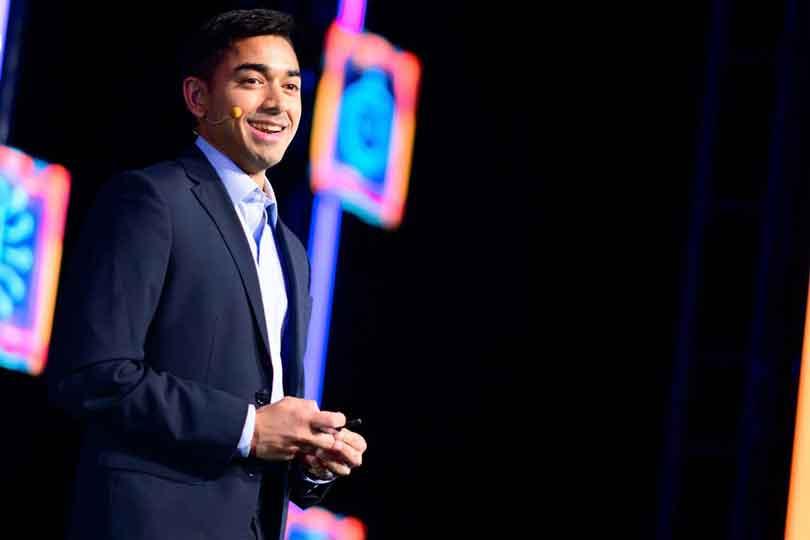
Careers are often told as neat stories. A degree leads to a first job, a promotion follows, and eventually a leadership title appears at the end of a carefully planned roadmap. Sharya Unamboowe's journey has been anything but predictable.
He once dreamed of becoming a Formula 1 driver. At another point, he imagined opening a beach bar, an ambition he admits he still hasn't abandoned. Instead, his career carried him through consulting, startups, product management, corporate development, and ultimately to WSO2, where he now leads the company's Integration Business Unit. The route was shaped less by a master plan than by curiosity, a willingness to embrace unfamiliar challenges, and a habit of saying yes when opportunities appeared.
That openness has given him a front-row seat to one of the biggest technological shifts of our time. As artificial intelligence transforms the way businesses operate, Unamboowe finds himself leading conversations not only about AI, but also about the infrastructure, integration, and strategy that make it possible. Throughout our conversation, however, it became clear that technology is only part of the story. His approach to leadership is rooted in lessons learned from sport, family, and the mentors who trusted him with responsibility long before he thought he was ready.
In this conversation, Sharya Unamboowe reflects on an unconventional career, the future of enterprise technology, the realities behind the AI conversation, and why the best leaders spend less time having all the answers and more time asking the right questions.
1. What kind of child were you growing up? Were you naturally curious, competitive, adventurous, or something else entirely?
Let's just say I got many lectures throughout my pre-teen and teenage years from my parents for fighting with my brother, throwing bats and golf clubs, and generally getting super angry and irritable whenever I lost at one sport or another. I was also adventurous and always willing to try something new, as long as it involved an adrenaline rush.
2. You've worked across consulting, product management, corporate development, and now lead one of WSO2's most strategic business units. Looking back, was your career intentionally designed, or did it evolve through saying yes to opportunities that challenged you?
I went from wanting to be a Formula 1 driver to wanting to open a beach bar, which I still want to do, so I think it's definitely safe to say this career path wasn't intentionally designed. I've had the very good fortune of working with some incredible leaders over the years. Each of them gave me opportunities to take on more responsibility. I was always happy to accept those opportunities and, hopefully, show what I was capable of.
3. When you look back at your younger self graduating from the University of Southern California, what assumptions about business or leadership have completely changed?
Honestly, I had no idea what to expect from business or leadership when I graduated. All I knew was that I wanted to move back home, and I'd figure out what I wanted to do once I got back.
The only things I really knew, which haven't changed at all, were that it was important to be passionate about whatever you do, and that if you're going to do something, you should do it to the best of your ability. Those were qualities I saw in both my parents growing up.
4. You began in consulting, solving problems for clients across Japan, Singapore, and Sri Lanka. What did consulting teach you that product management never could?
That the customer isn't always right.
As a product manager, your primary objective is to build something customers want because that's what sells. Sometimes what they want may seem completely ridiculous, but if customers want it and it makes money, that's the reality.
As a consultant, your job is to listen to customers and help them work out the best way to solve a problem, even if that means telling them their ideas are wrong.
5. Then you made what many would consider an unusual move from consulting into a startup environment with MillionSpaces. Why did building a product become more appealing than advising others?
I had recently moved back to Sri Lanka after working in Singapore and Japan for two and a half years, and it just felt like the right time to try something completely different.
I'd been at Virtusa for almost five years by then and was getting bored with the corporate structure. Working at startups was something a lot of people spoke about with passion and excitement because of their fast-paced, innovative environments, and I was one of many people who simply wanted to experience that.
In summary, it wasn't building a product itself that appealed to me. It was the opportunity to do something completely different from what I'd been doing for the previous five years.
6. WSO2 has long been known as one of Sri Lanka's most globally respected technology companies. What makes the company different in an increasingly crowded enterprise software market?
From a purely technical perspective, it's the fact that we provide 100 percent open-source software, which means anyone, anywhere in the world can use WSO2 products without paying us. At last estimate, we have more than 50,000 such enterprises across nearly 100 countries doing exactly that.
What we're truly proud of is that WSO2 is an inherently Sri Lankan software company that has succeeded on the world stage while competing against global technology giants such as IBM, Oracle, and Google. We have offices and employees across the globe, but much of our leadership, especially our technical leadership, remains in Sri Lanka, where more than 75 percent of our workforce is based.
7. Your business unit focuses on integration, a word many people hear but don't fully understand. If you had to explain integration to someone outside technology, how would you describe why it has become so essential?
Traditionally, integration is what connects the different systems across a business so they can communicate with one another. It allows data entered into one system to automatically flow into another, helping automate business processes and reducing manual work. Today, integration has become a key enabler of AI because it connects AI agents to those same systems, allowing them to communicate across platforms and autonomously execute business processes.
8. Do you think companies are currently overestimating what AI can do while underestimating the importance of infrastructure?
I actually think we're underestimating both. We've only just begun to scratch the surface of what AI can do, and we'll see many more advancements in the years ahead. At the same time, having the right infrastructure is critical. You need the right connectivity, governance, and security in place to ensure AI agents have access to your systems while operating within the appropriate controls and guardrails.

9. Early in our careers we're rewarded for having the answers. As leaders we're rewarded for asking better questions. What questions do you find yourself asking your teams most often today?
The most important question is, "Why are we doing this?" There's no point doing something simply for the sake of it. There must be a clear objective and real value in everything we do. The second question, which I learned from a previous boss, is, "Is this the best way, or just the easiest way?" The easiest way may be faster, but it often creates problems in the long run.
10. Every decade seems to have its defining technology. Cloud reshaped computing. Mobile changed consumer behavior. AI is changing knowledge work. What do you believe will define the next decade?
It's difficult to look beyond AI right now. That said, one topic I keep hearing more about is Post-Quantum Cryptography (PQC). I'm not even going to try explaining it because it's well beyond my technical knowledge, but it's essentially about making systems safer in a future shaped by quantum computing.
11. There's increasing discussion around AI replacing jobs. Do you think that's the wrong conversation? Should we instead be asking how AI changes the nature of work?
AI will definitely replace some jobs, but it will also create new ones. We need to adapt because AI isn't going away. We have to develop skill sets that complement AI rather than those AI can easily replace. AI is already changing the nature of work. At WSO2, every employee has access to Claude and Gemini, and I'd be surprised if anyone uses them less than once every couple of days. Personally, I use both multiple times a day. They allow me to do things like create presentations or spreadsheets in 15 minutes that might previously have taken several days. If used properly, AI gives people more time to focus on the enjoyable parts of work, whether that's brainstorming with colleagues, speaking with customers, or developing new strategies.
12. Sri Lanka has consistently produced world-class engineers despite being a relatively small country. What gives Sri Lankan talent a competitive advantage globally?
I can't point to one single structural reason. I simply think Sri Lankans are inherently intelligent people. We're hardworking, passionate, and incredibly dedicated when we believe in something and have a genuine sense of purpose.
13. Technology is fast-moving and leadership can be mentally demanding. How do you avoid burnout while leading large teams?
A lot of drinking. Honestly, though, it's only been a couple of months since I started leading this team, and it's been a lot of fun. The most important thing is enjoying what you're doing. You'll burn out very quickly if you're not having fun. Secondly, you need to know when to step back. No one can be fully engaged all the time. Whether it's going to the gym, sitting on the couch watching TV, or taking a proper holiday, everyone needs time to recharge. You shouldn't feel guilty about taking that break.
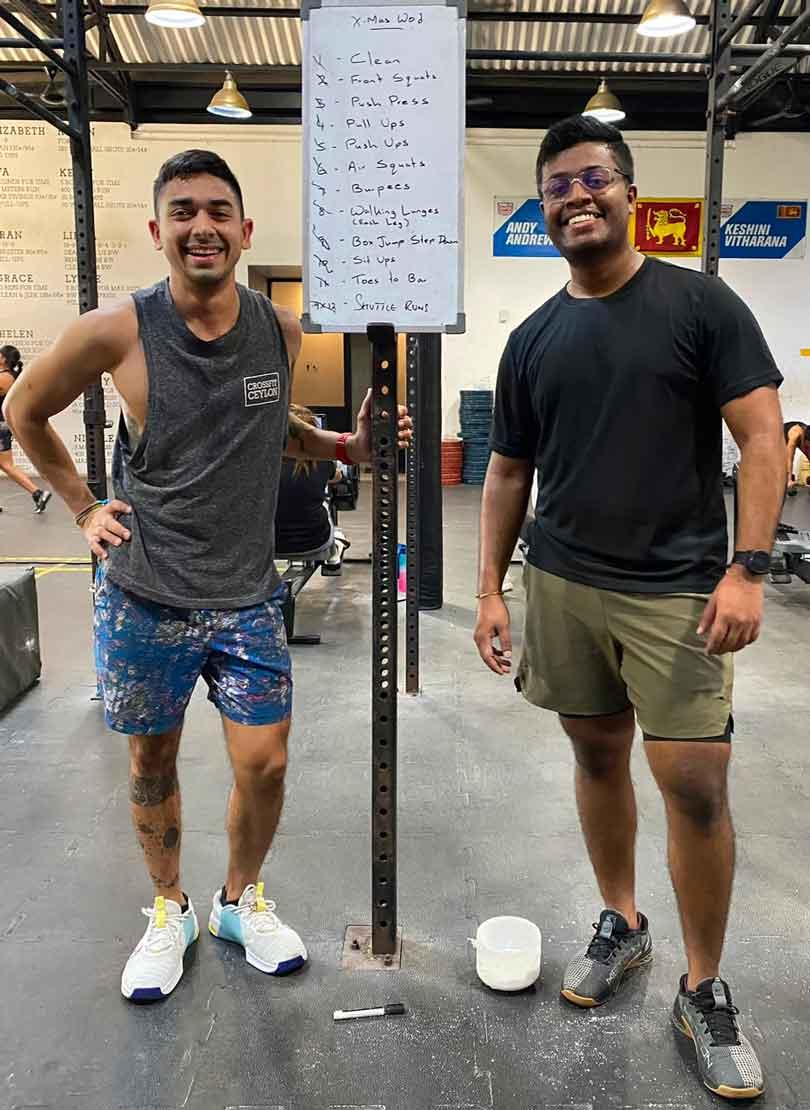
14. CrossFit demands discipline and consistency. Have there been lessons from sport that directly influence the way you lead teams?
I played cricket in school, so my lessons come more from a team sport than an individual sport like CrossFit. Every person has different strengths. It's important to identify what each individual is good at and give them opportunities to prove themselves. Expecting someone to do something you know they aren't good at is simply setting them up to fail. You wouldn't expect an opening fast bowler to open the batting and score a century. Another lesson is making sure everyone is moving in the same direction to achieve a common objective. Not everyone will agree with that direction, but a good leader explains why it's necessary and earns the team's commitment. Whether in sport or at work, someone constantly pulling in the opposite direction eventually damages morale and, ultimately, the team itself.
15. Who has had the greatest influence on your leadership philosophy?
I'm still learning what my leadership philosophy is, and I don't think that process will ever stop.
I also can't choose one influence because I've been incredibly fortunate to work with five outstanding leaders across Virtusa and WSO2. Each had a different leadership style, but they all challenged me to keep improving by giving me opportunities to prove myself. What stood out was that they took responsibility when things went wrong but gave me the credit when things went right. I think that's an incredible quality, and one many leaders struggle with. Secondly, both my parents have had a tremendous influence on me. They've each held leadership positions for as long as I can remember, and they taught me the importance of a strong work ethic, genuine passion for your work, and motivating people to move together toward a common goal.
Writer's Curiosity
Best career advice you've received? Focus on doing work that has a clear purpose and creates real value. Don't waste time doing things simply for the sake of it.
Biggest leadership myth? That leaders need to have an answer for everything. The best ideas can come from anywhere, and sometimes there isn't an immediate answer at all.
One book every entrepreneur should read? I'm sad to say I haven't been much of a reader since my university days.
Morning routine? I like to take my time in the mornings. I get up at least an hour and a half before I need to leave for work, water the plants, make a coffee, and watch the news for a while to laugh at the latest stupid thing Donald Trump has said or done.
AI tool you use most? Claude.