Why Sri Lankans Should Pay Attention To Sonam Wangchuk’s Hunger Strike?
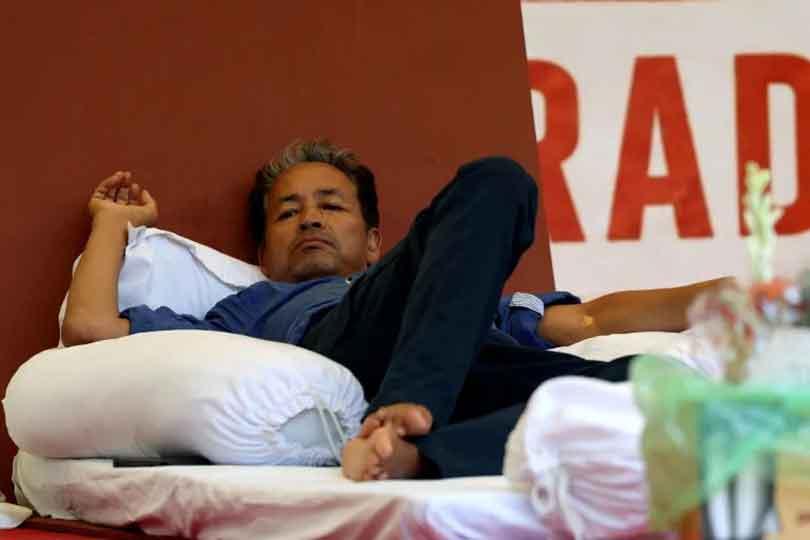
Sonam Wangchuk is lying in a hospital bed in Delhi right now, refusing fluids, and most of the world has decided this is a nice little story about a hunger strike and some Bollywood nostalgia. It isn't. It's a story about what a democracy does to a border region it doesn't fully trust, and honestly, Sri Lankan readers should be able to spot the shape of this one from a mile away. We've lived versions of it. Somehow the international coverage of Sonam Wangchuk’s strike keeps flattening him into a symbol before bothering to explain why he matters in the first place. Wangchuk is an engineer and educator from Leh who spent decades building an alternative schooling model for Ladakhi kids who kept failing under a curriculum written in Delhi and taught in languages they didn't even speak at home. He's widely credited as the inspiration for Phunsukh Wangdu, the free-thinking engineer character in the 2009 film 3 Idiots. That's the detail every news report opens with. It's also the least interesting thing about him, and every time I see it used as the hook, I know the rest of the piece is going to skip the actual politics.
What Actually Matters
Ladakh used to be part of the state of Jammu and Kashmir. In 2019, Delhi split it off and made it a Union Territory, which in practical terms means Ladakh has no legislature of its own. No elected body making its own laws. Its population is over 97 percent Scheduled Tribe. For the past five years, two civic groups representing the Leh and Kargil districts have been asking Delhi for one of two things: full statehood, or failing that, protection under something called the Sixth Schedule of the Indian Constitution. That's a provision originally written for tribal regions in India's northeast, and what it does is give local councils real, legally protected control over land, forests and customary law, the kind of control that can't just be overridden by a state legislature or a bureaucrat's signature. Wangchuk became the face of that campaign because he was pretty much the only person who could get Ladakhis of different faiths, Buddhist and Muslim, sitting in the same room, agreeing on the same demand. That in itself is no small achievement in a region Delhi has spent years trying to manage through division.
In September last year, after five years of talks going nowhere, Wangchuk started a hunger strike. Thirty five days. Nine days before he was forced to call it off, the Ladakh administration cancelled the land allotment to his own institute, the Himalayan Institute of Alternatives Ladakh, claiming the land wasn't being used the way it was supposed to be. Convenient timing, to put it mildly. On September 24, protests in Leh turned violent, the local BJP office was set on fire, vehicles were burned, police opened fire on the crowd. Four people died. Around ninety were injured. Wangchuk ended his fast that same day, presumably to try and calm things down.
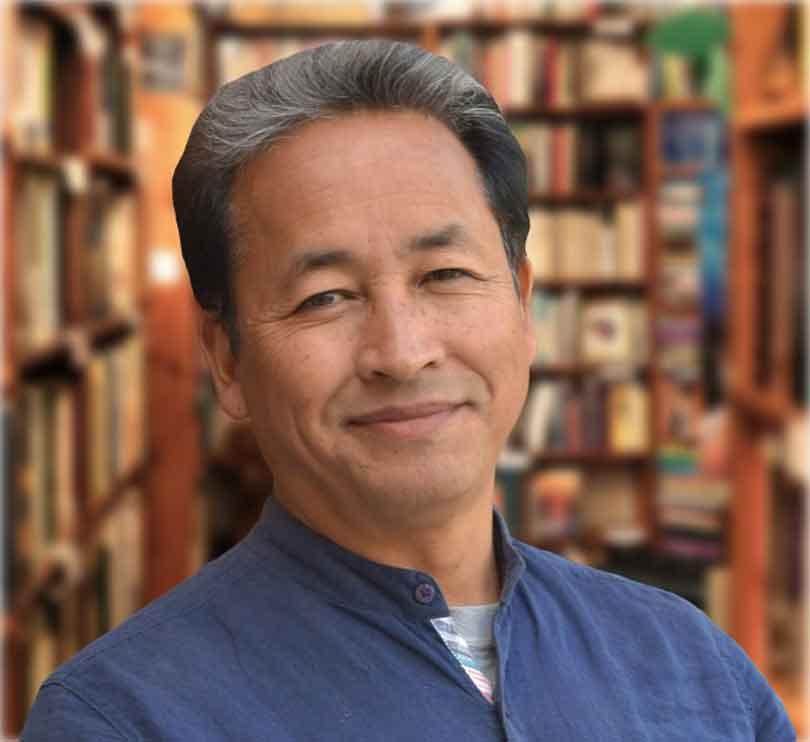
Within 48 hours, the government cancelled the foreign funding licence of his older organisation, SECMOL, citing a discrepancy of about three and a half lakh rupees from 2021. The CBI opened a separate inquiry into his newer institute's foreign funding, and while they were at it, quietly folded in a trip he'd made to Pakistan back in February, as though that needed explaining too. On September 26, he was arrested under India's National Security Act, a law that lets the state detain someone for up to twelve months without ever filing formal charges. He was flown over a thousand miles away to a jail in Jodhpur, Rajasthan, nowhere near his home, nowhere near his lawyers, nowhere near the people who'd actually elected him as their spokesperson in all but name. In November, the Supreme Court itself said the arrest was illegal and a clear violation of his fundamental rights. And the government just kept the case crawling along anyway, adjournment after adjournment, month after month, until he'd already served roughly half the maximum term the law even allows. He was finally released in March this year, after almost six months inside.
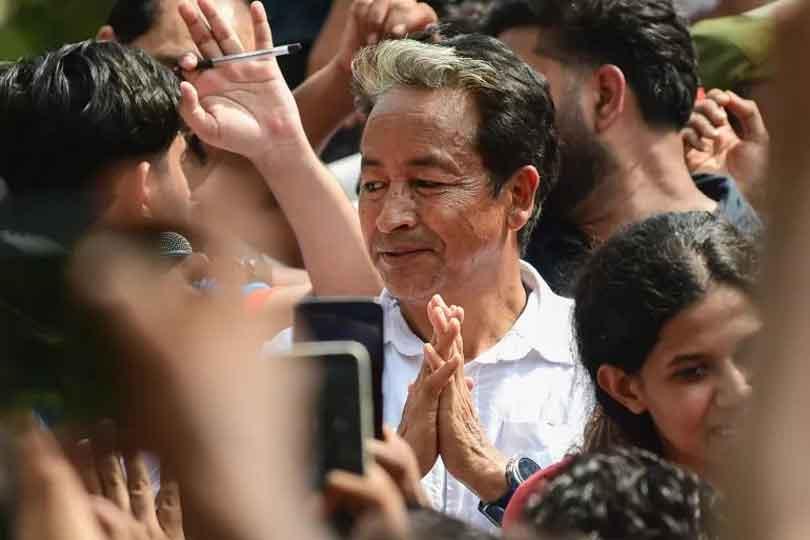
Whatever that’s described here is not a state responding to unrest, it’s more like a state building a file on someone. Land allotment cancelled. Funding licence pulled. Foreign travel flagged and thrown into a criminal inquiry. Preventive detention that a judge would later call outright illegal. Every lever a state has, used within a single week, against a man whose actual demand was a constitutional protection the government itself had more or less already agreed to in principle back in 2019. You don't need all of that machinery to deal with someone asking a question you're planning to say yes to anyway. You only need it if you're hoping the question just quietly goes away.
The Gen Z Protest Group
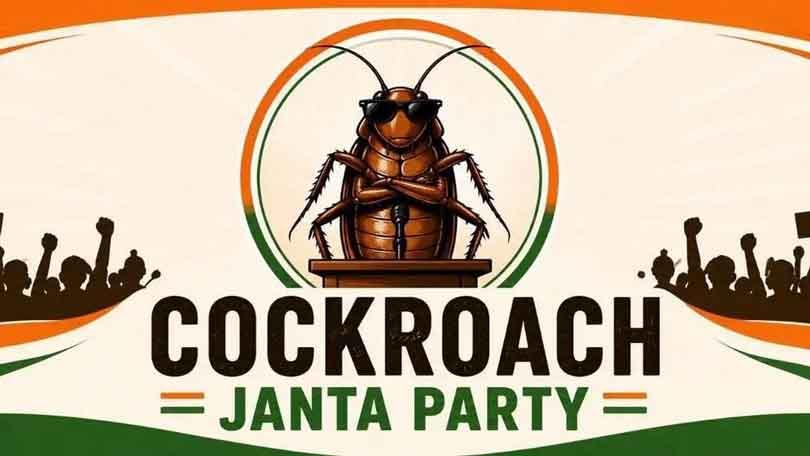
Three months after he got out of jail, Wangchuk didn't quietly go home and lie low, he turned up in Delhi in June, fasting again, this time standing with a Gen Z protest group calling itself the Cockroach Janta Party, demanding the resignation of the education minister over exam paper leaks that affected millions of students across the country. By mid-July he was seventeen-plus days into the fast. Over the weekend of the 18th and 19th, Delhi police physically removed him from the protest site and he ended up hospitalised, badly dehydrated, apparently refusing treatment.
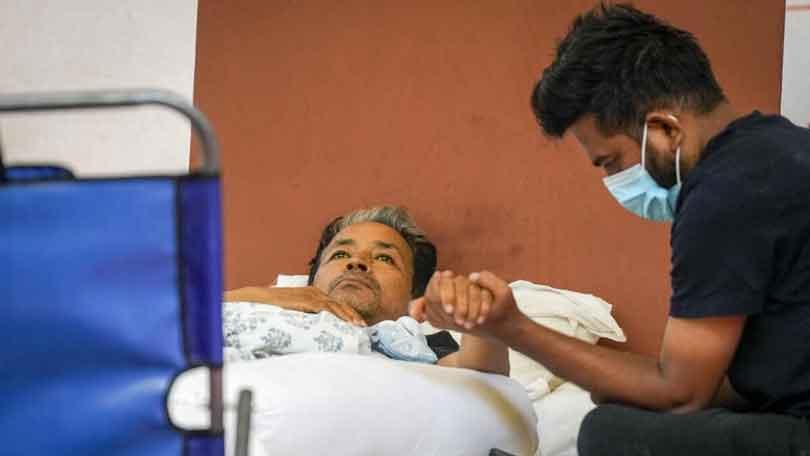
I genuinely don't think these are two separate, unrelated stories about one very persistent activist. I think Wangchuk worked out, correctly in my opinion, that the only thing this government actually responds to is pressure loud enough to embarrass it on a national stage, because quiet negotiation clearly wasn't getting him anywhere. A regional statehood demand from a territory of roughly three hundred thousand people was never going to hold the country's attention the way a national exam scandal involving millions of anxious families and their kids could. So he showed up where the cameras already were.
How the Media Perceives & Portrays
Every big outlet covering this, Reuters, CNN, the usual names, has reached for the exact same comparison, calling him a modern day Gandhi. It's a comfortable label. It lets a global audience feel appropriately moved by an old man refusing food without ever having to ask the harder question, which is why a functioning democracy needed six months, a National Security Act detention, a cancelled land grant and a revoked funding licence just to deal with a peaceful reformer asking for something the government had effectively half-promised him back in 2019. Gandhi makes for a tidier headline than accountability does. It always has.
There's also something worth saying about how differently this story would have been handled if Wangchuk didn't have the profile he has. He's a known name, a face people recognise from a Bollywood film, someone with the kind of visibility that makes it genuinely awkward for the state to let him disappear quietly. Most of the people who've spent years pushing the same Ladakh statehood demand alongside him don't have that protection. When the cameras leave, they're the ones still dealing with local administrators who now know exactly who supported the protest and who didn't. That imbalance rarely makes it into the coverage either, but it matters, because it tells you the state's restraint here isn't really restraint at all. It's just a calculation about which activists are too visible to disappear and which ones aren't.
What Sri Lankans Need to Pay Attention To
For a Sri Lankan audience, I think this should land somewhere close to home, because we genuinely know what it looks like when a state responds to a minority region's constitutional demand with slow administrative strangling instead of a straight yes or no. Land reallocated at politically convenient moments. Funding suddenly scrutinised right when a protest gathers steam. Preventive detention laws stretched well past their intended purpose to hold someone the state can't otherwise touch through the ordinary courts. We watched versions of exactly this play out for decades in the north and east, dressed up in different legal language, but built out of the same basic instinct. Stall. Discredit quietly in the background. Wait for the news cycle to move on to something else. It always does eventually, and both governments seem to know it.
What strikes me most, writing this from Sri Lanka rather than Leh or Delhi, is how familiar the emotional rhythm of the whole thing feels. There's an initial burst of outrage, a wave of solidarity hashtags, maybe a candlelight vigil or two if the story crosses over into global media long enough. Then a quiet settling back into normal, where the underlying demand, the actual constitutional ask, just sits there unresolved, waiting for the next crisis to drag it briefly back into daylight. Anyone who has followed devolution debates here for the last few decades knows exactly how that cycle works, and exactly how long it can be made to run without ever actually breaking.
T
he exam leak protest will probably end the way most of these things end. Pradhan may or may not resign, Wangchuk will be pressured by his own supporters to finally break the fast before something worse happens to him, the television cameras will pack up and leave Jantar Mantar, and the story will quietly fall off the wires within a month, maybe less. What almost certainly won't happen, unless something actually shifts in how Delhi is dealing with this, is Ladakh getting the Sixth Schedule protection it's been asking for since before this government even started its current term. That's the real story sitting underneath all of this. Everything else, the hospital footage, the Gandhi comparisons, the Gen Z hashtags trending for a week, is just the noise a state generates while it quietly waits out a demand it has no genuine intention of ever granting.