MY MOTHER’S JOURNEY WITH TRIPLE NEGATIVE BREAST CANCER
My mother was the most informed person I knew. She read the newspapers, listened to the news every morning and night, and could tell you about a health scare before most of us had heard of it. So, when people learned she had been diagnosed with stage three breast cancer in 2015, many of them said the same thing, quietly, as if it were a puzzle: how did she not catch it early? I have been thinking about that question for ten years. The answer is simple and uncomfortable. Knowing about a disease and recognising it in your own body are two very different things.
IT STARTED WITH SOMETHING TINY
For mom, it began with a very small pimple on her breast. Nothing dramatic. The kind of thing you press once, frown at and forget. Pimples happen. Nobody panics over a pimple. It was only after we visited an aunt who had also been diagnosed with breast cancer that something shifted. She described her own early symptoms, and I watched my mother go quiet as she listened. The details sounded familiar. That same week, we took her to a doctor. He ordered tests. I remember the day the report came back. Dad handed me the envelope, and I was the one who went with mom to the doctor to show him the result. I was young, and I opened the letter on the way, which I still wish I hadn't. One word stared back at me: positive. I did not know much about breast cancer at that age. I thought positive meant the end. I thought I was going to lose her. The tears came before I could stop them, and I wiped them quickly so mom wouldn't see and get scared. That is the first thing cancer teaches a family: you learn to cry in secret, so the patient doesn't have to carry your fear on top of her own. The doctor recommended a biopsy, and after that everything moved so fast. The pimple became an olive-shaped cyst, and the cyst seemed to grow by the minute. Soon dad was signing the papers for a full surgery to remove mom's breast. I still remember seeing him outside the Matale hospital, holding on to a pillar and crying out loud, a man who had always been our strength, completely undone. After the surgery came chemotherapy. Mom was not given the oral medicines that many breast cancer patients receive, because the doctor explained that three of the factors tested negative. I did not understand it then. I understand it better now.
WHAT "THREE NEGATIVES" ACTUALLY MEANS
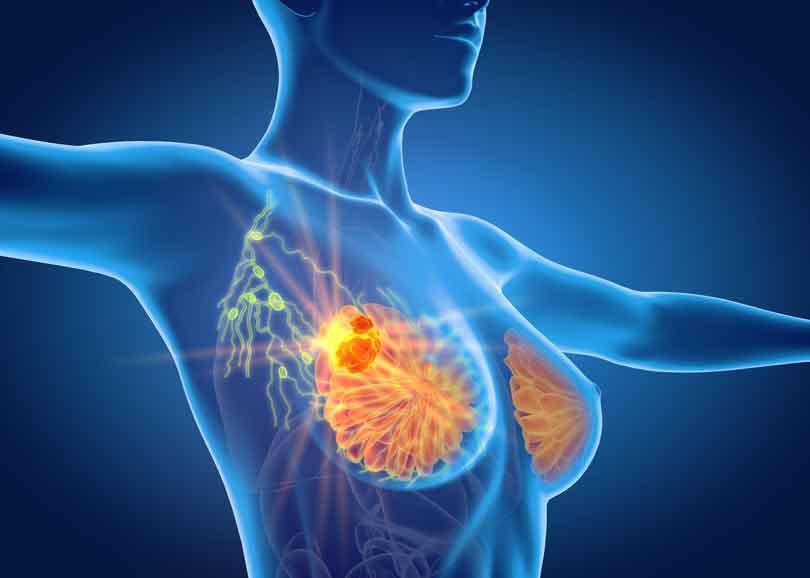
Doctors test breast tumours for three things: oestrogen receptors, progesterone receptors and a protein called HER2. When a tumour has these, there are targeted treatments, including tablets that block hormones, that can help prevent the cancer from returning. When all three come back negative, it is called triple negative breast cancer. Those targeted medicines will not work, so chemotherapy becomes the main weapon. Triple negative cancers also tend to grow faster and are more likely to be found at a later stage. That is exactly why early detection matters so much.
Back then, all I knew was that people around us had opinions. Some scared us by saying that stage three meant she would not live long. Others tried to hold up hope, telling us stories of survivors. I learned that both groups, even the kind ones, can hurt you. What you need in that moment is not a prediction. You need a doctor who is honest and steady.
TEN YEARS LATER
It has now been a decade, and mom is still with us. She is not in her best health. Her body carries the marks of everything it went through, and she lives with the ailments of ageing, made heavier by what she endured. But she is here. She fought cancer and she is still here, and I do not take a single ordinary day with her for granted. I wanted to write this in my column because cancer is a b**ch. It does not only crush the patient. It crushes everyone standing around her. It is a physical battle for one person and a mental one for the whole family, a life of fearing what comes next at every scan, every check-up, every cough that lasts a day too long.
WHY WE DON'T TALK ABOUT IT
I recall when mom was diagnosed with breast cancer, some of her sisters were talking about it in whispers; some of them told me, ‘we don’t even mention the word cancer out loud, it’s such a scary thing’ and somehow I learned in Sri Lanka, breast cancer is not only a medical problem. It is also a taboo. Many of us grow up learning that the body, especially a woman's body, is something to be covered, not examined. So, women feel awkward touching their own breasts, even for a purpose as serious as checking for lumps. Some feel it is shameful. Some fear what the doctor will think. Many still avoid male doctors and delay going at all because there is no female doctor close by or they are too embarrassed to ask. Then there is the fear of the word itself. In many homes, cancer is whispered. Families hide a diagnosis from relatives or neighbours, afraid of gossip, afraid it will affect a daughter's marriage prospects, afraid people will look at the woman differently. There is also the fear of losing a breast, and the quiet belief that without one, a woman is somehow less. I have heard women say they would rather not know than risk surgery. Some people explain illness as karma, as something she must have done or something that was always written. This takes away the urgency to act. Others turn first to home remedies or traditional healers, which can be a comfort alongside treatment but are dangerous as a replacement for it, because every month lost is a month the cancer can spread. And so, women wait. They wait because it doesn't hurt. They wait because it might go away. They wait because they are busy looking after everyone else. Mom waited too, not out of ignorance, but because a tiny pimple does not look like a threat.
WHAT TO LOOK OUT FOR
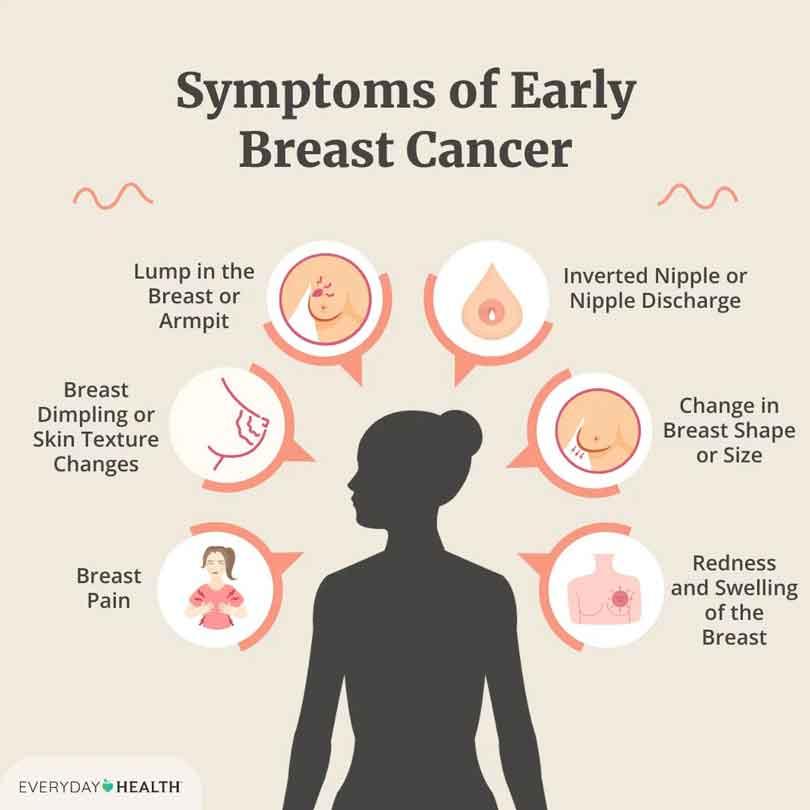
The most important thing I can tell you is that breast cancer does not always begin with a lump. Please know the other signs, which are easy to dismiss:
- A lump or thickening in the breast or under the arm, which may or may not be painful
- A small bump, sore or "pimple" that does not heal or keeps returning in the same spot
- A change in the size or shape of one breast
- Dimpling or puckering of the skin, sometimes described as looking like the peel of an orange
- Redness, rash, scaling or unusual warmth on the breast
- A nipple that turns inward, or changes in the skin around it
- Any discharge from the nipple that isn't breast milk, especially if bloody
- Swelling in the armpit or near the collarbone
- A new pain that stays in one place and does not go away
Most breast changes turn out not to be cancer. But that is exactly why they must be checked: so, you can be told it is nothing or told early enough that something can be done.
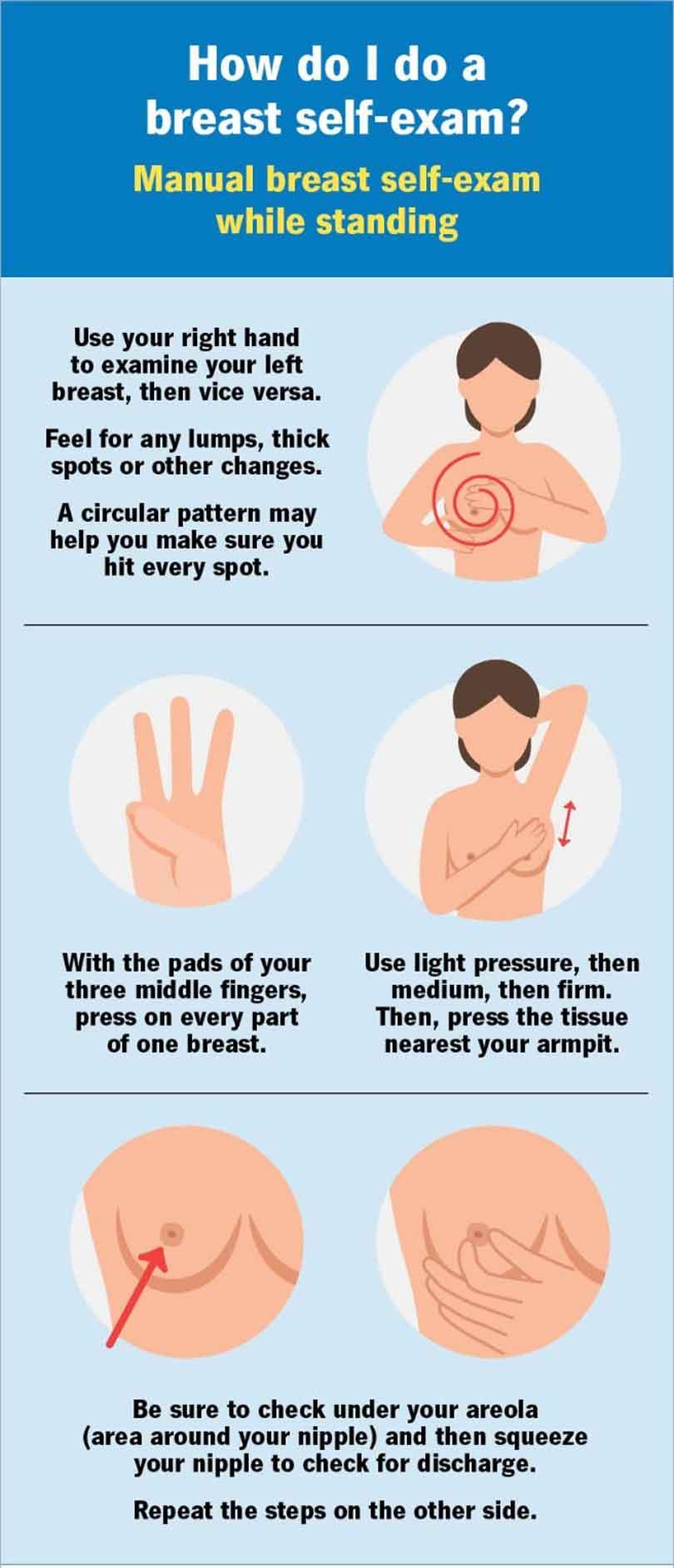
HOW TO CHECK YOURSELF AT HOME
WHAT A DOCTOR CAN DO
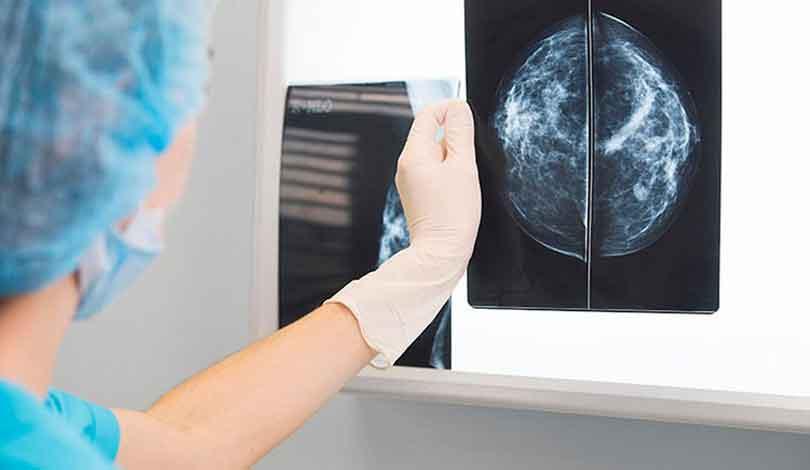
A doctor will usually begin with a clinical examination and may then recommend an ultrasound, a mammogram (more useful for women over 40) or both. If something looks suspicious, a biopsy takes a small sample of tissue to be tested, and that is what actually confirms whether it is cancer and what type. In Sri Lanka, the government's Well Woman Clinics offer breast examinations for women, and government hospitals, including the National Cancer Institute in Maharagama, provide diagnosis and treatment. If you are 40 or above or have a close relative who has had breast or ovarian cancer, ask your doctor about regular screening. Men can get breast cancer too, though rarely, and they should never ignore a lump either.
WHY WE NEED TO KEEP SAYING IT
This should not be a conversation that happens once a year in October, when pink ribbons appear and then vanish. It needs to happen at family dinners, in school classrooms, in women's groups, in temple and church and mosque gatherings, and over tea between sisters. It needs to be said often because silence is what lets small things become big things. If my mother's story shows anything, it is that even the most informed person can be caught off guard, so information alone is not enough. We need permission to talk about our bodies, to look, to ask, to go to the doctor without shame. A woman who is embarrassed will wait, and waiting is where cancer wins.
A THANK YOU
I would not feel right ending this without thanking the doctor who walked this road beside us. Dr. N. Yoganathan, our oncologist, has been the greatest source of support for mom and for our entire family. It is sadly rare to find doctors in Sri Lanka who treat patients with warmth, patience and real empathy, who explain things gently and treat fear as part of the illness. He did all of that, again and again, for years. Thank you, doctor. You gave us more than treatment. You gave us steadiness when we had none. If you are reading this and you have been putting something off, a lump you keep meaning to check, a mother who keeps saying she's fine, a sister who changes the subject, let this be your sign. Make the call. Book the appointment. Have an awkward conversation. My mom is alive today because someone listened to a story, noticed a connection and said: let's go to the doctor. Be that person for someone you love.