The Death Sentence Debate in Sri Lanka
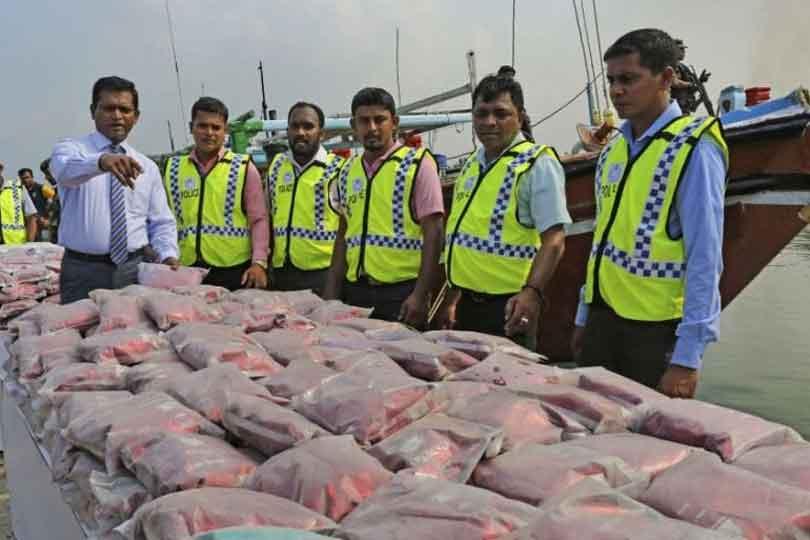
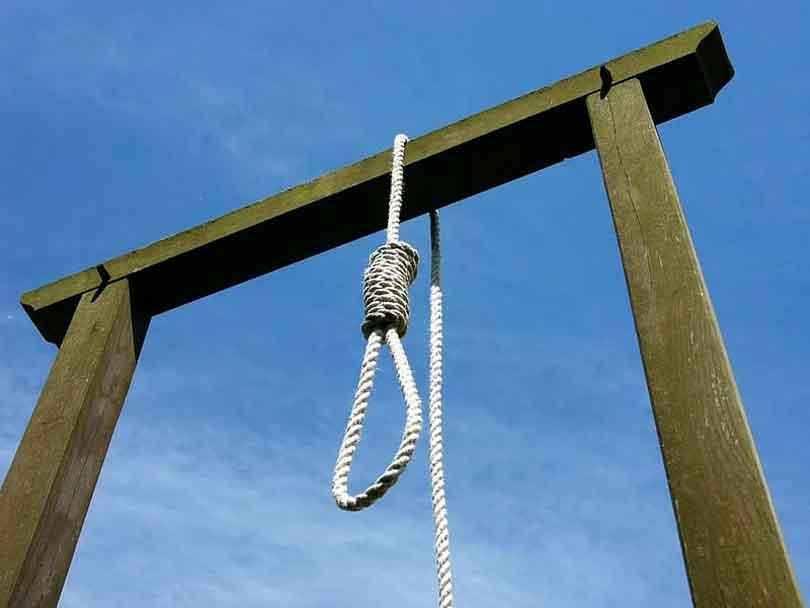
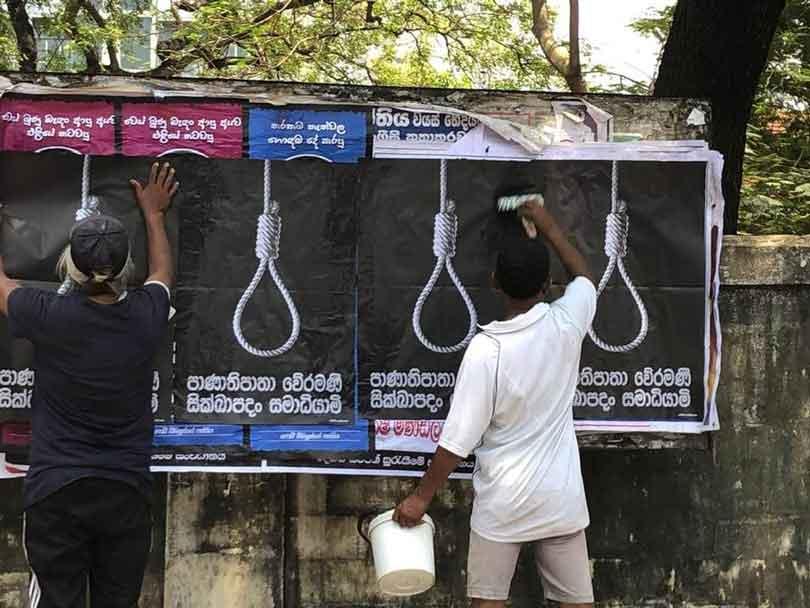
Every few years, someone in power in Sri Lanka decides the answer to a crisis is a noose nobody has actually used since 1976. This time it is drugs. On 10 August, at a National Operations Council meeting the government branded "Ratama Ekata," officials raised the idea of executing drug traffickers as a response to what is, by any measure, a genuine and worsening narcotics crisis. The Cabinet spokesman has since said no final decision has been made. That caveat should not comfort anyone. We have been here before, and the pattern is worth naming plainly: a country in economic and social distress reaches for capital punishment as theatre, gets slapped by the reality of its own legal and trade commitments, and quietly backs away, only for the idea to resurface a few years later dressed in slightly different language.
This is round three. Chandrika Kumaratunga announced in March 1999 that hangings would resume. She backed off. Maithripala Sirisena, freshly returned from a trip to the Philippines where he praised Rodrigo Duterte's drug war, declared in February 2019 that he would end the moratorium, advertised for hangmen, and in June signed death warrants for four people convicted of drug offences. Nobody was executed. The warrants were challenged in court, international pressure mounted, and the government of the day quietly let the matter die. Now it is 2026, and Sri Lanka has already gone further on paper than either of those two false starts. Act No. 7 of 2026, gazetted in March after a run of naval interceptions in international waters, made manufacturing narcotics on the high seas aboard Sri Lankan-registered or stateless vessels a capital offence, applicable to foreigners and citizens alike. The August proposal to extend the death penalty more broadly for drug offences is not a new idea springing from nowhere. It is the next log on a fire that has been quietly building for months.
Why does this conversation keep returning?
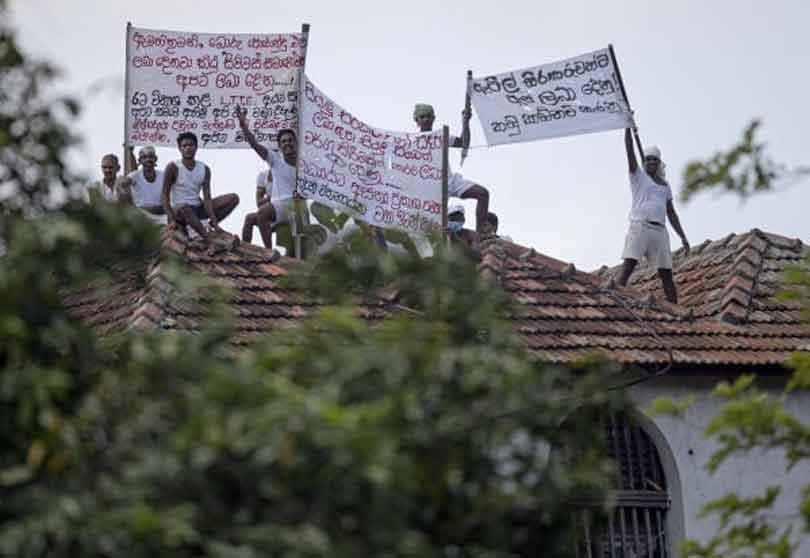
The crisis is manufactured or exaggerated and does nobody any favours. Sri Lanka's prisons were built to hold roughly 10,000 people. They currently hold more than 40,000. The Justice Minister told Parliament in January that every prison in the country is operating at roughly 300 percent capacity. About 65 percent of those inmates are there on drug-related charges, and more than 7,300 of them are under 21. These are not abstract statistics. They describe a criminal justice system that has been overwhelmed by narcotics enforcement for years, funnelling mostly low-level users and couriers into a prison system that cannot hold them, rehabilitate them, or process their cases with anything resembling speed. When a Prisons Commissioner stands in front of schoolchildren and tells them political leaders should be pressured into executing major traffickers to "protect future generations," as Jagath Weerasinghe reportedly did in October, he is voicing a frustration that a lot of ordinary Sri Lankans genuinely share. Families have watched addiction hollow out their communities.
Law enforcement has watched seizures of heroin and methamphetamine grow larger and the networks behind them grow more sophisticated and more transnational. The anger is real. It just does not follow that the rope is the answer, and a serious opinion piece owes its readers the actual reasons why, not just the assertion.
What do Sri Lanka’s law books say about this?
The death penalty has already been on Sri Lanka's law books this entire time, for both murder and drug trafficking, and courts have never stopped imposing it. As of September 2025, the Ministry of Justice reported 817 people sitting on death row. Earlier counts this decade put the number even higher, over 1,200 at points, including dozens convicted specifically of drug offences. If the mere existence of a death sentence on the statute books were doing anything to deter trafficking, none of this would be happening. Sri Lanka has had capital punishment as a legal possibility for drug crimes for decades without a single execution actually deterring the trade from professionalising and expanding. What has changed is not the law. What has changed is enforcement capacity, regional trafficking routes, and the economics of a country in crisis, where desperate people become couriers because the money is better than anything else on offer. You do not fix an economic and enforcement problem by threatening to hang the most replaceable, least powerful people in the supply chain, and that is precisely who ends up on death row. The kingpins do not carry the drugs across the water themselves.
There is a legal argument here too, and it is not a technicality, it is the actual floor Sri Lanka agreed to stand on. Article 6 of the International Covenant on Civil and Political Rights, which Sri Lanka ratified in 1980, restricts the death penalty to the "most serious crimes," a phrase the UN Human Rights Committee has consistently interpreted to mean offences involving intentional killing. Drug offences do not meet that bar under international law, no matter how severe the domestic panic around them becomes. Sri Lanka also voted in favour of UN General Assembly resolutions calling for a global moratorium on executions in both 2016 and 2018. Reviving executions for narcotics offences would not just be a domestic policy shift. It would put the country in direct breach of commitments it made to the international community with its own vote, and it would do so for a category of crime international law does not even recognise as eligible for this punishment.
Then there is also a trade decision with real financial consequences. The EU's GSP+ scheme gives Sri Lanka zero tariffs on the majority of its exports to Europe, dominated by apparel, and Sri Lanka's use of that access has been recovering after a rough patch, worth roughly 2.2 billion euros in 2024 alone. GSP+ eligibility is explicitly tied to a country's record on human rights conventions, including the ICCPR. The EU has already told Colombo, in its most recent review covering 2023 to 2025, that continued death sentences and the prospect of executions are a live concern for the scheme's renewal, with new eligibility rules coming into force that Sri Lanka will need to reapply under before the end of 2028.
Finance Minister Mangala Samaraweera made exactly this point back in 2019 when Sirisena signed those four warrants, warning that reinstating executions could cost the country its GSP+ status entirely. That warning held then. It holds more now, in an economy that is still climbing out of the worst financial collapse in its post-independence history and cannot afford to gamble apparel exports on a policy with zero demonstrated deterrent effect.
What about the status quo?
None of this is an argument for doing nothing about the drug crisis, and it would be intellectually dishonest to write this piece as if the status quo is fine. It is not. A justice system where 65 percent of a badly overcrowded prison population is there on narcotics charges, where trials drag on for years, and where circumstantial cases can still end in death sentences, as they did for twelve men convicted in the 2022 killing of an MP largely on CCTV footage that never actually captured the killing itself, is a system in crisis regardless of what the maximum sentence says on paper. The honest answer to that crisis is unglamorous compared to a hanging. It looks like financial intelligence units that go after the assets and bank accounts of syndicate leaders instead of the bodies of the couriers who work for them. It looks like modernised maritime interdiction done in cooperation with regional navies, which is presumably why Act No. 7 targeted high-seas manufacturing in the first place, since that part of the response is actually sound. It looks like dedicated courts to clear the backlog so that people are not sitting on remand for years before a verdict, and it looks like community-based, medically supervised rehabilitation that treats addiction as what it is rather than funnelling users into a prison system that has no room for them and no capacity to change them.
Sri Lanka has tried the death penalty threat twice before during a crisis and backed down twice, not because the political will evaporated, but because the legal and economic reality caught up with the rhetoric both times. There is no reason to expect a third attempt to end differently, except that this time the country has already gone one legislative step further with Act No. 7, which means the next attempt at expansion will be harder to walk back once it clears Parliament. That is exactly why this debate deserves more scrutiny now, while it is still a proposal and not yet a gazetted law nobody can quietly retreat from. The families burying loved ones lost to addiction deserve a state that actually dismantles the networks profiting from their grief. What they do not deserve is a government reaching, for the third time in three decades, for a punishment that has never once worked, dressed up as decisive action because it photographs better than the slow, unglamorous work of actually fixing the system.