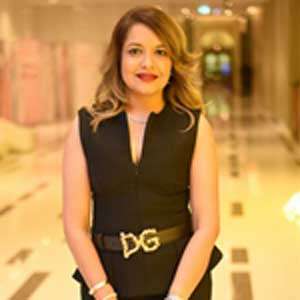
IN CONVERSATION WITH LINDA SPELDEWINDE, FOUNDER AND CHAIRPERSON, AOD.
MERCEDES-BENZ FASHION WEEK SRI LANKA 2026

BY: RISHINI WEERARATNE
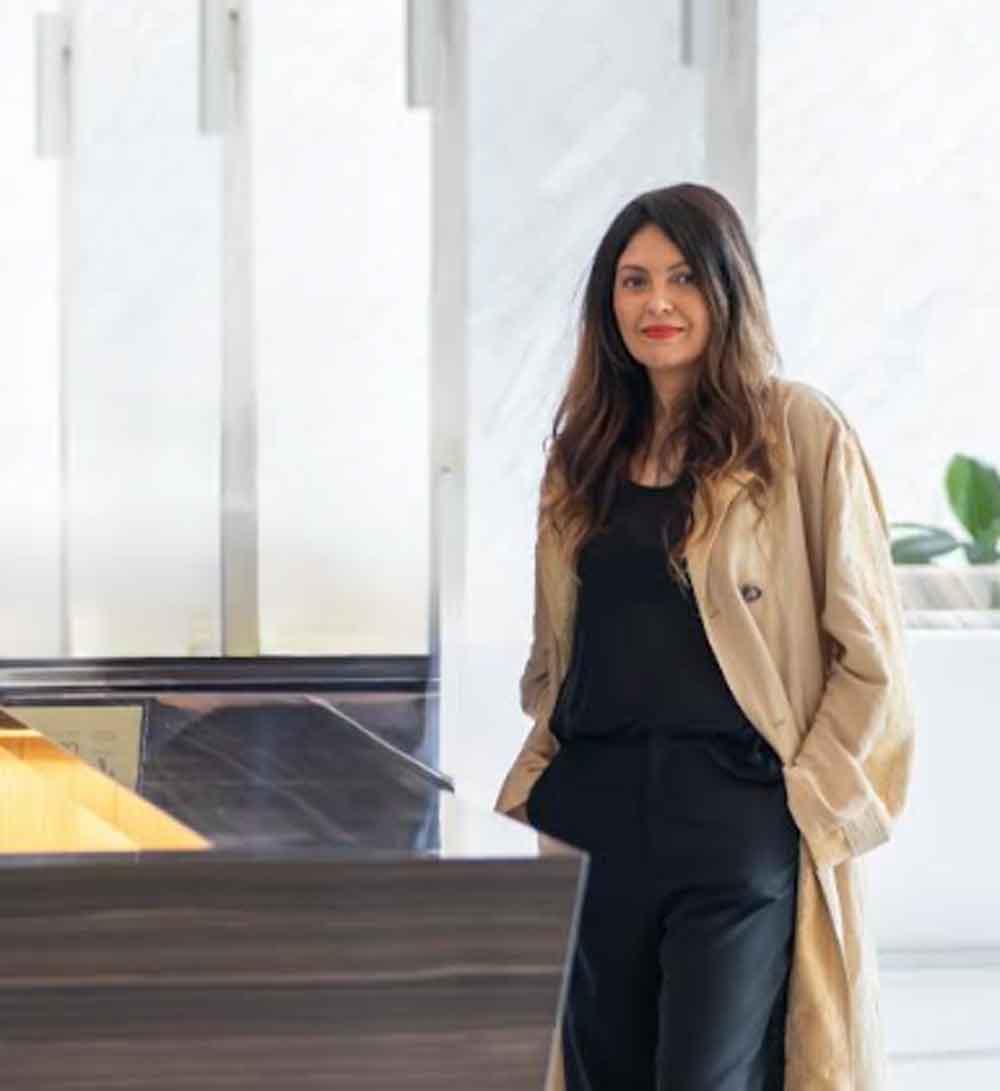
There are certain rituals that signal the arrival of fashion week. For me, one of them is a conversation with Linda Speldewinde. Ahead of each edition of Mercedes-Benz Fashion Week Sri Lanka, I look forward to sitting down with its founder and chairperson to find out what has been quietly, or knowing Linda, not so quietly, putting into motion. Who are the new names to know? What will feel different? Who is coming to Colombo? And where does intend to take it all next? Standing still has never interested Linda much. She is an instinctive builder, constantly experimenting, questioning, connecting and creating, with her eye firmly on what comes next. Each year, that restless energy finds new expression at Fashion Week. Fresh faces appear on the runway. Emerging designers nurtured through the AOD ecosystem step into the spotlight. International designers share the calendar with Sri Lankan talent. Buyers, editors and industry figures arrive in Colombo. And the conversations around craft, sustainability, commerce and the future of fashion continue to evolve.
It is this sense of discovery that has made Mercedes-Benz Fashion Week Sri Lanka one of the most anticipated fixtures on Colombo’s fashion and social calendar. Yet the runway, as Linda observes in this interview, is only the visible layer. Behind it is a much more ambitious project, one concerned with building the infrastructure, confidence and international connections of a genuine Sri Lankan creative economy, while positioning Colombo as a gateway through which the world can encounter South Asian fashion. That ambition comes into sharper focus this year. The 2026 edition begins a three-year vision that takes Fashion Week through its tenth anniversary in 2027 and beyond. Linda is no longer thinking simply about staging another memorable season. She is thinking about Colombo’s place on the international fashion calendar, about bringing more buyers, editors, designers and industry figures to the city, and about creating credible pathways for Sri Lankan talent to move from a Colombo runway into the wider world. And then there is the inevitable question of what comes next.
This year sees the Sri Lankan launch of She’s Mercedes, a stronger international focus and a wider conversation about women, leadership and the structures that allow talent to flourish. All of it belongs to the larger world Linda has spent 25 years building around AOD, encompassing education, fashion, craft, retail, design and the creative industries. So, as Colombo prepares once again for Fashion Week, I sat down virtually with Linda to talk about the edition ahead and the bigger questions occupying her now. What will it take for Sri Lankan fashion to compete internationally? What can Sri Lanka learn from the extraordinary rise of Indian fashion? What distinct role could Colombo play within South Asia? And what does success look like when the real project was never simply a fashion week, but an entire ecosystem? With Linda, the most interesting question is rarely what are you doing now? It is what are you building next?
Mercedes-Benz Fashion Week Sri Lanka returns this October. For someone who has followed the platform from its beginnings, what will feel genuinely new and different about the 2026 edition?
What is new is that we are leveraging the international side of this platform much more aggressively this year. Mercedes-Benz Fashion Week is a global platform, part of an international network that stretches from Berlin to Tbilisi to Prague. This year, we are using that deliberately to position Colombo. Think about what London Fashion Week does for London. It is not only a series of shows. It tells the world that London is a fashion city, and it brings designers, buyers and media into the city because of that. That is the role we want MBFWSL to play for Colombo. Because the platform is global, it gives Colombo the standing to become an international gateway. That is why designers from India, Bangladesh and Bhutan choose to show here, but we also bring our own unique point of view. They come for the international stage, and Colombo becomes the place where we show South Asian talent through our lens and where that talent meets the world. The week itself is also more carefully structured this year, with five distinct runway formats, from The Colombo Edit to Future Craft to Destination Island. Alongside it, we are launching She’s Mercedes in Sri Lanka. And as this is our ninth edition, 2026 is the year in which we build momentum towards our tenth anniversary in October 2027.
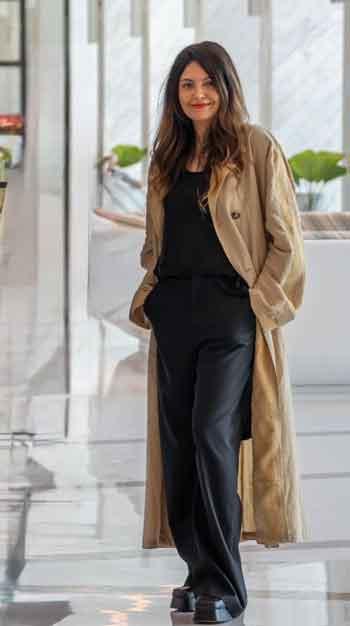 You have now announced a three-year vision taking MBFWSL through 2028. What is the larger ambition behind that commitment, and where would you like Mercedes-Benz Fashion Week Sri Lanka, and Colombo itself, to sit on the international fashion calendar by the end of those three years?
The larger ambition is to build Colombo as a design city, and to use a global platform to do it. Cities are positioned by their events. London, Paris, Milan and New York are fashion capitals partly because their fashion weeks tell that story to the world every season. Mercedes-Benz Fashion Week carries international credibility, and we are using it intentionally to put Colombo on the global fashion calendar. By 2028, I want an international editor, buyer or designer planning their year to see Colombo in October as a fixed date, and to see it as the international gateway into South Asian fashion. Announcing our dates three years ahead is part of that. Serious international partners need calendar certainty, and now they have it.
For a young Sri Lankan designer selected to show at MBFWSL, what does the platform offer beyond the prestige and visibility of putting a collection on the runway? How are you helping designers make the transition from creative talent to sustainable, commercially viable fashion businesses?
A runway is a moment. A career is built on what happens around it. We try to give designers the full chain, visibility, commercial exposure and a route outward. Amesh Wijesekera is the proof. He was discovered on our platforms in Colombo, won at Graduate Fashion Week in London, showed at Mercedes-Benz Fashion Week Berlin in 2019 and became the first Sri Lankan designer named an LVMH Prize semi-finalist. This June, another AOD graduate, Charuka Dilshan Gunasekara, took Overall First Place at Graduate Fashion Week London. The pipeline works, and it compounds.
International fashion weeks are increasingly judged not simply by who shows, but by who is sitting in the room. What can designers expect this year in terms of access to buyers, international industry figures, media, and potential commercial opportunities?
This is exactly where being part of a global platform matters. The Mercedes-Benz name opens doors that, as a local event, we simply would not have been able to open. It gives international designers, media and industry figures a reason to come to Colombo, and our partnership with Cinnamon Life has been central to positioning the city as a place where people fly in, stay and experience Colombo. For designers, the value is in proximity. A young Sri Lankan designer can sit at the same table as an established name from Delhi or an editor from London. That is where commercial and editorial relationships genuinely form. Over the next three years, we will steadily grow the international buyer presence so that every designer who shows leaves with real conversations, not just applause.
And from the buyer's perspective, what do you want a buyer coming to Colombo in October to discover? Is there a recognisable Sri Lankan design proposition, whether craftsmanship, materials, sustainability, price point or aesthetic, that you believe differentiates the country internationally?
I want a buyer to discover that Sri Lanka offers something no one else can. It is our unique point of view on fashion’s new voices from South Asia, where craft is measured in centuries and collections are finished to international standards. South Asia is home to craft like nowhere else, with India just next door, and we ourselves are almost a living laboratory for small runs. We have handloom, batik, Palmyrah weaving, Beeralu lace and Dumbara weaving, which is inscribed by UNESCO. At the same time, we have one of the world’s most respected apparel manufacturing sectors. Sri Lanka built the first LEED Platinum apparel factory on earth and manufactures for brands including Calvin Klein, Marks & Spencer, Nike and Patagonia. So, the Sri Lankan proposition is not one aesthetic. It is authenticity with discipline behind it. It is craft that is real, ethically made and often circular by default, combined with an industry that can deliver and knows how to meet international specifications. And because Colombo is becoming an international gateway for the region, a buyer can see South Asian design curated through a unique lens in one trip.
What can local and international media expect from MBFWSL this year? How important is serious international editorial coverage in changing the narrative around Sri Lankan fashion from an ‘emerging’ industry to one that deserves to be followed consistently?
International editorial coverage is essential because the narrative follows the coverage. As long as Sri Lankan fashion is written about as ‘emerging,’ it will be treated as emerging. The truth is that we are not starting from zero. This is an almost decade old fashion week sitting on top of a 25-year-old institution like AOD, with a 450-artisan craft network, 17 years of the Sri Lanka Design Festival and an almost decade old Mercedes-Benz Fashion Week. The substance is already here. What has been missing is telling that story properly to the people who need to hear it. For local media, we want depth, not just photographs. For international media, we want them to come to Colombo, meet the designers, visit the villages and see the craft for themselves.
Once people see it, the story tells itself. This year, among the international press, we have Vogue Italia flying in to do just that.
DIMO, the exclusive authorised Mercedes-Benz representative in Sri Lanka, has been integral to MBFWSL's development. How has that relationship evolved, and what has the association with Mercedes-Benz enabled you to do that would otherwise have been difficult for a Sri Lankan fashion platform?
DIMO is Mercedes-Benz in Sri Lanka, and Fashion Week has been a joint DIMO and AOD initiative since its launch in 2017. Over the years, that relationship has grown into a genuine partnership, grounded in DIMO’s more than 85 years of representing Mercedes-Benz in Sri Lanka. The Mercedes-Benz association gives us a global platform, connecting Colombo to an international network of fashion weeks and talent programmes. It is what allows us to position Colombo internationally rather than simply host an event and has created pathways for talent such as Amesh Wijesekera to move from Colombo to Berlin. But the partnership also reflects a shared understanding of luxury. Mercedes-Benz has never been only about the car. It is about lifestyle, experiences, people, culture and belonging. Fashion Week is one expression of that, as is She’s Mercedes. Ultimately, the value of a brand like Mercedes-Benz lies in belonging to its world, and in Sri Lanka, that world lives with DIMO.
This year also sees the new She’s by Mercedes-Benz - Power Women initiative. Tell us about the thinking behind it. Who are the women you want to reach, and what do you want the initiative to achieve beyond simply celebrating successful women?
She’s Mercedes is Mercedes-Benz’s global platform for women. It began in 2015 and now runs in more than 70 countries, and this year we bring it home to Sri Lanka alongside Fashion Week, powered by DIMO. Its story goes back to Bertha Benz, who in 1888 took the car, took her sons and drove more than 100 kilometres to prove the idea worked. She did not ask permission. That spirit is everywhere in Sri Lanka, in women who have built businesses, brands and institutions against the odds. In Sri Lanka, She’s Mercedes is a circle of women who lead in business, design, technology, finance and public life. It will gather once or twice a year, and each year the circle will choose one initiative for women in Sri Lanka to champion. So, it goes beyond celebrating success. It is about women who have made it finding each other and then using that collective strength to pull the next generation up with them. We open with an invitation only launch on the 10th of October at the Mercedes-Benz Fashion Lounge, in parallel with Mercedes-Benz Fashion Week itself.
You have spent much of your career creating platforms for other people, designers, students, entrepreneurs and creatives. As a female founder yourself, what have you learned about the difference between recognising female leadership and actually creating the structures, networks and opportunities that allow more women to lead?
Recognition has never been what drives me. My motivation has always been to build, to create impact and to define the scale of my own ambitions. That belief shapes everything I do. If I want to spread my wings fully as a woman, I also have a responsibility to create the conditions for other women to do the same. An award lasts an evening. A structure lasts a generation.
Women rarely lack talent or ambition. What they often lack are networks, access and the confidence that comes from seeing other women succeed. Almost everything I have built, from AOD and Fashion Week to our work at village level, creates those structures. Eighty percent of our Village Programme artisans are women, named and paid as co-creators. She’s Mercedes applies the same thinking differently, bringing women together to open doors for others. Recognition celebrates what a woman has achieved. Structure creates space for what she can do next.
MBFWSL is only one part of a much larger ecosystem you have built, encompassing the Academy of Design, Sri Lanka Design Festival and your curated retail concept. Do you see these as separate ventures, or as interconnected pieces of one long term project to build a genuine creative economy in Sri Lanka?
It has always been one project. I introduced the concept of the creative industries to Sri Lanka following the UK model, based on a specific programme I was part of with the UK at the time, and each part feeds the next. AOD educates the designers. The Sri Lanka Design Festival broadens the conversation into design, innovation and the city. Mercedes-Benz Fashion Week gives our talent a global stage and positions Colombo internationally. The Village Programme connects the village to the economy. Urban Island and Fashion Market give designers a place to sell in Sri Lanka and internationally. A graduate can move from the classroom to the runway to the retail floor within one ecosystem. The runway is simply the visible layer. When it opens this October, a quarter of a century stands behind it.
Your concept store takes the conversation one step further, from showcasing design to actually selling it. What have you learned from retail about the Sri Lankan consumer? Are people increasingly willing to invest in Sri Lankan design, and what does it take for a local label to move from being admired to becoming commercially successful?
In 2010, we introduced “designed and made in Sri Lanka” and really drove that movement. Through the Island Craft Fashion Shows at Sri Lanka Design Festival, Fashion Market and the New Sari movement, we championed a New Sri Lankan Style that people actually wanted to wear. We took batik, handloom and traditional craft and made them contemporary, desirable and designer. It was not about wearing something simply because it was craft. It was modern design built on craft, distinctive, beautifully made and connected to local designers and artisans. At the same time, AOD was nurturing a new generation of Sri Lankan designers and integrating craft into its design education. It took several years to build, and then it took off. Today, consumers increasingly want something distinctive in a homogeneous world, and Sri Lankans are willing to invest in design they cannot find on the high street. But retail has taught me something important. Admiration is not enough. A label becomes commercially successful when the product is strong enough for someone to pay for it. Product is key. Product, product, product. Story comes second. Design has to lead. When the product is resolved and the story is authentic, the customer will invest.
When you look at Sri Lanka's fashion landscape today compared with when you began, what has fundamentally changed? And what is still missing from the ecosystem, investment, manufacturing flexibility, buyers, retail infrastructure, fashion media, brand building expertise or something else?
When I started, design was not considered a serious career in Sri Lanka. Today, we have a generation of designers, a fashion week on a global platform and international recognition for our craft and our sustainable manufacturing. That is a fundamental change. What is still missing is investment in creative businesses, flexible small batch manufacturing for young labels, a stronger buyer network, and brand building and international sales expertise. We also need more serious fashion media, locally and internationally, to follow our designers consistently. The encouraging part is that none of this requires reinvention. The foundations are here. What we need now is to connect them to capital, markets and the world.
We are seeing an extraordinary international moment for Indian fashion. Raw Mango has made its London Fashion Week debut; Anamika Khanna's AK|OK has shown in London; Lovebirds has joined the London calendar; Rahul Mishra has established a presence at Paris Haute Couture, and Sabyasachi in New York. What do you think India has got right in translating its extraordinary craft heritage into fashion brands with contemporary global relevance, and what can Sri Lanka learn from that?
India has done something remarkable. Its designers have taken their craft heritage and made it contemporary and globally relevant without diluting it. Craft became a point of pride and a luxury proposition, not a souvenir. They have also built strong brands with clear identities, and the confidence to show in London, Paris and New York as equals. Sri Lanka can learn from that confidence and that brand discipline. But Sri Lanka also has its own role. India has gravity. Sri Lanka has distinctiveness. Just this March, Delhi label Lovebirds showed at Geoffrey Bawa’s Lunuganga, and it was covered by Wallpaper, Harper’s Bazaar and ELLE. That tells you something. Sri Lanka is a place the world already wants to see. With a global platform like Mercedes-Benz Fashion Week behind it, Colombo can be the international gateway where the region meets the world. We do not need to copy India. We can play a different role. Sri Lanka has the unique role of curator, and with AOD, Sri Lanka can bring a unique point of view to the region.
Sri Lanka has extraordinary craft, textile and manufacturing capabilities, but international recognition of “Sri Lankan fashion” remains comparatively limited. What needs to happen for a Sri Lankan designer or brand to reach the point where showing in London, Paris, Milan or New York, or being stocked by a major international luxury retailer, feels like a realistic progression rather than an exceptional breakthrough?
It has to become a system, not a lucky break. Today, when a Sri Lankan designer breaks through, it feels exceptional because each one has found their own way. The goal is a pipeline that repeats. That means strong education, a global platform at home, commercial exposure and direct links into the international fashion network. That is exactly what the Mercedes-Benz connection offers. Amesh went from Colombo to Mercedes-Benz Fashion Week Berlin. Seven years later, Charuka won at Graduate Fashion Week London. Both came through AOD. The route exists.
What we need now is more buyers and editors coming to Colombo, more investment behind promising labels, and international partners who help carry our designers onto larger stages. When that becomes routine, a Sri Lankan label showing in Paris or being stocked in London will feel like progression, not a miracle.
Elina Gunawardena is an exciting example of Sri Lankan talent operating at the highest level of international fashion, walking for houses including Alexander McQueen, Chanel and Gucci, and appearing across the major fashion capitals. When you see a Sri Lankan model succeeding on that stage, does it change the aspirations of young people here? And what needs to happen for Elina to be the beginning of a pipeline of globally visible Sri Lankan models, designers, photographers, stylists and other creatives rather than an exception?
When a young person in Sri Lanka sees someone from here walking for the biggest houses in the world, it changes what they believe is possible. Representation is powerful. It turns a dream into a plan. But for Elina to be the beginning rather than the exception, the pipeline has to exist behind her. That means training, platforms, agencies, international connections and a creative industry here with real standards. It applies equally to designers, photographers, stylists, makeup artists and creative directors. A fashion week is an ecosystem of many talents, and every one of them needs a path. That is what we have been building for 25 years. We are proud that Elina’s first runway show in Colombo was Mercedes-Benz Fashion Week, but it was Elina who found her own way internationally. Our job is to make sure the next Elina does not have to find her own way alone.
Looking beyond Sri Lanka, how do you see the South Asian fashion ecosystem evolving over the next decade? Could Colombo become a connector between the enormous creative economies of India and the wider region and the established fashion capitals of Europe, rather than trying simply to replicate London, Paris, Milan or New York?
South Asia will be one of the most important fashion regions in the world over the next decade. It has the population, the craft, the manufacturing and a fast-growing luxury market. Colombo’s role is to offer a unique point of view. As a fashion week, our role is not to replicate London, Paris, Milan or New York. It is to connect to them. That connection comes from being part of a global platform. Mercedes-Benz Fashion Week gives Colombo an international standing that allows it to act as the gateway, the place where the world comes to meet South Asian fashion and where South Asian designers step onto an international stage. We are doing this intentionally. Just as London Fashion Week positions London, we are using a global platform to build Colombo as a fashion city. Sri Lanka also brings its own advantages. It is neutral ground in the region, and it is an island the world already wants to visit.
You have already spent decades building institutions and platforms rather than simply a single business. Ten years from now, where do you see Linda Speldewinde? What would you still like to build, and what would need to have happened in Sri Lankan fashion and design for you to look back and feel that the ecosystem you set out to create had truly succeeded?
This year, AOD turns 25. I started it in my twenties, and I have used it to deliver for Sri Lanka. The next ten years are about finishing that job. I want to see the full ecosystem around AOD come together so that everything we have built truly delivers for this country.
I started this, and I want to see it through. For me, what I build and who I am have never been separate. It has always been an evolving journey, and every phase has been different. I am obsessed with growth, and above all, I am obsessed with the future. That is why I founded the AI Academy during COVID19, and why we recently partnered with Tomorrow University. Even the name says it. Whatever I pursue, I am looking at what comes next. In the next decade, I want Sri Lanka to become South Asia’s champion for the creative industries and, in fashion, the place that curates the best of South Asia with its own distinct point of view. AOD remains the engine. I believe in education completely. It is evolving into something new, but it has always been my most powerful tool. But the real measure of success is who it reaches. I am deeply passionate about building livelihoods for women and young people, and I have a clear number in my head that I intend to deliver. I am equally obsessed with the village and with inclusion. I believe that the woman in the village has to be part of what we build, not left outside it. That is why the apparel industry, our artisans and our craft communities have always been central to my work, and they will all be part of this ten-year story. The ecosystem will have succeeded when a young person grows up believing that a global creative career is possible from right here, and when the women behind our craft earn a real and lasting living from their skills. My role models are people like Dr. Jane Goodall, who never really retired. It has never been about building a company, selling it and stepping away for me. It is an entrepreneurial journey with a purpose, and it is always a journey with different phases and milestones. I believe that only I should define that journey for myself, and I try to do that with a great deal of responsibility, knowing that there is always a next generation of young women watching, learning and defining what is possible for themselves from the benchmarks we set.