Shehan Karunatilaka on New Zealand Education, Creativity and Learning Beyond the Classroom
By: Yashmitha Sritheran
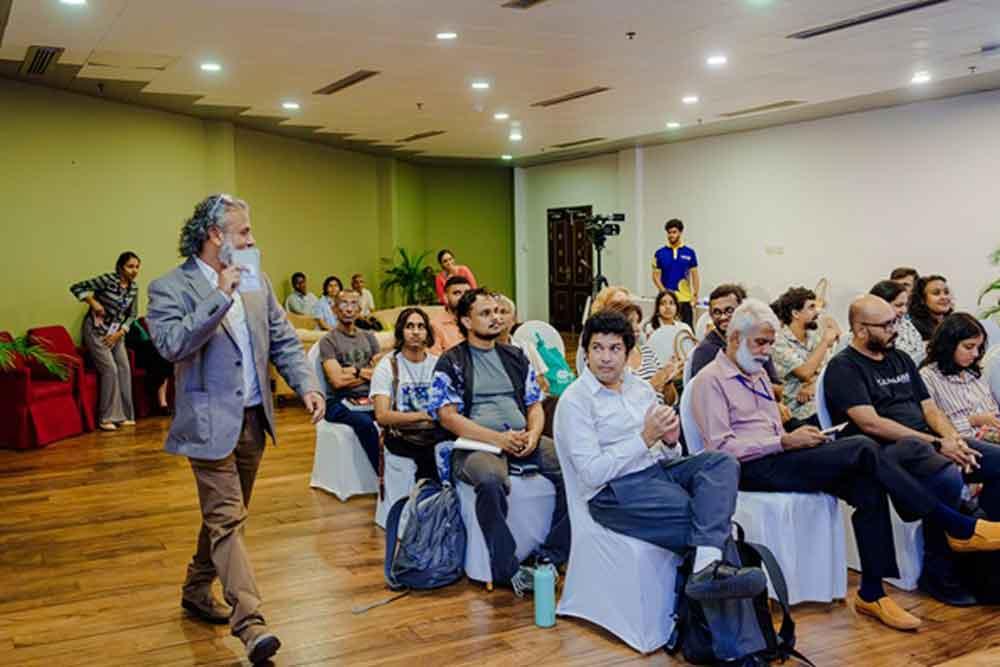
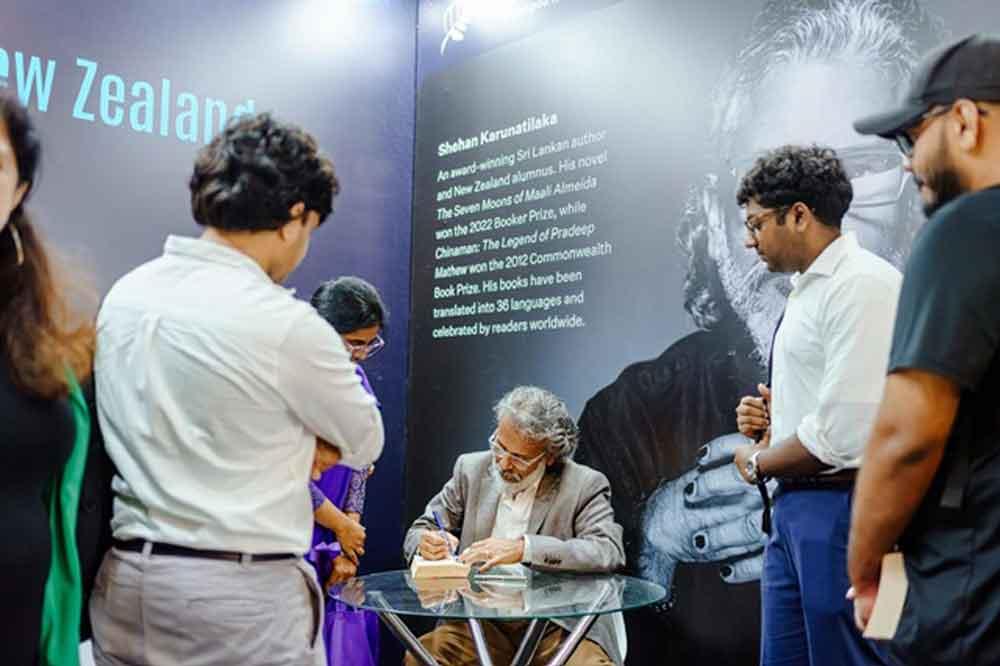
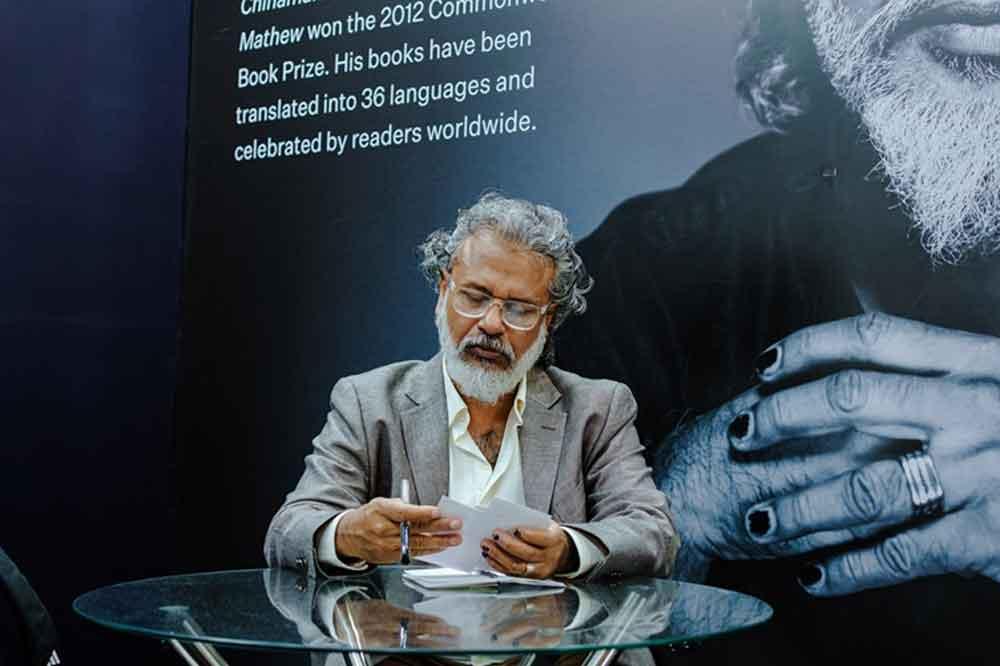
At the Colombo International Book Fair 2026, Education New Zealand brought together students, aspiring writers, educators and readers with one of Sri Lanka’s most internationally recognised authors, Booker Prize winner Shehan Karunatilaka. Through conversations, literary engagements and a creative writing workshop, the collaboration explored an idea that extends well beyond books: that meaningful learning does not end when a lesson does.
Karunatilaka, who studied at Whanganui Collegiate School and Massey University in New Zealand, brought a personal perspective to the discussion. His own journey from studying English literature and working in advertising to becoming an internationally acclaimed novelist reflects the value of remaining curious, experimenting with different paths and continuing to learn beyond formal education. For Karunatilaka, curiosity has always been central to both learning and creativity.
Speaking about choosing a career, he argued that young people should not feel pressured into following a particular path simply because it appears to be the safest or most conventional option. Instead, he encouraged them to explore what genuinely interests them. His own career illustrates that approach. Before becoming a full-time writer, Karunatilaka worked in advertising and pursued interests in music and writing. His breakthrough as a novelist came when an idea stayed with him long enough that he could no longer ignore it: the story of a brilliant Sri Lankan cricketer who disappears after falling out with the cricket establishment. That idea eventually became Chinaman: The Legend of Pradeep Mathew, his acclaimed debut novel. He described this as an important lesson for aspiring writers: finding a story that will not leave you alone.
The idea also connects with ENZ’s emphasis on encouraging students to explore ideas, think independently and discover their own paths rather than viewing education purely through academic achievement. Karunatilaka also reflected on how education can shape the way people think. Recalling his experience studying in New Zealand, he remembered lessons where students were encouraged to question historical events rather than simply memorise them.
That emphasis on questioning has remained relevant to him as a writer. For Karunatilaka, curiosity is not simply about collecting information; it is about asking why things are the way they are, looking at different perspectives and being willing to challenge assumptions. It is also an approach he applies to writing. He believes that becoming a good writer requires more than waiting for inspiration. Drawing on advice from writers such as Stephen King, he highlighted the importance of reading extensively, writing regularly and making the practice part of everyday life. “Read a lot, write a lot, do it every day,” was the essence of the advice he shared.
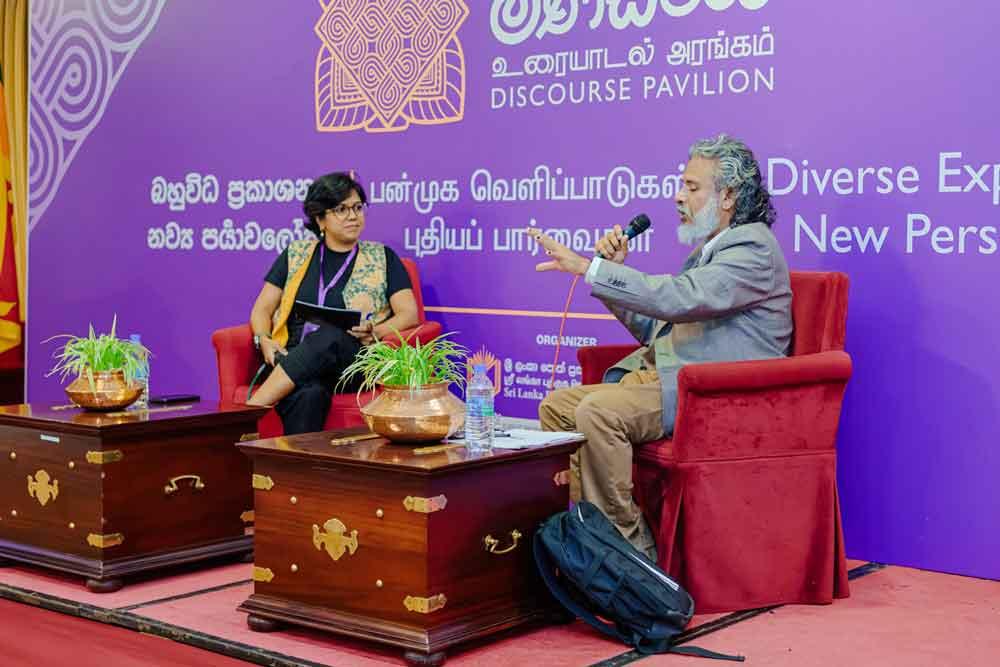
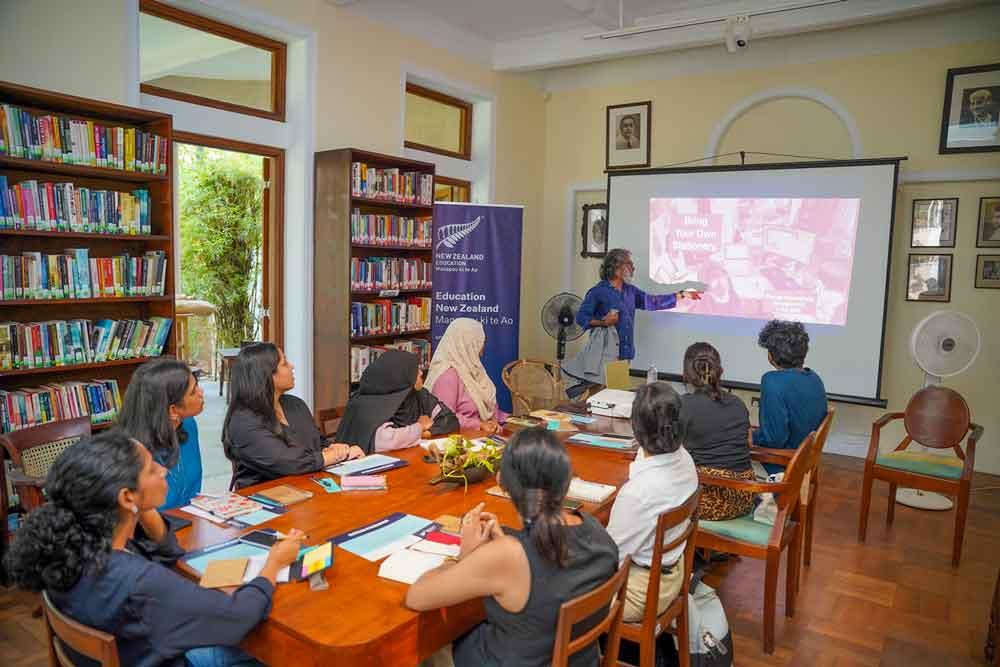
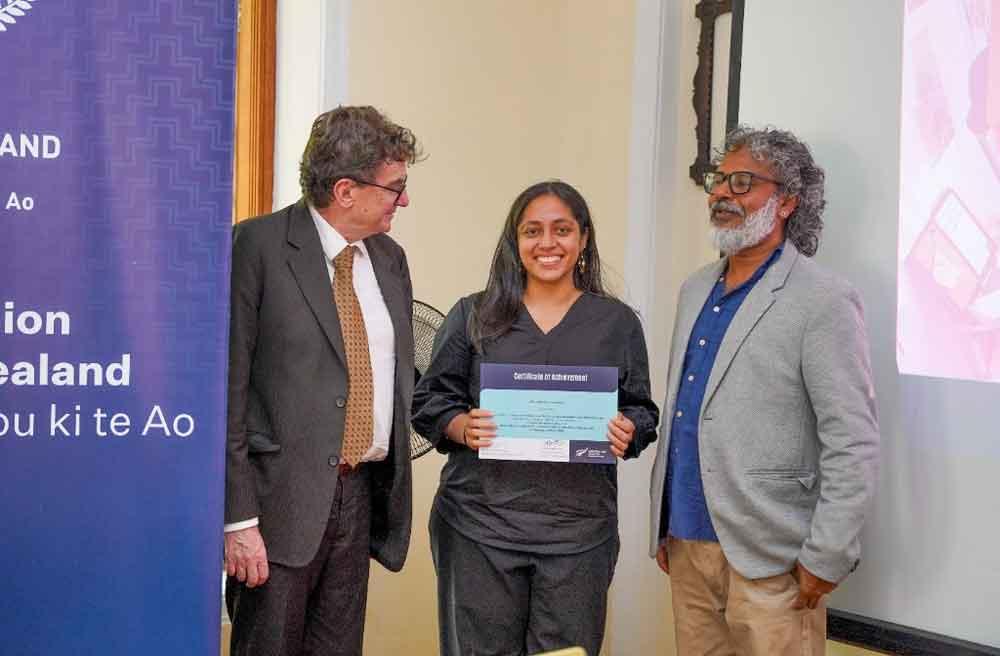
For young writers, however, finding a personal voice can be one of the most difficult parts of the process. Karunatilaka spoke about the many writers who influenced him over the years, from classic authors to Sri Lankan writers such as Carl Muller. While writers may initially imitate the authors they admire, he believes the challenge is eventually to discover a voice that feels authentic. That idea of finding one’s own voice was also reflected in the experience of the young writers participating in the Education New Zealand Short Story Challenge. Shafra Hamid, a final-year student at CINEC Campus and one of the top 10 winners, said the challenge pushed her to think more critically about her writing and helped her develop her own voice. The opportunity to learn directly from Karunatilaka, she added, gave her valuable insight into how he approaches storytelling. The creative writing workshop at the book fair provided another opportunity for emerging writers to engage with that process directly, moving learning from theory into practice.
Karunatilaka also sees reading as an important part of developing that wider perspective. While technology has transformed how people consume information and stories, he does not believe digital developments have made books irrelevant. Instead, he sees value in combining different forms of knowledge and experience. For young people especially, he believes exposure to books, cinema, music, art and the wider world can help develop a richer understanding of society. Reading provides not only information but also an opportunity to slow down, observe and listen to perspectives beyond one’s own. His views on artificial intelligence similarly reflect the importance he places on curiosity and human judgement. Rather than seeing AI simply as a replacement for writers, he described it as another tool that can help people work faster and explore information. But the human work of researching, reading, speaking to people and developing original observations remains essential. For him, technology changes the way people work, but it does not remove the need to think. That philosophy is at the heart of the wider message behind ENZ’s participation at the Colombo International Book Fair. Education, in this context, is not limited to examinations, qualifications or classrooms. It is about developing the confidence to ask questions, engage with different perspectives, apply knowledge in real situations and continue learning throughout life.
Karunatilaka’s own journey demonstrates how those qualities can continue long after formal education ends. From a student interested in literature and music to an advertising professional, and eventually a Booker Prize-winning author, his path has not been linear. It has instead been shaped by curiosity, experimentation, reading, writing and a willingness to follow ideas. At CIBF 2026, his message to emerging writers was therefore about more than becoming an author. It was about remaining curious enough to discover what interests you, disciplined enough to develop your abilities and open-minded enough to keep learning. Through its collaboration with Karunatilaka, Education New Zealand has used literature as a way to demonstrate that learning can happen through stories, conversations, creative practice and encounters with people who have taken different paths. In that sense, the classroom is only one starting point. The wider education comes from what people choose to question, explore, create and carry with them long after the lesson is over.