In Praise of Women Who Keep the City Running
By Thaliba Cader
There are certain women society has trained itself not to see properly, because we have collectively decided their labor belongs in the background of our lives. Like traffic lights, pavements, drains, electric poles. Necessary things. Functional things. Things we depend on but rarely pause to thank. Every morning, before most of Colombo fully wakes up, there are women already working under a sun that has barely risen. Women sweeping roads while buses throw dust back into their faces. Women lifting garbage bags heavier than their own bodies. Women standing ankle-deep near drains, collecting what the rest of society discards without a second thought. They work while school vans rush past them, while office workers sip iced coffee in air-conditioned cars, while people wrinkle their noses and walk around them as though proximity itself is contamination. And still, the roads are clean when we need them to be.
That is the cruel thing about labor done well. People only notice it when it stops. We talk endlessly about celebrating women. Every year there are panels and campaigns and themed brunches and social media captions trying to define empowerment in polished language. But I have always wondered who gets left out of these conversations. Because womanhood has never looked singular to me. It has never lived only inside boardrooms, beauty campaigns or aesthetically curated success stories. Sometimes womanhood looks like a woman holding onto the back of a garbage truck at 7 in the morning after already cooking breakfast for five people at home. Sometimes it looks like surviving violence quietly because survival itself has become routine. Sometimes it looks like exhaustion so normalized that people stop asking if you are tired.
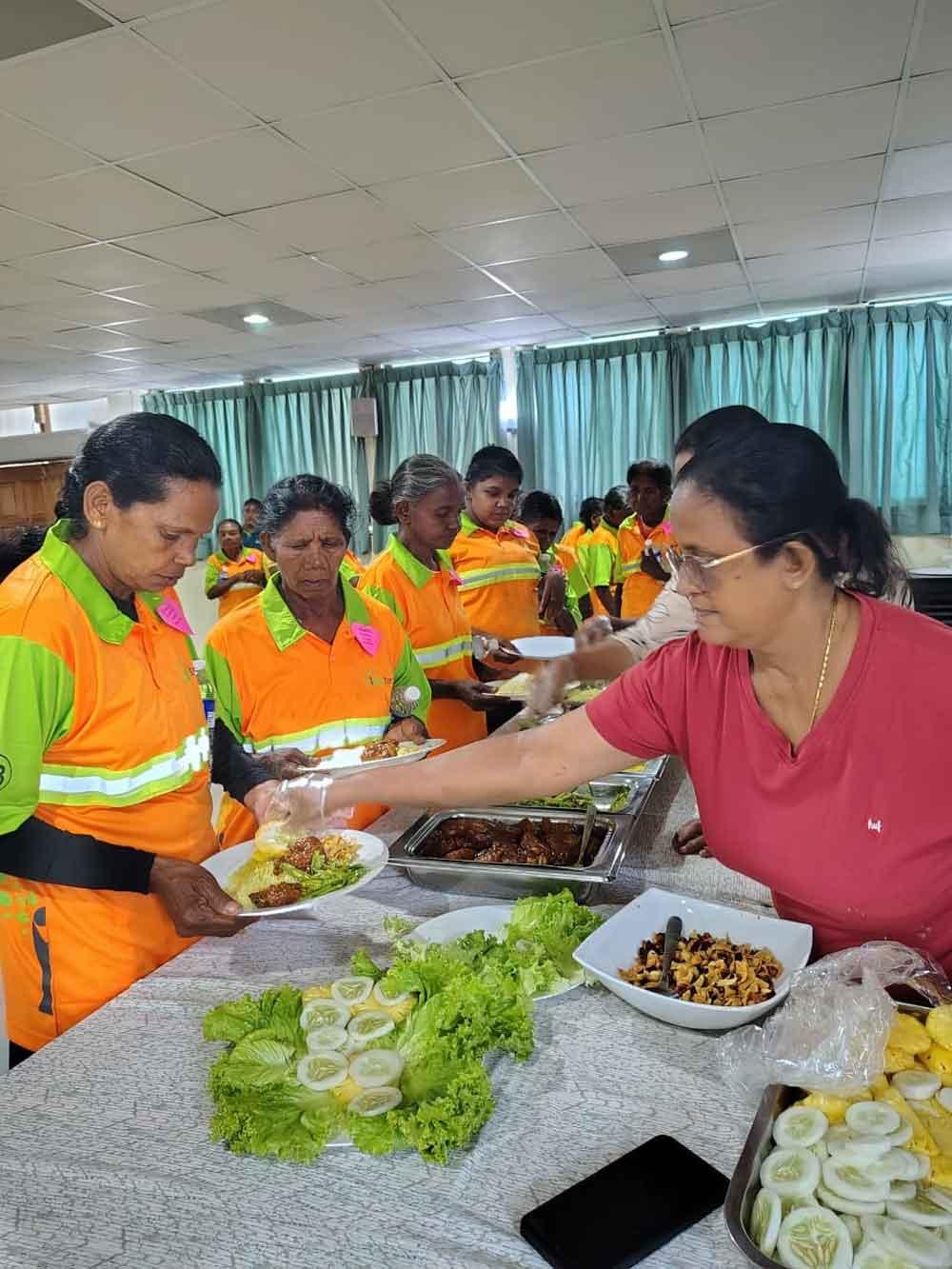
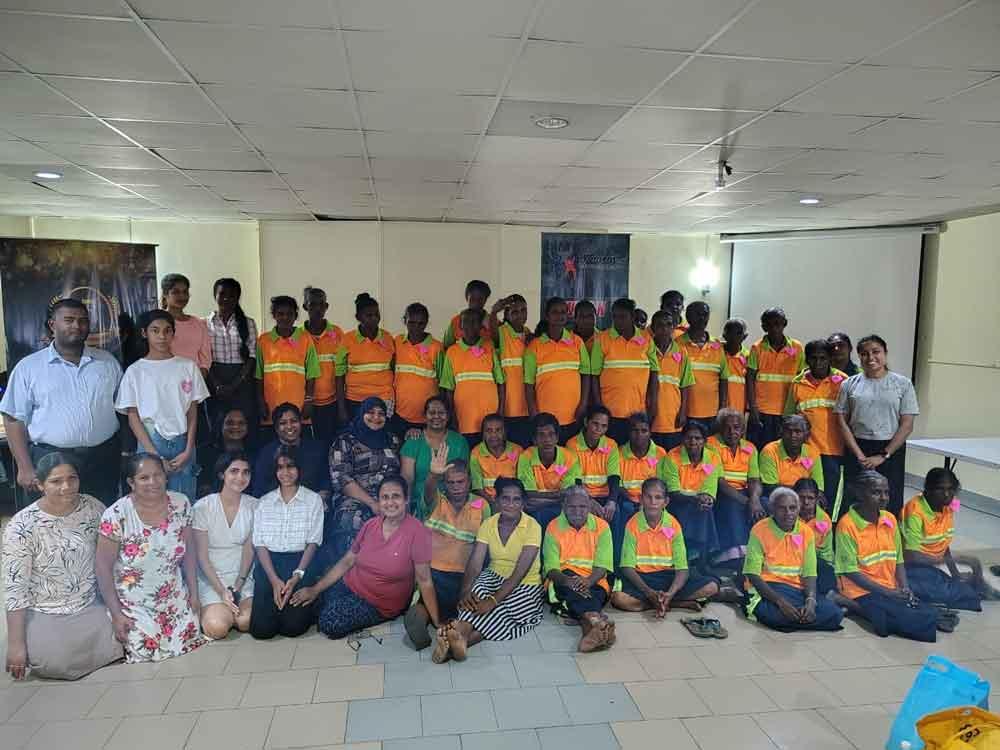
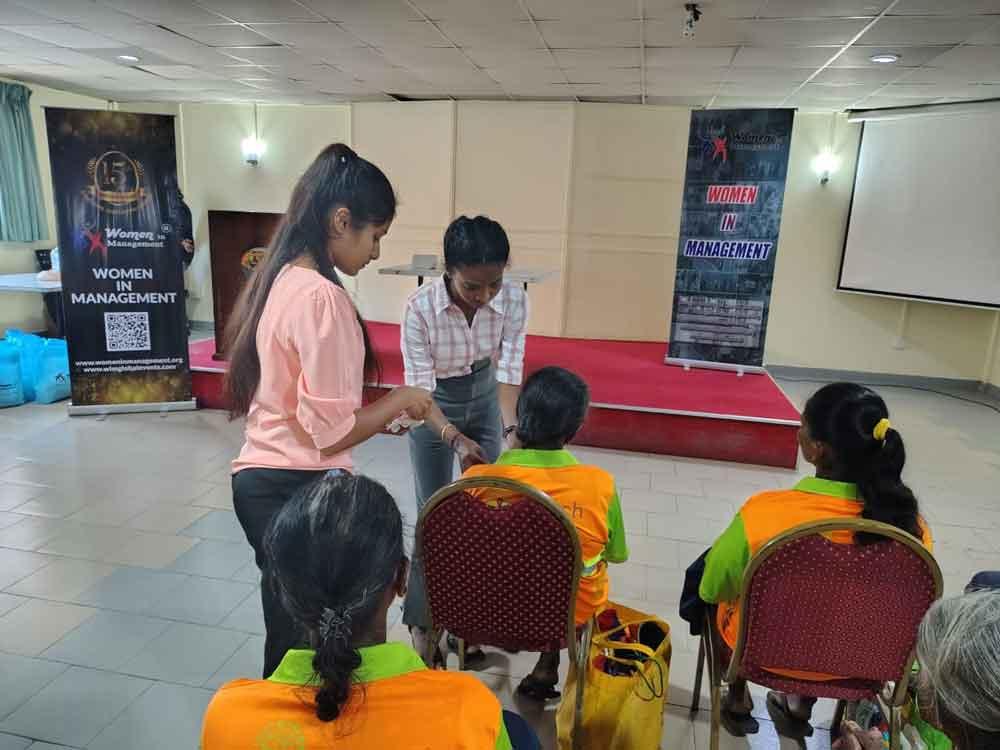
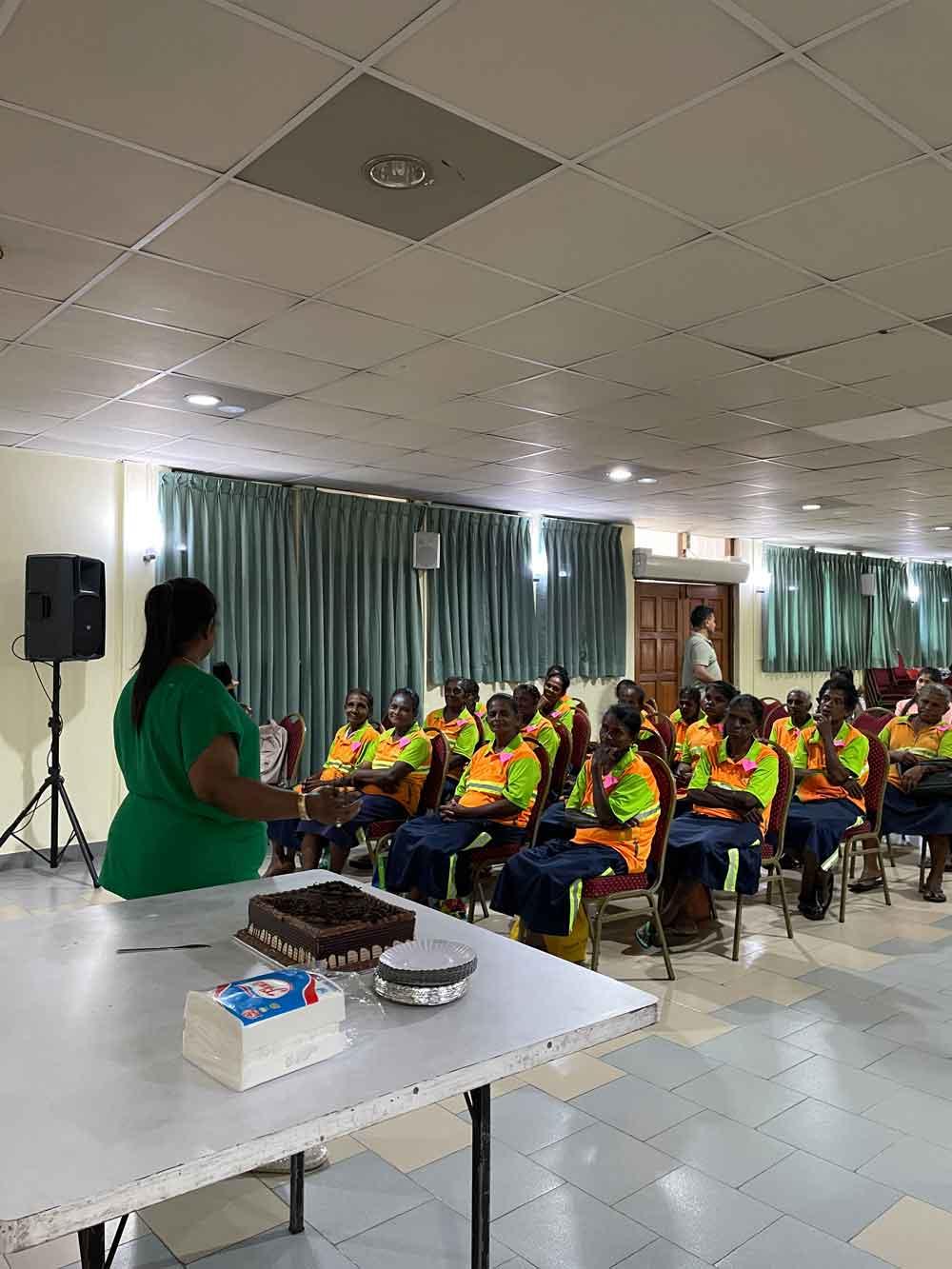
That is why the recent celebration organized by Women in Management under the leadership of Dr. Sulochana Segera felt different from the very beginning. It felt deeply considered. Human in the most intimate way. Not an event trying to “help” from a distance, but one trying to restore dignity to women who have spent years being overlooked in public spaces. The women arriving that afternoon were municipal workers. Street cleaners. Garbage collectors. Public sanitation workers. Women whose labor physically holds society together while receiving almost none of the admiration reserved for more visible professions.
And yet the room they walked into felt like a celebration prepared for royalty.
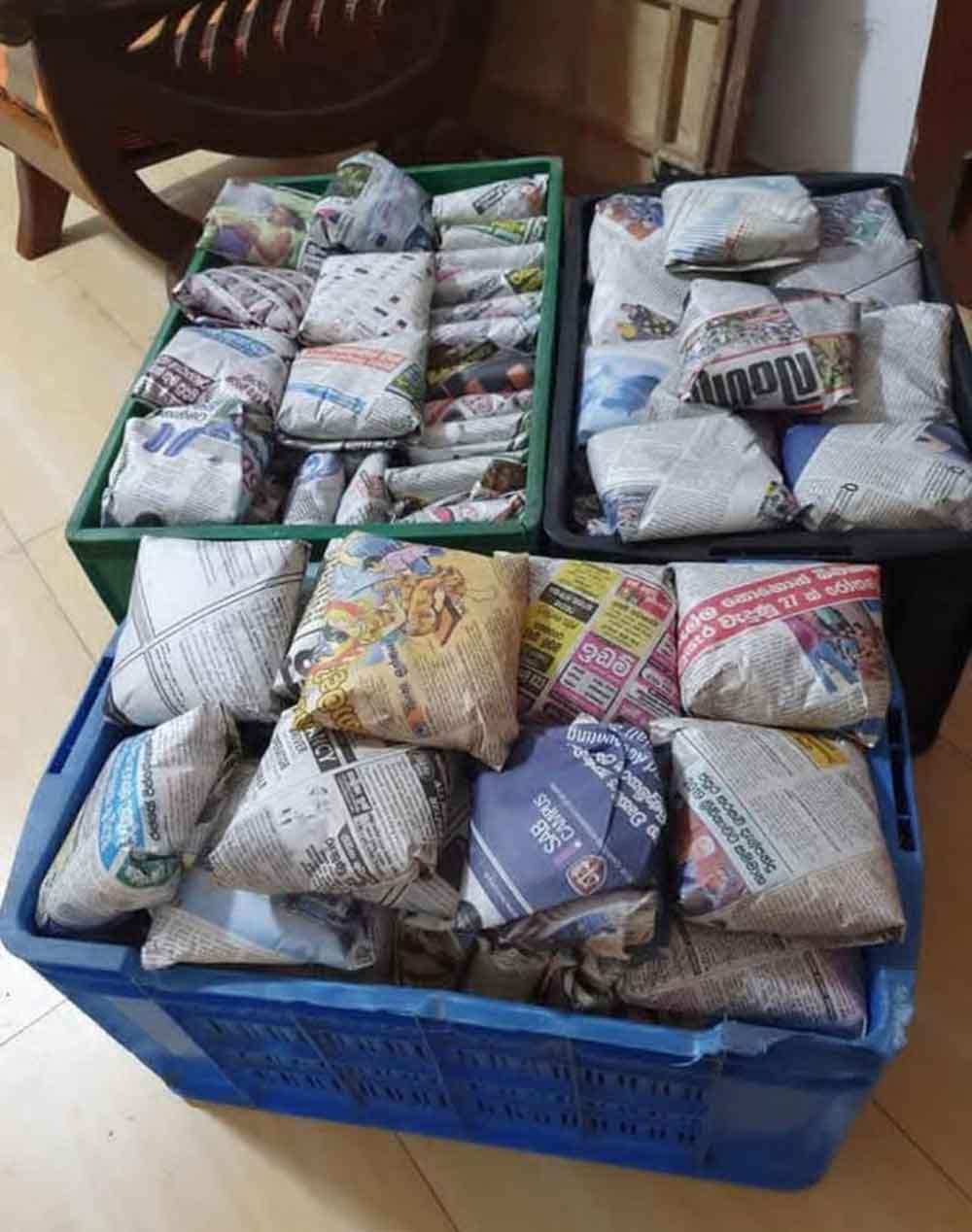
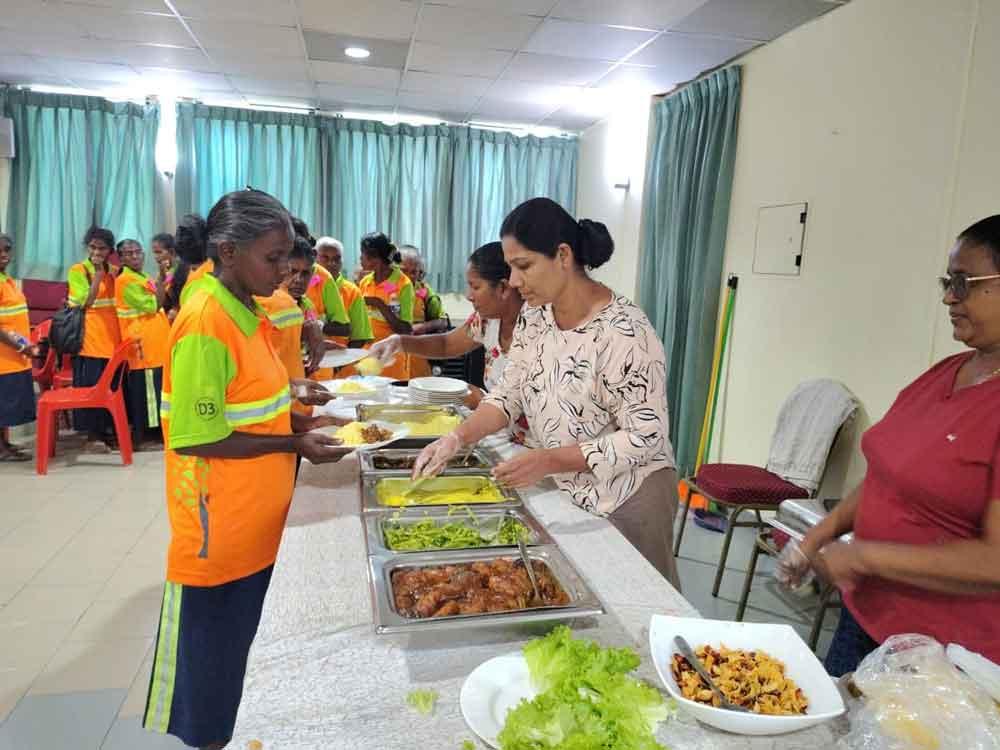
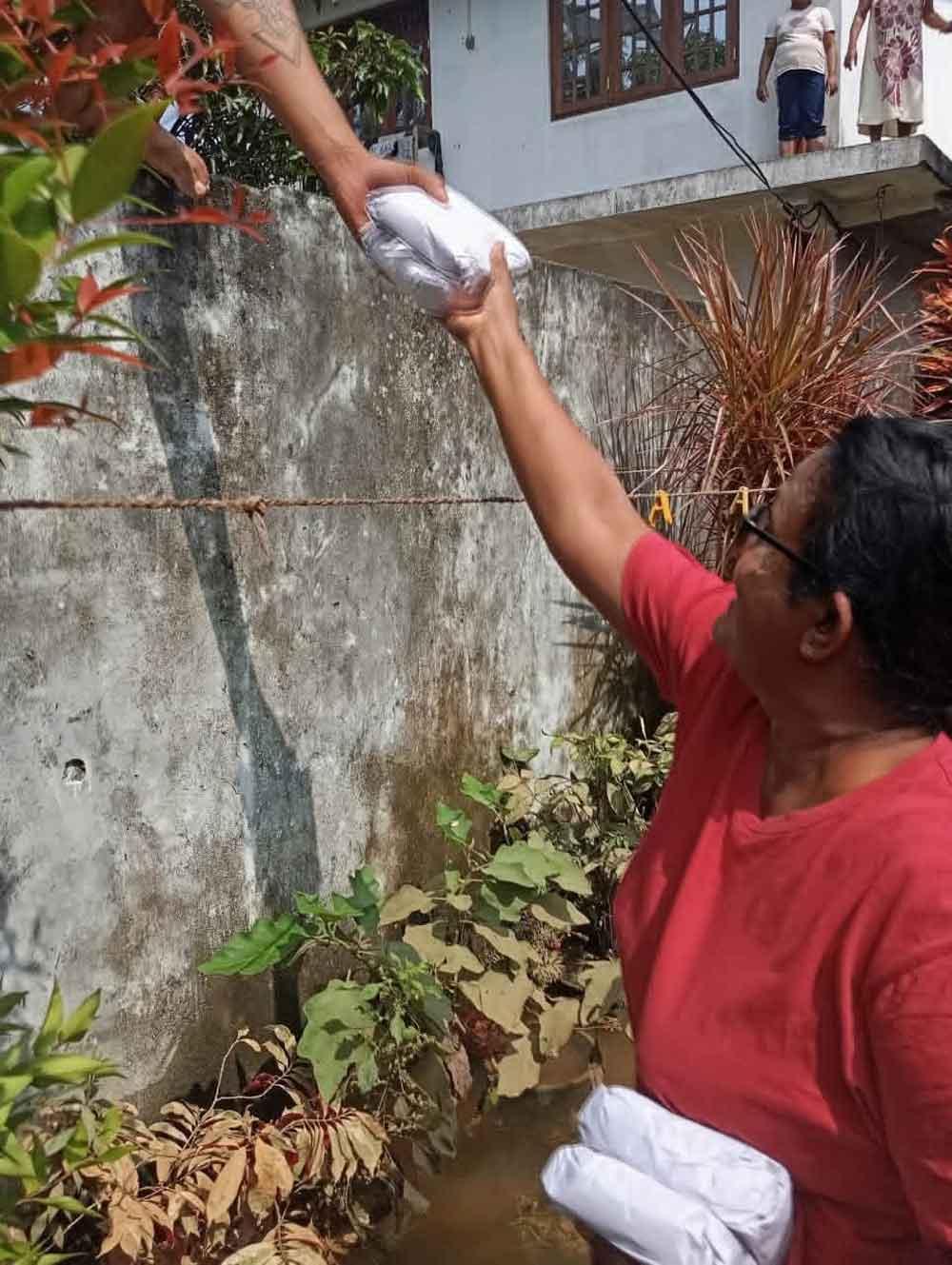
There were warm meals waiting for them. Dry ration packs arranged carefully for them to take home. Smiles that did not feel forced. Volunteers moving around the room with sincerity instead of pity. Even the atmosphere itself carried softness, as though everyone instinctively understood this day needed gentleness more than grandeur. But the moment that stayed with me most was painfully simple.
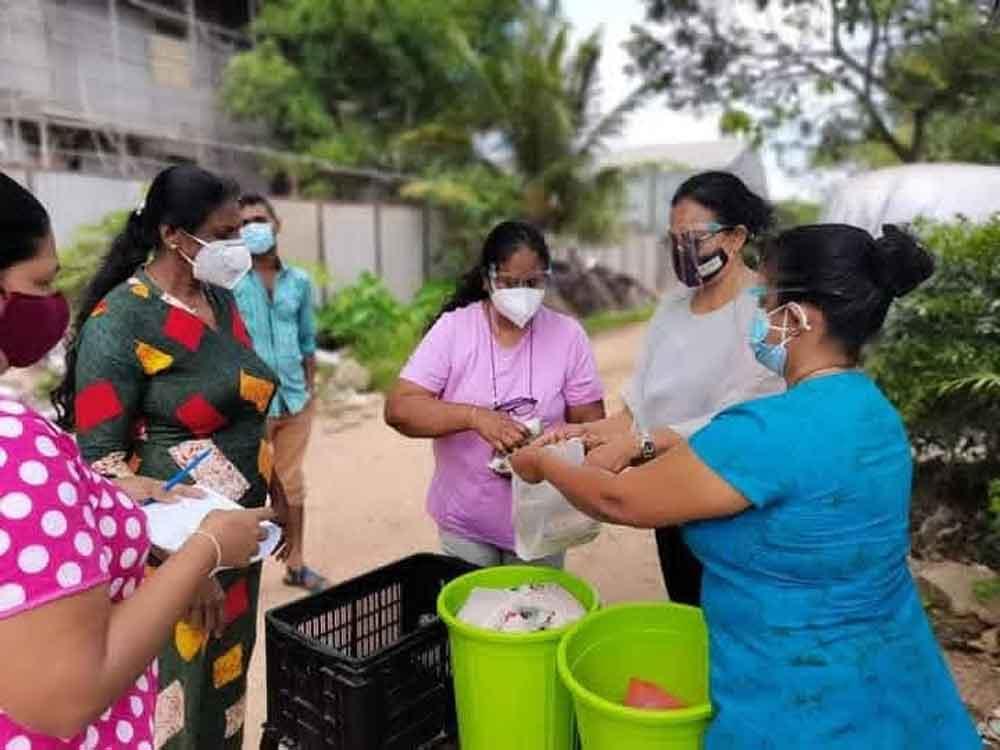
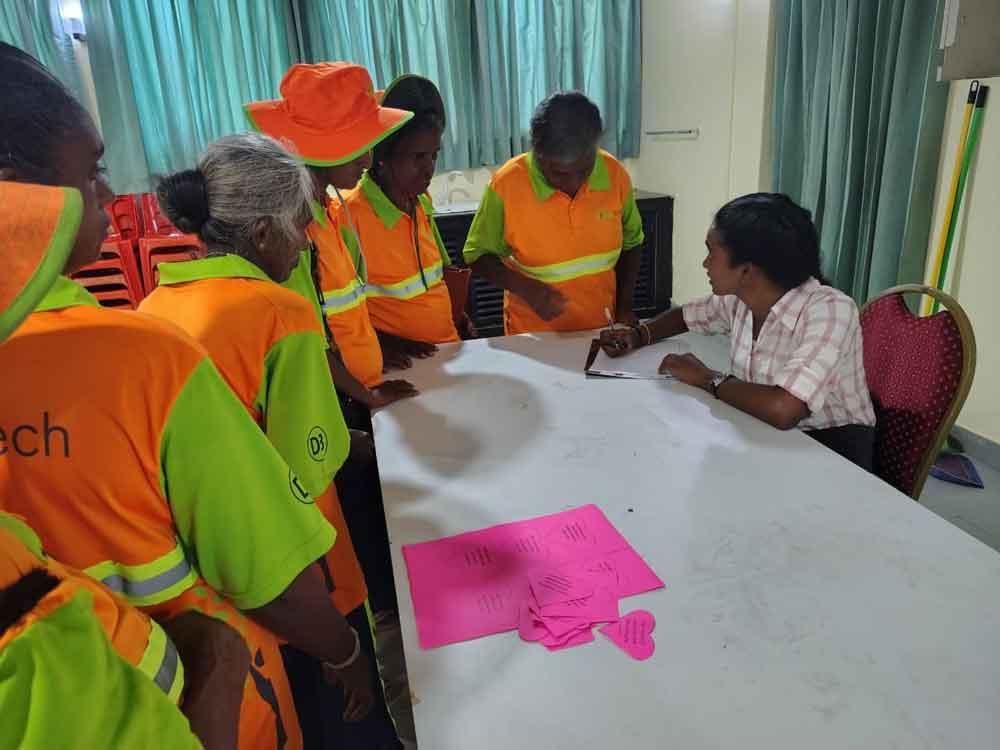
The WIM team had prepared handwritten affirmations in Sinhala for every woman there. Little messages pinned individually for them to read.
- “You are appreciated.”
- “You are strong.”
- “You matter.”
Ordinary sentences perhaps, if you read them casually. But not ordinary when you witness someone receiving those words after a lifetime of invisibility. I watched women stare at those affirmations with expressions I genuinely struggle to describe. Some smiled immediately. Some looked embarrassed, almost shy receiving praise so directly. Some kept rereading the same sentence quietly to themselves. Dr. Sulochana moved around reading the notes aloud to all of them, and I remember thinking how starved human beings become for acknowledgement when society only interacts with them through utility.
We ask these women to clean our surroundings every day, yet many of us have never once looked at them long enough to ask how they are doing.
- How many of us stop to say good morning?
- How many of us thank them?
People often dismiss these jobs by saying they “have no choice.” But after speaking to these women, that sentence started feeling unbearably lazy to me. Because many of them spoke about their work with pride. Not performative pride. Quiet pride. The kind rooted in knowing your work serves people even when those people barely acknowledge your existence. But dignity does not erase hardship. Some of these women return home to husbands struggling with substance addiction. Some endure physical violence. Some support entire households on salaries that disappear before the month ends. Some are old enough to retire but continue working because stopping is financially impossible. Some carry the emotional weight of children, grandchildren and unemployed family members while still waking up before dawn to work shifts that physically exhaust them. And yet there they were that afternoon laughing like girls again. That was the part I could not stop thinking about.
How quickly joy returns to people when they are finally allowed to feel included. At one point, the music started. Apparently, this had already been promised to them beforehand because the anticipation in the room shifted immediately. You could physically feel everyone becoming lighter. Curious. Excited. Suddenly the women who had walked in tired and reserved were impatiently waiting for the DJ to begin.
And when the dancing finally started, the entire room transformed. Anne, Kamali and Irangani became the unofficial stars of the dance floor almost instantly. Hands clapped. Laughter echoed across the hall so loudly that for a moment it genuinely felt impossible to remember the heaviness attached to these women’s everyday lives.
- Nobody danced carefully.
- Nobody performed dignity.
- They danced freely.
And maybe freedom is the right word for what it felt like watching them. Not freedom in the dramatic sense. But temporary freedom from being reduced to labor. Temporary freedom from surviving. From calculating expenses. From worrying about home. From carrying responsibilities that never really pause. For those few hours they were not “workers.” They were simply women celebrating each other.
I remember asking Dr. Sulochana why the event was limited to their lunch break because honestly everyone wished they could stay longer. The answer hit me harder than I expected. She explained that if they remained beyond working hours, deductions would be made from their salaries.
And suddenly the entire afternoon became even more emotional for me. Because this joy existed inside borrowed time. These women had to return to work immediately after this celebration ended. Return to roads and garbage and exhaustion and the unforgiving realities waiting outside those doors. Yet for one lunch break, somebody created a space where they were spoken to with respect instead of instruction. A space where they were not rushed. Not ignored. Not treated as background scenery inside the city. That matters more than people realize. I hope it does at least.
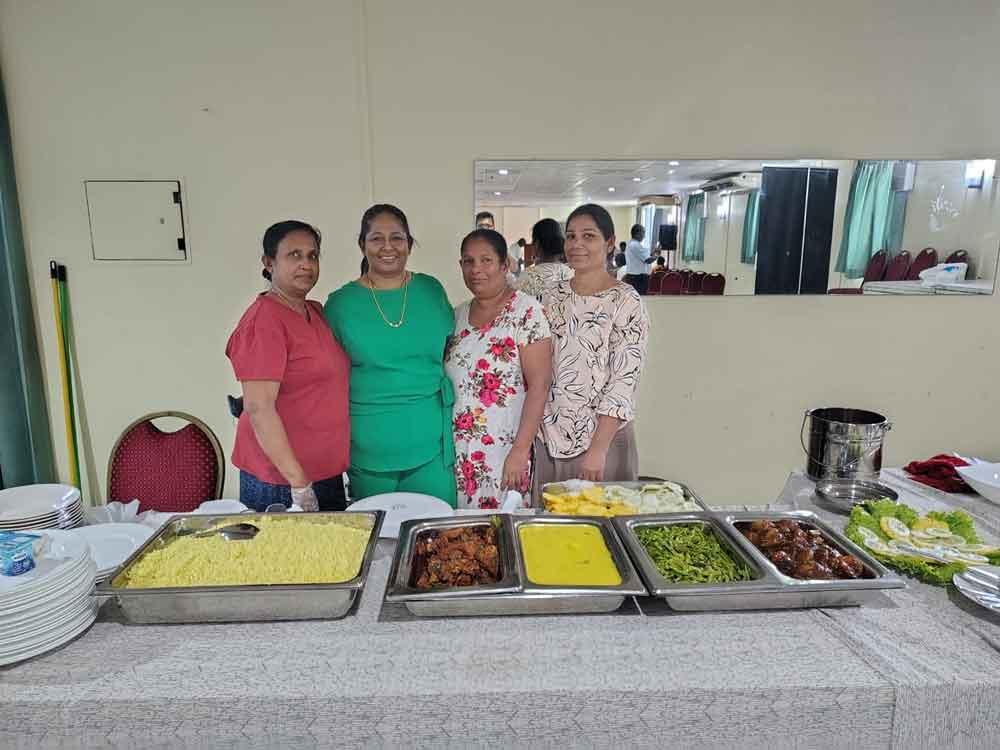
Even the food served carried a story rooted in care. The smell alone felt familiar to me because my former peer Tamara, who is also Dr. Sulochana’s daughter, used to occasionally bring food prepared by WIM Healthy Kitchen. There is something deeply comforting about food made by women who cook not only with skill, but with emotional generosity. The kind of food that does not feel commercial or rushed. Food that feels like someone truly cared while making it.
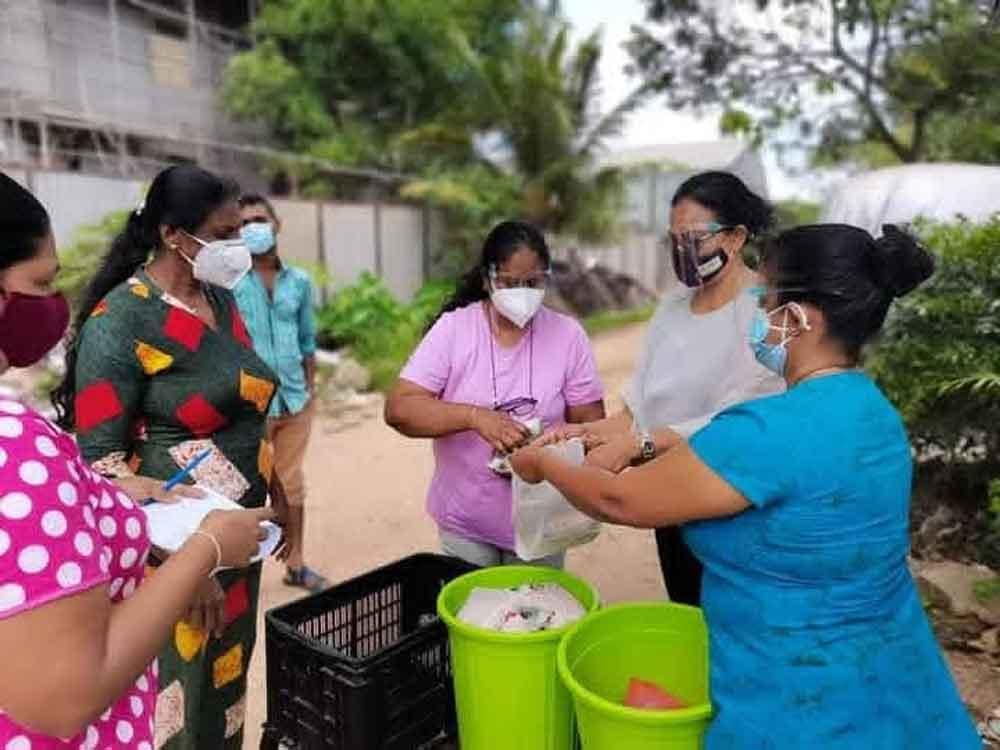
Behind the kitchen is Aunty Sriyani, a mother of five whose life itself deserves a story far longer than this one. Together with Aunty Prasadini and Kumari, she continues to feed communities through WIM Healthy Kitchen with remarkable consistency and very little public attention. Aunty Sriyani is serving for almost six years now as the secretary of the Dematagoda Police Division’s charity service initiatives, always quietly drawn toward community work and helping those in need wherever she could. Originally from Matale, she often reflects on how moving to Colombo after marriage shifted something within her. The city opened her eyes to a different kind of poverty and hunger. In 2019, she met Dr. Sulochana, and what began as a simple connection gradually grew into something far more meaningful. Some people see suffering repeatedly and slowly grow numb to it. Others cannot unsee it once they notice it. She seemed to belong to the second kind. And because cooking was the gift she naturally possessed, she chose to use it where it mattered most. That decision eventually became something much larger than meals.
During Covid, while fear consumed most households, women like her continued to cook for families in need, distributing lunch packets and feeding people quietly and consistently. Much of this work was supported through limited donations and sustained by WIM and Dr. Sulochana herself, ensuring that even in moments of crisis, care reached those who needed it most. That is the thing about women like these. They rarely call themselves extraordinary. They simply continue.
- Continue feeding.
- Continue carrying entire communities on shoulders already tired.
By the end of the event, while everyone danced and sang together, I remember standing there thinking how dangerous it is when society only celebrates women who are easy to romanticize. Because some of the strongest women will never appear on magazine covers or leadership campaigns. Some of them are standing in the middle of the road at sunrise holding a broom in one hand and carrying a lifetime of struggle in the other.
- And still showing up to work.
- Still laughing when music plays.
- Still sharing food with each other before serving themselves.
- Still finding softness despite the world constantly hardening around them.
That afternoon did not solve poverty. It did not erase violence or financial struggle or exhaustion. But maybe meaningful celebrations are not always about solving. Maybe sometimes they are about reminding people that their humanity has not gone unnoticed. That they deserve joy too. That somebody looked at them closely enough to say, “We see you. And we are grateful you exist.” And honestly, maybe the world would feel far less cruel if we learned to do that more often.