Breast Cancer Is Not Just a Medical Conversation!
WELLNESS CURATED BY ANSHU BAHANDA
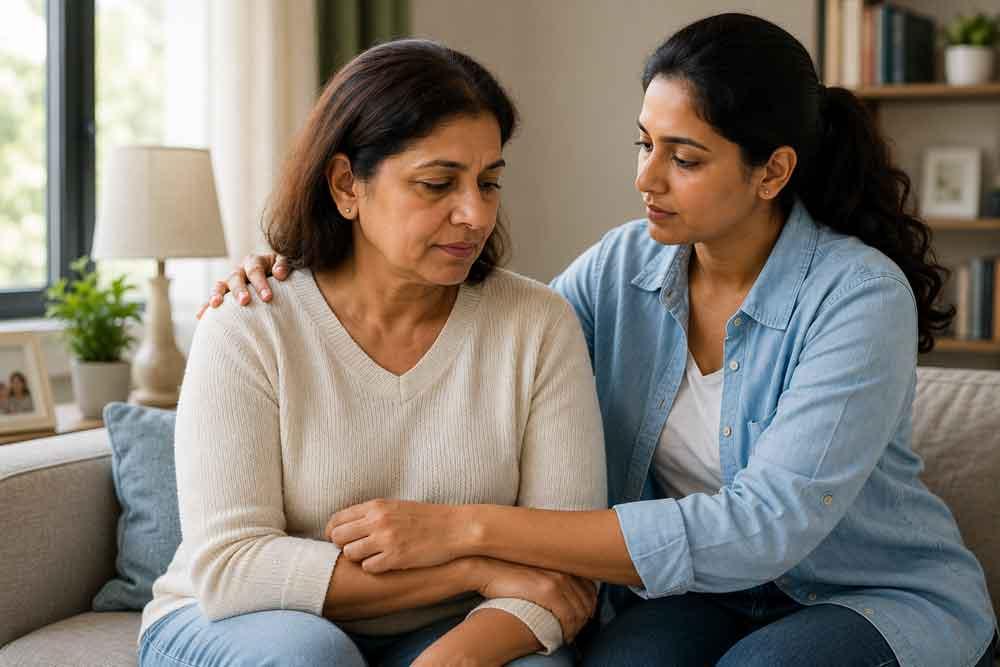
 What if breast cancer awareness is not about making women more afraid, but about making sure they never have to face fear alone? Following a conversation on the Wellness Curated podcast with Dr P. Raghu Ram, I found myself thinking less about panic and more about how families, workplaces and communities can make early care feel normal, supported and free of shame.
I have often felt that the most frightening health moments do not begin in hospitals. They begin at home, in the middle of an ordinary day, when the body quietly interrupts the routine. A woman notices something while she is in the shower. Perhaps it is a lump. Perhaps the nipple looks different. Perhaps there is a stain on her clothing that she cannot explain. She does not always say anything immediately. She gets dressed, answers messages, attends the meeting, checks on the children, calls her mother, finishes the day. The body has raised a question, but life does not pause to give her a quiet hour to answer it. By night, she has searched online. Now she has too much information and no clarity. Her mind moves faster than the facts. That, to me, is where the breast cancer conversation so often starts; not with knowledge, but with dread.
A Disease we Cannot Keep Private
Breast cancer is too common for silence. The GLOBOCAN 2022 analysis, published in CA: A Cancer Journal for Clinicians, gives the wider global context of cancer incidence and mortality across 185 countries. It is one of the clearest reminders that breast cancer is not a distant concern, but part of the central health story of our time. The anxiety feels sharper because the conversation is often delayed. Women may know something is not quite right and still postpone care because there is a home to run, a job to keep, a parent to look after, a child to collect, or a fear they cannot bear to name. This is the social side of breast cancer. It is not only about cells, hormones and scans. It is also about how women are trained to endure discomfort, how families divide attention, how embarrassment delays care, and how fear can either send someone to a doctor or keep her away.
The Calm We Need
During one of my conversations with Dr P. Raghu Ram, OBE, Founder Director of KIMS-Ushalakshmi Centre for Breast Diseases at KIMS Hospitals, Padma Shri awardee, and one of India’s most respected breast cancer surgeons, what stayed with me was not only the depth of his expertise, but the steadiness with which he approached the subject. He did not soften the seriousness of breast cancer. He did not make light of what women and families may face. But he also did something equally important: he did not allow fear to become the starting point.
In a conversation that can so easily become overwhelming, one line brought immediate perspective: “9 out of 10 breast lumps are benign.” That does not mean a lump should be ignored. It means fear should not be allowed to make the diagnosis before a doctor does.

Know Your Own Body
There is a difference between breast awareness and constant self-surveillance. For years, women were told to examine their breasts in a fixed way, on a fixed day, almost like a monthly test of vigilance. For some, that helped. For many, it created anxiety. Breast awareness is more humane. It asks you to know what is normal for your own body, so that a new change does not pass unnoticed. That can happen while you bathe, dress or apply moisturiser. It does not need to become a ritual of fear. It is simply a more honest relationship with your own body. This matters because women’s bodies change across the month, during pregnancy, after childbirth, through menopause and with age. Not every change is sinister. But a new change that stays with you should not be left to Google, denial or family advice passed through social media.
Screening is Ordinary Care
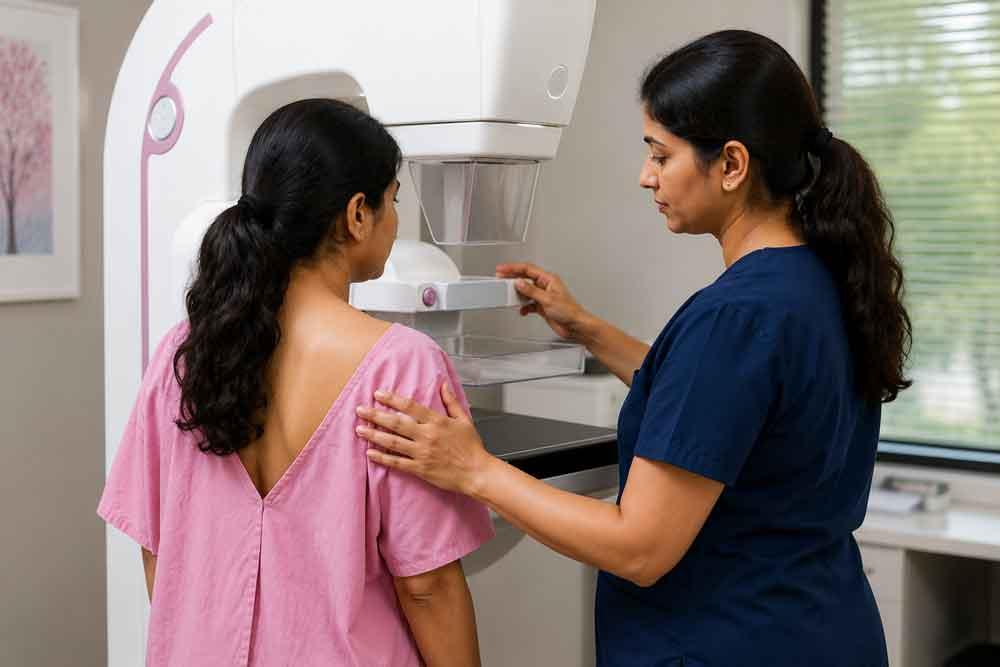
Screening is where personal care becomes public health. My own take from the conversation is clear: after 40, women should treat breast screening as part of ordinary health care, not as something to consider only when there is a scare. Depending on the person, that may mean a mammogram, ultrasound, or a combination advised by a specialist. The recommendation is especially clear for women over 40, with annual mammography and ultrasound discussed as an important part of early detection. The evidence base around screening is also important. In 2024, researchers published a JAMA evidence report and systematic review for the US Preventive Services Task Force. It reviewed breast cancer screening strategies and supports the broader point that screening decisions need to be tied to age, risk, follow-up and access to treatment. If breast cancer becomes a family crisis after diagnosis, breast health should become a family concern before that point.
Family History is Not Destiny
Family history is one of the most misunderstood parts of this conversation. Some women believe that one case of breast cancer in the family means they are almost certain to get it. Others believe that no family history means no risk. Both views are too simple. Most women who develop breast cancer do not have a known family history, but a strong family pattern can still matter. The more serious signals include breast cancer in close relatives at a young age, multiple close relatives with breast cancer, a family history of both breast and ovarian cancer, or male breast cancer in the family. These are the situations where a specialist may advise genetic counselling and, if appropriate, testing. The 2019 JAMA recommendation statement on BRCA-related cancer supports this order clearly: risk assessment first, genetic counselling next, and testing only if indicated after counselling. That order matters. A genetic test is not just a result on paper. It can affect surgery, surveillance, children, siblings, anxiety and future choices. It should not be bought in panic.

Risk Is Not Blame
Lifestyle is part of breast cancer risk, but it must be discussed with care. Physical inactivity, alcohol, smoking, postmenopausal weight gain and some hormonal factors can affect risk. The 2019 Cancer Causes & Control review examined physical activity, sedentary behaviour, adiposity, weight change and breast cancer risk as part of the World Cancer Research Fund International Continuous Update Project. It supports the point that lifestyle can influence risk, while also showing how complex these associations can be. But there is a danger in turning risk into blame. A woman who had a child late did not cause her cancer. A woman who did not breastfeed should not be made to feel guilty. A woman who gains weight after menopause does not need judgement wrapped in medical language. Risk is information. It should help us make better choices where choice exists. It should also force us to ask why healthy choices are easier for some women than for others.
Treatment is Not What It Used To Be
The old cultural picture of breast cancer treatment is still severe in many people’s minds. They imagine radical surgery, loss, secrecy and a life divided into before and after. Treatment has changed. It is now far more individual. The plan depends on the patient, the tumour, the stage, the biology of the cancer and the wider context of her life. Surgery has changed too. Breast-conserving surgery is possible for many more women. In some cases, chemotherapy before surgery can reduce the size of the tumour and make a less extensive operation possible. Sentinel node biopsy can help doctors assess the lymph nodes without removing more tissue than necessary.
The Family Must Be Part of This
One of the strongest parts of the conversation, for me, was the reminder that women’s health cannot remain women’s private responsibility until the moment it becomes a family emergency. Too often, everyone is involved after diagnosis. Before that, the appointment is hers to book, the worry is hers to carry, the scan is hers to arrange, the embarrassment is hers to overcome. That is not care. That is distance disguised as respect. We need a culture where a mammogram is not something a woman has to remember, arrange and face alone, but a normal part of how families care for the people they love. The responsibility cannot sit with women alone. Partners, children, siblings, friends and workplaces all have a role in making timely screening feel supported, practical and free of shame.
My Takeaway
Breast cancer will not disappear because we speak about it better. But unnecessary fear, late action and silence can be reduced. The point is not to make women anxious. The point is to make them less alone. Know your body. Notice what is new. Seek medical advice early. Get screened at the right age and frequency for your risk. Do not rush into genetic tests without counselling. Do not let shame, busyness or family discomfort decide the timing of your care.
“Every opportunity to empower is an opportunity to save lives.”
That sentence stayed with me because empowerment, in this context, is not a slogan. It is a daughter saying, “I’ll come with you.” It is a partner saying, “I’ve booked the appointment.” It is a mother telling her child the truth without fear. It is a woman looking at a change in her body and knowing that she does not have to wait, hide, search alone, or imagine the worst in silence.