When the Year Speeds Up, What Holds Us Steady?

What if 2026 is not asking us to rush into a new life, but to move with more honesty through the one we already have? On the Wellness Curated Podcast, I explored the meaning of the Year of the Horse, and found myself thinking less about ambition, and more about what it really takes to move forward without losing ourselves.
For weeks before I recorded this episode, I kept seeing the same idea dressed up in slightly different language. The Year of the Fire Horse was coming. It was going to be powerful. Fast, fiery and full of movement. People spoke about it as though the year itself had already broken into a gallop and all of us simply needed to catch up.
I understood the appeal immediately. There is something irresistible about the promise of momentum, especially after a period in which so many people have felt slowed down by uncertainty, disappointment, grief, hesitation, or just the quiet heaviness of carrying too much for too long. The thought of a year that might finally shake things loose has a certain seduction. It gives shape to hope. It suggests that perhaps the stuckness will end, perhaps life will begin to move again, perhaps we will feel more like ourselves.
And yet, even as I watched all this excitement build, I found myself resisting the simplification of it. I was not interested in hearing that 2026 would magically fix things, nor did I want another conversation that turned an ancient system into a neat social media slogan. What I wanted was something more textured. I wanted to know what a Horse year actually means in Chinese astrology, why this particular one is being described with so much intensity, and what it asks of us beyond the obvious language of action and success.
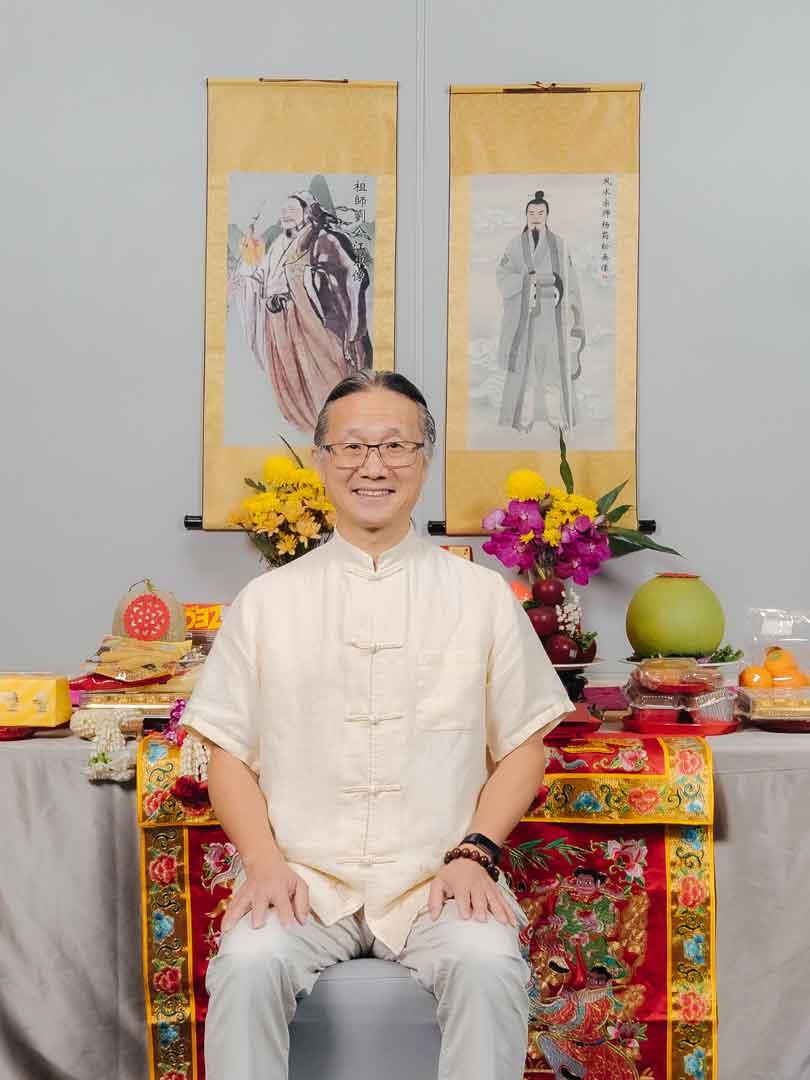
That was the spirit in which I sat down with Master Edgar Lok Tin Yung and Priya Khanna, both Feng Shui Master and Chinese astrology expert. What emerged was not a conversation about chasing outcomes or treating astrology as a script. It became something much more thoughtful than that. It was about timing, energy, the body, choice, and the discipline required to stay centred when the world around you becomes faster, louder, and more demanding.

Seduction of movement
What struck me early on was how quickly both Edgar and Priya moved the conversation away from the superficial fascination with "fire horse energy" and toward something more meaningful. We have become used to talking about astrology in broad emotional strokes. We like the idea of assigning a year a mood and then living inside that mood as though it were a personality trait. But Chinese astrology, at least as they described it, is far more layered than that.
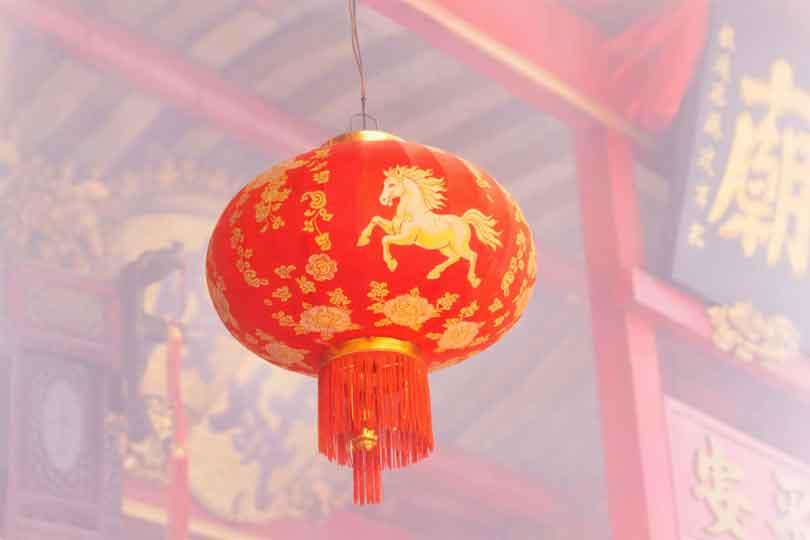
Edgar explained that the horse is only one part of the language. There is a heavenly influence, an earthly influence, and a deeper interaction between the two. In 2026, the horse is not just the horse. It is Yang Fire Horse, and that changes the quality of the year. Fire speeds things up. It heats, exposes, pushes, intensifies. It can inspire courage, visibility, and boldness. It can also heighten impulsiveness, aggression, overreaction, and strain.
That nuance mattered to me, because it brought the conversation back into real life. When people talk about movement, they usually make it sound universally desirable. But movement is not always progress. Sometimes it is restless, sometimes it is avoidance in a more flattering outfit. Sometimes we throw ourselves into change simply because we do not know how to bear uncertainty, and speed becomes a substitute for clarity.
I think this is what I was quietly wrestling with as we spoke. There are moments in life when standing still no longer serves us, and action becomes necessary. But there are also moments when speed can distort our instincts, making us feel that urgency and truth are the same thing. They are not. A loud impulse is not always a wise one. A fast decision is not always a brave one. Some forms of momentum are deeply aligned, and others are simply reactions to discomfort.
Perhaps that is why this conversation felt important to me. So many people I know are somewhere between one chapter and another. They have reflected. They have questioned things. Some have mourned versions of life they thought they would have by now. Others are trying to recover from years of functioning so well on the outside that no one noticed how tired they had become on the inside. For people in that place, the promise of a year of action can feel both thrilling and merciless.
Fire Does Not Only Illuminate
One of the most memorable moments in the conversation came when Edgar put this year’s energy in the simplest possible terms. He said, “Some people, well, use the horse, they can speed up very quickly. Some people if they speed up too fast and they don’t know how to ride a horse, then we fall down”.
I loved that line because it said so much without pretending to solve everything. There is wisdom in that image. We all know what it is to be carried by something before we are ready for it, whether it is success, emotion, pressure, attention, desire, or change. Life can gather pace very suddenly, and when it does, the real question is not whether things are moving, but whether we have enough steadiness in us to stay upright.
This is where I think the online conversation around 2026 can become slightly dangerous. We are already living in a culture that worships acceleration. More output, more ambition, more visibility, more reinvention. Even rest is often recast as strategy, something to be measured by how productive it makes us later. So, when a year arrives carrying the language of fire and movement, it can be all too easy to hear only what flatters our existing addictions.
But fire is not automatically liberating. Fire can illuminate, yes, but it can also burn through judgment. Priya made that very clear when she spoke about the vividness of Yang Fire. This is not subtle energy, she said. Things are more visible, more pronounced, more active. That may create opportunity, and for some people it absolutely will. But it can also create volatility. It can amplify the part of us that wants to move first and think later. It can make us bolder in ways that are useful, and bolder in ways that are costly.
As I listened, I found myself thinking less about whether the year would be good or bad, and more about whether we know how to remain internally calm when the energy outside us is not. That feels like the more interesting question. The point is not to become frightened of movement. It is to become conscious enough to distinguish between movement that expands us and movement that scatters us.
What Body Knows Before Mind Admits
I was especially drawn to the part of the conversation that turned toward health, because it shifted the whole discussion away from abstraction. Edgar spoke about the fire element being connected to the eyes, the heart, the blood, and circulation. Priya spoke about anger, excess heat, and the way imbalance can show up in the body if we do not pay attention.
Whether someone receives this symbolically or literally, I think the insight lands in the same place. There are times when the body registers pressure long before the mind is willing to name it. We may tell ourselves we are fine. We may continue performing competence, productivity, and composure. But the body usually knows first. It knows when we are overstimulated, inflamed, depleted, too reactive, too flooded, too far from our own centre.
That part of the conversation felt deeply relevant to the lives many of us are living now. We are surrounded by noise, by speed, by too much information, by too many demands on attention. Most people I know are trying to hold together more than they were ever meant to hold together at once. And because the strain has become so normal, we often do not recognise it until it spills over into sleep, patience, digestion, mood, energy, or relationships.
Priya said, “Just doing breath work can actually activate the metal element”. I found that observation unexpectedly moving, not because it sounded mystical, but because it returned us to something simple and physical. Breath is one of the first things to change when we are overwhelmed, and also one of the first things we can consciously restore. There is humility in that. No dramatic solution. No glamorous prescription. Breathe properly. Calm the system. Build strength where there is too much heat.
That made a great deal of sense to me. If the year carries more fire, then perhaps wisdom lies not in becoming equally fiery ourselves, but in learning how to cool, regulate, and ground. It may mean paying more attention to sleep, pace, food, irritability, the quality of our mornings, the overstimulation we call normal, the relationships in which our nervous system never truly softens. It may mean not dismissing the small signs. It may mean understanding that wellbeing is not separate from timing. The body is always in conversation with the life we are living.
Money, Appetite, and Discipline of Holding
Of course, one of the big questions around any energetic forecast is money. People want to know whether this will be a year of abundance, whether opportunities will open, whether prosperity is somehow written into the air. I appreciated that neither guest gave a simplistic answer. Priya spoke about active energy, money flowing, trading increasing, movement in the financial sphere. But she also made an important distinction between making money and keeping it. A dynamic year may bring more opportunities, but it can also bring more temptation, more impulsiveness, more volatility, more appetite. That felt exactly right to me. There are seasons when life feels expansive, and we become intoxicated by possibility. We say yes more easily. We move faster. We assume that what is coming in will continue to come in. We become looser with boundaries, with spending, with judgment, with discernment. It is not only money this happens with. It happens with attention, success, love, power, even validation. Sometimes the challenge is not receiving more. The challenge is knowing how to hold what arrives without becoming careless. That was one of the quiet insights I took from this conversation. Prosperity, in any form, asks for containment. It asks for enough inner maturity to receive without immediately escalating. Enough patience to build rather than merely consume. Enough steadiness not to confuse excitement with security. I think that applies beautifully to modern life, because so much of our culture teaches us how to want more and so little teaches us how to hold more well. We are encouraged to expand, grow, become visible, become successful, but rarely asked whether we have created the inner structure to sustain what we say we want. A year of fire might well bring movement and opportunity. The better question is whether we meet those things with clarity or appetite.

My Takeaway
Toward the end of our conversation, I asked Edgar what someone standing at a crossroads should be asking themselves in a year like this. His answer was both simple and piercing. What do I really want? The reason that question lingers is because it is much more difficult than it sounds. It asks us to clear away performance, fear, comparison, social expectation, and even the seduction of momentum itself. It asks us to tell the truth before we make the move. Not what looks impressive. Not what feels urgent. Not what other people are applauding. What do I really want? I think that may be the heart of this whole conversation for me. Not whether 2026 will be exciting, or active, or intense. It probably will be, in different ways for different people. The deeper issue is whether we know how to meet that year from a place of self-knowledge rather than self-abandonment. There is a kind of courage that looks loud from the outside and another kind that is much quieter. The quieter kind is what interests me more now. It is the courage to pause before reacting. To turn down what flatters the ego but disturbs the spirit. To listen to the body instead of overriding it. To move when the direction feels true, not simply when the energy around us becomes noisy. To understand that progress without grounding can become another form of loss. When I finished recording this episode, I did not leave feeling swept up by the prediction. I left feeling more thoughtful about pace. More attentive to what I call ambition and whether it is actually alignment. More aware of how easily speed can masquerade as purpose.
More respectful of the fact that movement is only useful when it is carrying us somewhere we genuinely mean to go. Perhaps that is the real invitation of the Year of the Fire Horse. Not to run blindly because the world is shouting about momentum, but to move with enough honesty that when life gathers speed, we do not leave ourselves behind.