You Don t Need It Just Because It s on Sale

Walk into almost any shopping mall or open your favourite shopping app, and you'll be greeted with the same familiar messages: "50% OFF." "Limited Edition." "Only Two Left." "Trending Now." They seem harmless enough, but behind these phrases lies one of the most powerful psychological tools ever created by modern retail. They don't simply encourage us to shop; they encourage us to stop thinking.
Somewhere along the way, we stopped asking the most important question before making a purchase: Do I actually need this? Instead, we ask ourselves entirely different questions. Will it sell out? What if I regret not buying it? Everyone else seems to have one. It would be silly to miss this discount. Before long, we've convinced ourselves that buying something we never intended to own is somehow a sensible financial decision.
Impulse buying has quietly become a defining habit of modern consumer culture. Research suggests that around 92% of consumers have made impulse purchases, often buying items they had no intention of purchasing before they entered a shop or opened an app. For many people, these purchases have become so routine that they barely notice them anymore. A pair of shoes added during checkout, another jacket because it was discounted, or a trending handbag that seemed impossible to resist. Individually they may appear insignificant, but over months and years they quietly fill our wardrobes and empty our wallets.
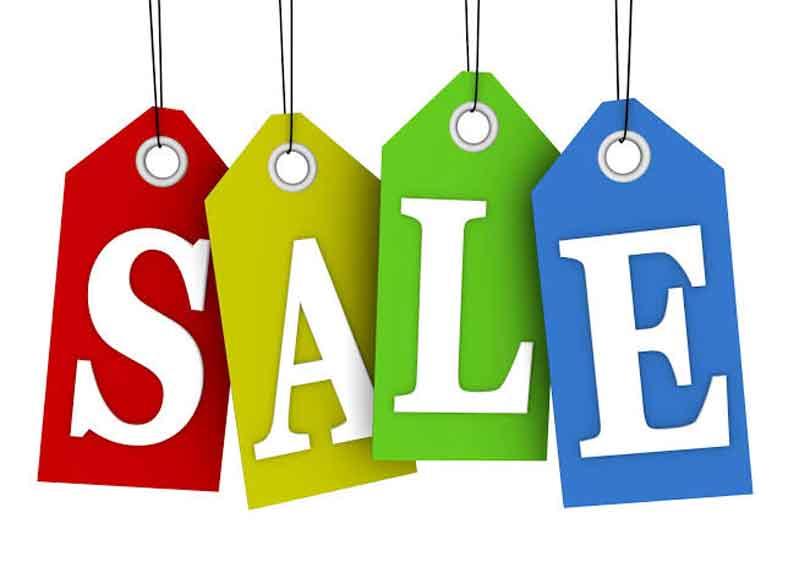
Retailers understand human psychology remarkably well. They know that scarcity creates urgency. A countdown timer beside a product makes us believe that time is running out. A "limited edition" label creates the illusion of exclusivity. "Only three left in stock" suddenly transforms an ordinary item into something that feels valuable simply because it appears difficult to obtain. None of these marketing techniques change the quality of the garment itself. What they change is our emotional response.
Sales are perhaps the greatest illusion of all. We often celebrate buying something because we saved fifty percent, but saving money only happens when you avoid spending it in the first place. Purchasing a dress you never planned to own simply because it was discounted is not a financial victory. It is still money leaving your bank account. The price may have been reduced, but your expenditure was not eliminated.
Many of us have wardrobes filled with these "good deals." They are the dresses still carrying their tags, the jackets worn once, the shoes that looked perfect under the bright lights of the store but somehow never fit naturally into everyday life. Ironically, these unworn bargains often become the most expensive pieces we own because every dollar spent on them produced almost no value in return.
Impulse purchasing isn't always driven by clever marketing alone. More often than not, it is driven by emotion. Shopping has become one of the most socially accepted coping mechanisms for stress, boredom, loneliness and anxiety. After a difficult week, buying something new offers a brief sense of excitement and control. Neuroscientists have found that the anticipation of receiving a purchase triggers the release of dopamine, the brain's reward chemical. Interestingly, the biggest dopamine surge often occurs before the parcel even arrives. Once the excitement fades, we begin searching for the next purchase that might recreate the same feeling.
This explains why retail therapy rarely solves the problems we hope it will. The emotional high is temporary, but the financial consequences and the clutter remain. Our wardrobes become fuller while our satisfaction remains surprisingly unchanged.
Social media has only accelerated this cycle. Trends now emerge and disappear at extraordinary speed. One month everyone is dressing like the "Coastal Grandmother." The next, it's "Mob Wife," followed by "Tomato Girl Summer," "Quiet Luxury," or another aesthetic waiting just around the corner. Fashion has always evolved, but today's trend cycle moves faster than ever before, fueled by algorithms that reward constant novelty.
The result is that we are no longer simply buying clothing; we are buying identities. Every trend promises a new version of ourselves. If we purchase the right handbag, jacket or pair of trainers, perhaps we'll become more sophisticated, more creative, more successful or more admired. Yet identity has never been something that can be purchased. It develops through experiences, values and personal expression; not through next-day delivery.

Perhaps this is why so many people own overflowing wardrobes yet still insist they have nothing to wear. The issue is rarely a lack of clothing. More often, it is an excess of decisions. Psychologists refer to this as decision fatigue. The greater the number of options available to us, the harder it becomes to make satisfying choices. Instead of making dressing easier, excessive consumption often makes it more stressful.
Interestingly, the most stylish people are rarely those with the largest wardrobes. They understand themselves. They buy thoughtfully, wear their favourite pieces repeatedly and build wardrobes where almost everything works together. Their confidence comes not from constant novelty but from consistency. They have learned that repeating an outfit is not a fashion failure but a sign that they chose well in the first place.
None of this means we should stop buying clothes altogether. Fashion remains one of the most joyful forms of self-expression. It reflects culture, craftsmanship, creativity and individuality. Supporting designers, artisans and brands whose work genuinely resonates with us is something worth celebrating. The problem begins when purchasing becomes automatic rather than intentional.
Before making your next purchase, pause for just a moment. Ask yourself whether you would still buy it if it were full price. Would you still want it if no one on social media owned one? Can you imagine wearing it at least thirty times? Does it complement the wardrobe you already have? Most importantly, ask yourself whether you are buying it because you truly love it, or because a clever marketing campaign has convinced you that you should.
Walking away from something can initially feel uncomfortable. Retailers rely on that discomfort. They want us to believe that opportunities disappear forever. Yet experience teaches us something very different. Most of the items we desperately wanted six months ago have already been replaced by something newer. The urgency was temporary. The desire passed. Life continued exactly as before.

Over time, resisting impulse purchases becomes easier. Instead of collecting regret, we begin collecting confidence in our own judgement. Our wardrobes become smaller but far more meaningful. Every piece earns its place because it was chosen with intention rather than panic.
In a world constantly encouraging us to buy more, perhaps the most radical act is learning to say, "No, thank you." Not because we cannot afford it, but because we understand that our happiness, our style and our identity were never hiding behind a sale sign in the first place.
A guilt-free wardrobe is not built by owning less for the sake of minimalism. It is built by buying better, buying thoughtfully, and recognizing that the most satisfying purchase is often the one we never make.