Is Sri Lanka Facing Its Worst Dengue Threat in Years?
The buzz of a mosquito may seem harmless, but what if that tiny insect could put thousands of people in hospital and overwhelm an entire healthcare system? That is exactly the reality Sri Lanka is facing as dengue cases continue to rise at an alarming rate, making 2026 one of the country’s most concerning dengue years in recent history.
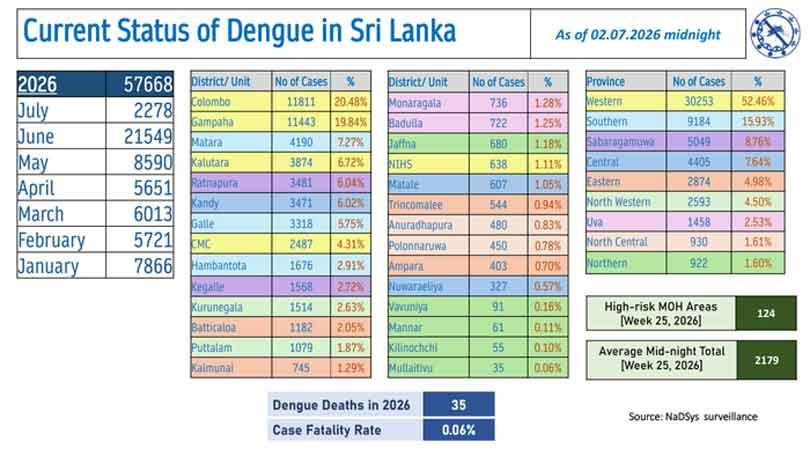
Since the beginning of the year, dengue infections have steadily increased across the island. However, the situation worsened dramatically after the heavy rains and flooding that followed the southwest monsoon in mid-May. Warm temperatures, stagnant water, and high humidity created ideal breeding conditions for Aedes mosquitoes, the insects responsible for spreading the dengue virus. According to the National Dengue Control Unit (NDCU), Sri Lanka recorded more than 56,000 dengue cases and over 30 deaths by the beginning of July 2026. In comparison, around 51,000 cases were reported throughout the whole of 2025, highlighting how rapidly infections have increased this year.
The Western Province remains the hardest-hit region, accounting for nearly half of all reported cases. Colombo District has recorded the highest number of infections, followed by Gampaha and Kalutara. Significant numbers of patients have also been reported from Kandy, Galle, Matara, Ratnapura, Hambantota, Kurunegala and Kegalle, showing that the outbreak is affecting multiple provinces across the country. Health experts say densely populated urban areas are particularly vulnerable because they provide ideal environments for mosquito breeding and allow the virus to spread quickly among communities. Following the heavy rains, countless containers, discarded plastic items, clogged drains, abandoned lands and stagnant pools of water became breeding sites for mosquitoes.
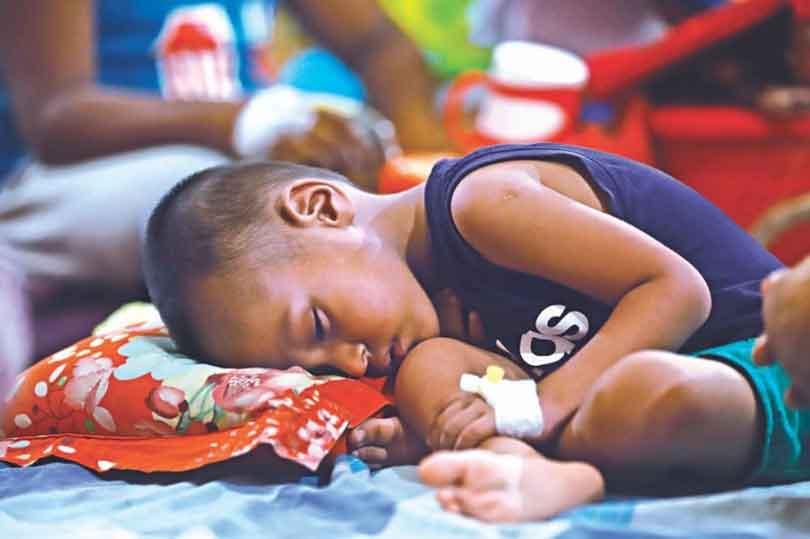
The rapid rise in infections has placed enormous pressure on Sri Lanka’s healthcare system. Hospitals in Colombo and several other districts have reported a sharp increase in admissions, with approximately 1,000 dengue patients requiring hospital treatment every day during the peak of the outbreak. Some hospitals have struggled with bed shortages, forcing healthcare workers to manage multiple patients in limited spaces while working under immense pressure. Health authorities warn that the dominant virus currently circulating is DENV-2, one of the four dengue virus serotypes. According to researchers, DENV-2 is responsible for a large proportion of current infections and has been associated with previous major outbreaks in Sri Lanka, including the devastating epidemic in 2017.
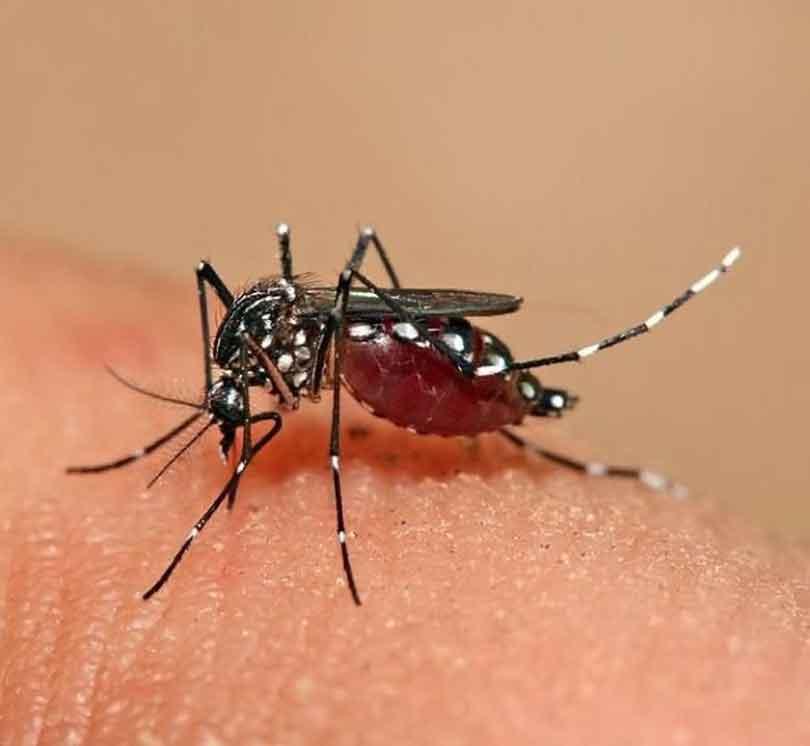
Scientists believe several factors are contributing to the current surge. Climate change is one of the major reasons. Rising temperatures allow mosquitoes to mature faster, bite more frequently and survive for longer periods. Combined with Sri Lanka’s tropical climate, where temperatures generally range between 26°C and 30°C with high humidity, conditions remain favourable for year-round mosquito activity. Rapid and unplanned urbanisation has also played a significant role. As towns and cities expand, poor waste management, blocked drainage systems and abandoned construction sites often create perfect breeding grounds for mosquitoes. Public health officials have repeatedly stressed that many breeding sites are found in homes, schools, workplaces, factories and religious institutions, making community participation essential in controlling the disease.
Adding to the challenge is the mosquito’s remarkable ability to adapt. Researchers have found that Aedes mosquitoes are becoming increasingly resistant to some insecticides used during fogging operations. While fogging can help reduce adult mosquito populations during outbreaks, experts say it is no longer enough on its own. Instead, eliminating mosquito breeding sites remains the most effective long-term strategy.
Mosquitoes responsible for dengue commonly breed in clean, stagnant water. Everyday items such as discarded yoghurt cups, plastic containers, coconut shells, flower pots, tyres, roof gutters and water storage containers can easily become breeding habitats if water collects inside them. Researchers have even discovered mosquito larvae surviving in estuarine water and water tanks, demonstrating how adaptable these insects have become. In response to the growing crisis, the Sri Lankan government has intensified nationwide dengue prevention programmes. In early June, authorities launched a large-scale three-day mosquito control campaign covering 14 districts and dozens of Medical Officer of Health (MOH) divisions. Public Health Inspectors have been conducting inspections at schools, construction sites, government institutions and residential areas, issuing warnings and legal notices to property owners who fail to eliminate mosquito breeding sites.
The government has also introduced newer approaches to support mosquito control. Drones and military personnel have been deployed in some high-risk areas to assist with surveillance and public health operations. In addition, Sri Lanka continues to study innovative methods such as the Wolbachia bacteria programme, which aims to reduce the mosquito population’s ability to spread dengue. Although promising, this method is still being evaluated before wider implementation. Researchers believe technology could play a much greater role in future dengue prevention. By combining weather forecasts, rainfall patterns, environmental conditions and historical outbreak data, predictive models could help authorities identify high-risk areas before outbreaks become severe. Such early warning systems would allow health officials to carry out targeted mosquito control activities rather than responding only after cases begin rising.

Despite advances in research and public health interventions, experts agree that community involvement remains the strongest defence against dengue. Every household has a role to play by checking for standing water, disposing of waste responsibly, cleaning roof gutters, covering water storage containers and maintaining clean surroundings. Since mosquitoes can breed in just a small amount of water, regular inspections around homes can significantly reduce the risk of infection. Sri Lanka has successfully overcome major dengue outbreaks in the past, but the current surge serves as a reminder that dengue is no longer just a seasonal illness. Climate change, rapid urban development and evolving mosquito populations are making outbreaks more frequent and difficult to control. While government action, scientific research and improved healthcare are all essential, lasting success depends on collective responsibility. Preventing dengue begins not only in hospitals and laboratories, but also in every neighbourhood, workplace and household across the country. Small actions taken today could help save thousands of lives tomorrow.