What’s Good, What’s Bad? Who Decides?
By Yashmitha Sritheran
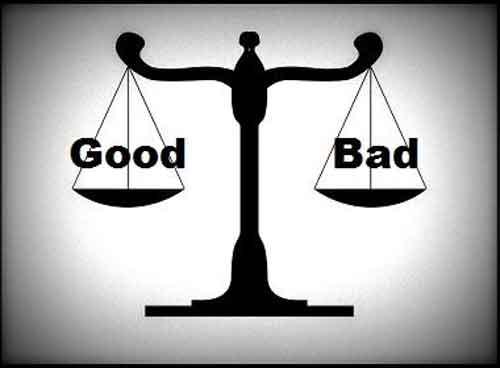
From the earliest stages of childhood, we are gently guided into a world structured by clear distinctions. We are taught to recognize what is good and what is bad, what is right and what is wrong, what is acceptable and what is not. These distinctions appear simple at first. They are presented as truths that require little questioning. A child learns quickly that honesty is praised, that kindness is rewarded, and that harmful actions are discouraged. These early lessons become the foundation upon which we begin to understand ourselves and others.
As we grow older, however, the clarity of these categories begins to fade. The neat boundaries that once separated good from bad start to blur. Situations arise where the right choice is not obvious. People we admire may make questionable decisions, while those judged harshly by society may act with integrity and compassion. It becomes clear that morality is not always as straightforward as we were once led to believe.
This uncertainty leads to an important question. Who actually decides what is good and what is bad? At first, the answer seems obvious. Society plays a central role. Families, schools, religious institutions, and governments all contribute to shaping a shared moral framework. These systems provide rules and expectations that guide behavior. They encourage individuals to act in ways that promote harmony and discourage actions that may cause harm or disruption.
Without such structures, social life would likely become chaotic. Rules such as telling the truth, respecting others, and avoiding harm create a sense of order and trust. In this sense, what is considered good often aligns with what benefits the collective, while what is considered bad is associated with actions that threaten stability or well-being. Society, therefore, acts as a powerful force in defining moral standards.
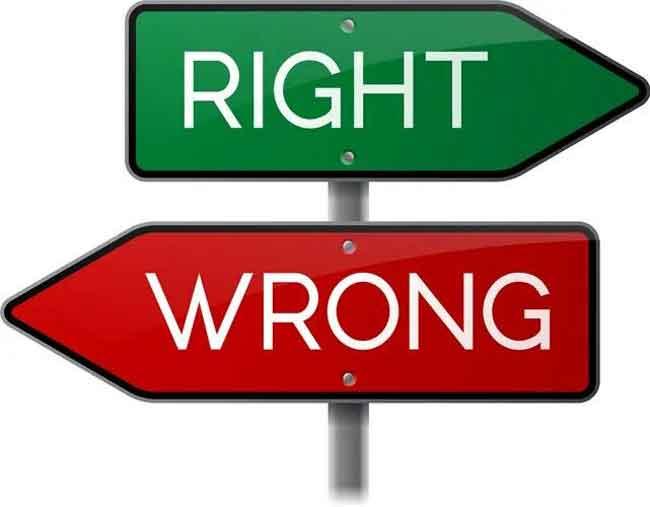
Yet this explanation only begins to scratch the surface. Societal standards are not fixed. They are constantly evolving. What is considered acceptable in one era may be condemned in another. History offers many examples of this transformation. Practices that were once widely accepted have later been recognized as unjust. Similarly, ideas that were once dismissed or criticized have come to be embraced.
This constant change suggests that morality is not an absolute set of truths. Instead, it reflects the values and beliefs of a particular society at a specific moment in time. As societies change, so too do their definitions of good and bad. This fluidity challenges the idea that there is a single, universal standard that applies to all people in all circumstances.
Culture plays an equally significant role in shaping moral perspectives. What is considered respectful or virtuous in one culture may differ greatly in another. Customs, traditions, and social norms influence how people interpret behavior and assign value to actions. Even within the same country, different communities may hold contrasting beliefs about what is right or wrong.
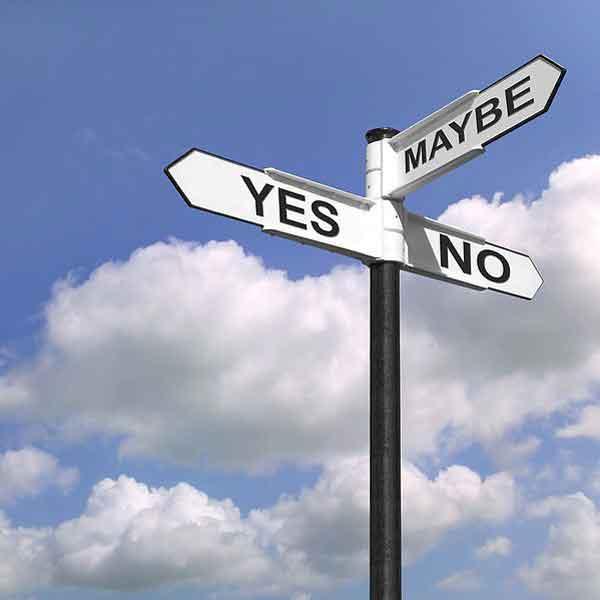
This diversity highlights the complexity of morality. It shows that our understanding of good and bad is deeply influenced by our surroundings and experiences. It also encourages us to recognize that our perspective is not the only one that exists. When we encounter different viewpoints, we are reminded that morality often exists on a spectrum rather than within rigid boundaries.
Religion is another powerful influence on moral thinking. For many people, religious teachings provide clear guidance about how to live a good life. These teachings often include principles that emphasize compassion, honesty, and respect for others. They offer a sense of certainty and structure that can be deeply reassuring. However, religion also adds layers of complexity. Different religions may offer different interpretations of what is considered moral behavior. Even within the same faith, individuals and communities may interpret teachings in varied ways. This diversity within religious thought further illustrates that moral understanding is not always uniform or straightforward.
Beyond external influences such as society, culture, and religion, there is also the role of the individual. Each person possesses a sense of conscience, an inner voice that guides decision making. This conscience is shaped by personal experiences, reflections, and values. It helps individuals navigate situations where external rules may not provide clear answers. There are moments when individuals choose to challenge societal norms because they believe something is unjust. Throughout history, many significant social changes have been driven by people who questioned what their society accepted as good. These individuals often faced resistance, yet their willingness to think critically and act according to their conscience led to progress.
This highlights an important aspect of morality. It is not simply about following established rules. It also involves reasoning and reflection. Asking questions such as why something is considered good, who benefits from it, and who might be harmed encourages deeper understanding. These questions prevent blind acceptance and promote thoughtful engagement with moral issues. Power is another factor that cannot be overlooked. Those in positions of authority, including political leaders, institutions, and influential figures, have the ability to shape moral narratives. Through laws, media, and public discourse, they can influence what is perceived as acceptable or unacceptable.
This raises important concerns. If those in power have the ability to define morality, their perspectives and interests may shape these definitions. What is labeled as good may not always serve everyone equally. It becomes essential, therefore, to remain aware of how power dynamics can influence moral judgments. Despite these complexities, there are certain values that appear to be widely shared across cultures. Kindness, fairness, and respect are often recognized as positive qualities. Similarly, actions that cause unnecessary harm are generally viewed negatively. These shared values suggest that there may be some common ground in human morality.
One possible explanation for this common ground is empathy. The ability to understand and care about the experiences of others plays a crucial role in shaping moral behavior. When individuals consider the impact of their actions on others, they are more likely to act in ways that promote well-being and reduce harm.
Even so, these seemingly universal values can become complicated in real life situations. Consider the value of honesty. While telling the truth is generally seen as good, there are situations where honesty may cause unnecessary harm. In such cases, individuals may struggle to decide whether it is better to be truthful or to prioritize compassion. These dilemmas illustrate that morality is rarely black and white. It often involves balancing different values and making difficult choices. There may not always be a perfect answer, and individuals must rely on judgment and reflection to navigate these situations.
In the modern world, the conversation around good and bad has become even more complex. The rise of social media and global connectivity has exposed people to a wide range of perspectives. Individuals are no longer limited to the views of their immediate community. They are constantly encountering new ideas and opinions. This increased exposure can be both enlightening and overwhelming. On one hand, it encourages open mindedness and a deeper understanding of different cultures and beliefs. On the other hand, it can create confusion and uncertainty about what to believe. When faced with conflicting viewpoints, individuals may struggle to determine what is truly right or wrong.
In this context, the question of who decides what is good and what is bad becomes even more nuanced. There is no single authority that holds all the answers. Instead, morality is shaped by a combination of influences, including society, culture, religion, power structures, and individual conscience. These influences interact with one another in complex ways. They evolve over time, reflecting changes in knowledge, values, and social conditions. As a result, our understanding of morality is constantly being reshaped.
Ultimately, the responsibility does not rest solely with external systems. Each individual also plays a role in defining what is good and what is bad. While we are influenced by the world around us, we also have the ability to think critically, question assumptions, and form our own judgments. Developing this ability requires awareness and reflection. It involves recognizing the factors that shape our beliefs and being open to different perspectives. It also requires a willingness to engage with difficult questions and to accept that there may not always be clear answers. Rather than searching for fixed definitions of good and bad, a more meaningful approach may be to remain curious and thoughtful. Asking not only what is right or wrong, but why we believe so, allows for a deeper engagement with moral questions. It encourages growth and understanding. In doing so, we move beyond simple labels. We begin to appreciate the complexity of human values and the role that empathy and reasoning play in shaping our decisions. Morality becomes less about rigid rules and more about thoughtful consideration and a commitment to understanding others.

In the end, the question of who decides what is good and what is bad does not have a single answer. It is a shared process, influenced by many forces and shaped by ongoing dialogue. By remaining reflective and open minded, we can navigate this complexity with greater awareness and care, recognizing that morality is not just about judgment, but about the continuous effort to understand and grow.