Take a Chill Pill: Anoma Wijewardene on How Much a Woman Is Allowed to Endure
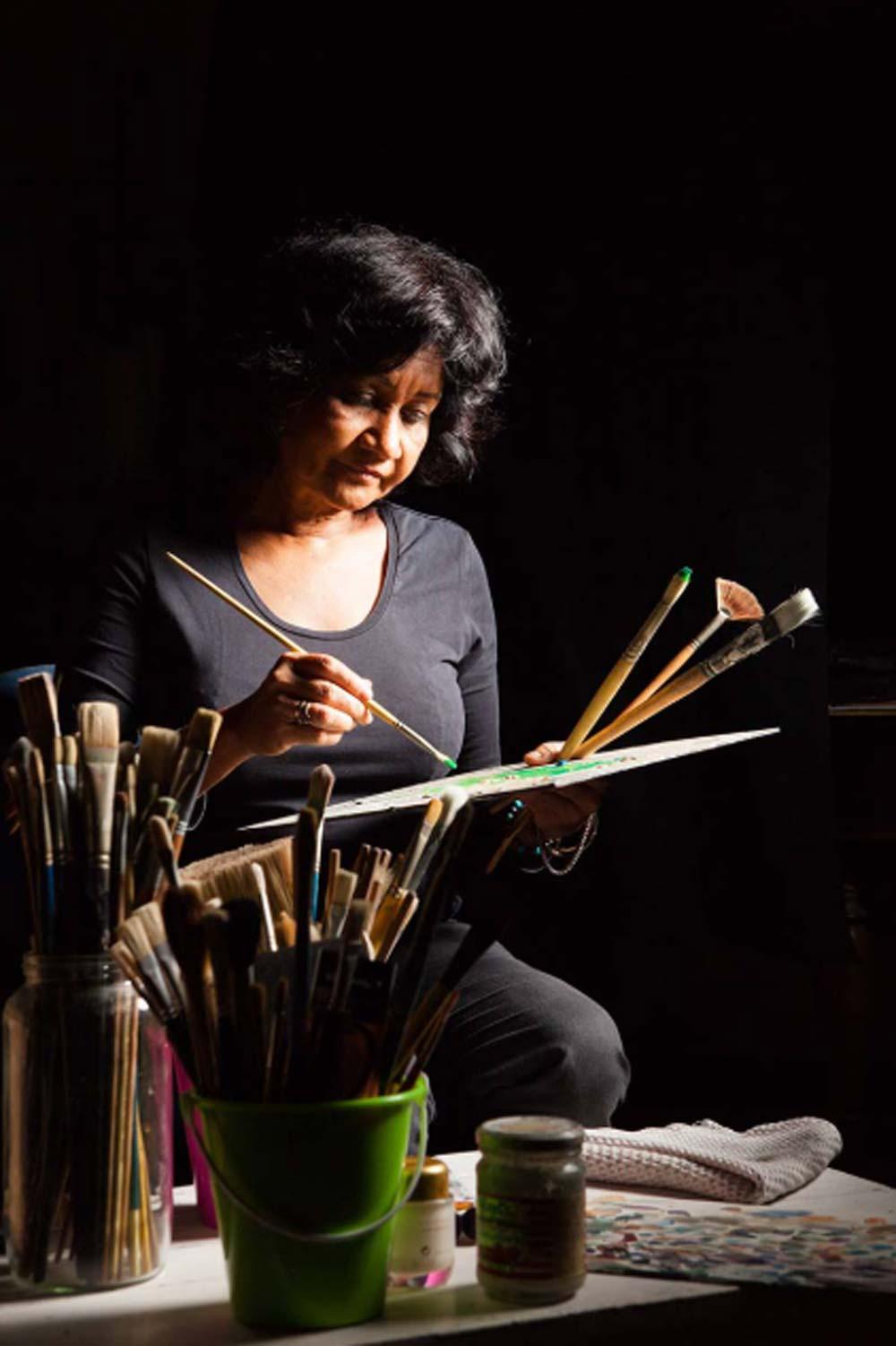
For internationally acclaimed artist Anoma Wijewardene, art has never merely been about aesthetics. It has always been an act of excavation, of memory, fracture, identity, grief, healing, and the fragile tensions that exist between destruction and renewal. Across decades of work spanning painting, installation, sculpture, digital media, video, sustainability, and activism, Anoma has built a visual language that feels at once deeply intimate and globally urgent.
Having exhibited at prestigious international platforms including the Venice Biennale at Palazzo Bembo through the European Cultural Centre in 2019 and at Sotheby's Hong Kong Gallery in 2016, her artwork has garnered solo shows across Sydney, Kuala Lumpur, New Delhi, the Maldives, Dubai, London. Yet despite this international recognition, her artistic voice remains profoundly human, vulnerable, and emotionally unguarded.
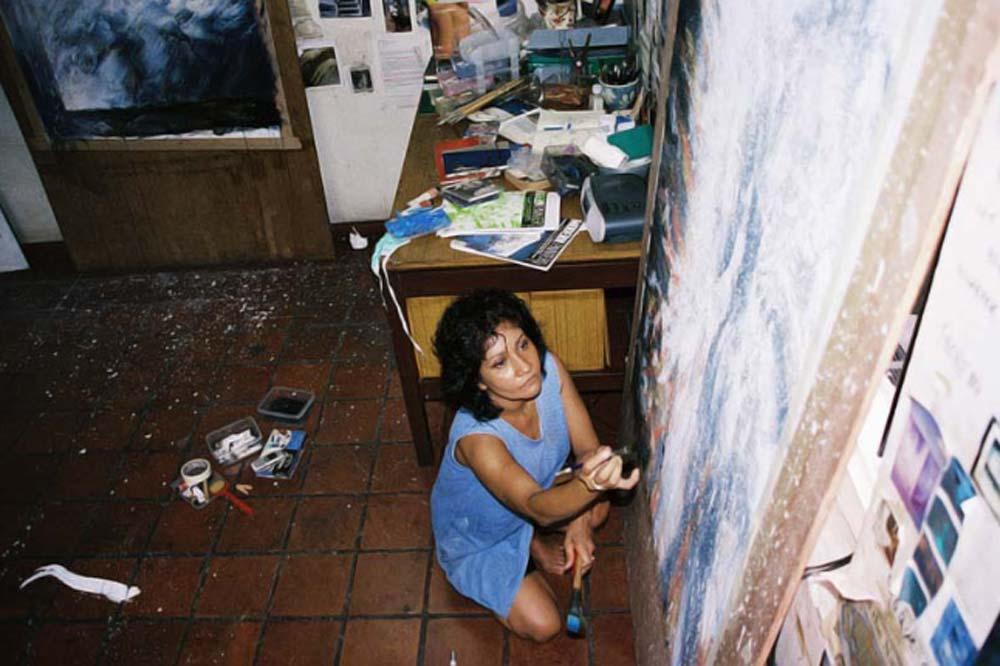
After studying at the iconic Central Saint Martins, University of the Arts, London and working in the United Kingdom for nearly three decades as a designer, artist and lecturer, Anoma now divides her time between London and Sri Lanka, where her studio practice continues to evolve through emotionally layered mixed media paintings, digital works, sculpture installations and video art. Her works often feel less like static images and more like living psychological landscapes. Boats, rivers, fractured figures, pathways, wounds, and crevices emerge and disappear within heavily textured surfaces, inviting viewers into meditations on impermanence, reconciliation, existential anxiety, climate collapse, healing, and the restless search for meaning.
There is a haunting duality within her practice. The paintings carry devastation, yet also transcendence. Violence and tenderness coexist. Fragmentation becomes reconstruction. Through layered surfaces, torn textures, and abstract forms, Anoma explores what is found through loss, what survives destruction, and what remains human in a world increasingly shaped by conflict, greed, isolation, and emotional disconnection.
Her multimedia trilingual installation on reconciliation, which incorporated writings on peace, music, performance, and video, was exhibited at the National Gallery of Sri Lanka, further reflecting her long-standing engagement with memory, humanity, and collective healing. Beyond the gallery world, her earlier work in design extended into fashion and design, with creations displayed at the Victoria and Albert Museum and the House of Commons in London. Her clients have included iconic fashion houses such as Yves Saint Laurent, Pierre Cardin, Calvin Klein, and Ralph Lauren, while her work has also appeared in international publications including the cover of Vogue UK. She was additionally selected by India for the SAARC Art Exhibition, which toured all seven capitals of the SAARC region, and later spent over a decade as a visiting lecturer at leading British art colleges including Central Saint Martins.
But beyond the accolades and international recognition lies something far more powerful: an artist unafraid to expose emotional truth. Anoma’s work resists spectacle. Instead, it asks viewers to sit with discomfort, vulnerability, longing, and silence. Her art does not offer easy answers or decorative optimism. It offers something rarer: emotional honesty. In a world increasingly consumed by noise, performance, and distraction, her work insists upon introspection, humanity, and the quiet possibility of healing.
Your exhibition feels deeply intimate, yet universally political at the same time. While observing these works, I felt as though each painting carried the emotional memory of generations of women who were taught to survive quietly. What personal emotional truth were you trying to confront within yourself through this body of work?
My works are always deeply personal journeys of exploration and enquiry. My emotional life has always been central to the work. The works are not outside of me; they are me. This remains true whether I am engaging with themes of climate crisis, identity, or unity, but it is perhaps even more acute in this series, which focuses on the status of women in today’s challenging world.
Each painting is an expression of my inner life, of my own loss, pain, and struggle to overcome, to grow, to surmount, and ultimately to find myself. There is within all of us a constant and often desperate seeking: seeking oneself, seeking truth, seeking freedom, seeking peace, and seeking harmony.
In works such as “I Bend, I Pause, I Question but I Will Not Break,” there is a profound emotional exhaustion present, but also resistance. How do you emotionally navigate painting vulnerability without allowing the work to become hopeless?
That is the absolute crux of the matter. I honestly do not know how it happens, and I am deeply grateful that the work does not become hopeless. These are very vulnerable, intimate, almost private works that explore deep insecurity, fear, and indeed exhaustion, but there is also within them a determined and inexhaustible seeking for light, for sustenance, for release, for peace, and harmony.
Somehow it is the light, or perhaps simply the hope for light, that ultimately pervades the work.
The textures within your mixed media pieces feel almost wounded, layered, and scarred, as though the surfaces themselves have survived something. Could you speak about that?
My earlier work for Venice in 2019 explored the idea of Kintsugi and the possibility of finding healing and renewal through the restructuring of what is broken and divided. This series continues that exploration more deeply. Every work is wounded, torn, stripped of wholeness, divided and scarred, and then painstakingly reconstructed and rebuilt layer by layer, almost brick by brick.
It mirrors what we ourselves must do repeatedly with our own broken selves, as each challenge tears us apart and we are forced to rebuild again and again. In that sense, the process of making the work echoes the process of recovery, resilience, and renewal.
One of the most haunting pieces for me was “We Learn the Weight of Our Words When the World Asks Us to Swallow Them.” Were you reflecting on the way women are conditioned into silence from a very young age?
Perhaps I was. From a very young age, we learn to defend ourselves, to navigate life, to survive, and this is true for both men and women. But women are perhaps even more conditioned to give way, to suffer silently, to avoid contradiction, and to not become “the difficult woman.”
We all know that when a man speaks his truth, it is often accepted, while when a woman does the same, she may be labelled difficult, aggressive, or opinionated. So, for the sake of peace and harmony, many women learn to swallow their words, their desires, and their needs.
Even in 2026, it can still feel frightening to raise one’s voice and demand one’s place. Movements such as Me Too, Pussy Riot, and the Guerrilla Girls have helped make it easier for women to push for truth and visibility, but it remains an ongoing struggle.
In “Not Seeking Approval, Seeking Equality,” there is a directness that almost interrupts the poetic softness of the exhibition. Did you intentionally create moments where the viewer could no longer romanticize the female experience and instead had to confront its political reality?
Frankly, when I am in the creative act, I am not thinking about the viewer at all. Painting is an utterly selfish and deeply personal act, so I do not think I concern myself with how the work will be received.
I would also reiterate that every viewer brings his or her own understanding and emotional response to a work. In that sense, each painting becomes a deeply intimate and private conversation between the artist and the viewer, and each person will take away something entirely different.
I hope the work does not romanticize or soften the underlying truths, though I think it is possible for viewers to overlook the seething tensions and questions that lie beneath the more lyrical surface. I am not entirely sure how or why these multiple layers emerge within the work, but there is certainly a duality there, many tensions, many possibilities, many readings.
Whatever the interpretation, I simply hope the work reaches the heart, because it is something given directly from my heart to the heart of the viewer.
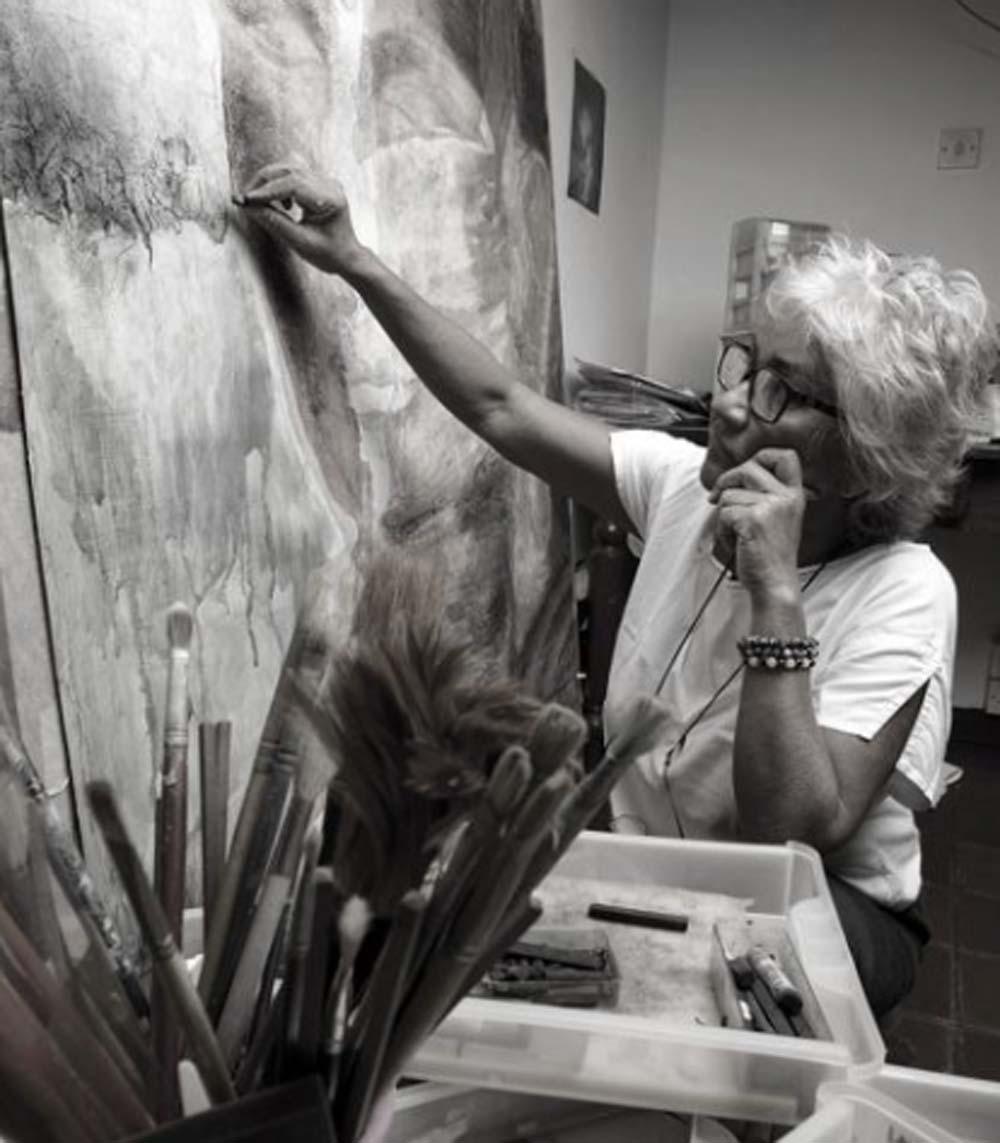
In your opinion, what does society fail to see about women even today, despite conversations around progress and empowerment becoming louder globally?
The exhibition includes a statement about the still desperate position of women globally, along with a set of statistics compiled with the assistance of UN Women and Amnesty International on the status of women today. The facts are frankly appalling, and one cannot help but feel despair that half the world continues to struggle under such profound inequality.
In “Invisible Was Never Empty. It Was the Place Where the Spirit Learned Its Own Language,” there is such philosophical depth surrounding silence and solitude. Do you think invisibility sometimes forces women into a deeper emotional intelligence and self-awareness that society often overlooks?
It is an interesting question, and who truly knows, but perhaps it is possible that the extraordinary resilience of women, and their ability to move fluidly through the world with grace and quiet strength, does in part emerge from that invisibility. Being “the second sex,” living under the male gaze, and enduring continuing injustice may well have fostered an ability to navigate profoundly difficult conditions with endurance, subtlety, and emotional intelligence.
Your career has spanned fashion, sustainability, activism, installation art, and deeply emotional visual storytelling. Having lived and worked across so many creative worlds, how has your understanding of womanhood evolved personally over the years, and how does this exhibition reflect that evolution?
I think I was once very naïve and trusting, and perhaps rather foolishly convinced that women were truly equal to men. It has taken a lifetime for me to understand just how far we still have to go in order for women to fully emerge.
It is interesting that this subject did not deeply engage me until now. Thirteen of my earlier solo exhibitions focused on climate, the environment, power, or unity. I seemed always to be looking outward toward the urgent issues of our age, without fully recognizing this deeply personal struggle that was also unfolding within me.
But I do not consciously order my passions, interests, or the themes within my work. They simply arise, or rather, they insist upon themselves. Much of the creative process comes from instinct, desire, emotion, and intuition rather than from logic or rational structure. It is closer perhaps to a kind of stream of consciousness, which is why it can be so difficult to fully articulate or explain in words.
Did you consciously resist creating a glorified version of empowerment in favour of something more truthful and emotionally complicated?
As I have already said, much of the process is not conscious. It does not come from the rational mind. I do not think about it in an analytical way while I am working. It is more about feeling and seeking than thinking.
Nor am I searching for answers or solutions. I am simply sharing my own internal struggles, my own small and deeply personal journey.
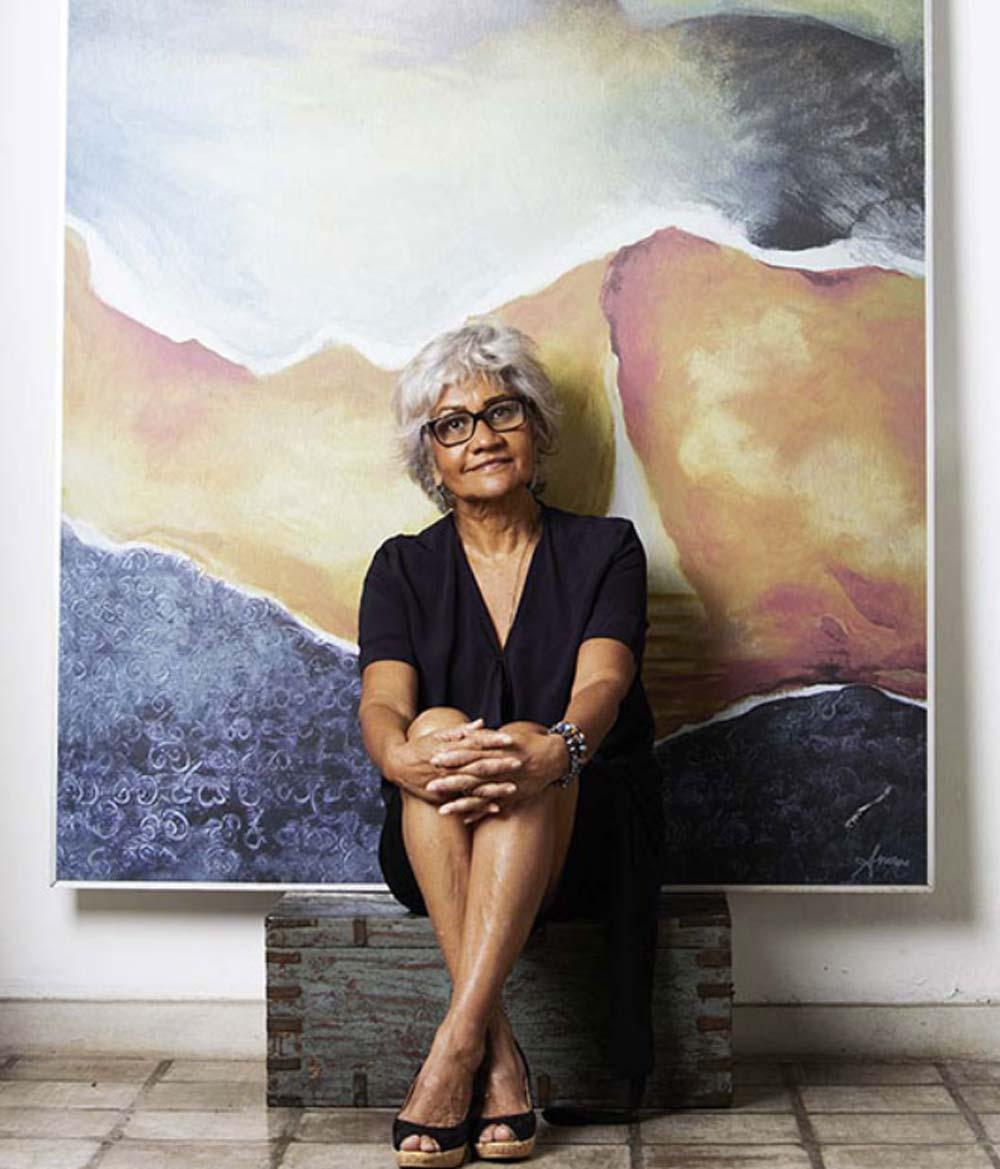
In pieces like “The Weight They Carry, the Ground They Claim,” I sensed not only individual stories but inherited female histories, almost ancestral burdens. Were you thinking about generational trauma and the silent labor women carry across time?
I probably was not consciously thinking about it, but in hindsight, of course we carry trauma from childhood, and the female child has so often occupied second place. Certainly we carry generational trauma, because female history has so often been one of restriction, denial, erasure, and censure.
Women have laboured deeply, constantly, and often silently for centuries. And while women still have a very long way to go, it does feel as though women are beginning to emerge from invisibility. They are increasingly included, increasingly able to become all that they are capable of becoming. Despite the persistence of toxic masculinity and incel culture in some spaces, it also feels that many men today are more welcoming of the space women are now beginning to occupy.
The final works in the exhibition feel less like resistance and more like reclamation, especially “To Be Loved. To Be Seen. To Be Heard. To Be Free.” After creating this exhibition, what do you think women are still fundamentally asking from the world that they have not yet fully received?
As the statistics accompanying this series make painfully clear, women still have a very long way to go. Inclusion, equality, and justice should simply be basic human rights available to women without question or negotiation.
Perhaps that is what women are fundamentally asking for: not to have to ask at all.
Your paintings feel emotionally raw without ever losing elegance. They hold grief, rage, tenderness, and hope simultaneously. After spending so much time inside these themes, what part of yourself did this exhibition force you to rediscover or heal as an artist and as a woman?
Thank you for your acute observations and for your penetrating questions. Yes, these works emerged from the struggles of a very hard and lonely journey over several years. It was a journey marked by loss, grief, pain, despair, and a constant struggle not merely to thrive, but simply to survive.
But perhaps this is, in some form, the journey of many women: to seek healing, truth, solace, connection, and the ability to give and share despite everything.
Recent scientific research now confirms what even our ancient cave ancestors seemed to understand instinctively, that making art and experiencing art can be profoundly healing, restorative, uplifting, and joyful. No diamond, Birkin bag, or super yacht can offer the nourishment and solace that music, poetry, and art can provide.
Art is soul work. It asks us to take life day by day, to allow the work to emerge and engulf us, not to destroy, but to restore. Even when the work presents a lone figure moving through a volatile world, beneath it there is always a longing for connection, togetherness, and human presence. A quiet faith in those who sustain us, stand beside us, and wish for our flourishing.
As an artist, I feel deeply blessed to still be able to create and to share that work with others.
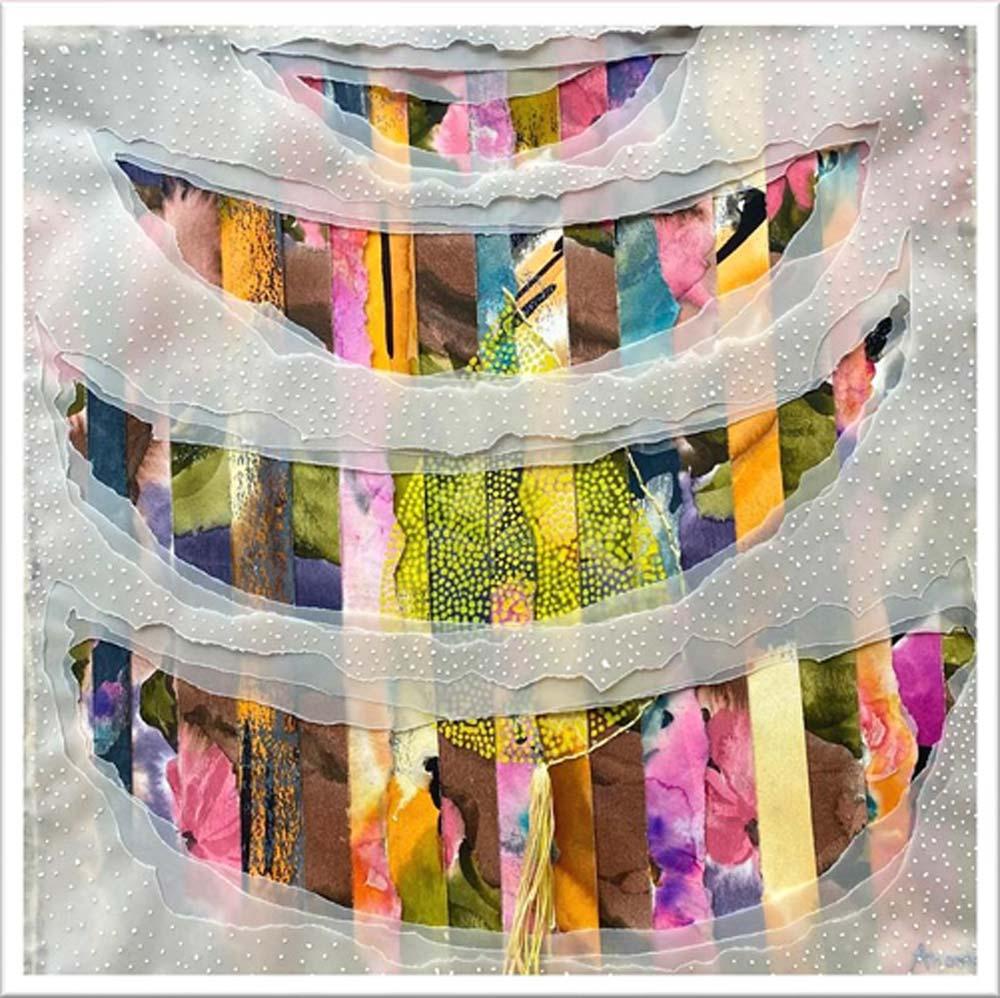
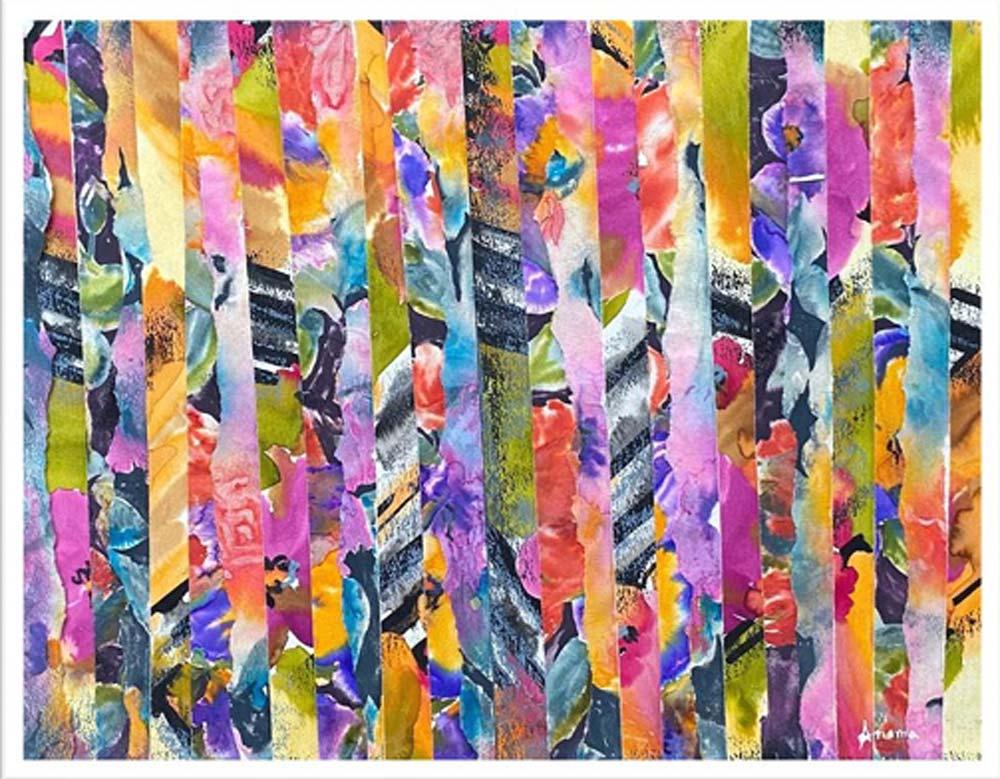
I bend, I pause,
I question but I will not break
Mixed media on paper
62cm x 63cm
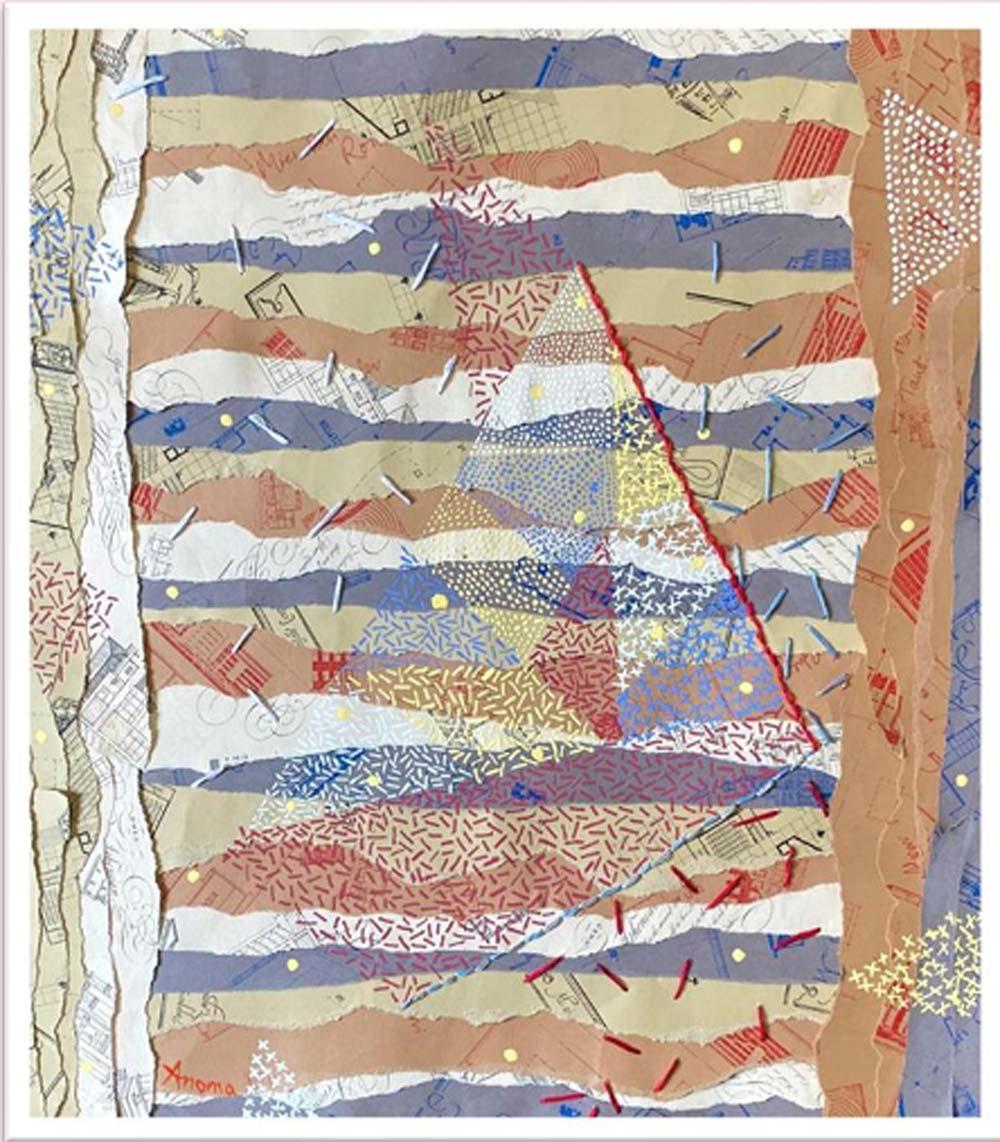
The risk to remain tight in a
bud became more painful
than the risk it took to
blossom
Mixed media on paper
77cm x 65cm
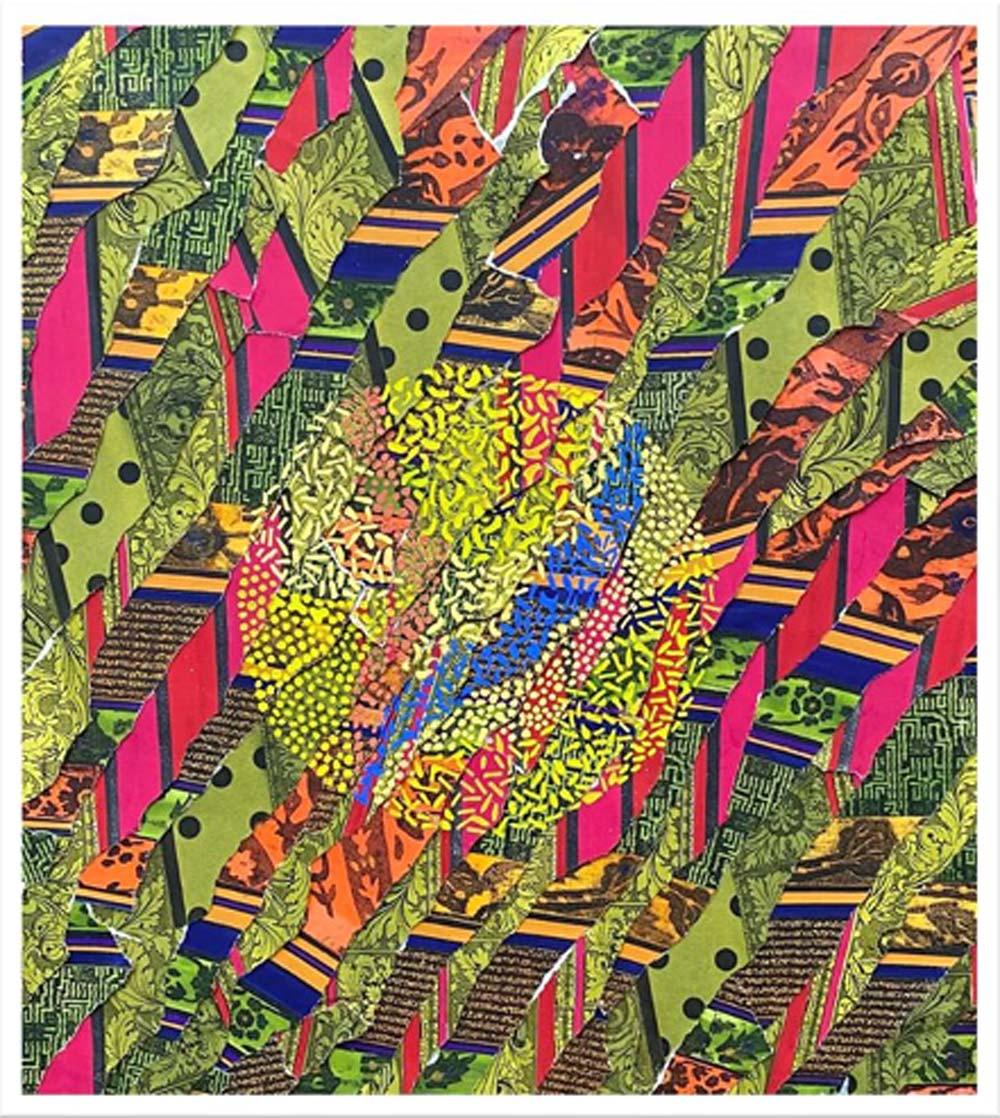
Throw your dreams into space
like a kite
Mixed media on paper
70cm x 66cm
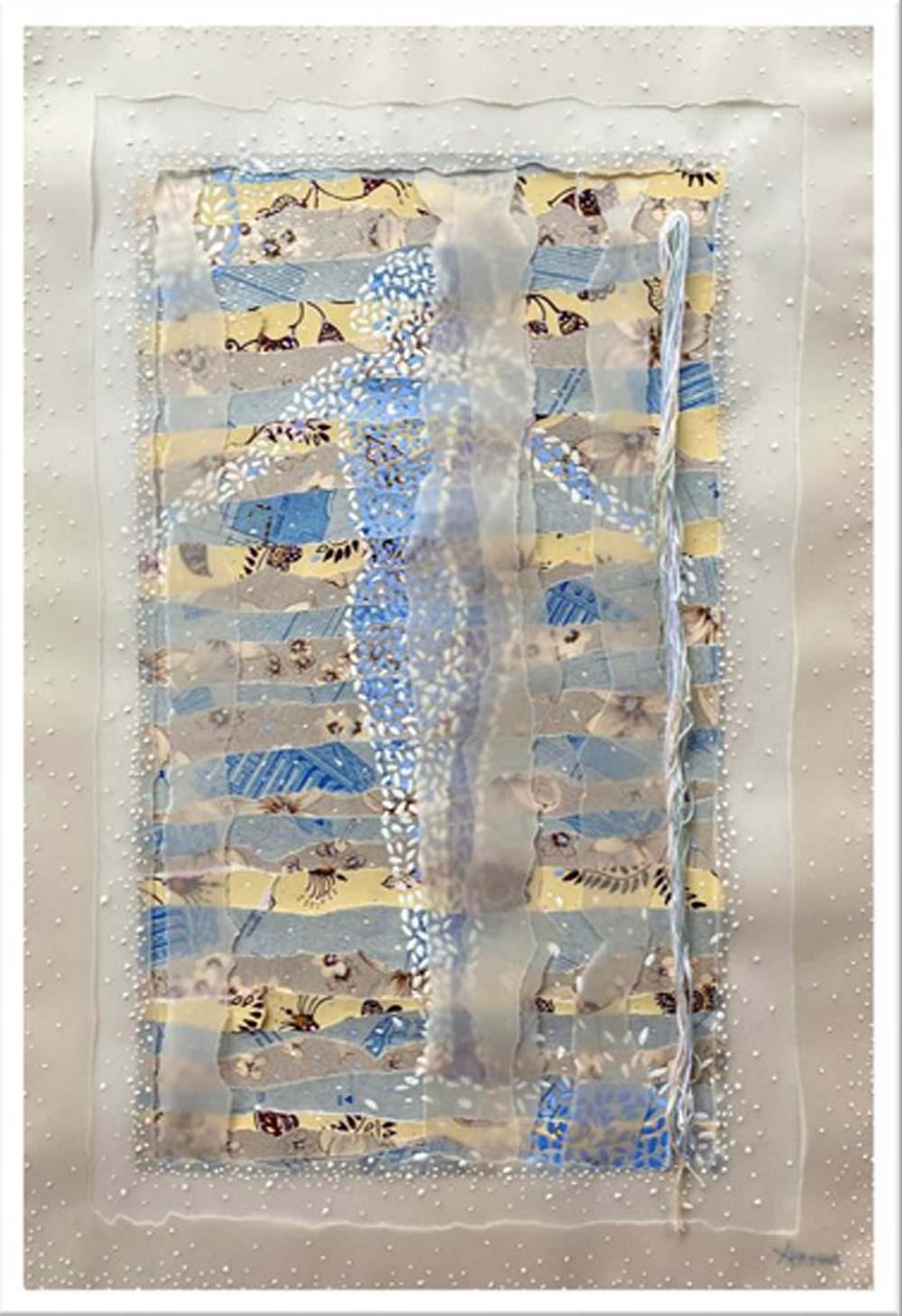
We learn the weight of our
words when the world asks us
to swallow them
Mixed media on paper
51cm x 56cm
There is always light,
If we have the courage to see it,
And the courage to become it
Mixed media on paper
81cm x 60cm
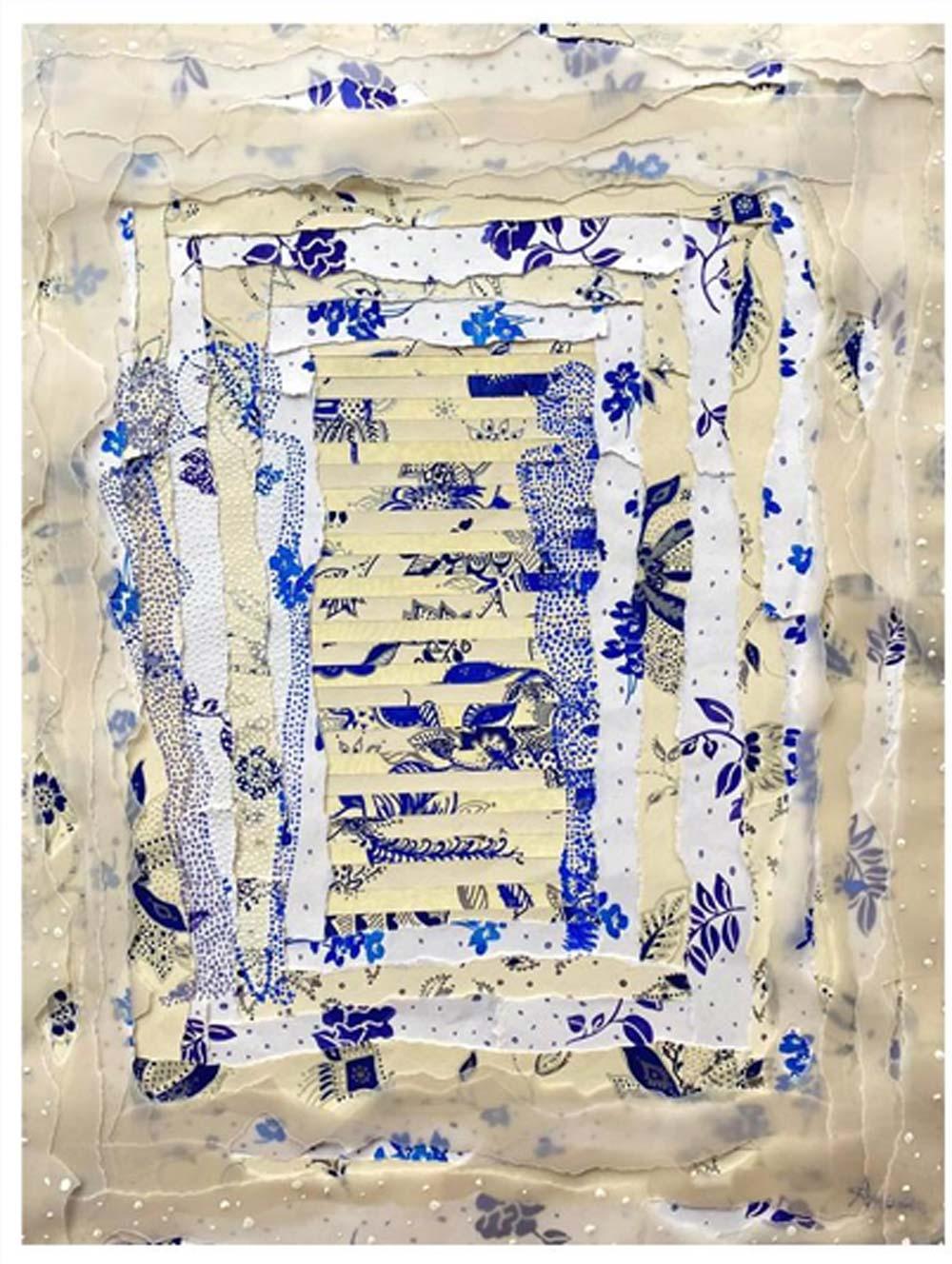
She is quiet strength rising,
even when no one sees the
battle she is fighting
Mixed media on paper
72cm x 58cm
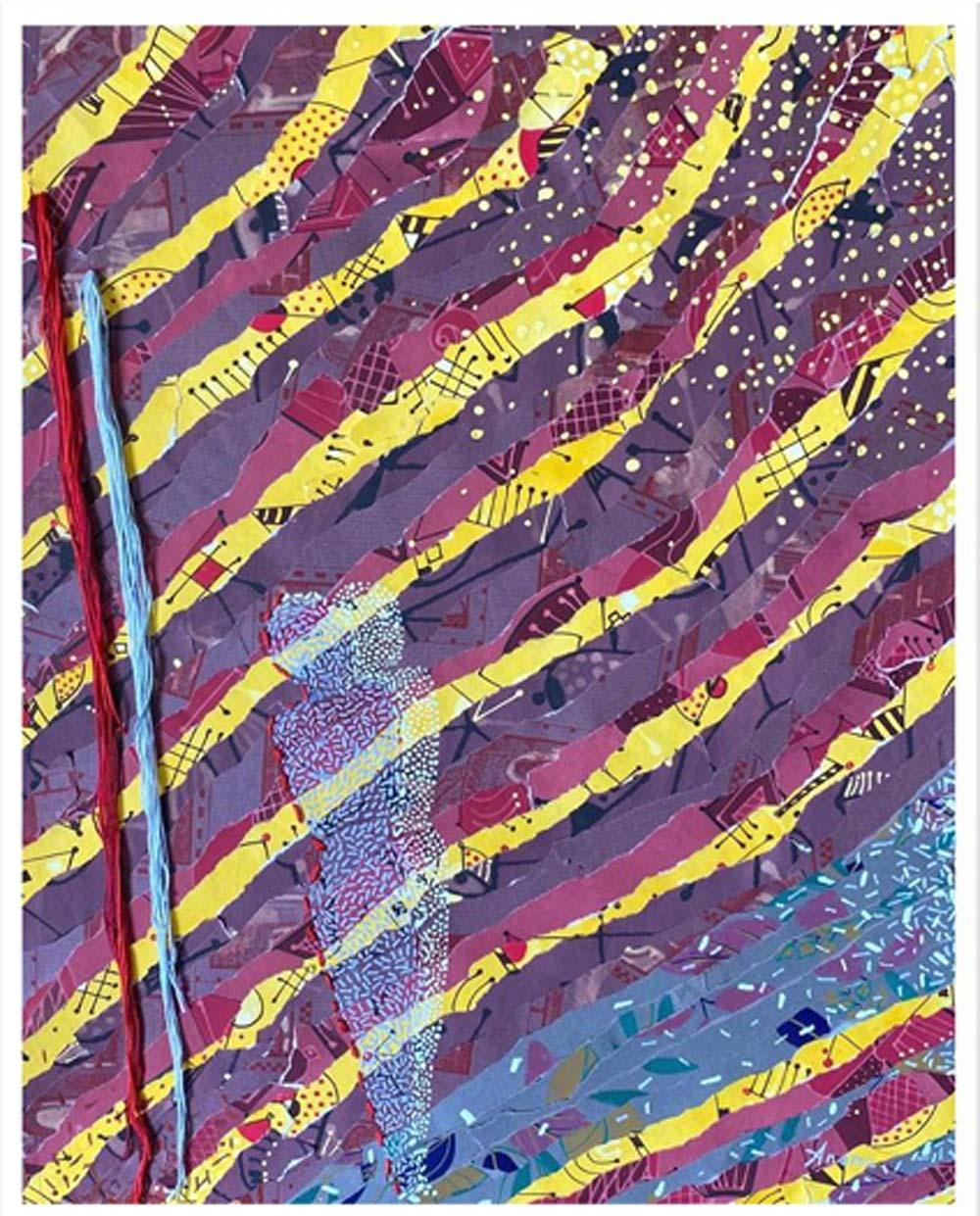
Each challenge is just a step
up into your becoming
Mixed media on paper
77cm x 64cm
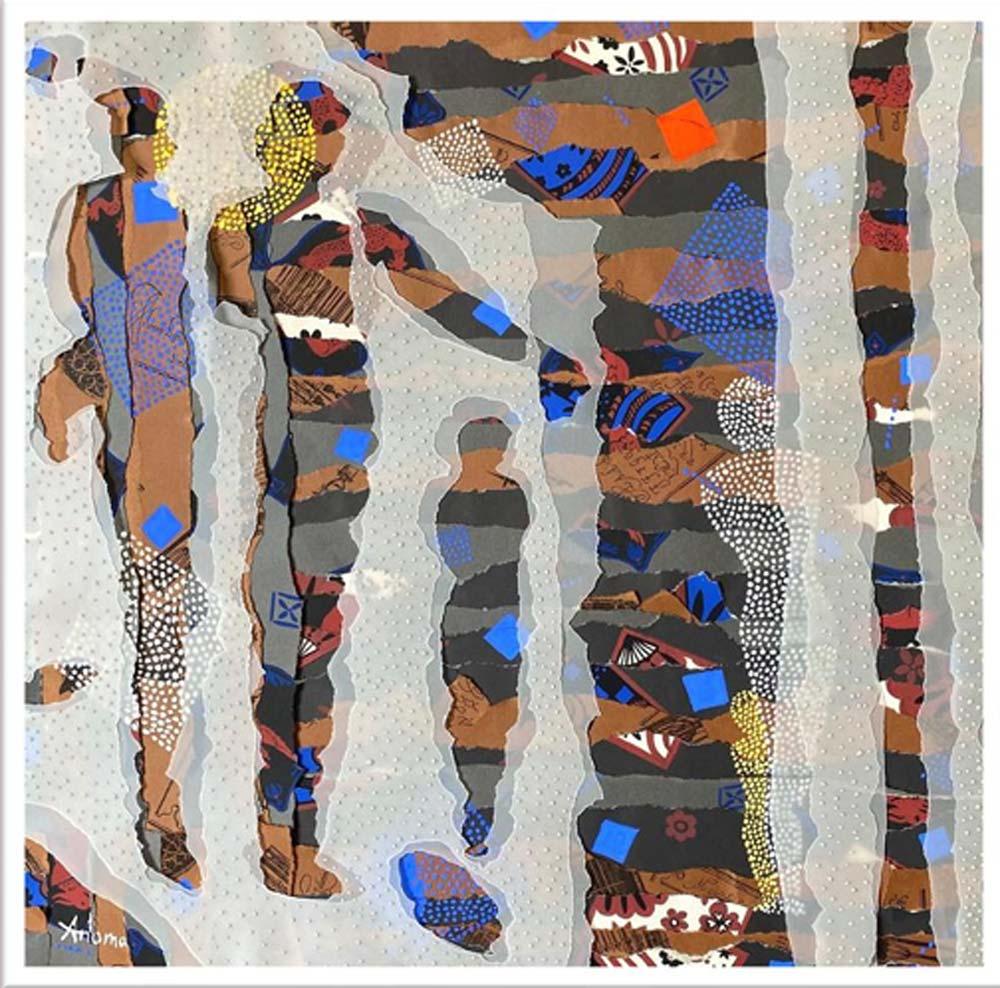
Expect the unexpected,
Be the unexpected
Mixed media on paper
66cm x 66cm
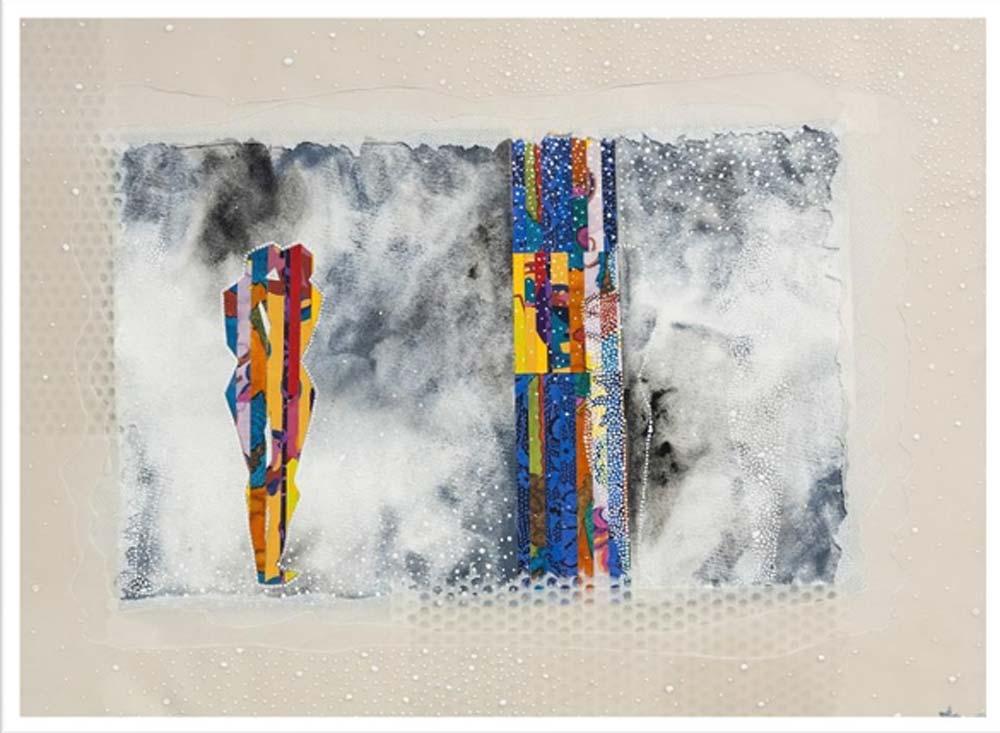
Together we rise.
Mixed media on paper
89cm x 72cm
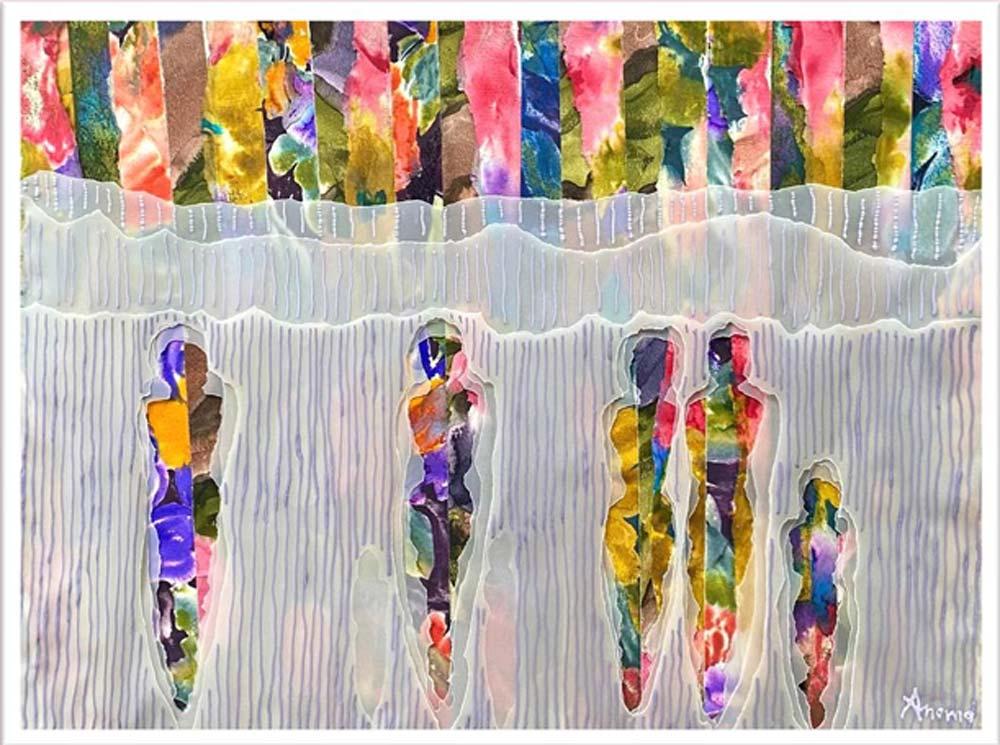
Not defined by society,
She belongs only to
herself
Mixed media on paper
74cm x 60cm
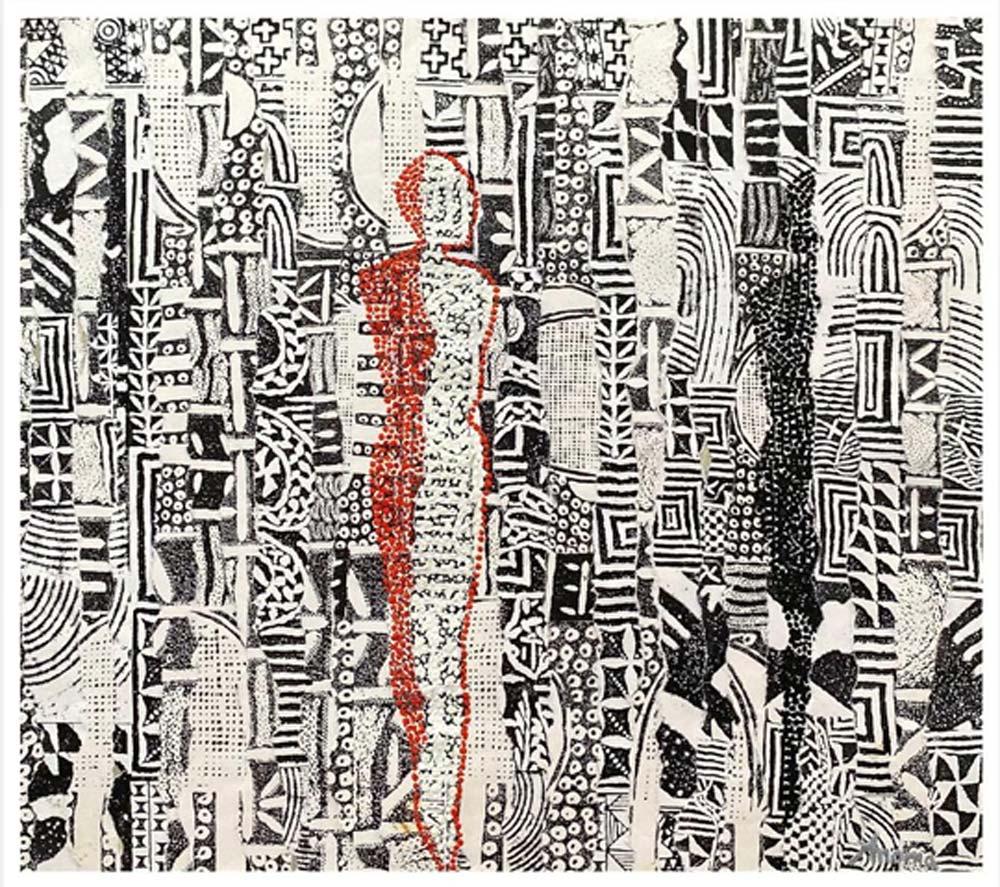
Not seeking approval,
Seeking equality
Mixed media on paper
60cm x 54cm
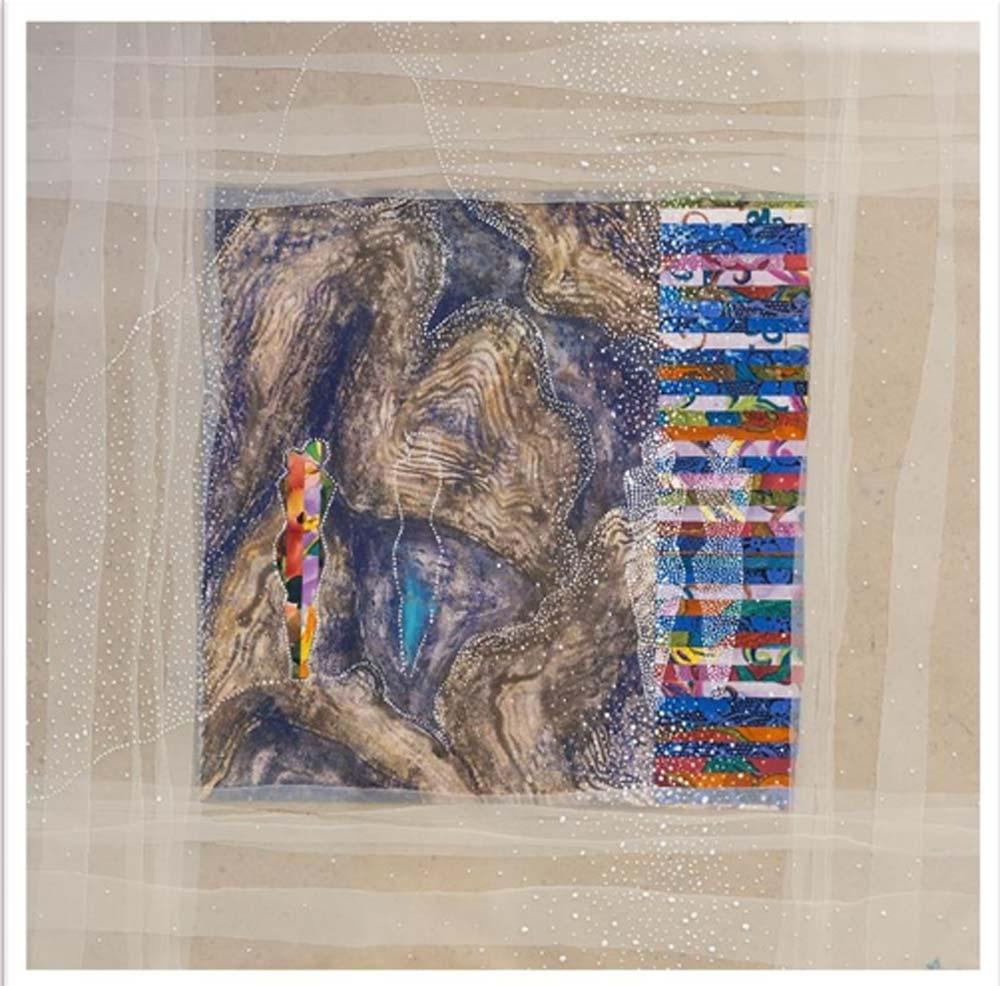
The weight they carry,
the ground they claim.
Mixed media on paper
87cm x 87cm